How to Increase Humidity for Tropical Houseplants
Aim for 50% to 70% relative humidity for most tropical houseplants; use a humidifier for several plants or one finicky plant in a dry room, and choose pebble trays or grouping only for small bumps. Too little moisture causes browned edges, stalled growth, and leaf drop. This guide compares humidifiers, trays, room placement, and maintenance so you can match the method to your plant and space.
What you’ll need
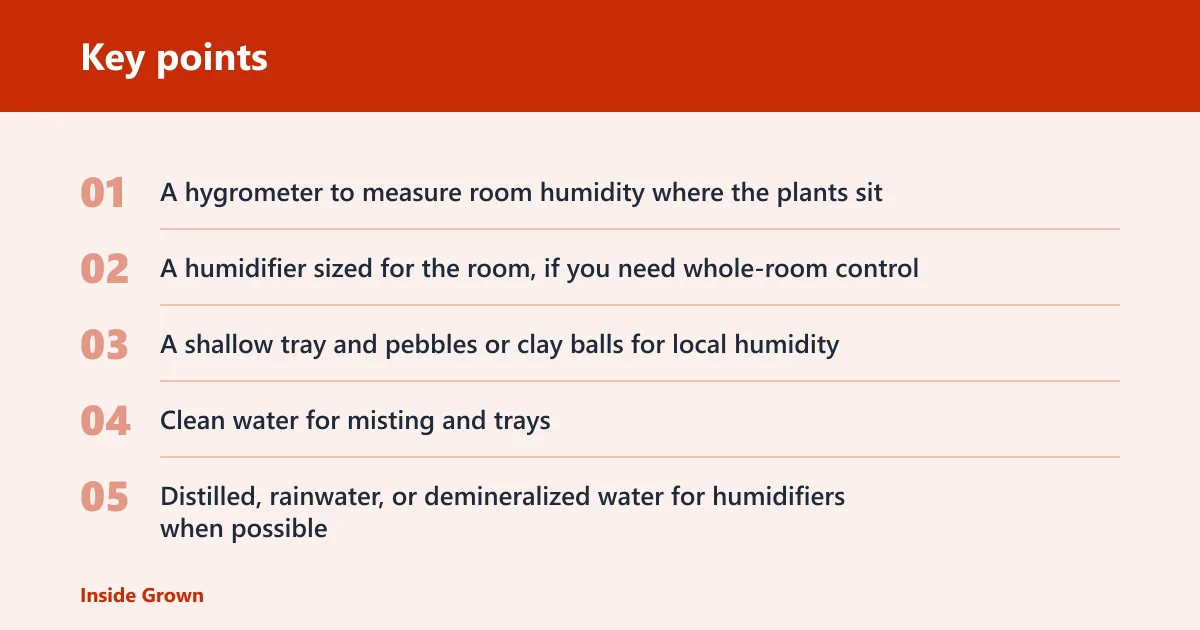


- A hygrometer to measure room humidity where the plants sit
- A humidifier sized for the room, if you need whole-room control
- A shallow tray and pebbles or clay balls for local humidity
- Clean water for misting and trays
- Distilled, rainwater, or demineralized water for humidifiers when possible
- A cloth or brush for regular humidifier cleaning
How do you choose the right humidity method?
Start with the plant, then match the method to the room. Many houseplants do well between 30 and 60 percent relative humidity, while many tropical plants want the higher end of that range or above it. Winter indoor humidity can fall below 30 percent in heated homes, so a method that works in summer may fail in January.
Match the method to plant type
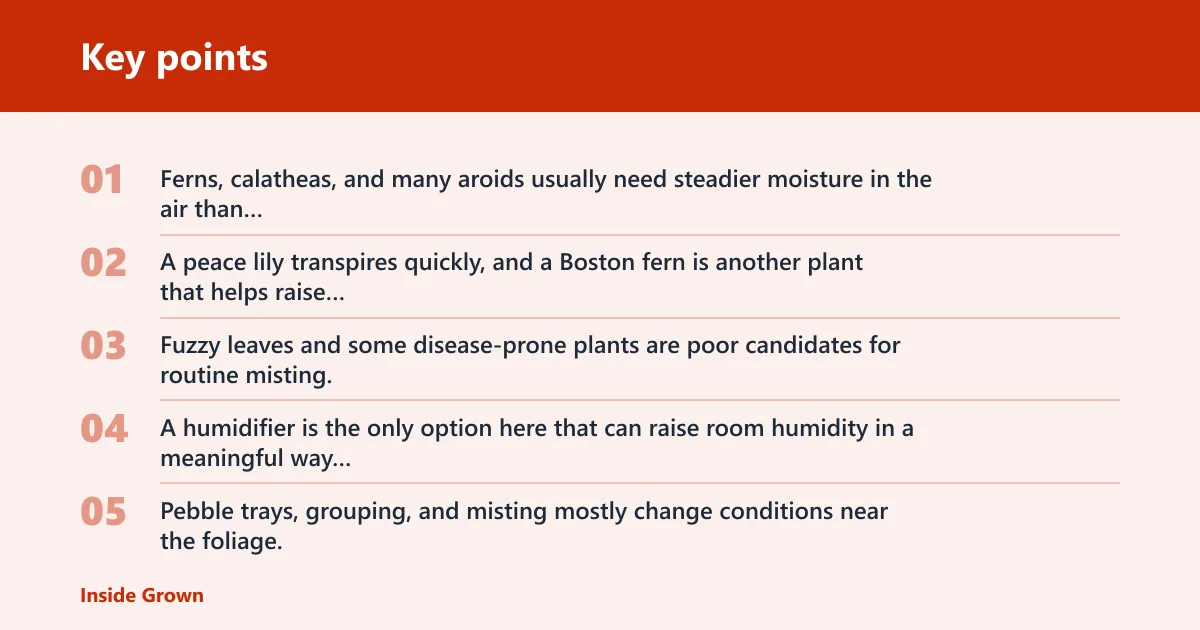
Ferns, calatheas, and many aroids usually need steadier moisture in the air than drought-tolerant plants do. A peace lily transpires quickly, and a Boston fern is another plant that helps raise humidity when grouped with others. Fuzzy leaves and some disease-prone plants are poor candidates for routine misting.
Match the method to room size
A humidifier is the only option here that can raise room humidity in a meaningful way for a larger space. Pebble trays, grouping, and misting mostly change conditions near the foliage. That means a tray can help one desk plant, but it will not fix a dry living room.
Match the method to upkeep tolerance
Humidifiers need cleaning to avoid mold and bacteria, and some models can be set to a desired humidity level. Pebble trays need water checks. Grouping needs pest checks. If you want a low-maintenance setup, bathroom or kitchen placement can work for humidity-loving plants if the light is adequate.
Best humidity method by situation
| Plant type | Room size | Humidity goal | Upkeep level | Risk | Recommended method |
|---|---|---|---|---|---|
| Fern in a dry bedroom | Small | 50% to 60% | Moderate | Tray alone is too local | Small humidifier with a hygrometer |
| Calathea on a mixed tropical shelf | Small to medium | 50% to 60% | Moderate | Pests spread if crowded | Plant grouping with similar humidity needs |
| Bathroom orchid setup | Small | 50% to 70% | Low | Light may be too low | Bathroom placement if the window or fixture light is sufficient |
| Aroid cluster in a small room | Medium | 50% to 60% | Moderate | One plant with pests can spread them | Humidifier plus loose grouping |
| Single plant on a desk | Very small | 40% to 50% | Low | Localized humidity only | Pebble tray under the pot |
| Large plant group in a living room | Large | 50% to 60% | Moderate to high | Room too big for trays | Room-size humidifier |
| Humidity-loving plant with low-maintenance needs | Small to medium | 50% to 60% | Low | Light limits bathroom or kitchen use | Kitchen placement if light and space allow |
| Mixed shelf in a heated winter room | Small | 50% to 60% | Moderate | Winter air often drops below 30% | Humidifier with distilled or demineralized water |
How to raise humidity step by step

- Place a hygrometer at leaf height where the plants actually sit.
- Check morning, afternoon, and evening readings for a few days.
- Choose one main method first: humidifier for room-wide control, pebble tray for a single plant, or grouping for a small shared zone.
- Size the fix to the space; a tray can add only local moisture, so move to a humidifier if the room stays dry.
- Add 1 method at a time, then recheck the hygrometer after 24 hours.
- If you use a humidifier, fill it with distilled, rainwater, or demineralized water and clean it on schedule.
- Use bathroom or kitchen placement only when the room has enough light for the plant.
Use a humidifier for whole-room control
Humidifiers are the strongest method when you need to raise humidity for several plants or for a room that stays dry all winter. Ultrasonic, evaporative, and warm mist models can all work. Many models can be set to a desired humidity level, which helps you avoid overshooting.
Cleaning matters. Humidifiers may spread mold and bacteria if not cleaned regularly, and tap water can leave mineral buildup. Distilled or demineralized water reduces residue on the machine and nearby surfaces.
Use pebble trays for local moisture
Pebble trays work by putting water below the pot, not in it. Fill a shallow tray with pebbles or clay balls and keep the water level just below the surface of the pebbles. That adds moisture right around the plant, but it will not raise humidity across a whole room.
Say your fern sits on a desk in a dry bedroom. A pebble tray may help the leaves closest to the tray, but if the room sits below 30 percent, the plant will still want more than that.
Use plant grouping for a small microclimate
Grouping plants together can create a small humid microclimate through transpiration. It works best when the plants share the same humidity needs. Large-leaf plants and moisture-sharing species, including peace lily and Boston fern, can help that zone hold moisture better.
Do not crowd plants carelessly. Tight grouping can speed pest transfer, especially if one plant already has mites, thrips, or leaf spots.
Use bathroom or kitchen placement when light allows
The bathroom usually has the highest humidity of the rooms discussed, and the kitchen often comes next. That makes them useful for humidity-loving plants with lower light needs, such as some orchids and ferns. The limit is simple: the plant still needs enough light and enough space.
Picture a bathroom orchid on a bright shelf near a frosted window. The humidity helps, but a dark corner will usually cause more trouble than it solves.
How to create humidity for indoor plants without overdoing it
Misting gives a very temporary fix. Use clean water, mist early in the day so leaves dry before night, and skip it for fuzzy leaves or plants that often get leaf spot. It can buy time, but it does not replace room humidity.
If you want the quickest boost, start with one light misting and one humidity source, then measure again rather than guessing. A common first-timer mistake is misting a plant daily while the room stays dry, which leaves the plant in the same air and increases disease risk.
If that did not work, move up the ladder: use a larger humidifier, move the plant to a more humid room, or pair a humidifier with grouping. A room that holds many plants may need both control and maintenance, not another tray.
Common mistakes
- Letting pots sit in water. Keep the pot base above the waterline to avoid root rot.
- Using a pebble tray for a large room. It changes the air only near the plant.
- Running a humidifier without cleaning it. That can spread mold and bacteria.
- Using hard tap water in a humidifier. Mineral residue can build up fast.
- Grouping plants without checking for pests first. One infested plant can spread trouble to the rest.
- Relying on misting alone. The effect fades quickly, especially in heated winter air.
- Pushing humidity too high without air movement. That can invite fungus, bacterial leaf spots, and mold.
Prevention is simple: monitor with a hygrometer, clean the humidifier, and change the setup when the season changes. Winter heating often drops indoor humidity below 30 percent, so a setup that worked in summer may need more support later.
Frequently asked questions
Do house plants increase humidity?
Yes, but only a little unless you have many plants in a close group. Some plants transpire faster than others, including peace lily and Boston fern. Their effect is local, so they help most when they are grouped in a small shared space.
Which houseplant increases humidity?
Peace lily and Boston fern are common examples of plants that transpire quickly and can help a grouped setup feel more humid. Even so, one plant will not raise a whole room much. For room-wide control, pair plants with a humidifier and a hygrometer.