How to Keep Houseplants Alive While on Vacation
For trips under 3 days, water normally and move plants out of direct sun, away from hot windows, radiators, and drafty AC vents; for about 4–10 days, a wick or self-watering setup is commonly used; for 10+ days, a plant sitter or automated irrigation is often recommended. Miss the timing, and dry soil, root stress, and leaf drop can turn a healthy plant into a rescue job. This guide matches vacation-care methods to trip length, plant type, and home conditions.
Vacation plant plan

The safest plan depends on three things: how long you will be gone, what kind of plant you have, and how fast your room dries out. Tropical plants usually need more backup than low-maintenance plants. Thirsty plants, rootbound pots, and recently repotted plants move you toward a sitter or a more automated setup.
Lower light, dry air, and missed watering are the main vacation stressors. Apartments with strong AC, radiators, or leaky old windows dry pots faster, so the same plant may need different care in two different rooms.
What you’ll need
- Watering can or cup for a deep soak
- Drip tray or saucer that can catch runoff
- Pot with drainage holes
- Hygrometer to check indoor humidity
- Humidifier, if the room runs dry
- Slow-release water spikes for short trips
- Grow light bulb for dim rooms on longer trips
- Clean cloth for wiping foliage
- Plant sitter contact for longer absences
Not every plant needs every item. A low-maintenance pothos in a bright room may need only a deep watering and a shifted spot. A thirsty fern in a hot, dry apartment may need humidity support, a backup watering aid, or a person who can check it.
Vacation care matrix
| Absence length | Safest care method | Plant types that qualify | Red flags that mean use a plant sitter instead |
|---|---|---|---|
| 1–3 days | Water deeply, drain fully, move out of direct sun | Low-maintenance foliage plants, established succulents, plants that dry slowly | Soil already dry, rootbound pot, recent repotting, pest pressure, very hot window, drafty AC or radiator |
| 4–10 days | Deep water, group plants, add humidity support, consider spikes or a wick setup | Familiar tropicals with even moisture needs, forgiving potted plants, healthy medium-size pots | Thirsty plants, fine-leaved tropicals, plants in small pots, rooms below 40 to 60 percent humidity, any plant that wilts fast |
| 10+ days | Plant sitter, timed irrigation, or a more automated system with a backup check | Only the most forgiving plants in stable rooms, and only if backup watering is reliable | Species-specific care, pest-prone plants, recently divided or repotted plants, dry apartments, mixed collections with different needs |
| Setup time | Shopping-list items |
|---|---|
| 10–15 minutes per plant | Watering can, cloth, saucer, drainage check |
| 20–30 minutes for a small group | Hygrometer, humidifier, grouping space, slow-release water spikes |
| 30–45 minutes for a long trip setup | Grow light bulb, timer if needed, plant sitter instructions, backup watering plan |
How long will you be gone?
For trips under 3 days, most healthy houseplants can handle a deep watering and a safer spot. For about a week, many plants need a little more help: grouping, humidity support, and sometimes a temporary watering aid. For 2+ weeks, a plant sitter or automated irrigation is usually the safer route for tropical or thirsty plants.
1 to 3 days away
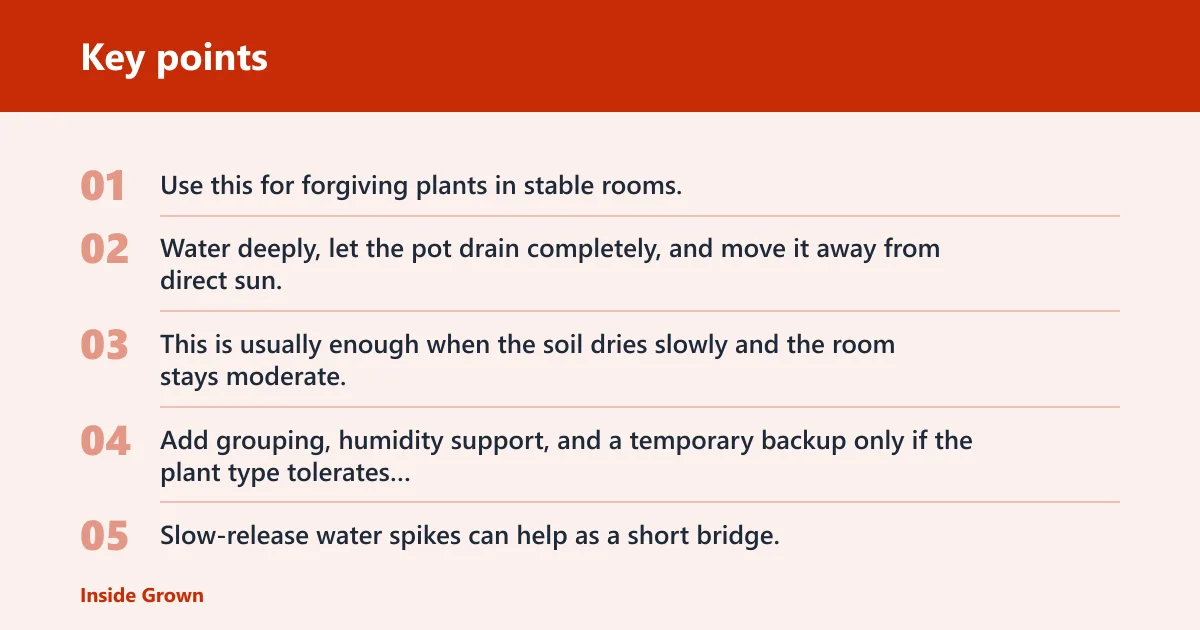
Use this for forgiving plants in stable rooms. Water deeply, let the pot drain completely, and move it away from direct sun, hot windows, radiators, and drafty AC vents. This is usually enough when the soil dries slowly and the room stays moderate.
About a week away
Add grouping, humidity support, and a temporary backup only if the plant type tolerates it. Slow-release water spikes can help as a short bridge. Do not use them as a rescue plan for already stressed plants.
2 weeks or more away
Use a plant sitter for tropicals, thirsty plants, or any plant with species-specific needs. A self-watering tool can reduce risk, but it does not replace human attention for pests, soil collapse, or a plant that dries unevenly. Longer absences require a backup check, not a guess.
Step 1: Prep each plant
- Check the soil by touch and weight, not the calendar. Dryness at the root zone matters more than the date.
- Inspect leaves for pests, dead patches, and stems that are bent, broken, or brown. Wiping foliage is part of the pre-vacation inspection routine.
- Skip fertilizer before you leave. Skipping fertilizer before travel prevents thirstier new growth.
- Water deeply only if the pot has drainage holes, then stop when liquid runs freely out of the holes.
- Let pots drain completely before putting them back on saucers.
Say your fern is in a 6-inch pot and the top inch feels dry but the center still feels cool. That plant may only need a standard soak. Say your snake plant is in a larger pot and already feels light; it can usually handle the simpler end of this plan without extra tools.
Step 2: Set the room
- Move plants back from sunny window ledges before leaving.
- Keep them away from radiators, space heaters, and AC vents that push out dry air.
- Group humidity-loving plants together so evaporation helps nearby plants. Grouping plants creates a localized humidity bubble.
- Use a hygrometer if the room may fall below the 40 to 60 percent range.
A humidifier is useful when heated air or summer AC dries the room, and the helpful range many growers aim for is 40 to 60 percent. In dim rooms, a grow light bulb can act as faux sunlight for longer absences. It helps when the apartment stays dark, but it does not fix dry soil.
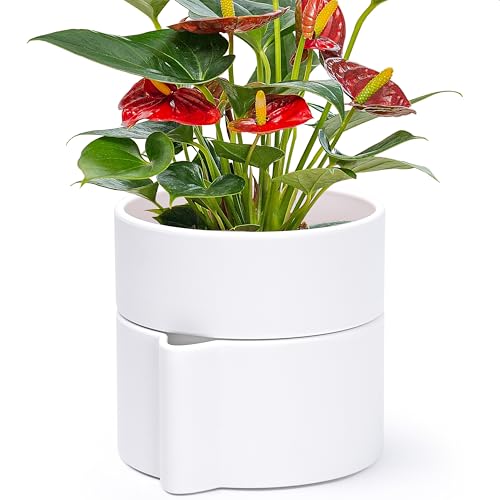
For a wick setup, run a cotton wick from a water reservoir into the potting mix and test it before you leave to make sure the soil begins to draw moisture. For a timer-controlled grow light, set a consistent daily on/off cycle and keep the bulb positioned far enough away that it does not heat the leaves.
Do you need a plant sitter?
A plant sitter is the safer choice when the trip is long, the plant is thirsty, or the care needs are species-specific. Tropical plants, pest-prone plants, rootbound pots, and recently repotted plants are the first to move into this category. If one plant dries faster than the rest, it should also get human attention.
Suppose a 10-inch calathea sits near an AC vent and curls leaves after a single missed watering. That plant is a sitter candidate even for a short trip. A hardy pothos in a cooler room may not need that level of help.
Common mistakes
Overwatering before departure: Water deeply, then stop. A pot that stays soggy can rot roots, especially if it has poor drainage or sits in runoff.
Leaving plants in direct sun: Bright window ledges heat up and dry pots faster. Move them back into the room before you leave.
Using fertilizer right before a trip: It can push new growth that drinks faster and wilts sooner.
Treating spikes as a cure-all: Slow-release water spikes are temporary moisture support, not a fix for neglected or high-risk plants.
Ignoring room conditions: A dry apartment with AC, a radiator, or leaky old windows needs more backup than a steady, shaded room.
Return-day plan
- Check soil before watering again. A still-damp pot does not need a second soak.
- Remove standing water from saucers and trays.
- Rotate plants if they leaned toward the light during the trip.
- Trim clearly dead leaves and damaged stems.
- Resume fertilizer only after the plant is back in active growth.
If a plant comes home limp, do not flood it immediately. Rehydrate in stages: water, wait for drainage, then reassess after the soil settles. If leaves stay limp after the soil is evenly moist, the problem is likely not simple dryness.
Frequently asked questions
How to keep indoor plants alive while on vacation
Match the method to the trip length. For a few days, water deeply and move plants away from sun and drafts. For about a week, add grouping and humidity support. For 2+ weeks, a plant sitter or automated setup is safer for tropical or thirsty plants.
How do I keep plants alive while on vacation?
Start with plant type, then check the room. Low-maintenance plants in a stable room can often handle simple prep. Tropical plants, dry rooms, and rootbound pots need more backup, especially if AC, radiators, or bright windows speed up drying.
Should I water houseplants before leaving for a trip?
Yes, but only as a deep watering with drainage. Water until liquid runs freely out of the holes, then let the pot drain completely before you return it to a saucer. Skip this extra water if the soil is still wet.
Is it better to group houseplants together before vacation?
Yes, especially for humidity-loving plants. Grouping creates a localized humidity bubble and slows moisture loss a little. Keep the group out of direct sun and away from radiators or vents, or the benefit drops fast.
Do I need a plant sitter for a week away?
Not always. A week can work with deep watering, grouping, and temporary moisture support for forgiving plants. Use a sitter if the plant is thirsty, recently repotted, pest-prone, or already drying faster than the rest.
Should I fertilize houseplants before going on holiday?
No. Skip fertilizer before travel because it pushes thirstier new growth. Resume after you return, or wait until active growth if the plant slows down in cooler or dimmer conditions.
How can I keep my houseplants alive while on vacation?
Use the shortest safe plan for the trip length. Check soil, water deeply if needed, move plants out of harsh light, group compatible pots, and add a plant sitter once the care needs stop being simple. The less forgiving the plant, the more backup it needs.