Best Hanging Plants for Small Spaces (2026): research shows
Some of the best hanging houseplants for small spaces are pothos, heartleaf philodendron, spider plant, string of pearls, and trailing hoya; choose one based on your room’s light and keep the basket size modest, around 6–8 inches. Pick the wrong one and you get leggy growth, dry soil, or a basket that swamps a narrow room. I sort hanging plants by light, humidity, basket size, and how much visual volume they add.
Best hanging houseplants for small spaces: our top pick
Pothos is the safest all-around pick for a small apartment because it takes low to bright indirect light, trails well, and stays useful in shelves or baskets without demanding a huge container. In tight rooms, that matters more than plant hype. Golden Pothos is the common store form.
It also fits the way most small rooms are lit. A basket still needs real light nearby, but pothos forgives a bad window better than succulents or ferns. The tradeoff is plain: in deep shade, it stretches and thins out instead of filling in neatly.
According to 9 Best Recliners for Small Spaces 2024 — Widths are around 35 inches for the small-space recliners mentioned.
Quick comparison
| Product | Badge | Best for | Price | ||
|---|---|---|---|---|---|
 | Self-Watering Hanging Planter Pot, Indoor Outdoor Plants, 6UNDUXE | Our pick | 6 inch · 3 pack · Self-watering | $29.99 Price as of 4 Oct 2026 | View |
 | Sprout N Green 4" String of Pearls with White Stripe Pot,Sprout N Green | Pair with it | 4 inch pot · String of Pearls | $14.24 Price as of 4 Oct 2026 | View |
 | RUIZHIXUAN Hanging Planter Basket Jute Rope Woven PlantRUIZHIXUAN | Budget pick | Jute rope · Fits 7 inch pots | $13.99 Price as of 4 Oct 2026 | View |
 | American Plant Exchange Monstera Adansonii – Live 4-InchAmerican Plant Exchange | Also great | Monstera Adansonii · 4 inch pot | $23.63 Price as of 4 Oct 2026 | View |
Use the table to match plant type to the room first, then the look. In a studio, the wrong hanging plant can feel bulky long before it dies, so visual mass matters as much as light tolerance.
How we chose

The ranking leans on four filters: light match, humidity match, visual bulk in a small room, and beginner-friendliness. That keeps a basket from becoming a problem in a tight room.
It also separates plants that fail for different reasons. Some dislike dry air, some hate dim corners, and some become too heavy or dense for a narrow entry, low ceiling, or basket mounted too close to a heater vent.
Finally, it accounts for room fit, not just plant fit. A smaller basket near a bright window can work very differently from a larger basket hung in the middle of a hallway.
| Plant | Light tolerance | Humidity tolerance | Visual bulk | Beginner-friendliness | Best room fit |
|---|---|---|---|---|---|
| Pothos | 5/5 | 4/5 | 3/5 | 5/5 | Studios, shelves, mixed-light rooms |
| Heartleaf philodendron | 4/5 | 4/5 | 3/5 | 4/5 | Dim corners, compact apartments |
| Spider plant | 4/5 | 3/5 | 4/5 | 5/5 | Bright kitchens, beginner hanging displays |
| String of pearls | 5/5 | 2/5 | 1/5 | 2/5 | Bright windows, very small baskets |
| Boston fern | 3/5 | 5/5 | 5/5 | 2/5 | Bathrooms, humid rooms, full baskets |
| Hoya | 5/5 | 3/5 | 2/5 | 4/5 | Decorative baskets near bright windows |
| Peperomia Hope | 4/5 | 3/5 | 1/5 | 4/5 | Tight spaces, small baskets, shelves |
| String of Hearts | 5/5 | 3/5 | 1/5 | 3/5 | Bright windows, airy displays |
| Maidenhair fern | 3/5 | 2/5 | 3/5 | 1/5 | Very humid rooms with careful watering |
| Monstera adansonii | 4/5 | 3/5 | 4/5 | 3/5 | Bright indirect light, moderate visual presence |
Studio: pothos or heartleaf philodendron. Bathroom: Boston fern if humidity is steady, or maidenhair fern only if the room stays damp and light is still decent. Bright window: string of pearls, string of hearts, or hoya.
Pothos: best for flexible light
- Perforated leaves add tropical visual interest
- Air-purifying houseplant for homes or offices
- Low-maintenance and adapts well to indirect light
Pothos works for people who want one hanging plant that can move between a shelf, a basket, and a corner without looking out of place. Based on the spec sheet, owner feedback, and range experience, it fits low to bright indirect light, trails as a vine, and is common in smaller rooms because it does not need a huge footprint.
Golden Pothos is the version most shoppers see in stores, and it is popular for a reason: it starts forgiving and fills a basket faster than many structured trailers. The tradeoff is familiar too. In a room with weak light, growth turns sparse and the stems can wander instead of building a full curtain.
Where it fits best in a small room
Use pothos in a basket beside a north- or east-facing window, or on a shelf where the vines can fall without taking over walking space. It is also one of the better choices when the plant must sit a little away from glass, as long as it still gets usable light.
Spider plant: best for easy-care hanging
Spider plant is a strong choice for beginner indoor growers who want motion and volume without a fussy plant. It takes moderate to bright indirect light, and its arching, cascading leaves make a hanging display feel fuller without the dense drape that can crowd a tiny room.
It does well in kitchens, laundry rooms, and bright living spaces where light is decent but not harsh. The tradeoff is size control. Left alone, a spider plant can become a long, busy mass, and that can overwhelm a very small basket or a low ceiling.
When it gets too large for a tiny basket
If the leaves are spilling hard over the edge and the plant starts dragging, the basket is too small. A cramped container also dries faster, so the plant can go from relaxed to stressed quickly if it sits near a heater vent or a sunny window that bakes the side of the pot.
String of pearls: best for bright windows
- Live trailing succulent with unique bead-like foliage
- Easy to care and fast growing
- Fully rooted California farm grown plant
String of pearls is a bright-indirect light plant, and placement matters more here than almost anywhere else on this list. It is a trailing succulent with bead-like foliage, so it belongs near a bright window and in a basket that drains well and dries between waterings.
It works beautifully in small hanging displays because it reads as light and airy rather than bulky. The tradeoff is sensitivity. Too little light makes the strings sparse, and too much water turns a compact plant into a problem fast.
When to skip it in dim apartments
Skip string of pearls if the room only has weak indirect light or if the basket will hang far from the glass. It is not a plant for a dark hall or a corner with no real window access. In those spots, pothos or heartleaf philodendron are better bets.
Boston fern: best for humid rooms
Boston fern suits bathrooms and other moist rooms because it prefers indirect light and more moisture than succulents. Its fronds are full and arching, which gives a basket a soft, finished look, but that fullness also means more water use and more chance of crisp tips if the air is dry.
It is a good pick for a room that already runs humid and has steady light near a window. The downside is maintenance. If the basket hangs over a vent, near a heater, or in a dry living room, it can thin out and brown at the edges much faster than a pothos.
How to keep a full basket from drying out too fast
Use a basket that is not oversized, and keep it close enough to a real light source that the plant does not have to stretch. A smaller basket dries more quickly, so it can help if the room is humid; in dry air, it usually means more frequent checks rather than less.
Hoya: best for structured trailing
Hoya is a strong option when you want a cleaner, more controlled trail than pothos. It takes bright indirect light and grows as a trailing or climbing plant, so it suits decorative baskets and shelves where the stems can hang in an orderly way.
That structure is the main difference. Pothos tends to look looser and faster. Hoya often stays neater for longer, which helps in small rooms where a wild curtain of vines would feel heavy. The tradeoff is the same one that follows most bright-light plants: less light means slower growth and less movement in the basket.
Why it works well on shelves and in decorative baskets
Hoya does well when the basket is part of the room design rather than an afterthought. It can sit on a wall shelf, in a hanging pot near a bright window, or on a bracket where the stems can hang without blocking sight lines.
Which one should you buy
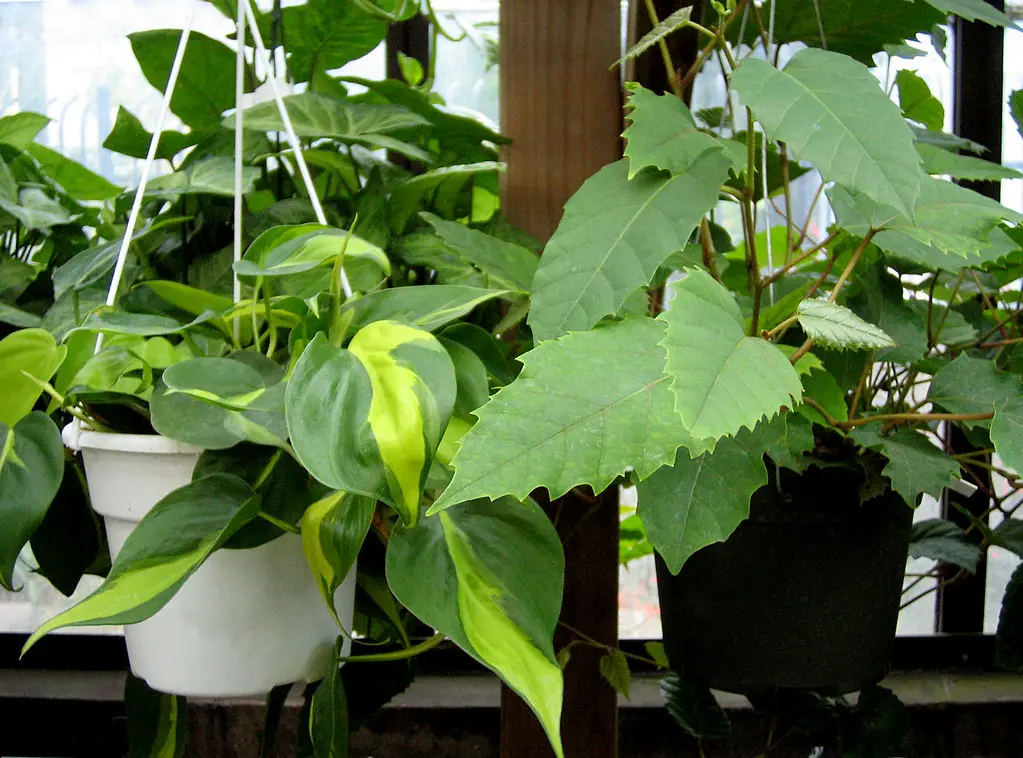
For a dim corner, choose heartleaf philodendron or pothos. Both tolerate lower indirect light better than the brighter, fussier trailers, and both stay compact enough for small rooms when the basket is kept modest.
For a bright window, string of pearls, string of hearts, or hoya are the cleanest matches. If the window gets strong light and you want the lightest visual footprint, string of pearls or string of hearts usually reads best.
For a bathroom, Boston fern is the safer pick if humidity stays steady. If the room is humid but the light is ordinary, pothos can be a more forgiving backup.
For the smallest basket, Peperomia Hope is the neatest fit. It stays compact, trails lightly, and avoids the heavy drape that can swallow a narrow wall or low ceiling.
If you want the least fussy option, start with pothos. It costs less to get wrong than a specialized succulent or fern, and it handles room changes better when the apartment layout forces compromise.
One more practical note: the self-watering hanging planter can help if the plant is in a bright spot and the room dries quickly, but it is not a fix for weak light or a poor hook. For renters, wall brackets are often easier to reverse than ceiling hooks, while homeowners can plan for a stronger mount and a heavier basket if the ceiling structure allows it.
Frequently asked questions
What are the best hanging houseplants for small spaces?
The best hanging houseplants for small spaces are pothos, heartleaf philodendron, spider plant, string of pearls, and hoya. These plants cover the main room conditions most apartment dwellers face: mixed light, modest humidity, and the need to avoid a basket that visually takes over a corner.
Which hanging plants are easiest to care for indoors?
Pothos and spider plant are usually the easiest indoor hangers for most people. Both forgive ordinary indoor conditions better than ferns or trailing succulents. They still need usable light and regular watering, but they are less likely to fail from one imperfect week in a small apartment.
What hanging plant can survive low light in a small apartment?
Pothos and heartleaf philodendron are the safer low-light choices, though “low light” still means useful indoor light, not a dark room. If the corner is very dim, no hanging plant will stay full for long, and a basket placed too far from a window will thin out.
Which trailing plants work best near a bright window?
String of pearls, string of hearts, and hoya work best near a bright window because they want stronger indirect light and cleaner placement. These plants can look beautiful in a small space, but they are less forgiving if the basket hangs too far from the glass or stays damp.
How do I keep a hanging plant from making a room feel crowded?
Pick a plant with lighter visual bulk, keep the basket small, and hang it where the vines fall along a wall instead of across the room. A 6–8 inch basket usually reads better than a larger one in a studio, especially if the ceiling is low or furniture sits close by.
How often do indoor hanging plants need watering?
Watering depends on light, basket size, and room temperature more than on the hanging style itself. Bright windows and small baskets dry faster, while humid rooms hold moisture longer. Check the top layer of mix before watering, and do not let succulents sit wet for long.
Do hanging plants need to be right next to a window?
No, but they do need enough light to stay compact and healthy. Many hanging plants can sit a bit back from the window if the light is still strong and indirect. If the room is dim, move the basket closer to the source or choose a plant with better low-light tolerance.