How Much Light Do Houseplants Need Indoors? A Simple Guide
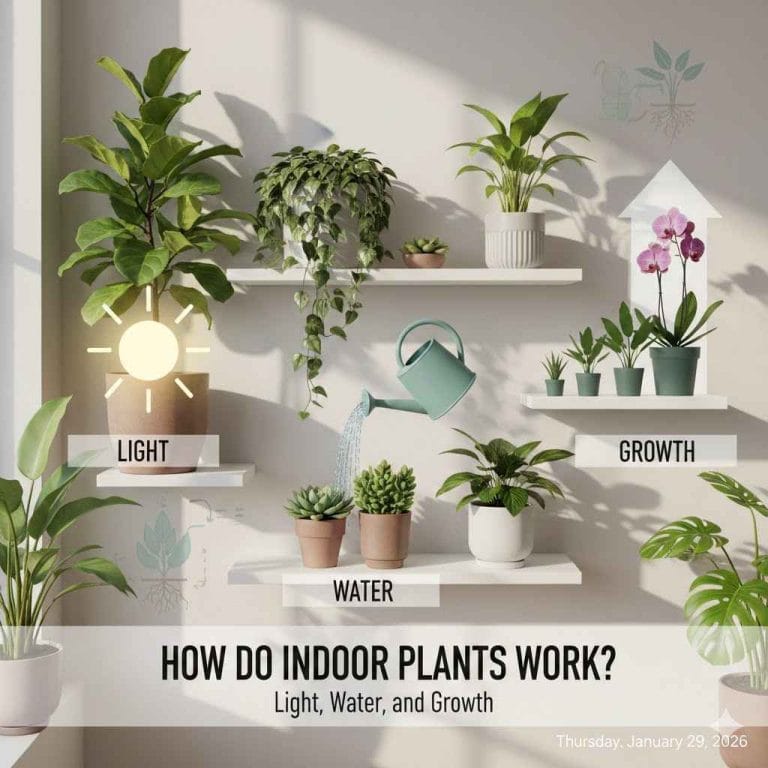
Many houseplants do best with bright, indirect light for much of the day. Low-light plants can handle a few hours of weak natural light, while sun-lovers want several hours of direct sun. Too little light slows growth, drops leaves, and stretches stems. Too much light burns leaves. This guide turns room light into placement choices for common houseplants, from windowsills to farther corners.
This guide is part of our Houseplant care guide for healthy indoor plants series.
What indoor light really means for houseplants

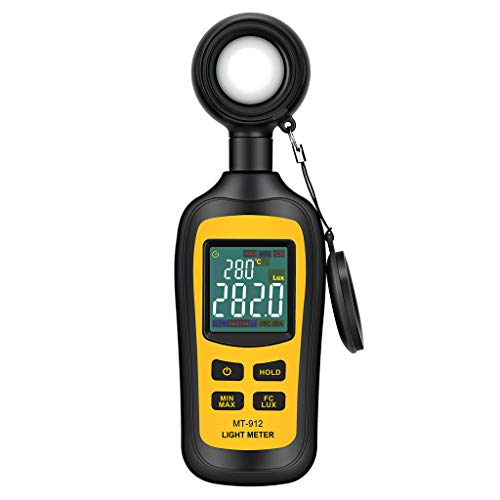
Indoor light can vary a lot, from dim corners to much brighter spots. It ranges from dim corners that barely hit 50 foot-candles to bright indoor spots above 1,000 foot-candles, and plants react differently at each level. “Low light” often means a plant can hang on, not that it will grow well, so placement matters more than the tag.
Low light, bright indirect light, and direct sun
Low light is a weak reading, and very low light can mean a spot well away from a large window or a few feet back from a small one. Bright indirect light sits near the window but out of the beam. Direct sun hits the leaves directly and is stronger, especially near south-facing glass.
How much light do houseplants need indoors?
Most common houseplants need more light than many owners expect. A plant that survives in a dim room may still stretch, thin out, or stop making new growth. Species matter more than room labels, because a snake plant can handle lower exposure than a jade plant, and a spider plant usually wants more light than either.
Why most houseplants need more light than the label suggests
Tags often use broad terms like low light or bright indirect light, but those labels hide the real question: where, exactly, should the plant sit? I have seen plenty of plants stay alive in weak spots and still look worn out. Garden Betty notes that indoor light is often in short supply, and that low light usually means survival, not thriving.
According to How Much Light Do Houseplants Need? — A low-light reading can be around 50 foot-candles.
How much light do houseplants need indoors?
Most houseplants do best with the brightest spot they can take without scorch. Low-light types may cope with weak natural light for part of the day, but many common houseplants want a spot close to a window, often with filtered sun. The right answer depends on the plant, the window, and how far the leaves sit from the glass.
The basic light needs of common houseplants
Some plants tolerate shade for long periods. Others need direct sun or nearly direct sun to stay compact and colorful. A pothos may accept less light than a jade plant, while a spider plant usually performs better in brighter indirect light. The plant’s natural habit tells you more than a generic room label.
When a plant can tolerate less light for a while
A plant can sit in a dimmer spot during winter, recovery, or transport, but that is a temporary arrangement. Low light can keep a plant alive, yet slow growth, smaller leaves, and sparse spacing often follow. If the plant is already weak, moving it closer to the window is usually the first fix.
What is bright indirect light for houseplants?
Bright indirect light means strong light without the leaves sitting in the direct beam for long periods. For indoor placement, that usually means close to a window with some filtering from sheer curtains, blinds, or a nearby wall. The exact strength changes with orientation, season, and how much glass or fabric blocks the sun.
How window orientation changes indoor brightness
Window direction sets the starting point. A south-facing window gives a lot of sun throughout the day. An east- or west-facing window gives sun for part of the day. A north-facing window gives no direct sun, which often works for plants that want gentle exposure, but not for sun-hungry species.
How curtains, blinds, and window film change exposure
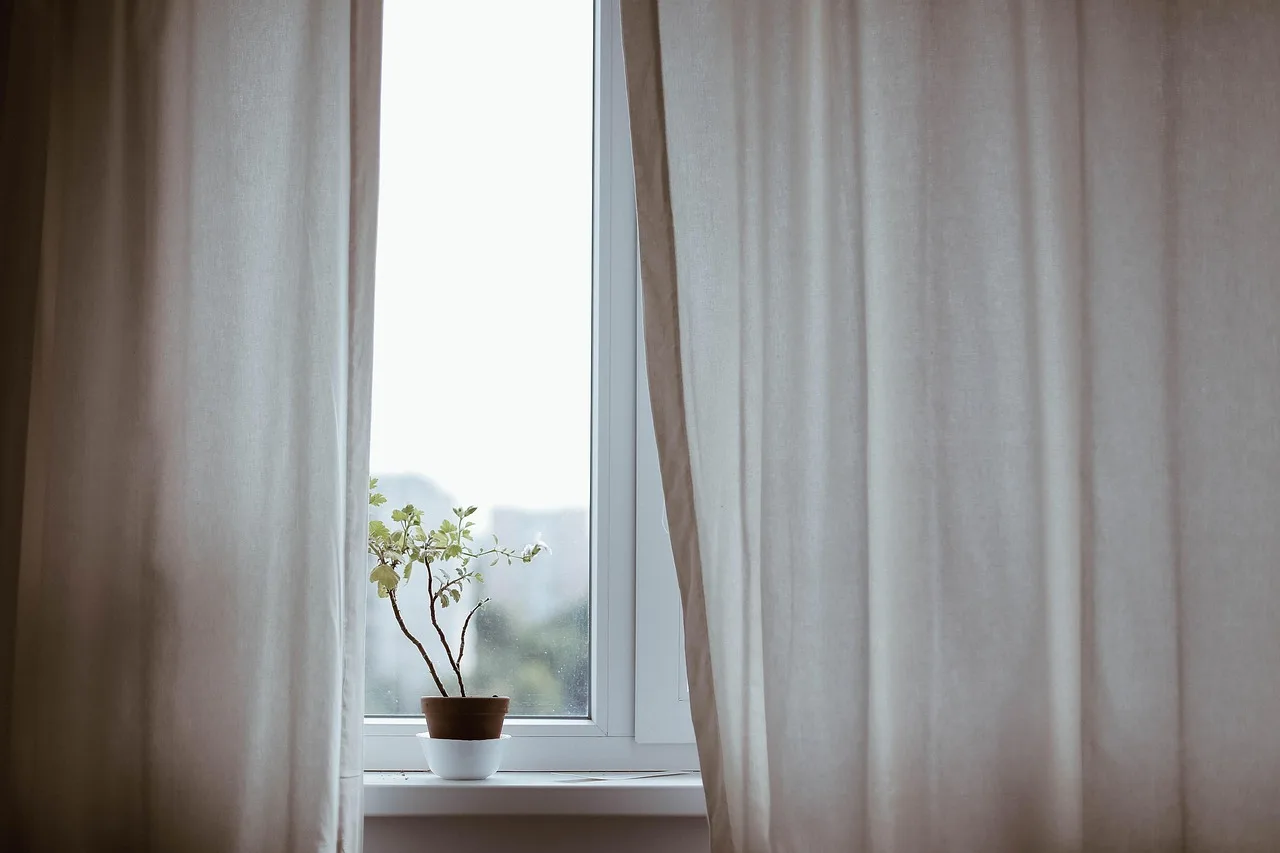
Sheer curtains soften direct beams and can turn harsh sun into usable indoor light. Blinds reduce exposure further, and window film can cut intensity enough that a once-bright sill acts more like a mid-light spot. Nearby buildings, trees, and seasonal angle changes can push the room even lower.
Why distance from the window matters so much
Light drops fast as a plant moves away from the glass. A shelf across the room can be much dimmer than the sill, even if the room looks bright to people. That is why a plant in a “bright room” can still stretch if it sits several feet back from the window.
How do I know if my houseplant is getting enough light?
A houseplant getting enough light usually stays compact, keeps leaf size steady, and produces normal new growth. Too little light shows up as stretching, wider spacing between leaves, paler color, slow growth, or leaf drop. A light meter or phone app helps confirm whether a spot is really bright enough for that plant.
Signs of too little light
Etiolation is the classic warning sign: long stems, sparse leaves, and a plant leaning toward the window. Smaller leaves, dull color, weak stems, and slower recovery after watering also point toward underlighting. If a plant once flowered or branched well and now looks thin, the light level is often the first thing to check.
Signs a plant is near its limit
Some plants can hold on just below their ideal range, but growth gets slow and uneven. New leaves may open smaller than older ones. Lower leaves may yellow and drop. The plant may remain alive while never really filling out. That is a sign to move it closer, not to water more.
How to use a light meter or phone app in a room
A light meter measures brightness in foot-candles or lux, which can make room-to-room comparisons easier. A low-light reading can be around 50 foot-candles, while anything over 1,000 foot-candles is bright indoors. A quick reading at the plant’s exact leaf height is more useful than judging the room by eye.
Which window is best for houseplants?
The best window depends on the plant. South-facing windows are strongest, east and west give moderate direct sun, and north-facing windows are gentler but often too dim for sun-loving species. The right window is the one that matches the plant’s tolerance and your ability to manage heat and glare.
South-facing windows
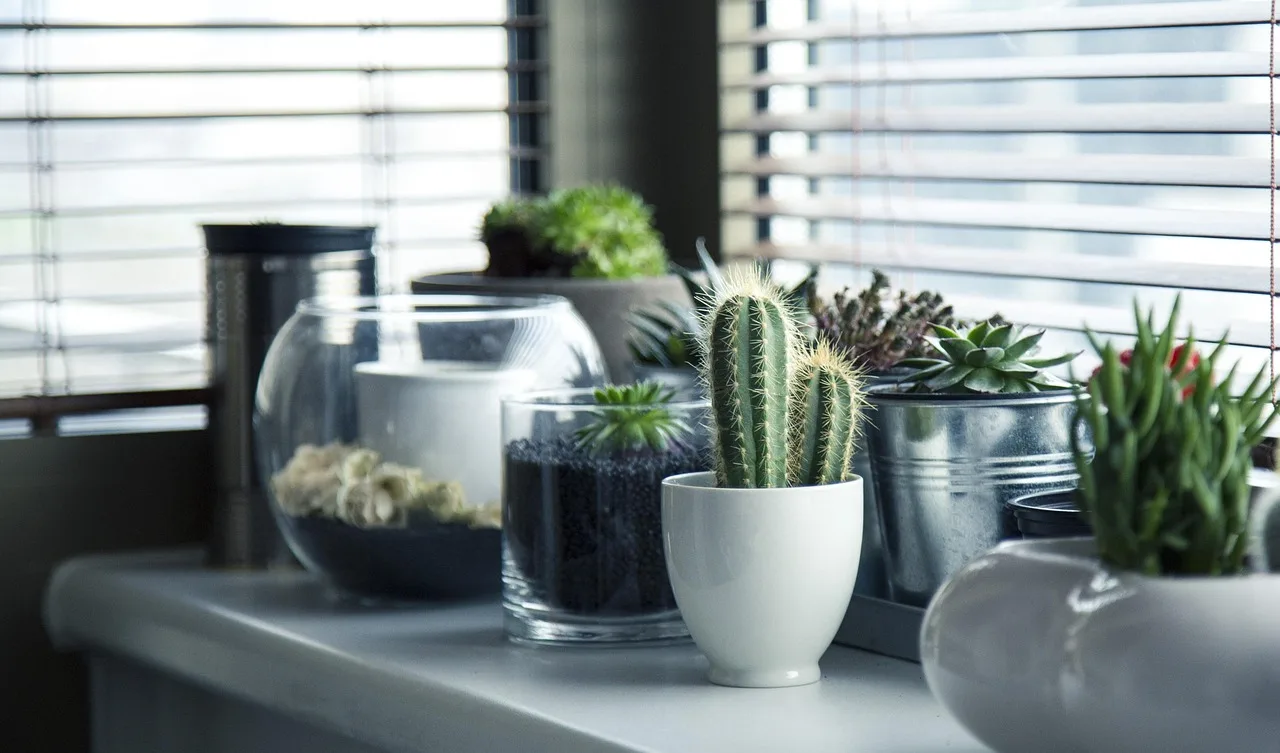
South-facing windows often give the longest and strongest exposure. They suit succulents, cacti, jade plants, and other sun-tolerant houseplants, especially when the plant sits close to the glass. If the sun is harsh, sheer curtains can soften the beam without moving the plant far from the window.
East- and west-facing windows
East windows bring gentler morning sun, which many houseplants handle well. West windows can be hotter and brighter in the afternoon. Both can work for spider plants, many foliage plants, and some succulents if the plant is close enough to the glass and not blocked by blinds or a deep sill.
North-facing windows and dim rooms
North-facing windows give no direct sun, so they suit plants that accept lower light, though “accept” is the key word. A dim room with a north window may still be too weak for a jade plant. In those spaces, placement near the glass or a grow light often becomes necessary.
Room placement checklist for common home setups
The easiest rule is simple: put the highest-light plants closest to the best window, and push tolerant plants farther back only if needed. A room with one bright window can still support several houseplants if the most demanding ones get the front row and the easier ones take the backup spots.
- Identify the window direction first.
- Check whether curtains, blinds, or film are reducing light.
- Measure the spot with a light meter or phone app if the room seems borderline.
- Place sun-lovers within a few feet of the glass when the window allows it.
- Keep lower-light plants farther back only if growth stays compact.
- Move any plant that stretches, pales, or drops leaves closer to the window.
| Window setup | Good plant-light category | Practical placement |
|---|---|---|
| South-facing window, clear glass | Bright indirect to direct sun | Place sun-lovers on the sill or just beside it; use sheer curtains if leaves scorch. |
| East-facing window | Bright indirect with some morning sun | Use for spider plants, foliage plants, and many medium-light species. |
| West-facing window | Bright indirect to strong afternoon sun | Best for tougher plants; watch heat in late day. |
| North-facing window | Low to medium light | Keep tolerant plants near the glass; avoid sun-demanding succulents. |
| Room with blinds, film, or distant shelf | Low light to very low light | Move plants closer to the window or add a grow light. |
How much light do spider plants, snake plants, and jade plants need?
These three plants sit at different points on the light tolerance scale. Spider plants want bright indirect light to stay full, snake plants handle lower light better, and jade plants need the strongest light of the three. When window space is limited, give the brightest spot to the jade plant first.
Spider plant placement priorities
Spider plants do well near an east or bright north window, or a few feet back from a brighter window with filtered sun. If the plant grows thin and the leaves lose their arch, it likely needs more light. Keep it closer to the glass before assuming the watering routine is the issue.
Snake plant placement priorities
Snake plants tolerate lower light better than many houseplants, but they still grow more steadily with stronger exposure. A north window may keep one alive, yet growth can slow to a crawl. If the plant should divide, bulk up, or push new leaves, move it nearer to brighter indirect light.
Jade plant placement priorities
Jade plants generally do best in very bright light and often a sunny window. They usually want the brightest window available, often south-facing, and they do poorly when shoved into dim corners. A jade plant that stretches or opens space between leaves is asking for more light fast. For this species, a sill is often better than a shelf.
| Plant | Placement priority | Best starting spot |
|---|---|---|
| Spider plant | Medium-high light | East window or bright spot near a south window with filtered sun |
| Snake plant | Low to medium light tolerance | Near a north or east window, closer if growth is slow |
| Jade plant | Highest light demand of the three | South window or brightest direct-sun spot available |
Should I use a grow light for houseplants?
Use a grow light when the best natural spot is still too dim for the plant you want to keep. Supplemental light is worth it for windowless rooms, deep shelves, winter shortages, or collections with sun-loving species. It lets a plant sit anywhere in the home, though it adds cost and visual clutter.
When natural light is enough
If a plant stays compact, keeps color, and makes normal new growth, natural light is probably enough. Many foliage plants can live happily near a good window without extra equipment. The key is matching the plant to the spot instead of forcing a dim room to do the work of a bright one.
When supplemental light becomes the better choice
When a plant is set well back from a small window or in a room with blocked glass, natural light can drop below what active growth needs. In those cases, a clip-on grow light can be easier than rearranging the room. It is especially useful for jade plants and winter propagation.
How to place a grow light without crowding the plant
Keep the light close enough to be useful, but leave space for airflow and future growth. A lamp clipped above a shelf or mounted over a plant stand often works better than a faraway floor lamp. The goal is to replace missing window light, not to heat the plant or press it into a corner.
Frequently asked questions
how much light do indoor plants need
Most indoor plants need brighter light than a room that feels comfortable to people. A useful target is bright indirect light near a window, with low-light species taking weaker exposure and sun-lovers needing direct sun. The best guide is the plant’s growth: compact growth means the light is close to right.
do indoor house plants need sunlight
Many do, but not all need direct sun. Some houseplants manage with bright indirect light, while sun-loving types such as jade plants need stronger exposure to stay compact. A north-facing window may be enough for tolerant plants, but it is often too weak for plants that want real growth.
how far from a window should houseplants be
That depends on the plant and the window. Sun-lovers should sit very close to the glass, while tolerant foliage plants can sit farther back if the room remains bright. Light drops quickly with distance, so a shelf several feet from the window can be a big downgrade.
how do I know if my houseplant is getting enough light
Look for compact growth, steady new leaves, and normal color. If stems stretch, leaves shrink, spacing widens, or the plant leans toward the window, it likely needs more light. A light meter or phone app helps confirm the spot in foot-candles or lux instead of guessing by room brightness.
what is the best window for houseplants
For sun-loving plants, the best window is usually south-facing because it gives a lot of sun throughout the day. East-facing windows are often the safest middle ground for many common houseplants. North-facing windows work for tolerant plants, but they usually do not provide enough light for strong growth.
should I use a grow light for houseplants
Use a grow light when the natural spot is too dim, especially in winter or in rooms with blocked windows. It is the better choice for high-light plants kept away from glass. For plants already thriving near a window, a grow light is optional, not required.