How to Care for Houseplants in Summer Heat
Move heat-stressed houseplants out of direct afternoon sun, improve airflow, and water only when the top 1 to 2 inches of mix are dry. Skip those steps, and leaves can scorch, roots can suffocate, and a plant can slide from stressed to failing fast. This guide shows you how to diagnose heat stress, then adjust light, airflow, watering, and humidity in the right order.
How do you spot heat stress?


- Checks moisture, pH, and light
- No battery needed
- Compact for indoor and outdoor use
Heat stress usually shows up first in the leaves, but the cause is often in the room, not the plant. Drooping with dry soil points one way; drooping with wet soil points another. The fix changes depending on whether the issue is too much sun, too little airflow, or poor drainage, so start with diagnosis.
What you need
- Finger or a moisture meter for a top-inch soil check
- Watering can
- Pot with drainage holes
- Tray, pebble tray, or humidifier
- Optional fan set to low and indirect
- Sticky note or phone reminder for a 7-day check-in
Summer houseplant heat triage table
Use this table to match the symptom to the next step. Focus on the first 24 hours, then watch the plant over the next 7 days. Use the severity flag to decide whether to act now or monitor closely.
| Symptom | Likely cause | Plant-type modifiers | Pot-material effect | Severity | Immediate action in the next 24 hours | What to monitor over the next 7 days |
|---|---|---|---|---|---|---|
| Drooping | Heat stress, underwatering, or roots staying wet too long | Succulents usually droop from dehydration or root trouble; aroids often rebound after shade and watering; ferns may wilt faster in dry air | Terracotta dries faster and can intensify drought stress; plastic holds moisture longer and can mask overwatering | Urgent if the mix is hot and dry or the plant is collapsing; watchful if the plant perks up after evening cooling | Move the plant out of direct afternoon sun; check soil 1 to 2 inches down; water only if that layer is dry and the pot feels light | Leaves should firm up by morning; if droop worsens after watering, check drainage and root health |
| Crispy edges | Leaf scorch from strong sun, hot glass, or dry air | Succulents can sun-stress at a window; aroids often show bleached patches; ferns brown fast when air is dry | Terracotta can amplify drying at the root zone; plastic may reduce rapid moisture loss but does not prevent scorch | Urgent if damage is spreading on the sun-facing side; watchful if only older leaves are affected | Shift the plant back from the window; keep light bright but indirect; raise humidity only if the room is very dry | Watch for fresh edge damage or bleaching on the sun-facing side |
| Yellowing | Stress from excess water, poor drainage, or heat plus low light | Succulents yellow from overwatering more often than heat; aroids may yellow after soggy roots; ferns yellow if the root ball dries unevenly | Plastic pots can hold moisture longer; terracotta may reduce rot risk but can still trap water inside a cachepot | Urgent if multiple leaves yellow after watering; watchful if an older lower leaf is aging out | Pause watering if soil is still moist; check for water trapped in a cachepot | Look for new yellowing versus old leaves aging out; soil should dry a bit between waterings |
| Curling leaves | Dry air, heat, or sudden sun exposure | Succulents curl to conserve water; aroids often curl before drooping; ferns curl and crisp when humidity is too low | Terracotta may speed drying; plastic can reduce rapid swing but still needs drainage | Urgent if curling comes with bleaching or limp stems; watchful if the plant is otherwise firm | Move to bright indirect light and away from vents; group plants or use a humidifier if the air is dry | Check whether new leaves open flatter and whether the plant stops curling by midday |
| Soil dries too fast or stays wet too long | Pot size, pot material, root fill, or poor drainage | Succulents want faster dry-down; aroids prefer even moisture; ferns need steadier moisture without sitting wet | Terracotta dries quickly; plastic dries slowly; oversized pots stay wet longest and can worsen summer stress | Urgent if roots stay soggy for days; watchful if the plant is rootbound and drying too fast | Confirm drainage holes; empty any standing water; if the mix is bone-dry within a day, increase shade or switch to a larger pot when roots are crowded | Watering frequency should change with heat, but the mix should still move from moist to dry in a reasonable cycle, not swing from soggy to dust |
How do you spot heat stress?
Start with the leaves, then check the soil and the pot. Drooping, crisp edges, yellowing, or curling can all point to heat stress, but the next step depends on whether the root zone is dry or wet. Cornell Cooperative Extension and other extension programs recommend checking moisture before watering, because the same symptom can come from too much water as easily as too little.
Drooping leaves versus dry soil
Check the top inch of mix with a finger, then lift the pot. If the mix is dry at the top and the pot feels noticeably light, the plant may need water. If the mix still feels damp, drooping is more likely a response to heat, low oxygen at the roots, or too much sun on the foliage.
Crispy edges and leaf scorch
Crispy edges usually point to leaf scorch, especially on plants pressed close to a south- or west-facing window. Morning sun may be fine for many species, but direct afternoon sun can overheat the leaf surface fast. Move the plant back from the glass or filter the light before you water more.
Yellowing and curled leaves
Yellowing can follow overwatering, while curling often tracks dry air or sudden light change. Both can happen during the same heat wave. If the plant sits in a cachepot, empty any water that collects after watering so the roots are not left in a wet sleeve.
Say a pothos on a west window starts drooping at 4 p.m. and the soil still feels damp at the top. The faster fix is not another drink. Move it 1 to 2 feet back from the glass, then check again the next morning.
How should you adjust light and airflow?
Bright indirect light is the summer default for most indoor tropical species. Start by removing harsh afternoon sun, then correct stale, hot air. The Royal Horticultural Society and university extension guidance both emphasize light reduction and air movement during hot spells, because plants are stressed by heat load as much as by dry soil.
What should you change first?
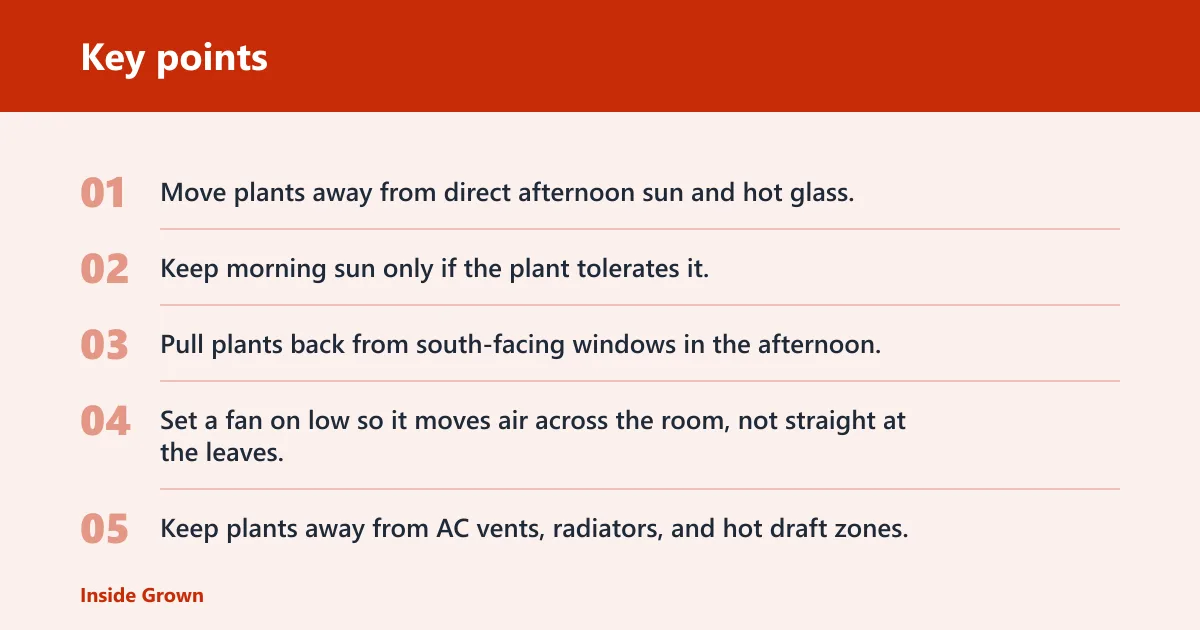
Move plants away from direct afternoon sun and hot glass before you change the watering pattern. If the room is stuffy, use a low fan that moves air across the room rather than directly at the plant. A small placement change often solves more than a watering increase.
- Move plants away from direct afternoon sun and hot glass.
- Keep morning sun only if the plant tolerates it.
- Pull plants back from south-facing windows in the afternoon, west-facing windows during the hottest hours, and east-facing windows if early sun starts to heat the glass.
- Set a fan on low so it moves air across the room, not straight at the leaves.
- Keep plants away from AC vents, radiators, and hot draft zones.
How far from the window should a plant go?
A fan should reduce stale hot air, not blast leaves. A direct stream can dry the pot unevenly and stress foliage. If the room is hot near a window, moving the plant 12 to 24 inches inward can be enough to cut scorch risk without making the room dark.
Use shade-first placement if you are moving a plant within the house. Put it where light is bright but filtered, then adjust a little at a time.
How should you water in summer?
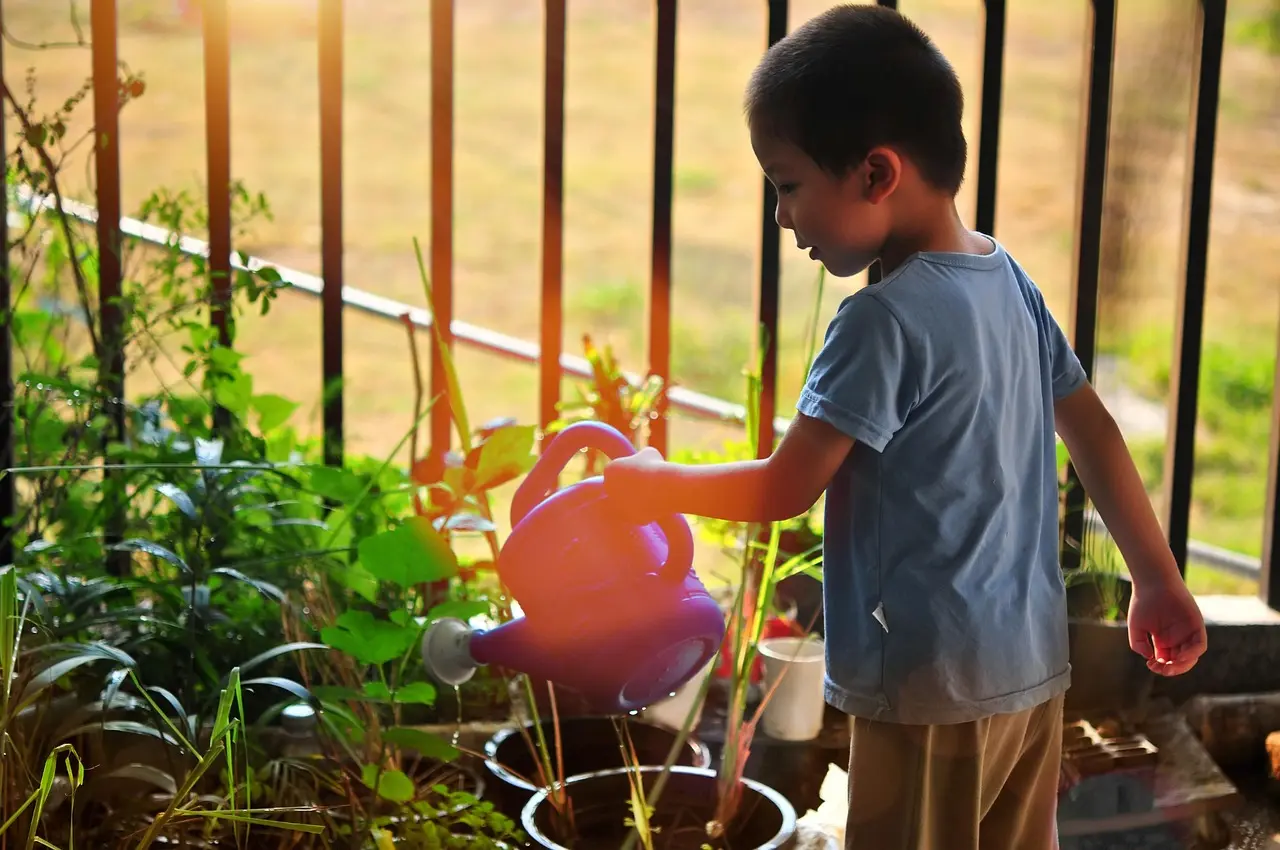
Water more often when temperatures rise, but do not switch to a fixed schedule. Extension services commonly recommend checking the root zone rather than watering by calendar, because pots dry at different speeds depending on light, airflow, pot size, and mix. The goal is moist, not soggy. If the plant is still heavy and cool at the base, wait.
How do you check moisture?
Insert a finger into the mix to the first knuckle, or use a meter if you already rely on one. Then lift the pot. A light pot with dry topsoil usually needs water. A heavy pot with damp soil probably does not, even if the leaves look tired. For many houseplants, the top 1 to 2 inches should dry before the next watering.
How do drainage holes and cachepots affect summer stress?
Drainage holes are important. Without them, excess water can stay around the roots and cause drooping that is often mistaken for thirst. If the plant sits in a cachepot, take the inner pot out after watering and empty any runoff within about 10 minutes. A decorative outer pot is fine only if it never lets roots sit in standing water.
How much water should you add?
Add water until it runs from the drainage holes, then stop and recheck after 5 to 10 minutes. If the mix is bone-dry and repelling water, add about 250 mL, wait 5 minutes, then add another about 250 mL only if the first pour disappears too fast. This prevents dry pockets without leaving the root ball flooded.
Suppose a spider plant in a terracotta pot dries in two days during a heat wave. That may call for more frequent watering, but it can also mean the room is too hot or the plant is rootbound. Check both before you start pouring on a schedule.
How do humidity and airflow help?
Humidity helps most when the room is dry, but it is not a fix for scorch or soggy roots. Botanical gardens and extension programs generally advise improving air movement and avoiding stagnant, steamy conditions around foliage. The goal is steadier leaf function, not a closed, damp bubble around the plant.
When does humidity matter most?
Humidity matters most for thin-leaf plants like ferns, calatheas, and some tropical aroids in dry rooms. Grouping plants together, using a humidifier, or placing them farther from AC can help. A pebble tray may offer a small local boost, but it will not solve heat stress by itself.
How much airflow is enough?
Light airflow is usually enough to prevent stale hot pockets and help the plant use water more evenly. Keep the fan on low and indirect. If leaves flap or the soil dries in streaks, the air is too direct. Good airflow should support the plant, not desiccate it.
Can houseplants go outside for summer?
Some houseplants can spend summer outdoors, but not all should. Plants with sun-tolerant foliage and strong roots can often handle a gradual move to shade or bright filtered light. Tender tropicals, thin-leafed plants, and anything already stressed indoors should stay inside unless conditions are controlled.
How do you acclimate a plant outdoors?
Move it gradually. Start in full shade for 2 to 3 days, then increase exposure over 7 to 14 days. Sudden outdoor sun and wind can dry leaves and soil at the same time, so the transition matters more than the destination. The Clemson Home and Garden Information Center and other extension programs recommend gradual hardening off for sensitive plants.
- Start in full shade for 2 to 3 days.
- Move the plant to brighter shade for several more days.
- Increase exposure over 7 to 14 days, not overnight.
- Bring the plant back indoors before cold nights arrive.
When should you bring it back inside?
Bring the plant back indoors before weather shifts or the first cool nights. If leaves bleach, curl, or feel papery within a day or two outside, move the plant back inside. A plant that looked fine on an indoor shelf can scorch in a single afternoon outside, especially if it skipped acclimation.
What pot and drainage setup works best?
The right pot setup can prevent summer stress before it starts. Use a pot with drainage holes, a saucer that gets emptied after watering, and an airy mix that drains while still holding some moisture. Avoid oversized pots unless the root ball is already filling the container, because too much extra soil stays wet too long in warm weather.
Should you use a cachepot or saucer?
A saucer is useful if you empty it promptly after watering. A cachepot is fine for display, but the inner pot should not sit in runoff. If a decorative pot has no drainage, treat it as an outer shell only, not the watering container.
When does a too-large pot make summer stress worse?
A pot that is much larger than the root ball holds excess wet mix around the roots. In summer, that slows drying and raises the risk of root stress, especially for aroids and ferns. If the plant is not rootbound, stay close to its current pot size and use a free-draining mix instead of upsizing early.
What mix helps most?
An airy mix reduces compaction and helps oxygen reach the roots. For many houseplants, that means adding ingredients that keep the mix loose rather than dense and muddy. Succulents usually need faster drainage, while ferns and many aroids do better with moisture retention plus air space.
What common mistakes make heat stress worse?
The biggest mistake is treating every wilted plant as thirsty. Heat stress, root stress, and sun scorch can all cause drooping. If the soil is still moist, more water usually makes the problem worse. University extensions routinely caution against fertilizing or repotting heavily stressed plants until they recover.
Why is fertilizer a bad idea during heat stress?
Fertilizer can force growth when the plant is already struggling to manage heat and water loss. During a hot spell, the safer move is to stabilize light, watering, and airflow first. Wait to fertilize until the plant is actively growing again and the soil-moisture pattern is back to normal.
Another common mistake is leaning on a pebble tray as a cure-all. A tray can help a bit in a dry room, but it will not solve scorched leaves or a heat wave next to a west window. Grouping plants, a humidifier, and better placement do more.
If that didn’t work, try this next
- Check the roots by gently sliding the plant from its pot.
- Trim away any black, mushy roots with clean scissors.
- Repot into fresh mix only if the soil stays wet for days or smells sour.
- Move the plant to brighter indirect light while it recovers.
Frequently asked questions
How to keep plants cool in summer
Keep plants out of hot afternoon sun, away from direct fan blasts, and away from AC vents that dry one side of the pot. Move them a foot or two back from bright windows if leaves start to scorch. A low fan across the room can help air move without hot spots.
Can I put houseplants outside for summer?
Yes, for some plants, but move them gradually. Start in full shade, then increase exposure over 7 to 14 days. Bring them back inside before cold nights. Plants already stressed by heat, pests, or dry roots are better left indoors until they recover.
How to care for indoor house plants
Give them bright indirect light, a pot with drainage holes, and water only after a soil check. In summer, rooms heat up fast near south- and west-facing windows, so placement matters more than usual. If the air is dry, use grouping, a pebble tray, or a humidifier.
How to care for houseplants in winter
Winter care flips the priorities a bit. Light is weaker, growth slows, and water use drops. Keep plants away from cold window glass and heating vents, and water less often, still based on soil dryness rather than a calendar. Humidity can still help in heated rooms.
How to care for heather plants
Heather plants are not the same care category as most indoor tropical houseplants. They generally want cooler conditions, brighter light, and acidic, well-drained soil. If you are growing heather, use a separate care guide rather than the summer houseplant routine above.
Sources
- University of Minnesota Extension. “Houseplant watering.” https://extension.umn.edu/houseplants/houseplant-watering
- Cornell Cooperative Extension. “Watering Houseplants.” https://gardening.cals.cornell.edu/houseplants/watering-houseplants/
- Royal Horticultural Society. “Watering houseplants.” https://www.rhs.org.uk/plants/houseplants/watering-houseplants
- Clemson Home & Garden Information Center. “Hardening Off Plants.” https://hgic.clemson.edu/factsheet/hardening-off-plants/
- University of Illinois Extension. “Houseplants.” https://extension.illinois.edu/houseplants
What should you avoid?
- Mistaking wilt for underwatering when the root zone is still wet
- Using a fixed watering schedule instead of checking soil first
- Putting plants in direct fan or vent airflow
- Leaving plants in hot afternoon sun near glass
- Using fertilizer to push growth during stress