How to Care for Houseplants in Winter
For how to care for houseplants in winter, fix light first, then watering, then humidity and temperature. Most cold-season problems come from too little light and too much water. Get that order wrong, and you can cause yellow leaves, root rot, or leaf drop while trying to “help.” This guide gives a simple winter triage routine and the fastest adjustments for common houseplant problems.
What changes for houseplants in winter?

Winter means less light, drier indoor air, and slower growth. That shift changes every other decision: plants use water more slowly, fertilizer matters less, and problems that look like thirst may actually be cold stress, low light, or root trouble.
Start with light, then water
Light is the first thing to correct because winter sun sits lower and many rooms lose usable brightness. Heated homes can also drop to 10 to 20% humidity in winter, while many houseplants prefer humidity closer to 50%. Slower growth means less water and fewer nutrients are used.
Houseplant winter triage table
| Symptom | Likely winter cause | First fix | What to avoid | Most sensitive plant groups |
|---|---|---|---|---|
| Crispy tips | Dry air from heating, sometimes salt buildup | Raise humidity with a humidifier or grouping, then flush the pot if salts are suspected | Watering on a fixed schedule without checking soil | Tropical foliage plants, prayer plants, calatheas |
| Yellow lower leaves | Overwatering, slow winter growth, poor drainage | Check the top 1 to 2 inches of soil before watering; let the mix dry a little more between waterings | Adding more water because the plant looks weak | Ficus, pothos, philodendron, peace lily |
| Leggy growth | Too little light | Move closer to a brighter window or add a grow light | Feeding to force growth in low light | Most foliage houseplants, especially vining types |
| Drooping | Either dry soil or cold stress | Check soil first, then move the pot away from drafts and cold glass | Watering again before checking the root zone | Peace lily, coleus, tropical foliage plants |
| Leaf drop | Light change, cold drafts, overwatering | Improve light exposure and stabilize temperature | Turning the plant, watering, and fertilizing all at once | Ficus, citrus, schefflera |
| Fungus gnats | Wet potting mix | Let the surface dry more, reduce watering, use sticky traps | Keeping the mix damp to “support” the plant | Moisture-loving tropicals, seedlings, some aroids |
| Spider webbing or speckled leaves | Spider mites in dry indoor air | Inspect leaf undersides, rinse foliage, use insecticidal soap if needed | Only misting and hoping the issue clears | Spider plants, palms, hoyas, many tropical foliage plants |
| Dull leaves | Dust buildup blocking light | Wipe with a damp cloth or use a soft brush on fuzzy leaves | Using oily leaf shine products | Broadleaf foliage plants |
| Soft, yellowing stems or soil that stays wet | Overwatering and slow winter uptake | Pause watering, improve drainage, and check roots if decline continues | Adding fertilizer or more frequent water | Succulents, cacti, ZZ plant, snake plant |
| Brown edges after a move | Cold window glass or a nearby vent | Shift the pot a little farther from the glass or airflow | Leaving leaves pressed to cold panes | Winter bloomers, tender tropicals |
| New leaves stay small | Low light plus low nutrients after the growth slowdown | Improve light first, then wait for active spring growth before feeding | Routine winter feeding | Fast-growing foliage plants |
Say your peace lily is parked beside a drafty entryway and the leaf edges turn brown after a cold snap. The first move is not fertilizer. Move it closer to brighter winter light, then check the soil depth before watering again.
How much light do houseplants need in winter?
Winter light is weaker and the sun angle changes, so many plants need a brighter spot than they used in summer. South- or west-facing windows are often among the brightest spots in winter. If natural light is still low, add a grow light and rotate plants about every 1 to 2 weeks.
Use the window that gives the best winter sun
In northern-hemisphere homes, south-facing windows are often the strongest option, with west-facing windows next best for afternoon light. A move to a different window may be needed as the sun angle changes. Sheer curtains can soften harsh direct exposure without blocking too much brightness.
Move plants closer, but protect leaves
Put plants nearer to the glass in winter if the room is dim, but keep leaves from touching cold window panes. Cold glass can damage tender tissue. For sun-sensitive plants, a little distance plus a brighter window often works better than full exposure against the pane.
Rotate on a simple schedule
Quarter-turns every 1 to 2 weeks help prevent plants from leaning toward one side of the window. This matters most when light comes from one direction only. If a plant still stretches after that, the room probably needs a grow light.
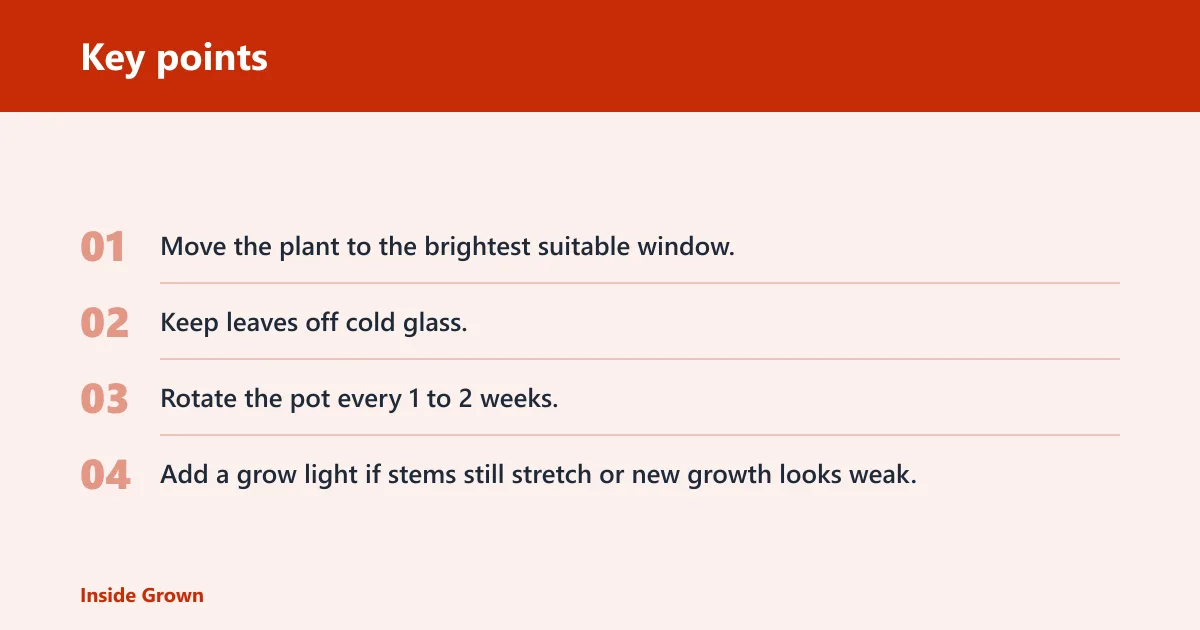
- Move the plant to the brightest suitable window.
- Keep leaves off cold glass.
- Rotate the pot every 1 to 2 weeks.
- Add a grow light if stems still stretch or new growth looks weak.
How often should you water houseplants in winter?
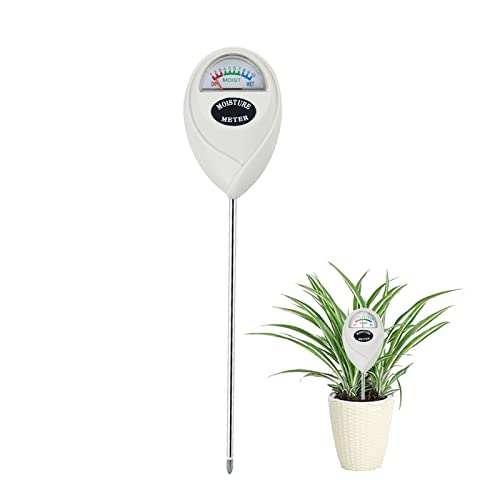
Water based on the soil, not the calendar. Check the top 1 to 2 inches of soil before watering, then water thoroughly until drainage holes run out and empty saucers afterward. Because growth slows, many houseplants need less water in winter than in summer.
Tell overwatering from underwatering
Both problems can cause drooping, which is why the soil check matters. Underwatered plants usually have dry soil, limp leaves, and a pot that feels light. Overwatered plants often have soil that stays wet, yellow lower leaves, and soft growth. In winter, overwatering is the bigger seasonal risk.
A common first-timer mistake is watering a drooping plant immediately and then discovering the potting mix was still wet two inches down. The safer sequence is to check soil first, then decide whether the plant needs water, warmth, or more light.
Water thoroughly, then drain fully
When the mix is dry enough, water at room temperature until excess runs from the drainage holes. Then empty the saucer. Cold water can shock roots, and standing water keeps the root zone too wet for a plant that is already growing more slowly.
Plant type matters
Tropical foliage plants usually need more regular checks because they keep some active growth under indoor light. Succulents and cacti want a drier cycle and often need much less water. Winter bloomers may stay a little more active, but they still should not sit in soggy mix.
Winter humidity for houseplants
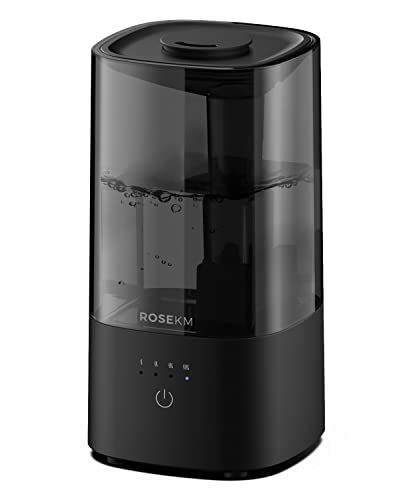
Many houseplants do well around 40 to 50% humidity, but heated homes can fall to 10 to 20% in winter. If the air is very dry, leaves can crisp, buds can stall, and spider mites become more likely. A humidifier is the most reliable fix.
Choose the right humidity tool
A pebble tray can help nearby plants. Use 1 inch of pebbles and 1/2 inch of water, then set the pot above the waterline. Grouping plants together also raises local humidity a bit. These methods help most when the room is only moderately dry.
Misting has limits
Misting gives only a brief bump in humidity and can leave foliage wet without changing the room much. That tradeoff matters for plants prone to leaf spots or fungal trouble. If you mist, treat it as a small extra step, not the main fix.
Match the fix to the plant
Tropical foliage plants, ferns, and calatheas tend to show dry-air stress sooner than succulents. Fuzzy-leaved plants should not be soaked with water because wet hairs can hold moisture and dirt. For those, a humidifier and plant grouping are cleaner options than frequent spray.
How do you keep houseplants warm indoors?
Most houseplants prefer 65° to 75°F during the day and 55° to 65°F at night. Keep them away from drafts, cold glass, radiators, and vents. Temperature problems often look like water problems, so check placement before you change the watering routine.
Watch the window and the heating source
Cold glass can chill roots and leaves, especially at night. Radiators and vents can dry the air fast and cause uneven temperature swings. If a plant sits near either, move it a little farther into the room while keeping the light level strong.
When should you move houseplants away from a cold window?
Move them when leaves touch the glass, the sill feels cold enough to chill the pot, or the plant begins to drop leaves after cold nights. A thin sheer curtain can help if the window gives strong light but the glass is too cold for direct contact.
Use plant type to guide placement
Most tropical foliage plants dislike cold drafts and sudden drops. Cacti and succulents can usually tolerate slightly cooler nights, around 55 to 60°F, if the soil stays dry enough. Winter bloomers often need bright light and stable temperatures more than extra water.
Winter feeding, dust, and pests
Most houseplants should not be fertilized in winter because growth slows and they use fewer nutrients. Resume feeding when new spring growth starts. Clean leaves, though, because dusty surfaces can clog pores and reduce a plant’s light use, which matters when daylight is already limited.
Skip fertilizer unless growth is active
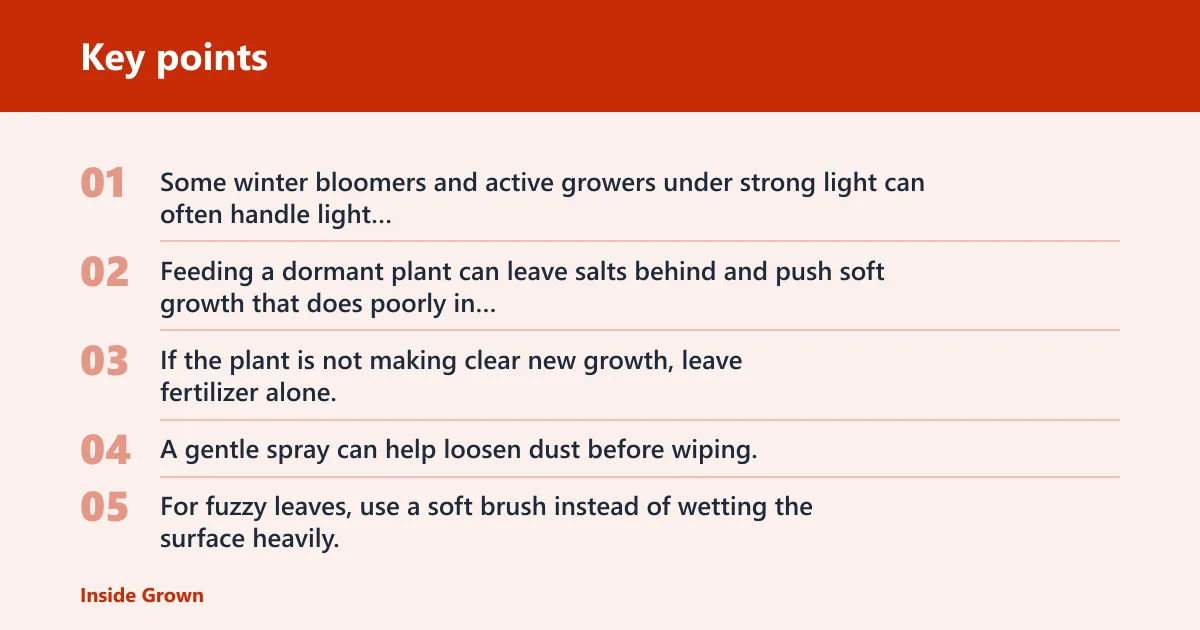
Some winter bloomers and active growers under strong light can often handle light feeding, but most foliage plants should wait. Feeding a dormant plant can leave salts behind and push soft growth that does poorly in low light. If the plant is not making clear new growth, leave fertilizer alone.
Clean dusty leaves so they can work
Use a damp cloth on broad, smooth leaves. A gentle spray can help loosen dust before wiping. For fuzzy leaves, use a soft brush instead of wetting the surface heavily. Keep leaf shine products out of the routine; they can interfere with normal leaf function.
Check for winter pests
Dry indoor air favors spider mites, while fungus gnats usually point to wet potting mix. Inspect leaf undersides for fine speckling, webbing, or tiny moving dots. Check the soil surface for small black gnats. Sticky traps help with adult gnats, and insecticidal soap is common for spider mites.
Picture a spider plant on a bright shelf above a heating vent. Its leaves start to look dull and a few tips brown. The first move is to shift it away from the vent, give it bright indirect light, and reduce water until the top 1 to 2 inches dry again.
Frequently asked questions
How best to care for house plants in winter?
Start by improving light, because winter sun is weaker and shorter. Then water only when the top 1 to 2 inches of soil are dry, and keep the plant away from drafts, cold glass, and heating vents. Finish by raising humidity if the room is very dry.
Should you feed houseplants in winter?
Most houseplants should not be fertilized in winter because growth slows and nutrient use drops. Pause feeding until spring growth starts again. A few winter bloomers and plants under strong grow lights can be exceptions, but those should still be fed cautiously, not on a routine summer schedule.
How to keep plants warm in winter indoors
Keep plants in the 65° to 75°F daytime range when possible and avoid night chills below the 55° to 65°F range many houseplants prefer. Move pots away from cold glass, radiators, and vents, since those spots create stress that often looks like watering trouble.
How much humidity do houseplants need in winter?
Many houseplants do well around 40 to 50% humidity, but heated homes can fall to 10 to 20% in winter. A humidifier is the most direct fix. Pebble trays and plant grouping can help nearby plants, while misting gives only a brief effect.