Should You Fertilize Houseplants in Winter?
Fertilize houseplants in winter only if they are still actively growing in bright light; otherwise skip it. A common rule of thumb is to use at most half-strength feed for plants under grow lights, winter bloomers, or vigorous tropicals that are still making new growth. Dormant plants do not use fertilizer well, and excess salts can accumulate in the potting mix. For broader winter care context, see Bright natural light, winter indoor care, Winter watering, and Brown leaf tips.
Editorial note: Winter feeding is decided by three things: light, visible growth, and plant type. In practice, that means checking whether the plant is still pushing new leaves, stems, or flowers under a bright window or grow light before deciding to feed.
Author: Edited by a horticulture-focused editor using university and botanical garden guidance on dormancy, salt buildup, and leaching.
Winter feeding decision
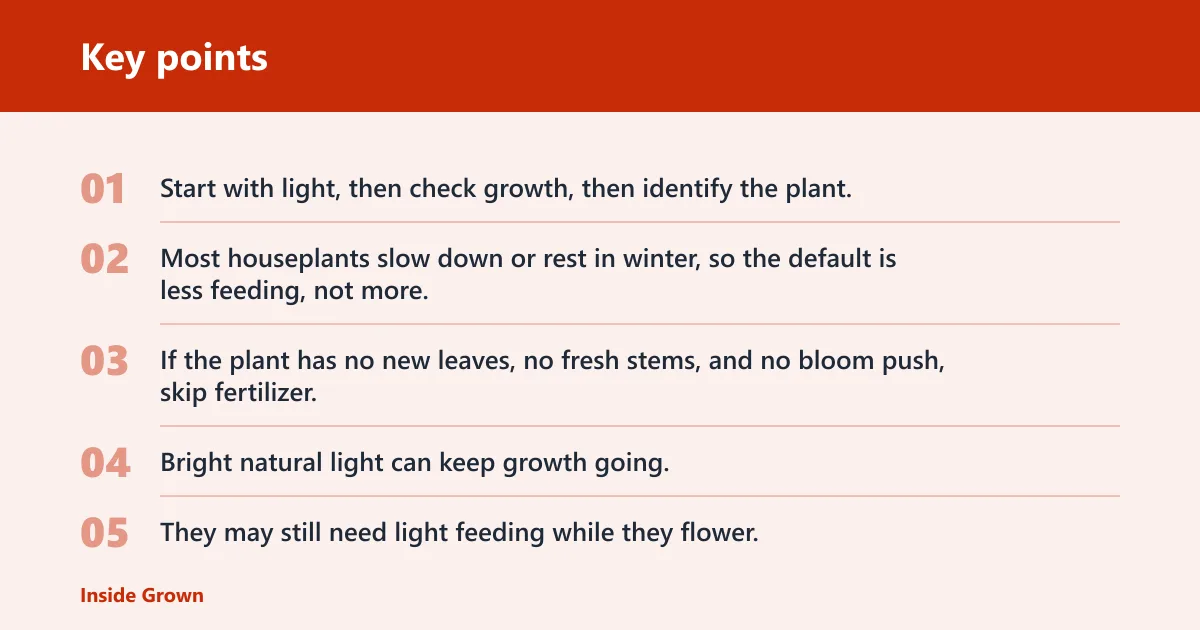
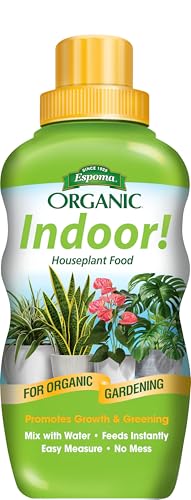

Start with light, then check growth, then identify the plant. Most houseplants slow down or rest in winter, so the default is less feeding, not more. If the plant has no new leaves, no fresh stems, and no bloom push, skip fertilizer.
Bright natural light can keep growth going, and grow lights can keep some plants active even when winter days are short. Winter bloomers are the main exception. They may still need light feeding while they flower. University extensions and botanical gardens consistently note that winter dormancy reduces nutrient use, while active growth under stronger light can justify a lighter feeding plan.
For a deeper light-based decision, the winter indoor care guide explains how room temperature, daylight, and plant activity work together.
Dormant, low-light plants
If the plant sits in a dim room, in a cool corner, or far from a winter window, it is often best not to fertilize. Dormant plants do not use as much energy to grow, so added fertilizer can sit in the potting mix and raise the risk of mineral buildup, fertilizer burn, or root stress. Extension sources and botanical gardens commonly advise pausing feeding during low-light rest periods.
Active growth under bright windows
If you see fresh leaves, stretching stems, or steady bud development near a bright south- or west-facing window, reduced feeding can make sense. The growth signal matters more than the calendar. A plant that is still pushing new tissue can use nutrients, but it usually needs less than in spring. Bright light plus visible growth is the best cue to feed lightly.
Active growth under grow lights
Grow lights change the winter rule. Some plants keep growing under artificial light and a warm, steady indoor setup, so winter feeding can continue at a reduced rate. That still means a lighter dose than the label maximum, not full-strength fertilizer on the usual schedule. Grow-light exceptions are widely recognized in university houseplant guidance because adequate light keeps photosynthesis and nutrient uptake going.
Winter bloomers
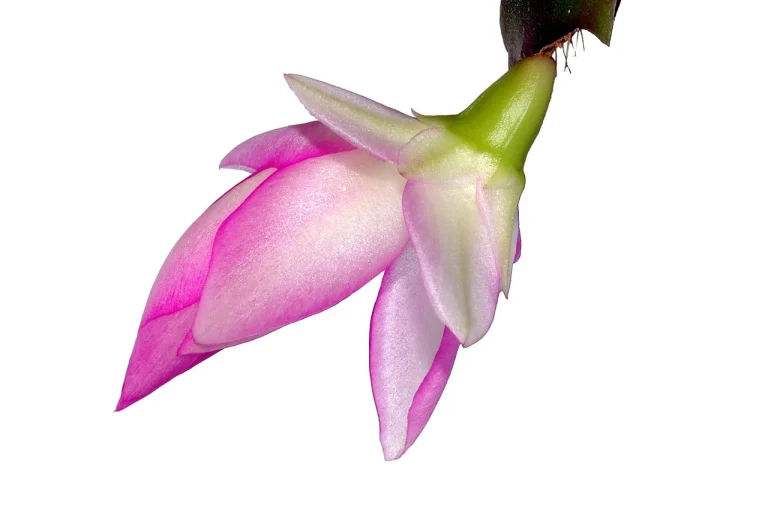
Winter-blooming houseplants are the clearest exception. Orchids, amaryllis, indoor cyclamen, and Christmas cactus can still need food while they flower. Feed lightly, because flowering plants are active but still more vulnerable to excess salts when watering slows in winter. Botanical garden and extension recommendations typically pair flowering exceptions with lower concentrations and less frequent feeding.
Should you fertilize houseplants in winter?
Usually no, unless the plant is clearly active and getting enough light. Winter light is weaker and shorter, so many houseplants slow down or rest. When nutrient uptake drops, fertilizer can build up in the soil instead of being used, which raises the chance of burned roots and stressed foliage. That is why winter feeding should follow growth, not the date alone.
The short answer
Skip fertilizer for dormant plants. Feed lightly only when the plant is still making new growth, flowering, or growing under strong artificial light. That is the simplest winter rule, and it fits most indoor setups better than a fixed monthly feeding schedule. A reliable indoor rule is to wait for visible new growth before restarting regular feedings.
Why winter light changes the rule
Light drives growth. Less winter daylight usually means slower photosynthesis, slower water use, and slower nutrient uptake. If the plant is barely growing, fertilizer does not help much and may hurt. That is why winter feeding decisions should start with the window, the grow light, or the bloom cycle.
What counts as active growth
Look for more than a calendar date. New leaves, fresh stems, elongating shoots, and open flowers all count. A plant that has stayed the same size for weeks is usually resting. A plant that is expanding, even slowly, is more likely to use a reduced winter dose.
How light changes the answer
Light is the main factor behind winter feeding decisions. Natural light and grow lights are not the same, and they should not be treated the same. Bright windows may support some growth, but a dark room usually does not justify fertilizer.
Natural light in winter
Winter daylight is reduced, even at a bright window. A plant that sits close to the glass may still get enough light to keep growing, but a plant a few feet back often will not. If the plant is not producing new growth, fertilizer can wait.
When grow lights change the plan
Grow lights can keep some houseplants actively growing when winter light is too weak. In that setup, feeding in winter is reasonable at a reduced dose. Treat the light source as a growth signal only if the plant is actually responding with new leaves, fresh stems, or flowers.
Cool rooms and slower uptake
Cooler rooms slow plant activity further. Lower temperature plus lower light means slower nutrient use, so fertilizer stays in the pot longer. Watering usually slows too, and that matters because wet soil with fertilizer in it increases root stress risk.
Which plants should stay unfed?
Do not fertilize houseplants that are dormant in low light, have no new growth, or are showing stress from winter conditions. These plants are conserving energy, and fertilizer is more likely to accumulate than to help. The safest move is to wait for new growth.
Dormant plants in low light
Ferns in a dim hallway, a pothos parked far from the window, or a peace lily in a cool room usually should not be fed. These plants may stay alive, but they are not actively building enough new tissue to justify fertilizer.
Plants with no new growth
No new leaves means no clear sign to resume feeding. That is true even if the plant looks healthy otherwise. Dormancy is often quiet. The plant may look unchanged for weeks because it is resting, not because it needs fertilizer.
Signs feeding should wait
Wait if the pot stays wet for a long time, leaves stop pushing, or the plant looks slower than usual. Yellowing from overwatering, brown leaf tips, and limp growth can all get worse if fertilizer is added on top of winter stress. Reduce watering first, then reassess light and growth.
Which plants can still get fertilizer?
Winter bloomers and plants under strong artificial light are the main candidates for winter feeding. These plants are still using energy, so a reduced dose can be justified. Keep the dose lighter than usual and let visible growth guide the schedule.
Winter-blooming orchids and cyclamen
Winter-blooming orchids may be fertilized as an exception, and indoor cyclamen are also named as winter feeders. These plants are active during bloom, but they still need a cautious hand. Use weak fertilizer and stop if flowering slows and fresh growth does not continue.
Amaryllis and Christmas cactus
Amaryllis are another winter-feeding exception. Christmas cactus also still requires feeding in winter while it flowers or sets new growth. Both plants can benefit from a light winter dose if they are actively moving through bloom, not merely sitting after the show is over.
Plants under strong artificial light
Houseplants under artificial lights should be fertilized in winter too, if they are actively growing. That does not mean full-strength feeding. It means a lighter schedule that matches the plant’s slower pace and the lower water use that usually comes with winter indoor care.
Say your pothos sits two feet from a bright north window and has not made a new leaf in six weeks. Skip fertilizer and let the pot dry a bit more between waterings. Now move that same plant under a grow light and watch for fresh leaves; only then does a reduced feed become reasonable.
How much fertilizer to use
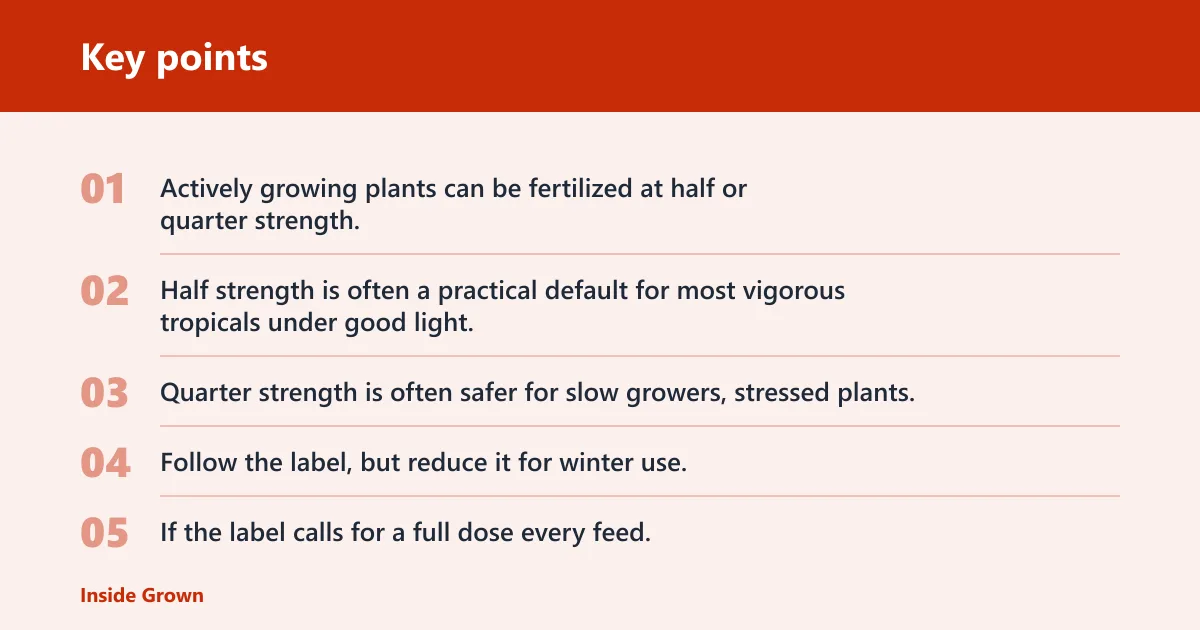
If you feed in winter, cut back. Half strength is the common starting point, and quarter strength can be better for sensitive plants or for growth that is only barely active. The label is the ceiling, not the target. Stronger winter feeding adds risk without much payoff.
Half strength versus quarter strength
Actively growing plants can be fertilized at half or quarter strength. Half strength is often a practical default for most vigorous tropicals under good light. Quarter strength is often safer for slow growers, stressed plants, or species that bloom in winter but do not need much food.
Reading label directions for winter
Follow the label, but reduce it for winter use. If the label calls for a full dose every feed, winter feeding should still stay below that rate. A better rule than a fixed calendar cutoff is to stop when growth slows in fall, then resume only when brighter light and fresh growth return in late winter or spring.
How watering and feeding should change together
Fertilizer and water move together. Winter watering is usually less frequent because growth slows, and feeding should slow with it. Do not fertilize a pot that is staying wet for too long. Wet soil plus fertilizer increases the chance of root injury and salt buildup.
Suppose a snake plant in a cool bedroom gets a half-strength dose while the soil is still damp from last week. That is a bad setup. The plant is using little water, the fertilizer lingers, and the root zone is more likely to collect salts than to turn that feed into growth.
Winter feeding table
| Plant condition | Light level | Whether to fertilize | Recommended dose |
|---|---|---|---|
| Dormant in low light | Dim winter window or room light only | No | Skip fertilizer until new growth starts |
| Actively growing under bright natural light | Bright window with clear new leaves or stems | Yes, if growth is steady | Half strength; quarter strength for sensitive plants |
| Actively growing under grow lights | Strong artificial light with warm, stable conditions | Yes | Half strength every 4 to 6 weeks, or quarter strength for slower growers |
| Winter bloomers | Bright light during flowering | Yes, while blooming | Light feed at half strength or weaker |
What happens if you overfertilize?
Winter overfertilizing usually shows up as salt stress first. You may see yellowing, wilting, or brown tips, and the potting mix may hold excess minerals. The right response is to stop feeding at once, then remove the buildup with clean water. Extension services commonly recommend leaching the container to move excess fertilizer salts out of the root zone.
Symptoms to watch
Brown leaf tips, leaf edge scorch, sudden wilting in moist soil, and a crusty white film on the mix can all point to fertilizer salts. The symptoms can overlap with watering problems, so look at the whole pot, not just one leaf. University and botanical garden guidance also notes that salt injury can resemble drought stress or root damage.
What to do first
Stop fertilizing immediately. Then flush the potting mix with clean water to wash out built-up salts. Let water run through the container, and repeat the leaching if the pot was heavily overfed. Do not add more fertilizer until the plant is pushing new growth again. For a fuller watering reset, see Winter watering.
Practical recovery steps
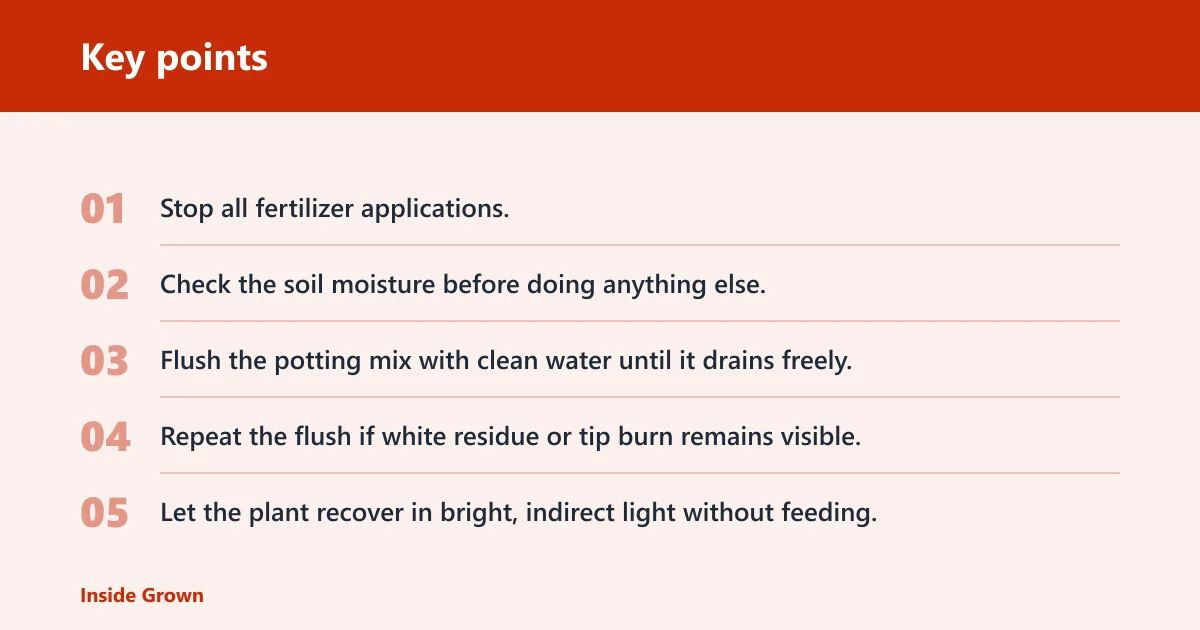
- Stop all fertilizer applications.
- Check the soil moisture before doing anything else.
- Flush the potting mix with clean water until it drains freely.
- Repeat the flush if white residue or tip burn remains visible.
- Let the plant recover in bright, indirect light without feeding.
- Resume only when new growth appears and watering needs increase.
Error recovery box
| Symptom | Likely issue | Action |
|---|---|---|
| Leaves yellow and the soil stays wet | Too much water, fertilizer paused too soon, or roots under stress | Hold fertilizer and reduce watering first |
| Tips turn brown or crispy after a recent feed | Fertilizer salts are building up | Flush the mix with clean water |
| The plant wilts despite damp soil | Possible fertilizer burn or root injury | Leach the pot before feeding again |
Frequently asked questions
Can I fertilize in the winter?
Yes, but only for plants that are clearly active. Winter bloomers, grow-light plants, and vigorous tropicals can take a reduced dose. Dormant plants should not be fertilized because they use fewer nutrients and are more likely to suffer salt buildup or root burn.
Should you feed houseplants in winter?
Feed only when the plant is showing new growth, flowering, or steady activity under strong light. Otherwise, skip it. Light level matters more than the date on the calendar, and a quiet plant in a dim room is better left unfed.
When to fertilize houseplants?
Resume when new growth appears in late winter or spring, or keep feeding lightly through winter only if the plant stays active. Instead of using a fixed calendar cutoff, wait for brighter light and visible new growth to return. That is a better trigger than a specific date for every home.
What houseplants should not be fertilized in winter?
Do not fertilize dormant plants in low light, plants with no new growth, or plants already stressed by slow-draining wet soil. These are the most likely to build up salts and show fertilizer burn. Wait for visible growth before feeding again.
Which houseplants can still be fertilized in winter?
Winter-blooming orchids, amaryllis, indoor cyclamen, and Christmas cactus are common exceptions. Houseplants under artificial lights can also be fed if they are actively growing. In every case, use a reduced dose and keep an eye on soil moisture so the pot does not stay wet too long.