How to Fertilize Houseplants the Right Way: A Guide
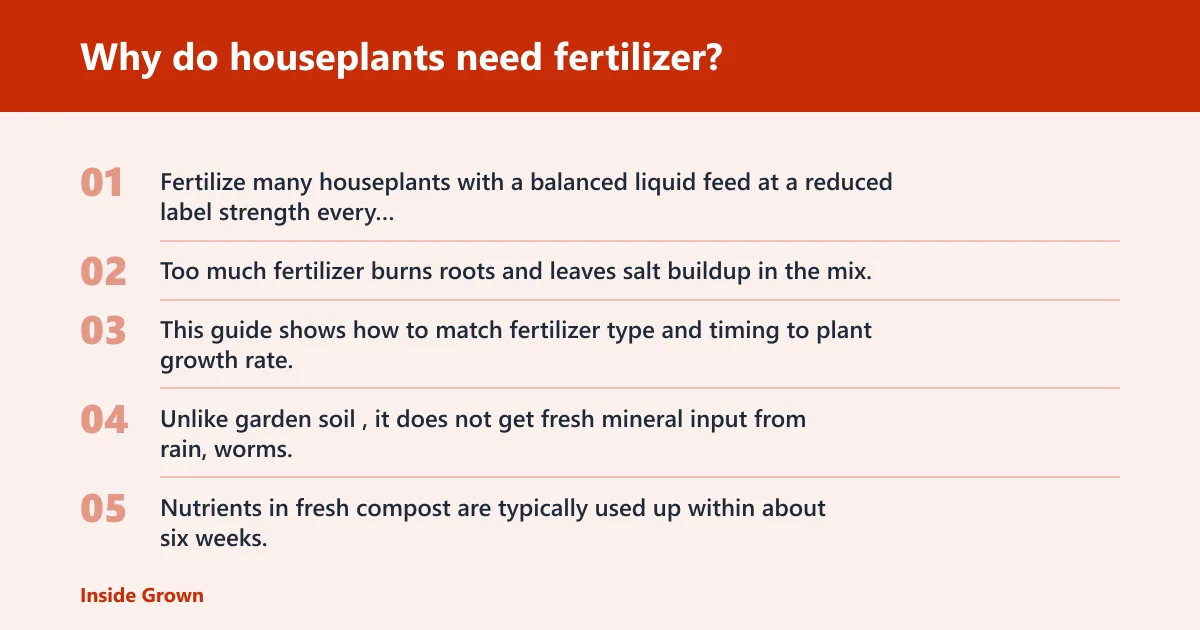
Fertilize many houseplants with a balanced liquid feed at a reduced label strength every few weeks during active growth, then cut back for slower growers and pause feeding for a while after repotting. Too much fertilizer burns roots and leaves salt buildup in the mix. This guide shows how to match fertilizer type and timing to plant growth rate, potting mix age, and pot size.
Why do houseplants need fertilizer?
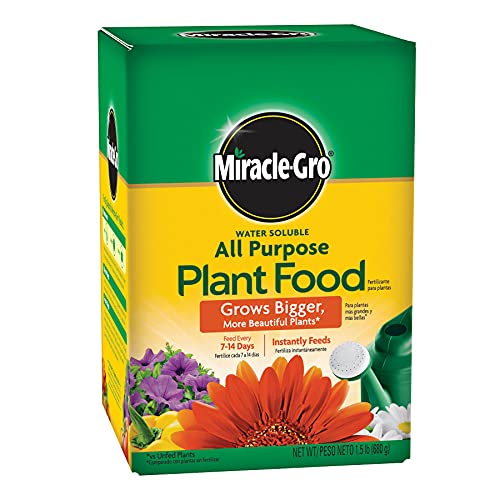

Potting mix can only carry a plant so far
Container mix is a closed system. Unlike garden soil, it does not get fresh mineral input from rain, worms, or decomposing organic matter. Nutrients in fresh compost are typically used up within about six weeks, and regular watering keeps moving soluble nutrients out of the root zone.
That is why a plant can sit in the same pot and still become underfed. Light, watering frequency, and pot size all affect how quickly that happens. Bright light usually speeds growth and nutrient use. Low light slows both, so feeding should slow too.
Watering and growth rate change demand
A fast-growing pothos in bright indirect light may use fertilizer faster than a snake plant in a dim hallway. A plant that gets watered often also loses nutrients faster because water carries dissolved fertilizer through the mix. In a small pot, that happens sooner.
What should you look for on a houseplant fertilizer label?
Read the N-P-K ratio first, then check whether the product is liquid, water-soluble, granular, or slow-release. A balanced label is a safe starting point for many indoor plants, and a roughly balanced ratio may also work well for many houseplants.
What N-P-K means
Nitrogen supports leaf growth, phosphorus supports roots and flowering, and potassium supports general plant function. The ratio printed on fertilizer packaging tells you the relative amounts of each nutrient. It does not mean one product is always better; it means the feed is built for a certain growth pattern.
Balanced, houseplant-specific, and micronutrient formulas
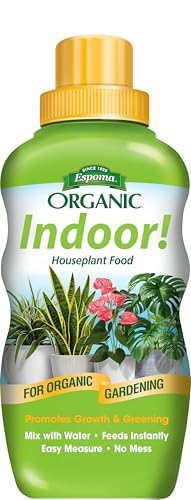
Houseplant-specific labels are useful because they often include micronutrients in addition to N-P-K. Those trace elements matter in containers where the root zone is limited. Use fertilizer labeled for houseplants or indoor plants when you want a simple, indoor-safe starting point. Balanced NPK products are generally safe for many houseplants, especially foliage plants. A balanced fertilizer can work for many foliage plants, while bloomers may benefit from a formula tailored for flowering.
Which fertilizer type works best for your plant?
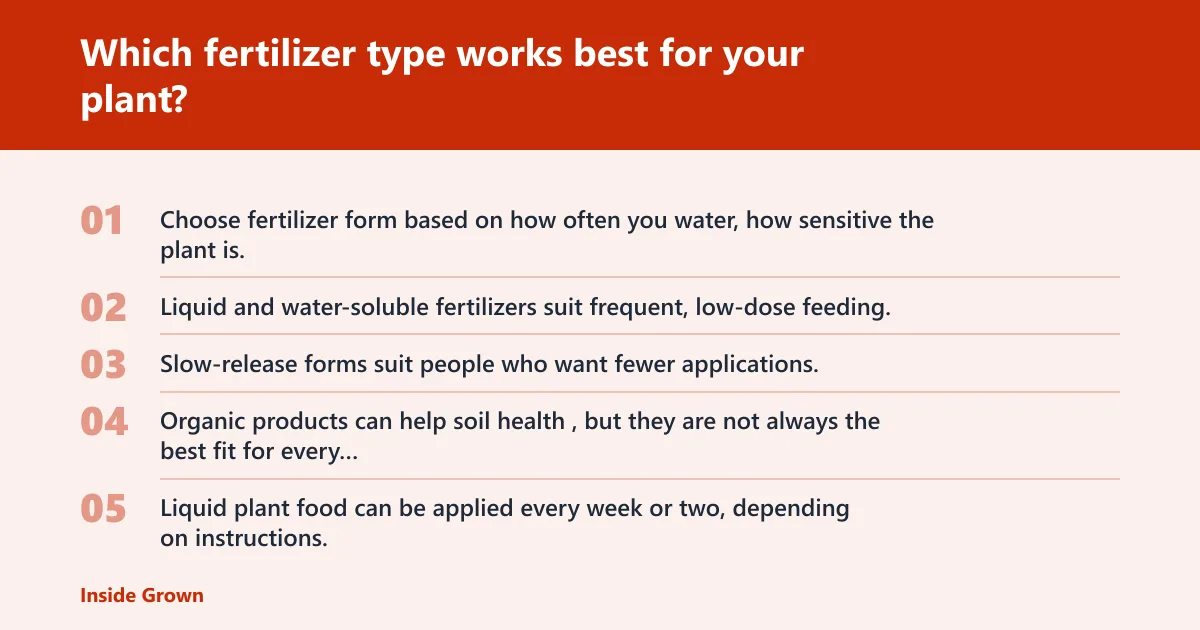
Choose fertilizer form based on how often you water, how sensitive the plant is, and how much control you want. Liquid and water-soluble fertilizers suit frequent, low-dose feeding. Slow-release forms suit people who want fewer applications. Organic products can help soil health, but they are not always the best fit for every indoor setup.
Liquid and water-soluble fertilizers
Liquid plant food can be applied every week or two, depending on instructions, and it is often applied every 1 to 2 weeks. It mixes with a watering can, so it is easy to dilute to ¼ to ½ strength. That makes it a good default for most houseplants.
Water-soluble products work the same way once mixed. They fit a routine where you want to feed lightly and often instead of giving one strong dose.
Granular and slow-release options
Slow-release fertilizers can be pellets, granules, or spikes. Fertilizer stakes are buried in soil and release plant food gradually over time, while controlled-release products can last for several months. Granular fertilizers may need reapplication after 4 to 6 weeks.
These products reduce guesswork, but they also reduce control. That matters for orchids, succulents, and plants that react quickly to excess salts.
Organic versus synthetic choices
Organic fertilizers like fish emulsion or seaweed can improve soil health over time. They can still burn roots if overused, and they do not erase the need to dilute and time applications carefully. Synthetic fertilizers are more predictable, which is useful for indoor plants in small pots.
For routine houseplant care, consistency matters more than marketing language. A mild synthetic feed is often easier to dose than a homemade mixture with unknown nutrient strength.
When should you fertilize houseplants?
Most houseplants should be fertilized every 1 to 2 weeks during active growth, which is usually spring through early fall. In winter, many plants slow down and need less or none at all. Always wait 4 to 6 weeks after repotting before adding extra plant food.
Active growth and winter slowdown
Most houseplants grow actively from spring through early fall. That is the main feeding window. In lower light, growth slows, so fertilizer use should slow too. Winter-blooming plants are the exception; they may need feeding when they are actively setting buds and flowers.
How repotting changes the timeline
Fresh mix may already contain fertilizer, and new roots need time to settle. Wait 4 to 6 weeks after repotting before feeding again. If the plant was rootbound or stressed, lean toward the longer end of that window.
A common first-timer mistake is repotting a peace lily into fresh mix and feeding it the next day. The leaves then curl, yellow, or brown at the edges, and the problem is blamed on “needing more food” when the roots are actually stressed.
How do you fertilize houseplants without burning roots?
Use the product at the lowest effective strength, apply it to moist soil, and keep the schedule tied to growth rate. For most indoor plants, a light feed is safer than a strong one. Morning application is the safer default because plants can use the water before cool nights slow uptake.
Soil drench steps for liquid fertilizer
- Read the label and choose a low dose, often ¼ to ½ strength.
- Water the plant first if the mix is dry.
- Mix the fertilizer in a watering can.
- Apply it evenly to the soil, not the leaves.
- Empty excess water from saucers so roots do not sit wet.
Applying to soil per label directions is the default method for indoor plants. That gives the root system access to nutrients without coating foliage in residue.
When foliar feeding can help
Foliar feeding is possible for some liquids, but it should stay the exception, not the rule. It can help when a plant needs a small, quick nutrient pickup and the product label allows leaf application. Skip it on fuzzy leaves, plants in direct sun, and any plant already under stress.
Why morning application is preferred
Morning gives leaves time to dry and roots time to absorb before cooler evening temperatures slow growth. That lowers the risk of fungus, residue marks, and wet-surface burn. It also helps you spot runoff, salt crust, or uneven wetting while you are still nearby.
Use this fertilizer decision table for common houseplants
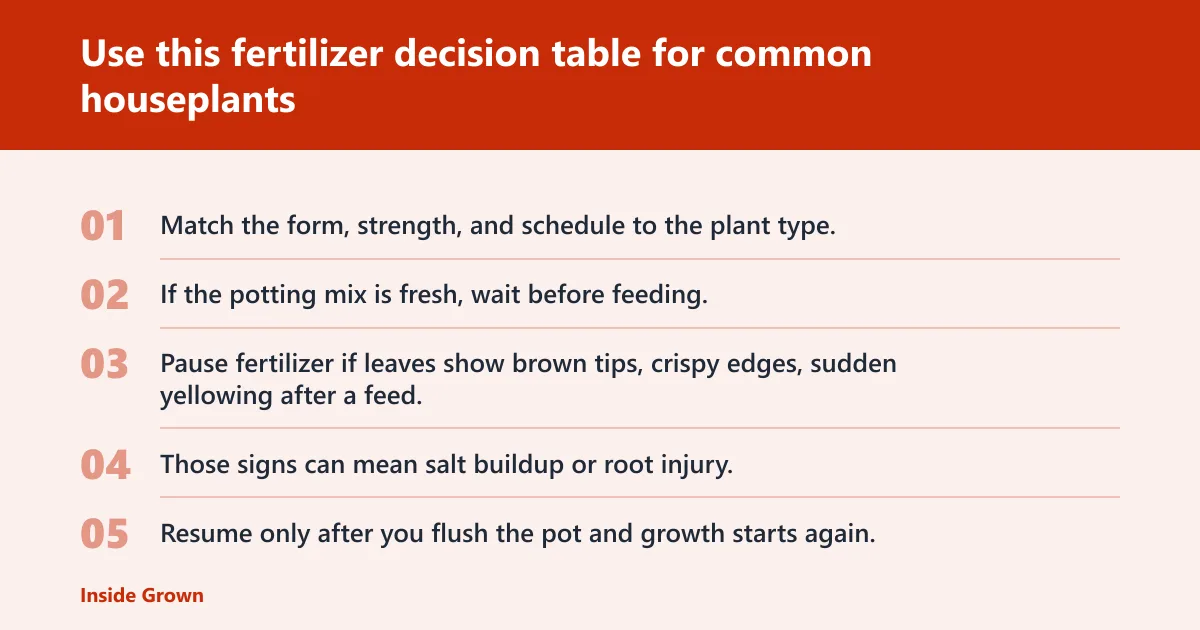
This table gives a simple starting point. Match the form, strength, and schedule to the plant type, then slow down if light is low or growth is sluggish. If the potting mix is fresh, wait before feeding. If the plant is recovering, wait longer.
| Houseplant type | Best fertilizer form | Strength | Feeding frequency | Restart after repotting | Pause if you see |
|---|---|---|---|---|---|
| Foliage plants | Liquid or water-soluble, balanced or 3-1-2 | ¼ to ½ label strength | Every 2 to 4 weeks in active growth | 4 to 6 weeks | Brown leaf tips, crusty white salts, limp new growth |
| Flowering plants | Liquid with balanced N-P-K or bloom-friendly houseplant label | ½ label strength | Every 2 to 4 weeks while budding or blooming | 4 to 6 weeks | Bud drop, yellowing between veins, scorched edges |
| Orchids | Orchid-specific liquid or water-soluble feed | Very light dose, often below standard label strength | Lightly during active root or leaf growth | 4 to 6 weeks | Root blackening, shriveled roots, sticky salt film |
| Succulents | Low-dose liquid or sparse slow-release | Very light dose | Occasionally during active growth only | 4 to 6 weeks | Soft tissue, stretch growth, leaf edge burn |
| Tropical humidity-loving plants | Liquid or water-soluble, balanced houseplant label | ¼ to ½ label strength | Every 2 to 4 weeks in active growth | 4 to 6 weeks | Yellowing after watering, tip burn, salt crust |
Red-flag signs to pause feeding
Pause fertilizer if leaves show brown tips, crispy edges, sudden yellowing after a feed, or a white crust on the potting mix. Those signs can mean salt buildup or root injury. Resume only after you flush the pot and growth starts again.
How do you tell fertilizer problems from other plant stress?
Fertilizer problems often show as burned leaf tips, salt crust, or stunted new growth, but watering and light issues can look similar. Nutrient shortages usually affect older leaves first, while overfertilizing can hit roots and new growth quickly. Check the whole setup before changing the dose.
Leaf burn and salt buildup
Leaf burn from fertilizer usually appears as brown, dry tips or edges. Salt buildup can leave a crust on the soil surface or pot rim. If the mix has a strong chemical smell or the pot dries with hard white residue, hold fertilizer and flush the container with clean water.
Yellowing, drop, and weak growth
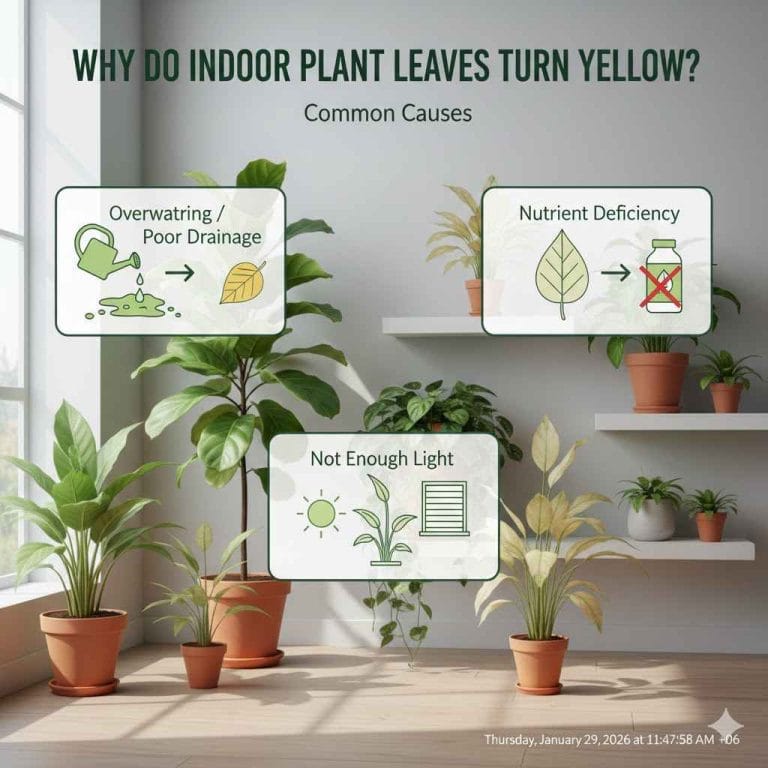
Yellow leaves are not always a feeding problem. Overwatering, low light, compacted roots, and old potting mix can all cause the same symptom. If the plant is pale but soil stays wet, fertilizer is probably not the first fix. Improve light and watering discipline before increasing feed.
Say your ZZ plant sits in a north window and gets watered every week. The leaves yellow slowly, but the soil stays damp. That is more likely too much water and too little light than a need for stronger fertilizer.
When to flush the pot and hold fertilizer
If you see burn, crust, or a strong suspicion of excess salts, flush the pot thoroughly with plain water and let it drain fully. Then hold fertilizer until the plant resumes healthy new growth. For plants already stressed by root rot or pests, feeding too soon can make recovery worse.
How to fertilize house plants naturally
Natural fertilizers can work indoors, but they need the same caution as synthetic products. Fish emulsion, seaweed, and other organic feeds still vary in strength and can smell, stain, or attract pests if overused. Use them only when the label and plant type fit the setup.
When natural options make sense
Organic fertilizers are useful if you want gentler feeding and are willing to accept slower response. They can suit foliage plants in stable conditions and pots where soil biology matters. They are less useful when you need exact dosing, such as with orchids or sensitive succulents.
How to make plant fertilizer at home
Homemade fertilizer is usually too inconsistent for everyday indoor use. Kitchen scraps, banana water, eggshell teas, and similar mixes do not provide a reliable N-P-K ratio, can invite fungus gnats, and may cause odor or rot in closed containers. For indoor plants, inconsistent nutrition is usually worse than no fertilizer.
Picture a kitchen counter jar filled with compost tea for a fern and a nearby succulent watered from the same jar. The fern may tolerate the weaker mix, but the succulent is more likely to suffer from excess moisture and unpredictable salts.
How to fertilize a plant
Start with the plant’s growth rate, then choose a low-risk product and dilute it before applying it to moist soil. Most indoor plants do better with light, regular feeding than with a strong dose. If the plant is slow-growing, feed less often and stop sooner in the year.
A simple feeding system
- Check the plant type and light level.
- Confirm whether it is actively growing.
- Choose liquid, water-soluble, granular, or slow-release based on your routine.
- Use a balanced label unless the plant type needs something narrower.
- Feed lightly, then watch for salt buildup or tip burn.
This system keeps fertilizer decisions tied to the plant, not the calendar alone.
How to fertilize potted plants
Potted plants need a feeding plan because the container cannot replace nutrients on its own. Start with the age of the mix, then decide how often the plant is watered and how quickly it grows. Fresh mix may already carry some food, while older mix may be depleted.
Pot size, water use, and mix age
Small pots dry faster and lose nutrients faster. Fast-draining mixes also need more frequent feeding than dense mixes because water carries nutrients through quickly. If the mix is older and the plant is growing fast, a mild liquid feed is often easier to manage than a heavy granular dose.
How to fertilize indoor plants
Indoor plants need the same basic nutrients as outdoor plants, but the container setting makes timing more important. Fertilize lightly during active growth, reduce feeding in winter, and restart slowly after repotting. The goal is steady nutrition without salt buildup or root stress.
How indoor conditions change the routine
Bright windows, grow lights, and warm rooms increase demand. Low light, cool rooms, and frequent watering do the opposite. That is why one “houseplant schedule” does not fit every pot on the shelf.
Frequently asked questions
when to fertilize houseplants
Feed most houseplants during active growth, which is usually spring through early fall. Many plants want less in winter because growth slows. If the plant was recently repotted, wait 4 to 6 weeks before feeding again, even if the season would normally call for fertilizer.
how often should I fertilize houseplants
Most houseplants can be fed every 1 to 2 weeks during active growth, but that is not a rule for every plant. Fast growers in bright light may need more frequent light feeding, while slow growers and plants in low light often need less. Always start with a mild dose.
can you overfertilize houseplants
Yes. Overfertilization can burn leaves, damage roots, cause yellowing or leaf drop, and leave salts in the potting mix. If you see crusty buildup, brown tips, or sudden stress after feeding, stop fertilizer and flush the pot with clean water before resuming at a lower rate.
what is the best fertilizer for houseplants
The best fertilizer is usually a houseplant-specific liquid or water-soluble product with a balanced N-P-K ratio, such as 4-4-4 or 10-10-10, or a 3-1-2 ratio for many plants. The right choice depends on growth rate, watering frequency, and how sensitive the plant is.
how to fertilize house plants naturally
Natural options such as fish emulsion or seaweed can work, but they are still fertilizers and still need careful dilution. They are best when you want gentler feeding and can accept variability. Skip homemade kitchen mixes for routine indoor use, because they are hard to dose safely.
how to fertilize potted plants
For potted plants, feed the soil, not the leaves, and use less fertilizer than the label’s maximum if the plant is indoors. Start with moist mix, apply a diluted product, and watch the pot for salt crust or leaf tip burn. Repotted plants should rest before you feed them.