Drainage holes for houseplants: why they matter most
Use a pot with drainage holes for most houseplants. Choose a cachepot only if the inner pot drains freely and you empty runoff after watering. Without drainage, extra water can sit around roots and lead to rot, fungus gnats, and salt buildup. This guide explains when to pick a drainage-hole pot, when a cachepot setup is safe, and how to fix overwatering or slow-draining pots.
Do houseplants need drainage holes?


For most indoor plants, yes. A drainage hole is the bottom opening that lets excess water leave the pot, and having at least one hole is generally the usual indoor setup for long-term planting. Containers with drainage holes are the safest default because they lower the risk of waterlogging and root loss.
Some plants handle a wetter root zone better than others, but the pot still matters. A hole gives you a release point after watering, while a sealed container keeps every mistake inside the root ball. That difference matters more than pot shape or color.
Why drainage holes matter for root health
Roots need oxygen and carbon dioxide exchange with the air. When soil stays wet, air spaces fill with water instead, and roots lose function. Waterlogged soil can lead to root rot, which can kill plants.
Drainage also helps wash salts out of potting soil. Tap water and fertilizer leave residues behind, and watering through a hole carries some of that out. Without drainage, salt buildup can show as brown leaf tips, edges, or a whitish crust.
Which plants are least forgiving of wet soil
Moisture-loving tropicals can still suffer in a soggy pot, but drought-tolerant houseplants usually handle constant wetness poorly. Succulents, cacti, snake plants, and many peperomias are often higher-risk choices for no-hole pots because their roots usually do better drying out than staying wet. Fast-growing plants in low light are also easier to overwater.
Why are drainage holes important for potted plants?
Drainage holes move extra water out of the root zone before the mix loses too much air. Soils need drainage to prevent waterlogging that harms root growth, and lack of drainage is one of the most common causes of unhealthy plants.
They also make watering less of a guess. With a hole, you can water until runoff appears, then let the pot finish draining. That gives you a clear stop point instead of judging a sealed planter by feel alone.
How excess water pushes out oxygen
When potting mix is saturated, water fills the gaps roots normally use for gas exchange. That is why air pockets matter in potting mix. Airier mixes lower risk in no-drainage containers because they leave more space for oxygen between waterings.
Dense mix holds water longer. So does a pot that is too large for the root ball, because the extra soil stays damp after the roots have already used the available moisture.
What happens if a houseplant sits in water?
Standing water keeps the root zone wet too long, and roots begin to suffocate. The first signs can look like ordinary thirst: drooping leaves, yellowing, and leaf drop. If the problem continues, roots may turn mushy and stop taking up water at all.
Saucers and cachepots need emptying because water left below the pot can wick back into the soil. A wet base is not harmless just because it sits outside the planter; it can keep the lower root ball saturated long after watering ends.
Why saucers and cachepots need emptying
A saucer is a catch tray under a pot with drainage. Empty it after watering so water does not wick back into the soil. The same rule applies to a cachepot if the outer container is collecting runoff.
Say your pothos sits in a 6-inch plastic nursery pot inside a ceramic outer pot. If water pools in the outer pot, the nursery pot can sit in a shallow reservoir and keep the lower roots wet for hours or days.
How low light and oversized pots make the problem worse
Low light slows drying because the plant uses less water. A pot larger than the root system also dries more slowly, since more mix stays wet between waterings. Dense potting mix adds another layer of risk.
A common first-timer mistake is moving a small plant into a much larger decorative pot. The plant may look fine above the soil while the lower half stays wet enough to trigger root rot.
How do you use a cachepot with a nursery pot?
Use a nursery pot inside a decorative cachepot when you want the look of a solid outer container but still need drainage. The nursery pot is the inner plastic grow pot with holes; it can be removed for watering, draining, and repotting. The outer pot should not hold standing water at the bottom.
That setup gives you control. Water the plant in the sink or elsewhere, let runoff drain fully, then place the nursery pot back into the dry cachepot. If water collects in the outer container, pour it out.
How to water and let it drain fully
- Lift the nursery pot out of the cachepot.
- Water until you see runoff from the bottom holes.
- Let the pot drain completely.
- Empty the saucer or outer pot.
- Return the plant only after dripping stops.
How to keep water out of the outer pot
Choose a cachepot with enough room that the nursery pot does not sit in any pooled water. If the outer pot is glazed or metal, residual water can linger longer because those materials do not breathe. Keep the cachepot dry between waterings unless a plant specifically needs a monitored reservoir system.
| Pot setup | Risk level | Best for | Main control point |
|---|---|---|---|
| Drainage-hole pot | Lowest | Most houseplants | Empty saucer after watering |
| Nursery pot in cachepot | Low to moderate | Decorative displays | Drain fully before returning to outer pot |
| No-hole decorative planter | Highest | Careful growers, low-risk plants | Strict watering control and dry potting mix |
Can you use a pot without drainage holes for houseplants?
Yes, but it is a higher-risk choice and should be limited to lower-risk plants and careful growers who can control moisture well. A no-hole pot is not the default, because mistakes stay trapped in the root zone. It works best as an experimental setup, not a general recommendation.
Airier mixes, smaller plants, and very measured watering make no-hole containers more workable. Even then, a moisture meter can help, but it is less reliable than learning pot weight and soil feel. A meter can miss uneven wetness deeper in the pot.
What makes a no-hole setup more workable
Use a fast-draining mix, a small pot that matches root size, and a plant that prefers drier intervals. Water in small amounts. Wait longer than you would with a drained pot, then check weight and soil feel before watering again.
Terracotta often dries faster than glazed ceramic, plastic, fiberglass, or metal because it is porous. That drying speed can help with water control, though it does not replace drainage. Glazed and nonporous containers usually hold moisture longer.
Which plant types belong in the experimental bucket
Low-risk candidates are mature succulents, some cacti, and other drought-tolerant houseplants that already prefer a dry cycle. Moisture-loving tropicals, young plants, and anything already stressed by root issues belong in a drained pot instead.
Decision checklist: choose the safest pot setup
Use this five-question check to sort pot risk. If you answer yes to most of the first two questions, choose a drainage-hole pot or a nursery pot in a cachepot. If you answer yes to the later questions, a no-hole setup becomes riskier and needs stricter control.
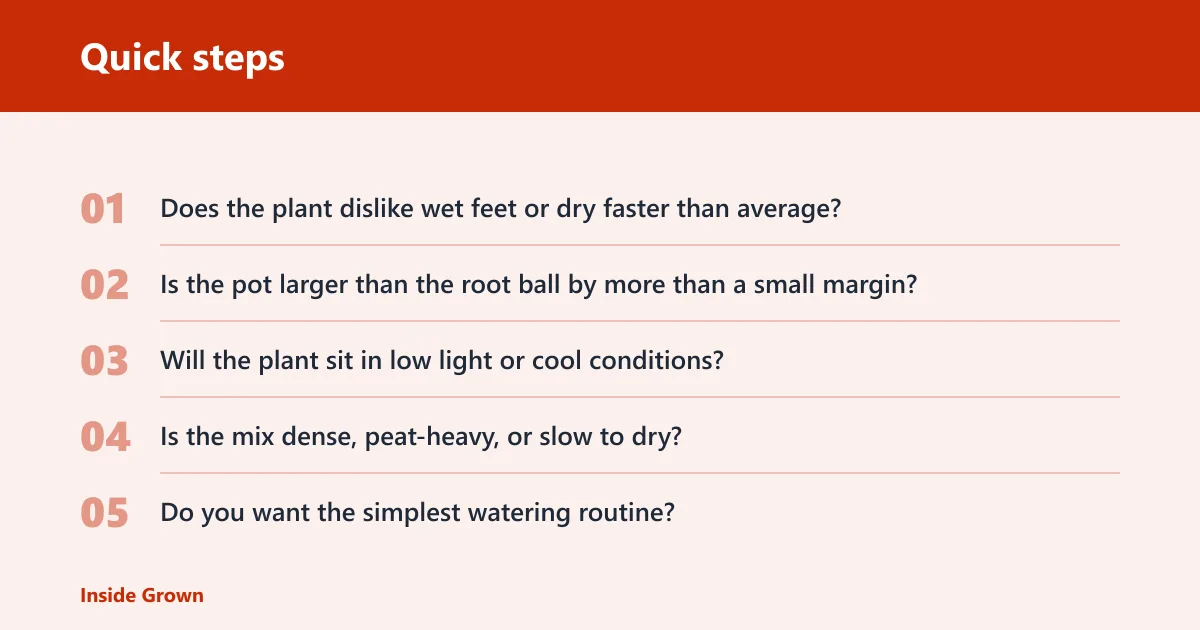
- Does the plant dislike wet feet or dry faster than average?
- Is the pot larger than the root ball by more than a small margin?
- Will the plant sit in low light or cool conditions?
- Is the mix dense, peat-heavy, or slow to dry?
- Do you want the simplest watering routine?
Path 1: drainage-hole pot
Choose this path if the plant is sensitive to wet soil, the pot is large, or you want the easiest failure buffer. This is the best default for most indoor plants. It also helps wash out salts and gives a clear drain point after watering.
Path 2: cachepot system
Choose this path if you want a decorative outer container but still want dependable drainage. Keep the plant in a nursery pot with holes, water it separately, and empty the outer pot or saucer every time. This is the safest decorative option.
Path 3: no-hole experimental setup
Choose this only for lower-risk plants, small pots, and careful watering habits. Use a lighter mix, avoid oversized containers, and check moisture by pot weight and soil feel before adding water. If you are unsure, this is the wrong path.
Red flags that mean repot now
- The plant wilts even when the soil feels wet.
- Leaves turn yellow or drop after watering.
- The pot smells sour or stale.
- Roots look brown, black, or mushy.
- Salt crust appears on the soil or pot rim.
- The mix stays wet for many days in a row.
Do rocks in the bottom of a pot improve drainage?
No. Rocks at the bottom do not really create drainage and do not replace a drainage hole. Water still needs an exit point, and a rock layer can leave the root zone wetter by shrinking the usable soil column above it.
What actually improves airflow and runoff is a pot with a hole, an airy potting mix, and a container sized to the root system. If soil dries too slowly, repot into a smaller pot, switch to a lighter mix, or move the plant to brighter light if it can handle it.
Better fixes for slow-drying soil
Check three things first: pot size, light level, and mix density. A large pot in low light with fine-textured soil is a classic slow-dry setup. Repotting into a smaller container with drainage often solves more than any add-on layer ever will.
Frequently asked questions
Do houseplants need drainage holes?
Most houseplants do. A drainage hole gives excess water a path out of the pot, which helps prevent waterlogging, root rot, and salt buildup. For long-term planting, a pot with at least one drainage hole is the most dependable choice.
Why are drainage holes important for potted plants?
They keep the root zone from staying saturated too long. Roots need oxygen and carbon dioxide exchange, and drainage holes help preserve air pockets in the mix after watering. They also let runoff carry away some fertilizer and tap-water salts.
Can you use a pot without drainage holes for houseplants?
Yes, but only with more control and more risk. No-hole pots work best for lower-risk plants, small containers, and airy mixes, and even then they demand careful watering. If the plant is sensitive to wet soil, use a drained pot instead.
What happens if a houseplant sits in water?
The roots lose oxygen, stop functioning well, and can rot. Early signs include wilted leaves, yellow leaves, and leaf drop. If the problem continues, roots may become mushy and the plant can decline quickly.
How do you use a cachepot with a nursery pot?
Set the nursery pot, which has drainage holes, inside the decorative cachepot. Water the plant outside the outer pot, let all runoff drain away, then return it only when the inner pot is no longer dripping. Never leave standing water in the cachepot.
How do I keep water from sitting in a saucer?
Empty the saucer after watering. Water left in a saucer can wick back into the potting soil and keep the root zone wet longer than intended. If needed, move the plant to the sink or shower, drain it fully, then return it to the tray.