Best Time of Day to Water Indoor Plants to Prevent Rot
Water indoor plants in the morning when possible. I do it then because leaves dry faster, the top of the mix loses moisture before night, and I spot droop, pests, or bad drainage sooner. Water at the wrong time, and roots stay wet too long. That is how rot starts. This guide gives the timing rule and the few cases where I would bend it.
What time of day should you water indoor plants?
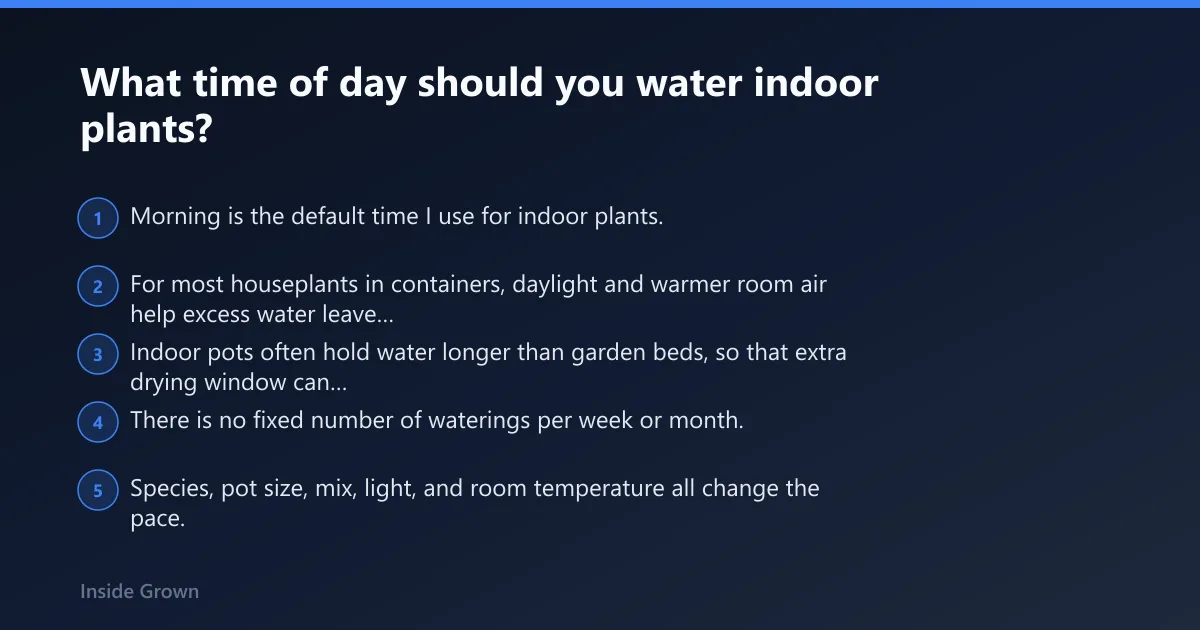
Morning is the default time I use for indoor plants. For most houseplants in containers, daylight and warmer room air help excess water leave leaf surfaces and the top of the pot before evening. Indoor pots often hold water longer than garden beds, so that extra drying window can matter.
There is no fixed number of waterings per week or month. Species, pot size, mix, light, and room temperature all change the pace. Overwatering is usually harder to fix than underwatering, so I check the soil first and water only when it needs it.
Why morning usually works best
Morning watering gives the plant the longest drying stretch. Splash on the leaves dries in daylight, and the upper layer of soil is less likely to stay damp into the evening. That lowers the chance of fungal growth and stale moisture around roots.
This matters more in closed rooms than people think. Air movement indoors is often weak, especially in winter or small apartments. When soil stays wet overnight, a pot can turn waterlogged because the extra water has nowhere to move.
When another time is acceptable
Later watering is fine if the plant is truly dry and morning has already passed, as long as the room still helps it dry. A bright, warm room usually handles a mid-afternoon watering better than a cool, dim one. If the pot drains well and the saucer is emptied, the risk drops.
Even then, I water early enough that the plant is not wet through a long, dark night. Evening watering dries more slowly and is a worse fit for many indoor plants, especially in low light or high humidity.
When evening watering can backfire
Evening watering can backfire because the mix dries slowly and roots stay wet longer. In a cool room or a low-light corner, slower drying can make problems like root rot, fungal growth, and fungus gnats more likely. Repeated night watering is where the pattern starts to matter.
Slower drying in low light
Light drives drying at the surface. A plant near a south window often dries faster than one on an interior shelf. If the room is dim, the soil may still be damp the next morning, and that lingering wetness is exactly what indoor containers should avoid.
Higher moisture risk in cool rooms
Cool rooms tend to hold moisture longer. A plant near a drafty window, an unheated hallway, or a winter bedroom often needs less water and more cautious timing. In those spaces, evening watering raises the odds that soil stays soggy instead of moving back toward a healthy moisture level.
Problems that show up after repeated night watering
Repeated evening watering does not always cause immediate damage. The trouble builds. Some overwatering symptoms include yellowing leaves, mushy stems, mold on the compost surface, and sudden or dramatic wilting. Excess moisture can also wash nutrients out of potting soil, which weakens growth over time.
How to decide whether to water now
Read the soil, not the calendar. Use a finger test or another simple check before watering, because indoor plants have different needs and the same pot can dry at different speeds week to week. If the top feels dry but the deeper root zone is still moist, wait.
A pot that feels light, with dry topsoil and only slight moisture lower down, is often ready for water. A pot that feels heavy or cool and damp near the roots is not. Never let any plant sit in water or soggy soil.
- Insert a finger about 2 to 5 cm into the mix.
- Check the surface and the deeper layer, not just the top crust.
- If the top is dry but the lower layer is still cool or wet, wait.
- If the mix is dry through the root zone, water thoroughly.
- Empty the saucer after draining so the pot does not sit in standing water.
What soggy soil tells you
Soggy soil means the pot is holding more water than the roots can use. That can happen after watering too soon, using a mix that drains poorly, or leaving a container in a saucer of runoff. Container plants can become waterlogged because excess water has nowhere to go.
When that happens, root rot risk rises fast. Fungal growth and pests such as fungus gnats also become more likely. The fix is usually simple but slow: pause watering, improve drainage, and let the mix dry to the level the plant type can tolerate.
Proof table: best watering time by room type
Room conditions matter as much as plant type. Use this table as a practical rule, then confirm with a soil check before you water. The point is not to build a rigid schedule. It is to choose the time of day that gives the pot the best drying window.
| Room scenario | Best watering time | Why this time works | What to watch for |
|---|---|---|---|
| Bright warm room | Morning | Fast daytime drying helps leaves and topsoil move back to a healthier moisture level. | Check that runoff does not stay in the saucer. |
| Cool low-light room | Early morning only, and only if needed | Any extra drying time helps; evening watering is a poor fit here. | Soil may stay wet much longer than expected. |
| Humid bathroom | Morning | Humidity slows drying, so early watering gives the longest daytime window. | Watch for mold on the soil surface. |
| Succulent shelf | Morning | These drought-tolerant plants need the soil to dry quickly and fully. | Do not keep the mix damp between waterings. |
| Vacation setup | The day before departure, in the morning | Water early so excess runoff can drain before the plant is left alone. | Confirm drainage holes are clear and empty the saucer. |
What changes the rule for different plants?
Plant type changes how much water the pot can hold, but morning still wins for most of them. Heavy moisture plants can take a bit more regular attention. Moderate moisture plants need a middle ground. Drought-tolerant plants such as succulents want a drier cycle and very careful timing.
Heavy moisture plants
Some tropical foliage plants like steady moisture, but steady is not the same as soggy. Water them in the morning after a soil check, then let the excess drain fully. These plants often tolerate a slightly more frequent watering rhythm, but they still do not like standing water.
Moderate moisture plants
Many common indoor plants fall in the middle. They like a dry top layer and a slightly moist root zone, not wet compost. Morning watering fits them well because it gives the pot time to rebalance before evening temperature drops.
Drought-tolerant plants
Succulents and similar plants usually need especially careful attention to staying on the dry side. They are often damaged more by overwatering than by a missed day. Water only when the mix has dried through the root zone, then water in the morning so the pot can dry out quickly again.
How container drainage changes the answer
Drainage decides whether timing works for you or against you. Pots with drainage holes are generally safer than decorative containers without them. Even with holes, a plant can still sit in water if the saucer is not emptied after watering.
Indoor containers behave differently from garden beds. Garden soil can spread excess water into a much larger area, but a pot traps it around the roots. That is why container plants can become waterlogged so easily, and why standing water is a problem.
Signs the pot is draining poorly
If the soil stays wet for days, smells sour, or pulls away from the pot edge while still feeling heavy, drainage may be weak. If water pools on the surface instead of moving through, the mix may be too fine or compacted. Those are warnings, not quirks.
Fix the container first when possible. Use a pot with holes, a lighter mix, and a saucer that gets emptied after each watering. If the plant is already stressed, improve conditions before changing the timing again.
Frequently asked questions
when’s the best time to water indoor plants
The best time is usually early in the day, after a soil check confirms the plant needs water. Morning watering is safer because the mix and foliage get more drying time before night. If the room is bright and warm, that edge is stronger.
does it matter what time of day you water indoor plants
Yes, it matters most in rooms that dry slowly. Evening watering leaves less time for evaporation, which can keep roots wet too long. That is less of a problem in a bright, warm room and more of a problem in a cool, humid, or low-light space.
is there a best time of day to water indoor plants
Yes. Morning is the best time for most indoor plants because it shortens the wet period and helps catch drainage problems early. It is not a fixed rule for every plant, but it is the safest starting point when you are deciding whether to water now.
what time of day to water potted plants
For potted indoor plants, morning is the default choice because containers hold moisture longer than garden beds. Check the soil first, then water enough that the root zone is moistened and excess drains away. Never leave the pot sitting in standing runoff.
what time of day to water outdoor plants
Outdoor plants are different because wind, sun, and soil depth change the drying rate a lot. Early morning is often preferred there too, but this guide is focused on indoor plants, which hold moisture differently and are more likely to suffer from soggy soil in enclosed rooms.
what’s the best time of day to water outdoor plants
For outdoor beds, early morning is often the safest general choice because plants can dry before heat rises. That said, outdoor watering follows different rules from indoor watering. Indoor pots need more caution because excess water stays trapped near the roots much longer.