How to Care for Monstera Indoors
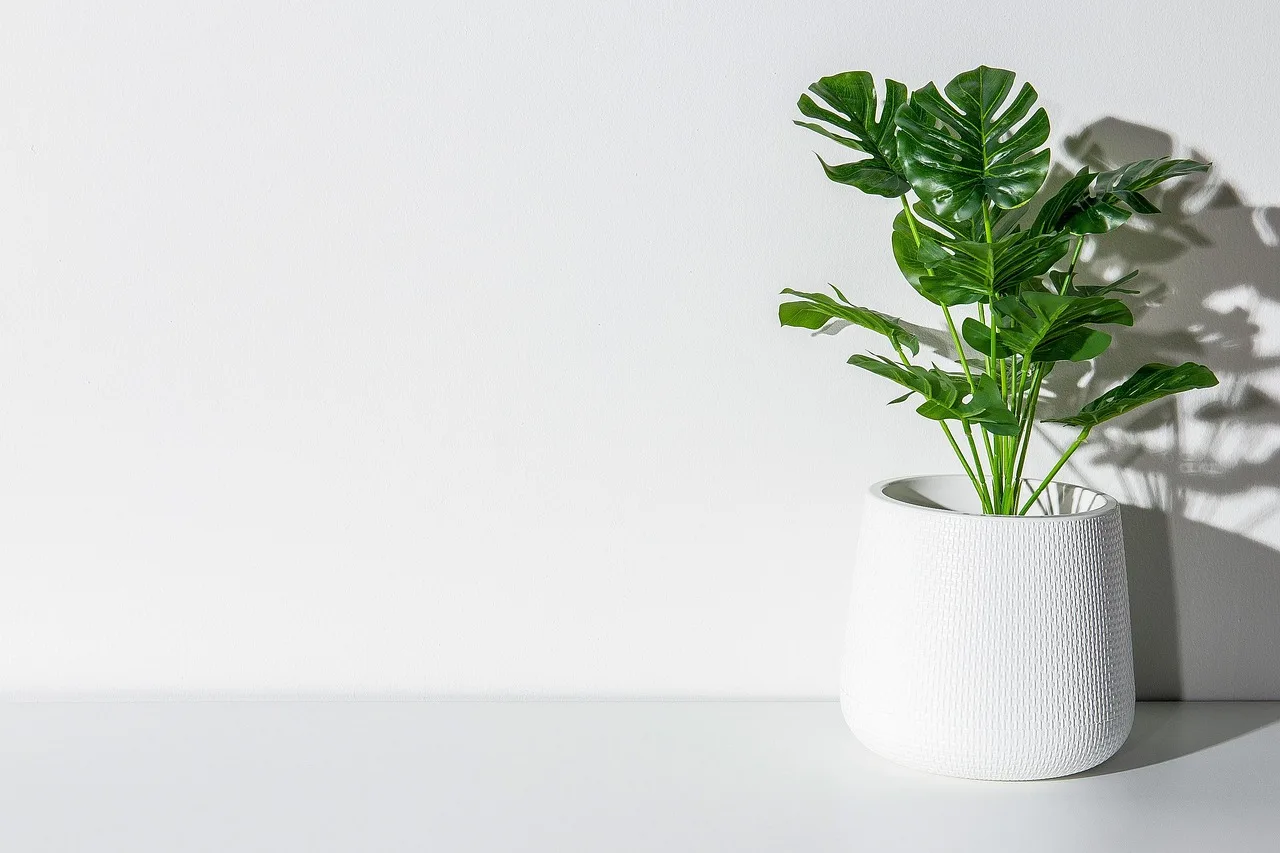
For indoor monstera care, place it in bright, indirect light, water it only when the top about 2 inches of soil are dry, and give larger types a moss pole or stake. Miss the light or watering balance, and you can get yellow leaves, root rot, or slow, leggy growth. This guide covers setup, light, watering, support, and seasonal adjustments by monstera type.
What you’ll need
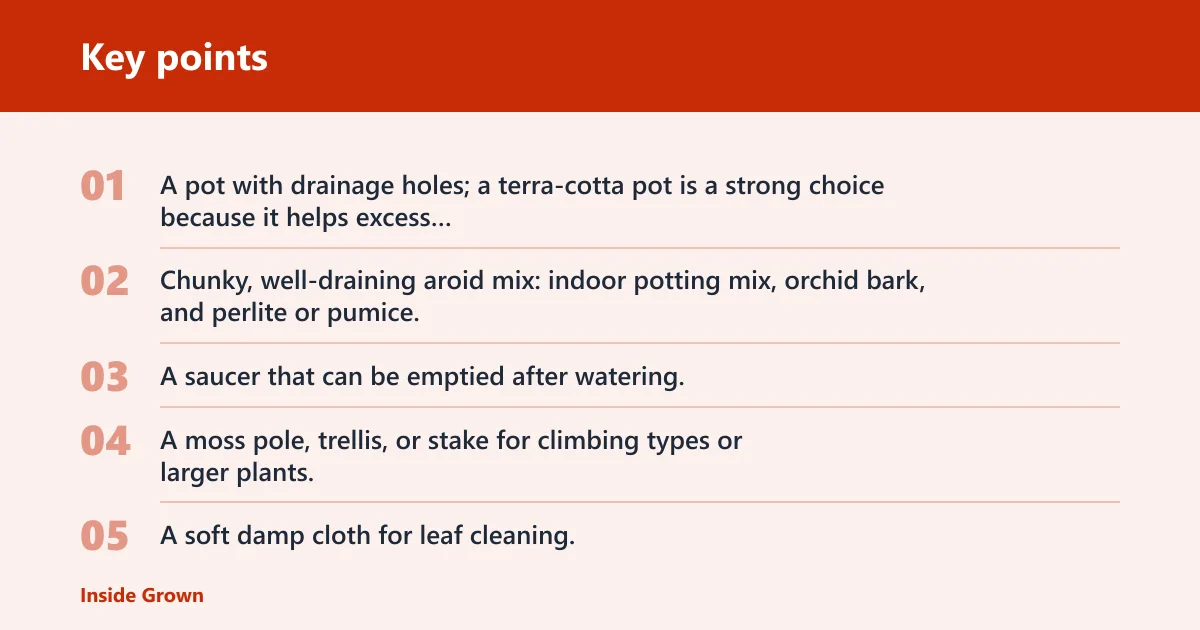


- A pot with drainage holes; a terra-cotta pot is a strong choice because it helps excess moisture evaporate.
- Chunky, well-draining aroid mix: indoor potting mix, orchid bark, and perlite or pumice.
- A saucer that can be emptied after watering.
- A moss pole, trellis, or stake for climbing types or larger plants.
- A soft damp cloth for leaf cleaning.
- Optional: pebble tray or humidifier for dry rooms.
- Identify your monstera type. Monstera deliciosa is the common indoor form with large fenestrated leaves and climbing growth. Monstera adansonii, sometimes called Swiss cheese plant or vine, is generally smaller and tends to trail more freely. Albo and Thai Constellation usually need the same base care, but they show stress faster if light or watering swings too much.
- Check the room before you move the plant. Bright, indirect light works best for most rooms. East-facing windows and filtered light are often a good fit. Aim for temperatures in the 65 to 85°F range, and keep the plant away from winter drafts, heat vents, and cold glass.
- Set the pot and mix correctly. Use a pot with drainage holes and a chunky aroid mix. A simple blend is 2 parts indoor potting mix, 1 part orchid bark, and 1 part perlite or pumice. Fill only to the root ball level so water can move through freely.
- Water by soil dryness, not by calendar. Insert a finger into the top 1 to 2 inches of soil. If it feels dry, water thoroughly until excess runs out, then empty the saucer. In winter, let the mix dry a bit more between waterings because growth usually slows.
- Add support when the plant starts to climb. If stems lean, aerial roots appear, or the plant grows larger leaves upward, add a moss pole, trellis, or stake. Tie stems loosely so they do not split. Small, compact plants can stay unsupported for a while.
- Clean, inspect, and adjust on a schedule. Wipe leaves with a soft damp cloth to remove dust and help light reach the leaf surface. Check for pests at the same time, especially under leaves and where stems meet the petioles. Repot when roots fill the container, usually into the next size up.
Where should you place a monstera indoors?
Put it in bright, indirect light near an east-facing window or a bright window with a sheer curtain. Direct midday sun can scorch leaves, while too little light slows growth and reduces fenestration. The goal is strong light without hot, direct rays on the foliage. NC State Extension and the Missouri Botanical Garden both describe Monstera as a bright, indirect-light plant, and the RHS notes that filtered light helps keep growth steady.
Choose the best window
East light is often the easiest fit because it gives gentler morning sun. A south or west window can still work if you filter it. If the plant sits far from a window, growth usually gets thinner and slower, and variegated forms may lose contrast faster. For window placement and indirect-light guidance, see houseplant light guidance from University of Georgia Extension.
Watch for too much sun
Bleached patches, crispy edges, or a sudden faded look usually point to direct-sun stress. Move the plant back from the glass or add a sheer curtain. If the leaves stay small and the stems stretch toward the window, the issue is more likely low light than sun scorch.
How do you water a monstera indoors?
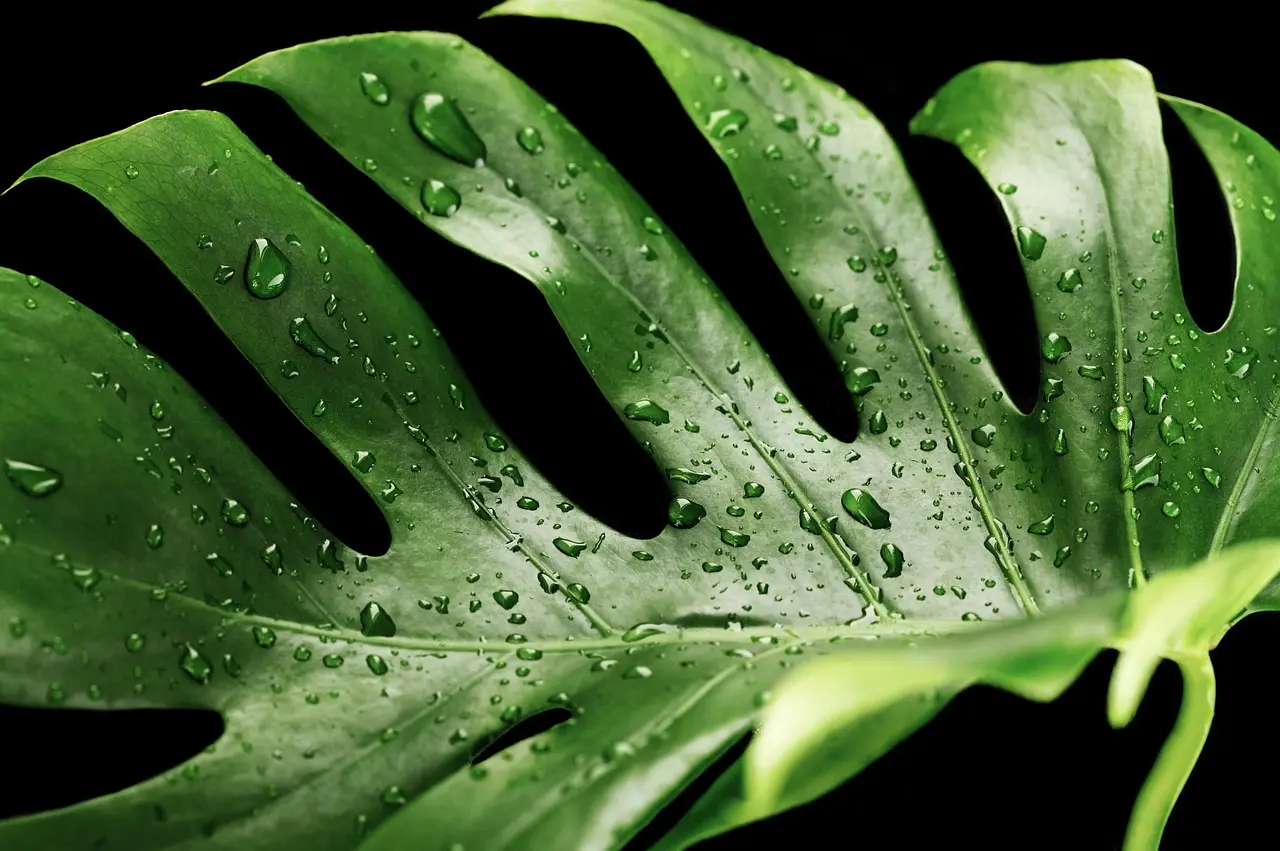
Water when the top layer of soil has dried, then let excess drain away. There is no fixed schedule that works year-round. Most mistakes come from watering too soon or leaving the pot in standing water, which keeps roots wet for too long and invites rot. Missouri Botanical Garden recommends letting the potting mix dry slightly between waterings, and extension houseplant guides commonly stress drainage over routine timing.
Use the finger test
Check the top 1 to 2 inches of soil before each watering. If it still feels damp, wait. If the pot feels light and the top layer is dry, water deeply until you see runoff from the drainage holes. Empty the saucer after a few minutes.
Slow down in winter
In winter, lower light and cooler indoor air slow growth, so the plant uses less water. A common first-timer mistake is assuming a monstera needs the same weekly watering in a cool winter room as it does in bright summer growth. Suppose a deliciosa in a 10-inch pot dries in 7 days in summer; in winter, it may need a longer gap before the next soak. For seasonal houseplant adjustments, link this habit to Winter care.
If that didn’t work, try this next
- Lift the pot and compare its weight to a freshly watered pot of the same size.
- Check the drainage holes for blocked roots or compacted mix.
- Repot into fresh chunky mix if the soil stays wet for many days after watering.
- Move the plant closer to bright indirect light if the soil dries very slowly and growth has stalled.
Should you use a moss pole or trellis?
Use support when the plant begins to climb, lean, or send out aerial roots. Larger monstera deliciosa plants often benefit from a moss pole or stake because the stems can break under their own weight. Small adansonii plants can trail without support, but vertical support helps them mature in place.
Tie stems loosely
Use soft ties and leave room for stem thickness to increase. A tight tie can pinch the stem or split petioles. Place the support in the pot early, before roots spread everywhere, so the plant can grow into it rather than being forced upright later.
When support is optional
If your adansonii stays compact in a hanging pot, support is optional. If the plant is getting top-heavy or leaves are getting smaller lower on the vine, add a pole or trellis. For a deliciosa, support usually becomes more useful as the plant gains height and leaf size.
How should care change by type and season?
Monstera deliciosa and adansonii share the same basic care, but deliciosa is usually sturdier and larger, while adansonii trails more and can dry out faster. Albo and Thai Constellation often need brighter indirect light than green forms, because pale sections hold less chlorophyll and can struggle sooner in dim rooms. NC State Extension and RHS both note that species and variegated forms respond differently to light intensity.
Deliciosa vs. adansonii
Deliciosa is the common indoor climber with broad, fenestrated leaves and stronger support needs over time. Adansonii, often called Swiss cheese plant or vine, stays finer and more trailing. Both want airy mix, drainage holes, and bright indirect light, but adansonii may ask for water a bit more often in a warm room. For species-specific care, see the NC State Extension plant profile for Monstera deliciosa and the Missouri Botanical Garden profile for Monstera.
Albo and Thai Constellation
Variegated albos and Thai Constellation plants are less forgiving of low light and uneven watering. Keep them in bright indirect light, not harsh sun, and do not let the soil swing from very dry to very wet. If new leaves come in smaller or the variegation fades, increase light before increasing fertilizer.
Winter care
Winter care is mostly about slower water use, lower light, and drafts. Keep the plant away from cold windows and vent blasts. Hold back on watering until the top layer dries, and expect growth to slow. Humidity can help if the air is dry, but it will not fix poor light or soggy roots.
Monstera indoor care decision table
Use the plant type, room conditions, and symptom pattern together. One symptom alone rarely tells the full story. Yellowing near the base, curling edges, brown tips, and slow growth often point to different causes, and the next step changes with the room setup.
| Plant type | Room conditions | Symptom pattern | Most likely cause | Next step | Do this first |
|---|---|---|---|---|---|
| Deliciosa | Low light, winter draft, pot stays wet | Yellow lower leaves, slow growth | Roots staying wet while light is too weak | Move to brighter indirect light, let the top 1–2 inches dry, and check drainage holes | Move it out of the draft and away from the cold window first |
| Deliciosa | Bright light, dry air, heater nearby | Brown tips, curling edges | Low humidity or hot air blast | Move away from vents, use a humidifier or pebble tray, and keep watering steady | Relocate it away from the heater or register first |
| Adansonii | Medium light, small pot, mix dries fast | Curling, thin leaves, faster dry-down | Underwatering or root crowding | Water thoroughly, then recheck after 1–2 inches dry; repot if roots fill the pot | Check the rootball and the pot size first |
| Adansonii | Low light, dense mix, saucer holds water | Yellowing, limp stems | Root stress from too much moisture | Remove standing water, improve light, and switch to a chunkier mix at repotting | Empty the saucer and stop bottom wetness first |
| Albo | Dim room, uneven watering | Slow growth, pale new leaves | Light too low for variegated tissue | Move closer to bright indirect light and keep watering consistent | Increase filtered light first |
| Thai Constellation | Bright room, but dry air and draft | Brown tips, edge crisping | Humidity stress plus temperature swings | Stabilize temperature, raise humidity if the room is dry, and avoid overwatering | Move it away from the draft first |
Say your Monstera deliciosa sits three feet from a north window, the leaves are yellowing from the bottom, and the soil still feels damp after a week. The most likely issue is not thirst. Move it closer to bright indirect light, empty the saucer, and wait longer between waterings.
Suppose a Thai Constellation near a heat register has crisp brown leaf tips and new leaves that open small. That pattern points more toward dry air and hot drafts than to a lack of fertilizer. Move the plant away from the vent, raise humidity if the room is dry, and keep the pot from staying wet.
Common mistakes
Most indoor monstera problems start with too much water, too little light, or a pot that traps moisture. The fixes are simple, but they need to be matched to the symptom pattern. Yellow leaves do not always mean the same thing.
Overpotting and standing water
A pot that is much larger than the root ball keeps soil wet longer than the plant can use it. Standing water in a saucer does the same thing. Choose a pot only one size up when repotting, and empty the saucer after every watering. Repotting into a slightly larger pot is also the usual extension recommendation for rootbound houseplants.
Dense mix and dusty leaves
Heavy soil holds water around the roots and slows air movement. Dust on the leaves blocks light and makes the plant look dull. Use a chunky mix and wipe leaves with a soft damp cloth every so often so the plant can work with the light it gets.
Pests and damaged foliage
Check for spider mites, mealybugs, and scale during regular leaf cleaning. Look under leaves and at stem joints. Remove badly damaged leaves, isolate the plant if pests appear, and treat early so the problem does not spread to nearby houseplants. For pest recognition and prevention, see University of Minnesota Extension houseplant insect pests.
Frequently asked questions
How to care for a thai constellation monstera indoor
Thai Constellation does best in bright indirect light and a stable watering pattern. Because its variegation can leave parts of the leaf less efficient, it needs careful light placement and good drainage. If new leaves are small or pale, move it to a brighter filtered window before changing anything else.