How to Care for Peace Lilies Indoors
Water a peace lily indoors when the top 2–3 cm of compost feels dry, place it in bright light filtered by a sheer curtain or a few feet back from an east-facing window, and add humidity support if leaves droop or brown. Ignored symptoms lead to yellow leaves, root rot, crispy tips, and fewer flowers. This guide shows what each symptom means and how to fix light, water, humidity, and placement for UK homes and winter conditions.
Peace lily diagnosis table

- No batteries required
- Easy-to-read color dial
- Helps track watering at a glance
| Symptom | Most likely cause | 24-hour fix | 2-week follow-up check |
|---|---|---|---|
| Drooping | Underwatering or a pot that has gone too dry; in a small pot, this can happen fast | Water thoroughly until the mix is evenly moist and excess drains away | Leaves should stand back up within hours; if drooping returns in a day or two, check rootbound soil, heat, or low humidity |
| Yellow leaves | Too much water, low light, or aging foliage | Pause watering if the soil is wet; move it to brighter indirect light if it is sitting far from a window | New leaves should stay greener; if yellowing spreads from the base with soggy soil, root rot is more likely |
| Brown tips | Dry air, fertilizer salts, or overfeeding | Flush the pot with plain water, then let it drain fully; stop feeding for now | New growth should show fewer fresh tips; if the room is very dry, add humidity support |
| No blooms | Light is too low, even if the plant looks healthy | Move it closer to bright indirect light, such as an east-facing window | Watch for stronger new growth first; flowers often follow better light after several weeks |
| Soggy soil | Poor drainage, oversized watering, or compacted mix | Let the top layer dry, empty any saucer, and check that the pot has drainage holes | Soil should dry more evenly between waterings; if it stays wet for many days, repot into a better mix |
| Crispy edges | Dry air, heater blast, salts, or inconsistent watering | Move the plant away from heat sources and use a pebble tray or humidifier | New leaves should emerge with cleaner margins; if the potting mix is crusty, rinse salts out and refresh the soil |
How much light does a peace lily need?
Peace lilies need bright indirect light. Direct sun can scorch the leaves, while too little light slows growth and reduces flowering. An east-facing window is a common choice because it gives soft morning light without harsh afternoon exposure.
Best indoor placement near a bright window
Place the pot a short distance from a bright window, or filter stronger light with a sheer curtain. A peace lily can tolerate lower light than many flowering houseplants, but tolerance is not the same as ideal care. In lower light, the plant may stay alive and still stop blooming.
Why direct sun damages leaves
Peace lily leaves are built for filtered forest light, not a hot sunbeam through glass. Direct sun can bleach patches, dry the leaf tissue, and leave curled or brown areas that do not recover. If the plant sits in a south- or west-facing window, move it back from the glass.
When lower light affects flowering
Healthy foliage does not guarantee flowers. Low light is the most common reason a peace lily stays green but refuses to bloom indoors. If the plant has upright leaves and steady growth but no white spathes, light is the first thing to adjust before changing fertilizer or water.
How to read light changes in winter
Winter light is weaker and days are shorter, so a spot that worked in summer may become too dim. If the plant starts stretching, drooping less after watering, or flowering less, move it closer to a bright window. Less light also means the soil dries more slowly, so water less often.
How often should you water it?
Water a peace lily when the top inch, or top layer, of soil feels dry. Some guides use the “almost dry” rule, and that works well if the pot drains freely. Drooping usually means thirst; yellow leaves and a sour pot often point to too much water.
Use the top-inch dry test
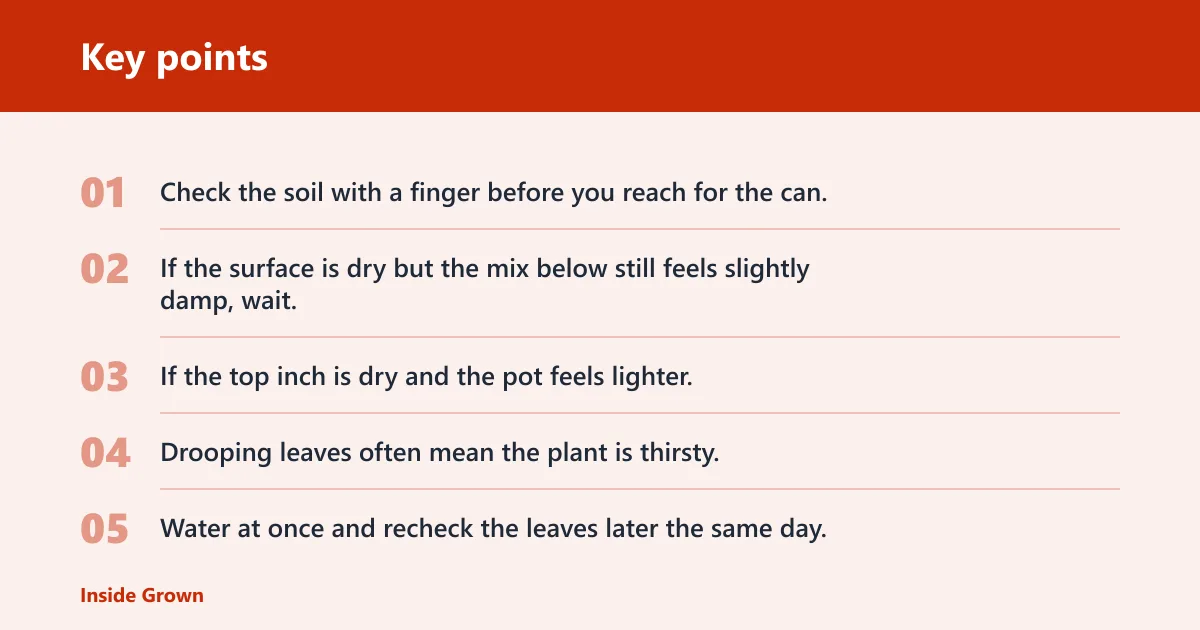
Check the soil with a finger before you reach for the can. If the surface is dry but the mix below still feels slightly damp, wait. If the top inch is dry and the pot feels lighter, water until moisture reaches the root ball and excess drains out.
How to respond when the plant droops
Drooping leaves often mean the plant is thirsty, especially if the soil is dry and the pot feels light. Water at once and recheck the leaves later the same day. If drooping happens while the soil is already wet, the problem is more likely root stress than thirst.
Say your peace lily sits in a bright kitchen window and the leaves collapse at noon, but the compost is dry to the touch. That points to thirst, not disease. Water deeply, then make the next check sooner if the room is warm or the pot is small.
How to avoid soggy soil and root rot
Keep the soil moist, not waterlogged. A heavy mix that stays damp for days can cut off air to the roots and lead to root rot. Empty saucers after watering, and never let the pot sit in runoff. Yellow leaves plus wet soil is a warning, not a cue to water again.
How room temperature and pot size change watering frequency
Warmer rooms, brighter light, and small pots dry faster. Cooler rooms, lower light, and larger pots dry more slowly. That is why a fixed weekly schedule can fail. Check the pot instead of counting days, then adjust for the room you actually have.
What indoor conditions keep it healthy?
Peace lilies do best in 65-85°F (18-30°C) with medium to high humidity above 50%. They dislike cold drafts, heater blasts, and sudden swings from open doors or windows. If the room is dry or chilly, the plant will need closer attention to water and placement.
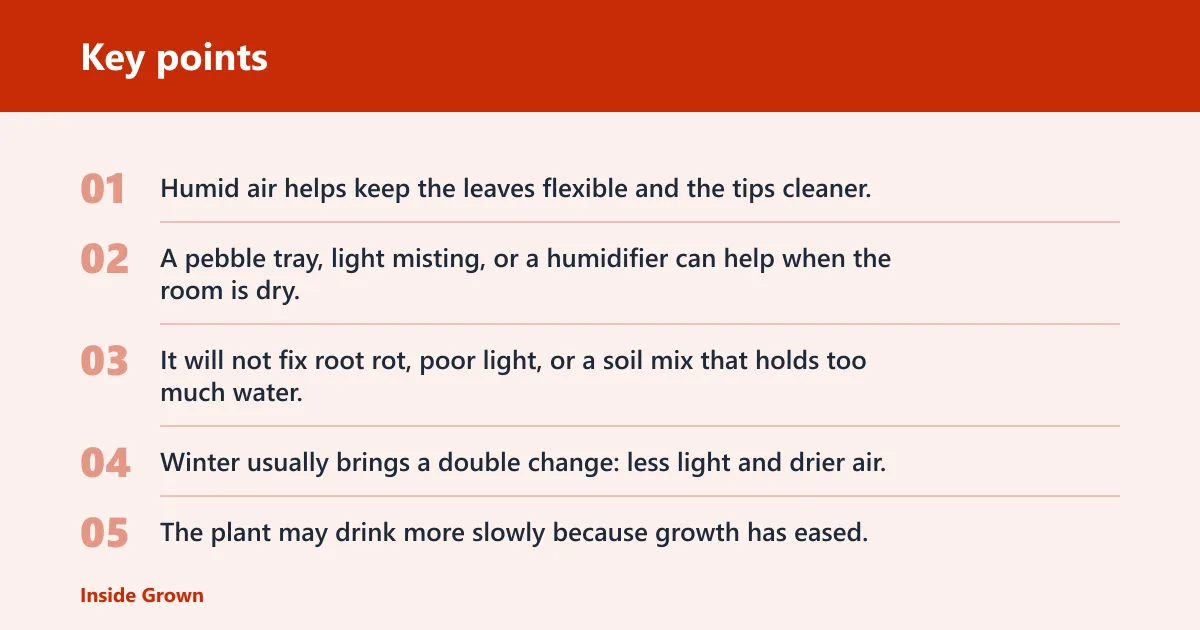
Humidity support with misting, pebble trays, or a humidifier
Humid air helps keep the leaves flexible and the tips cleaner. A pebble tray, light misting, or a humidifier can help when the room is dry. Misting is support, not a cure. It will not fix root rot, poor light, or a soil mix that holds too much water.
Why dry winter air changes the care routine
Winter usually brings a double change: less light and drier air. The plant may drink more slowly because growth has eased, yet heaters can dry the leaves faster. That means you need to watch both the soil and the room. Brown tips in winter often signal dry air near a radiator, not a need for more frequent feeding.
Suppose a peace lily near a hallway radiator has crispy edges but the compost is still damp three days after watering. The fix is not another drink. Move it away from the heat source, reduce the splash from misting if the soil is staying wet, and wait for the top layer to dry before watering again.
Where to place it away from heaters and door swings
Keep the pot away from hot vents, radiators, and frequent door traffic. Cold drafts from winter windows can stress leaves just as much as dry heat. A stable spot, a few feet from a bright window, is usually better than a colder sill or a blast zone by the front door.
What soil and pot does it need?
Use a rich, well-draining, loamy potting mix. A houseplant mix with peat, bark, sand, or perlite is a good fit. Heavy, soggy soil holds too much water and raises the risk of yellow leaves and root rot.
Why drainage holes matter
The pot must have drainage holes. Without them, water has nowhere to go, and the roots stay wet for too long. A decorative cachepot can work if the inner pot drains freely and you empty any standing water after watering.
Signs the soil is too heavy or compacted
If water pools on top, drains slowly, or the pot stays wet for many days, the mix is too dense. Soil that shrinks from the sides of the pot or smells sour can also mean the roots are struggling. In that case, repot into fresh mix rather than trying to solve the problem with less or more water alone.
When to repot into a slightly larger container
Repot about every 1–2 years, or when roots fill the pot. Move up only about 1–2 inches in pot size. A pot that is too large holds extra wet soil, which can delay drying and increase root problems.
When should you feed and repot it?
Feed with a diluted balanced liquid fertilizer only in spring and summer. A balanced fertilizer once a month is a common rule, and some guides suggest every two to three weeks in the active season. Stop feeding in winter, when growth slows and roots use less food.
How to spot overfertilizing
Brown tips, brown spots, or a crust on the soil surface can point to excess fertilizer salts. If that happens, pause feeding and flush the pot with plain water so the excess can drain away. Strong, undiluted feed can do more harm than a light, regular dose.
When rootbound plants need repotting
If roots circle the pot, dry-out happens fast, or the plant wilts soon after watering, it may be rootbound. A crowded root system can make the plant look thirsty even when the mix is not fully dry. Repotting into fresh mix often helps more than changing the watering schedule alone.
Why division is the dependable propagation method
Division is the reliable way to make more peace lilies. Separate the clump during repotting, making sure each section has roots and shoots. That method is steadier than trying to root leaf pieces, which is not the usual path for this plant.
Toxicity and pests to watch
Peace lilies contain calcium oxalate and are toxic to pets and humans if ingested. Keep them away from cats, dogs, and children who may chew on leaves or flowers. If you share your home with pets, placement matters as much as light. (Wikipedia)
Cats, dogs, and children: placement tradeoffs
A high shelf may keep the plant safer from nibbling, but it can also reduce the light too much. A bright room corner behind a barrier can be a better compromise. If the only bright spot is within reach of a curious pet, a peace lily may not be the right plant for that location.
Mealybugs, scale, and what to inspect on leaves and stems
Check the undersides of leaves, the joints where stems meet, and the leaf bases for cottony clusters or hard brown bumps. Those are common signs of mealybugs or scale. Wipe off visible pests, isolate the plant, and inspect again a few days later so the problem does not spread.
When root rot becomes a rescue problem
If the plant stays limp while the soil is wet, the roots may already be damaged. A sour smell, blackened roots, or repeated yellowing after watering are serious signs. At that stage, remove the plant from the pot, trim damaged roots, and replant in fresh, draining mix.
What should you check in 24 hours and again in 2 weeks?
Start with the symptom, then check the room. A peace lily can look thirsty, sun-stressed, or overwatered for different reasons, and each fix takes a different response. The first day is for correction; the next two weeks are for reading the plant’s reaction.
- Check the top inch of soil and the pot weight.
- Look at leaf color, not just droop.
- Move the plant if direct sun, heater air, or a draft is hitting it.
- Water only if the mix is dry enough to need it.
- Inspect for pests, sour smell, or standing water.
- Recheck new growth and soil dryness after 2 weeks.
Frequently asked questions
How do you care for a peace lily indoors?
Give it bright indirect light, water when the top inch or top layer of soil dries, and keep it in 65-85°F (18-30°C) with moderate humidity. Use a draining pot and a rich houseplant mix. If leaves change color or droop, treat that as a clue to adjust care rather than following a fixed schedule.
How often should I water a peace lily indoors?
Water when the top 2–3 cm of compost feels dry, which often works out to about once a week in average conditions. That can be less often in low light and more often in warm, bright rooms. Always let the pot tell you first, because soggy soil causes more damage than a short dry spell.
Where should I place a peace lily indoors?
Place it near a bright window with filtered light, such as an east-facing window or a spot just back from the glass. Keep it away from direct sun, radiators, and cold drafts. If you have pets, choose a place that is also hard for them to reach.
How much light does a peace lily need indoors?
It needs bright indirect light, not direct sun. Lower light can keep the plant alive, but it usually reduces flowering and can slow growth. If the leaves are healthy but blooms are missing, move the plant closer to a brighter window before changing the fertilizer routine.
What do yellow leaves on a peace lily mean?
Yellow leaves usually point to too much water, low light, or older foliage at the base of the plant. Check the soil first. If it is wet, hold back on watering. If the plant sits far from a window, move it to brighter indirect light and see whether new leaves improve.
How do you care for a peace lily indoors in winter?
In winter, lower light and dry heat change the routine. Water less often if the soil dries slowly, but add humidity support if heater air is crisping the edges. Keep the plant away from cold windows, radiators, and drafty doors, and expect flowering to slow.
Can you grow a peace lily in water?
A peace lily can be kept in water for a time, but soil is the steadier long-term option for most indoor growing. Water culture needs careful cleaning and regular monitoring so the roots do not rot. For the easiest routine, a draining pot with a proper mix is more forgiving.
Why is my peace lily drooping?
Drooping most often means the plant is thirsty, especially if the soil is dry and the pot feels light. If the mix is wet, drooping can also mean root stress from too much water. Check soil first, then decide whether the fix is a thorough drink or a drier, better-draining setup.
Should I mist a peace lily?
Misting can help in dry rooms, but it is not a cure for every problem. It is useful when brown tips suggest dry air, especially in winter. It will not fix root rot, low light, or soggy soil, so treat it as one humidity aid among several.
When should I fertilize a peace lily?
Feed only in spring and summer, using a diluted balanced liquid fertilizer. A monthly schedule is a safe starting point, and some growers feed every two to three weeks during active growth. Skip feeding in winter, because the plant is moving more slowly and salt buildup becomes more likely.
How to care for peace lily indoors uk
In UK homes, the key adjustments are light and winter dryness. Put the plant near bright indirect light, often an east-facing window, and check soil by touch instead of by calendar. Central heating can dry the leaves, while winter light can reduce both growth and flowering.