How to Water Succulents Indoors Without Overdoing It
Water indoor succulents when the potting mix is dry and the leaves feel slightly soft; then water thoroughly until it drains. Watering on a fixed calendar keeps roots wet, and that is the fastest path to rot, leaf drop, and a dead plant. This guide shows how to read the plant, pot, and room so you water at the right time.
How indoor succulents actually use water

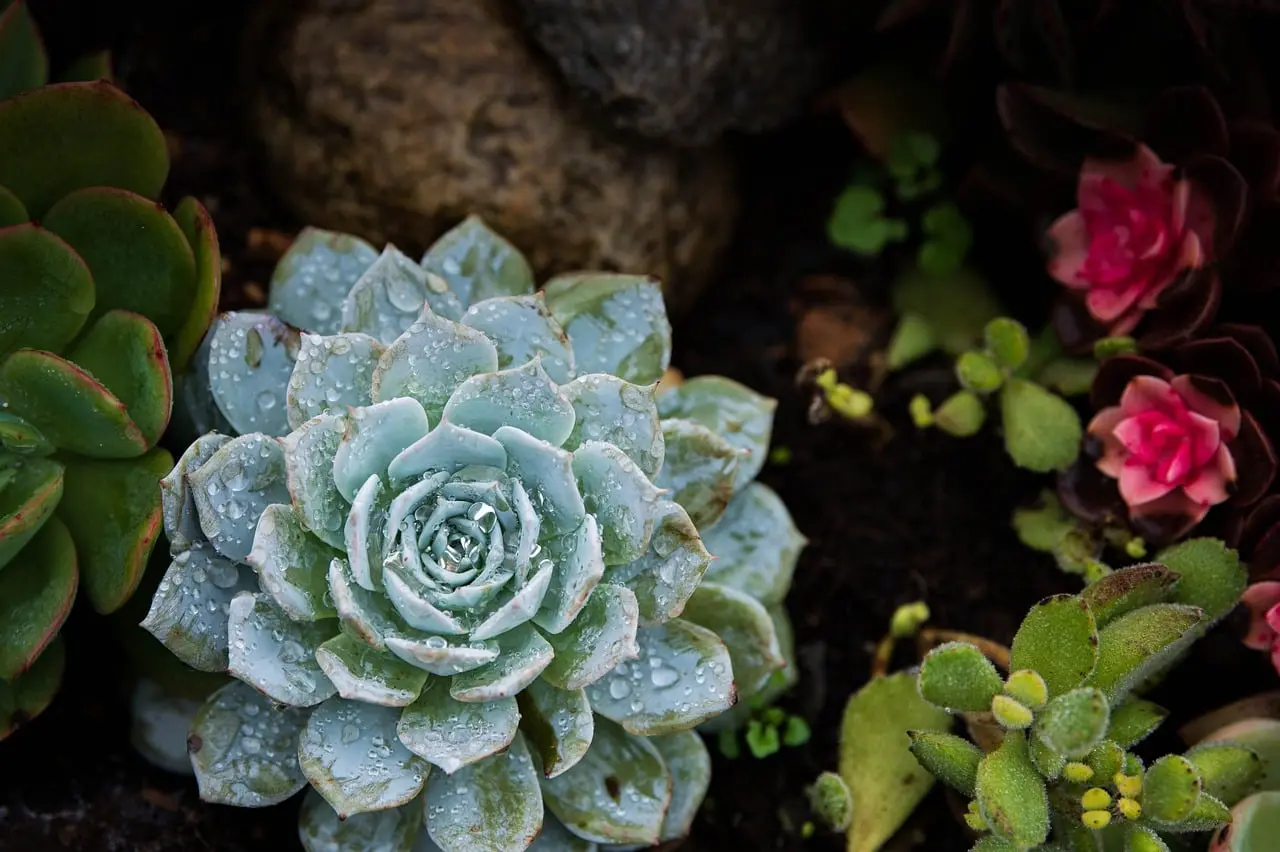
Succulents hold water in their leaves, stems, and roots, so they do not need frequent watering. Indoors, the drying rate depends on species, pot size, light, humidity, and season. A plant in bright light in a small pot dries far faster than one in low light in winter.
Why species matter more than a simple schedule
Some succulents hold water and use it more slowly than others. A Haworthia, Gasteria, or an epiphytic succulent often needs a different cadence from a thick-leaved Echeveria or a Lithops. That is why a fixed calendar misses the point: the plant, the container, and the room all change the answer.
Bright natural light speeds drying, while lower light slows it. Cooler rooms and winter dormancy reduce water use. Humid rooms hold moisture longer, so the same pot can stay wet for days more than it would in a dry, sunny spot.
Succulent watering table
Use this table as a decision aid, not a calendar. Read across from pot size, drainage, light, and season, then follow the action. “Wait” means leave the plant alone. “Water now” means use a full soak. “Check deeper soil” means the surface is dry, but the lower mix may still hold water.
| Pot size | Drainage hole | Room light | Season | Recommended outcome |
|---|---|---|---|---|
| Small | Yes | Bright natural light | Summer | Water now |
| Small | Yes | Low light | Winter | Wait |
| Small | No | Bright natural light | Summer | Check deeper soil |
| Small | No | Low light | Winter | Wait |
| Medium | Yes | Bright natural light | Summer | Water now |
| Medium | Yes | Low light | Summer | Check deeper soil |
| Medium | Yes | Bright natural light | Winter | Check deeper soil |
| Medium | No | Bright natural light | Winter | Wait |
| Large | Yes | Bright natural light | Summer | Check deeper soil |
| Large | Yes | Low light | Summer | Wait |
| Large | Yes | Low light | Winter | Wait |
| Large | No | Bright natural light | Summer | Check deeper soil |
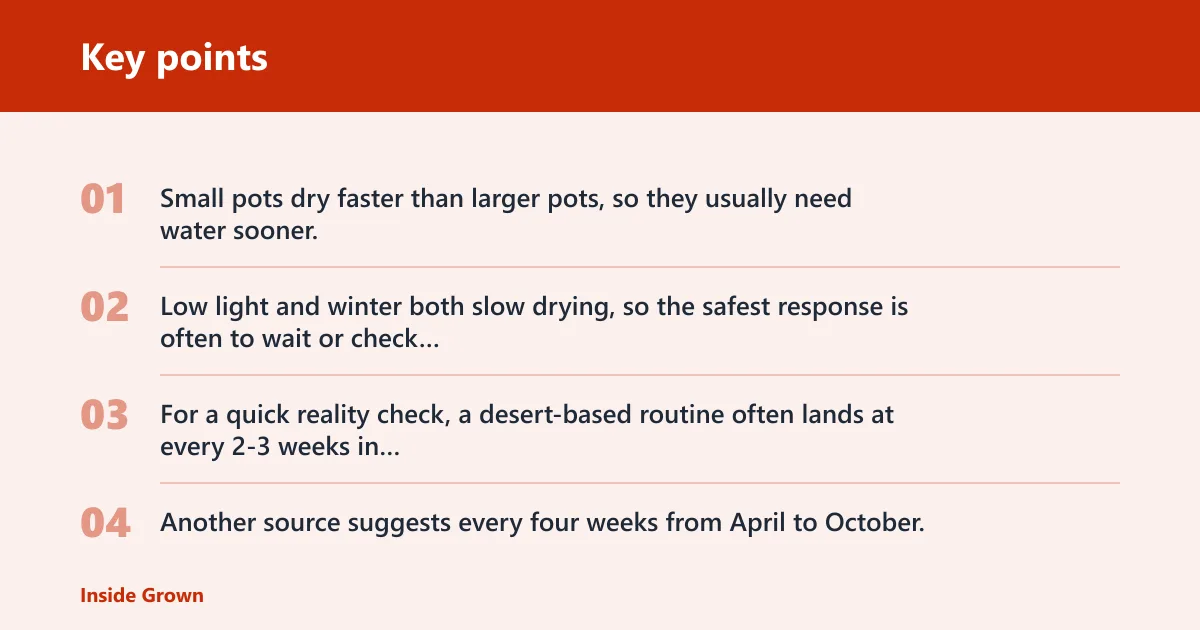
That table follows a simple pattern. Small pots dry faster than larger pots, so they usually need water sooner. Pots without drainage need more caution. Low light and winter both slow drying, so the safest response is often to wait or check deeper soil rather than water on sight.
For a quick reality check, a desert-based routine often lands at every 2-3 weeks in summer and every 3-4 weeks in winter, while many indoor growers use 14-21 days as a starting frequency. Every four weeks from April to October, every six weeks for the rest of the year, and once every two months below 12ºC. Those ranges are starting points, not rules.
Should you water deeply or lightly?
Water succulents deeply. The soak-and-dry method is the standard approach: water thoroughly until the mix is saturated and excess water drains out, then wait until the soil is completely dry before watering again. Frequent small drinks leave the upper mix damp and the lower mix wetter still.
How to water until the mix is fully saturated
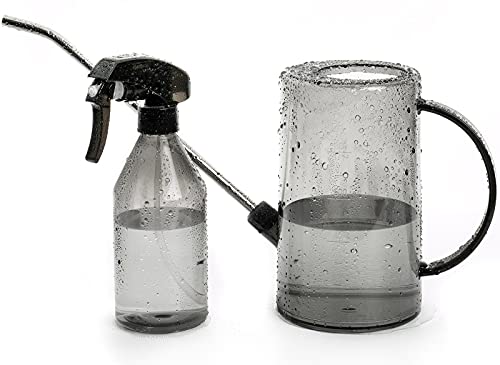
Set the pot where excess water can escape. Then add room-temperature water slowly until the entire root ball is wet and drainage starts. Stop once the pot has drained well. Cold water can shock roots, and hot water can damage them, so room-temperature water is the safest default.
- Check that the mix is fully dry before you start.
- Water the soil, not the leaves.
- Continue until water runs from the drainage hole.
- Let the pot drain completely.
- Empty any saucer or cachepot so the base does not sit in water.
A common first-timer mistake is misting the pot lightly every morning instead of waiting until the soil is fully dry. That keeps the lower roots damp without giving the whole root zone a full wet-dry cycle. Rot often starts there. Wet leaves are a different issue; they can cause spotting or rot on some plants, but leaf wetness is not the same as proper root watering.
What kind of pot and soil work best?
A pot with a drainage hole is often a safer setup for indoor succulents because it helps prevent water buildup and can lower root rot risk. A gritty succulent mix made with pumice, perlite, or coarse sand gives roots moisture without trapping them in dense, soggy compost. Dense general-purpose potting mix holds too much water for most succulents.
How no-drainage pots change the plan
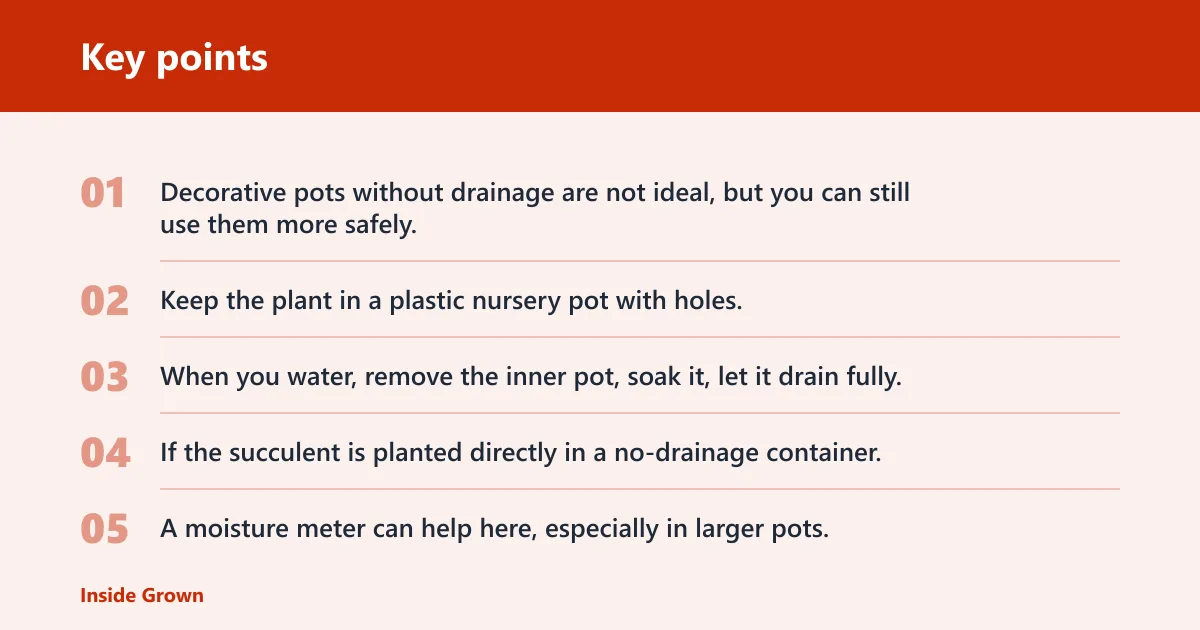
Decorative pots without drainage are not ideal, but you can still use them more safely. Keep the plant in a plastic nursery pot with holes, then place that pot inside the outer container. When you water, remove the inner pot, soak it, let it drain fully, and return it only when no water drips from the bottom.
If the succulent is planted directly in a no-drainage container, water very sparingly and only after confirming the lower mix is dry. A moisture meter can help here, especially in larger pots, but it should reach deeper soil, not just the surface. Surface dryness alone is not enough to declare the whole pot dry.
Why small pots dry faster
Small pots dry faster than larger pots because they hold less mix and often have less insulating mass. That means they usually need water more often than big containers. Large pots can stay wet below the surface long after the top layer looks dry, which is why deeper checking matters.
Suppose a 4-inch Haworthia sits on a bright south-facing windowsill in a drainage pot. The top inch may feel dry in a few days, but the lower mix can still be damp. In that case, deeper soil check beats a quick guess, especially if the room is cool or humid.
How do you know when to water again?
Water again only after the soil has dried out completely. For small pots, you can often judge by weight, pot feel, and the plant’s leaves. For larger pots, use a finger, skewer, or moisture meter to check deeper soil, because the surface can dry while the lower root zone still holds water.
What to check in the plant, the pot, and the room
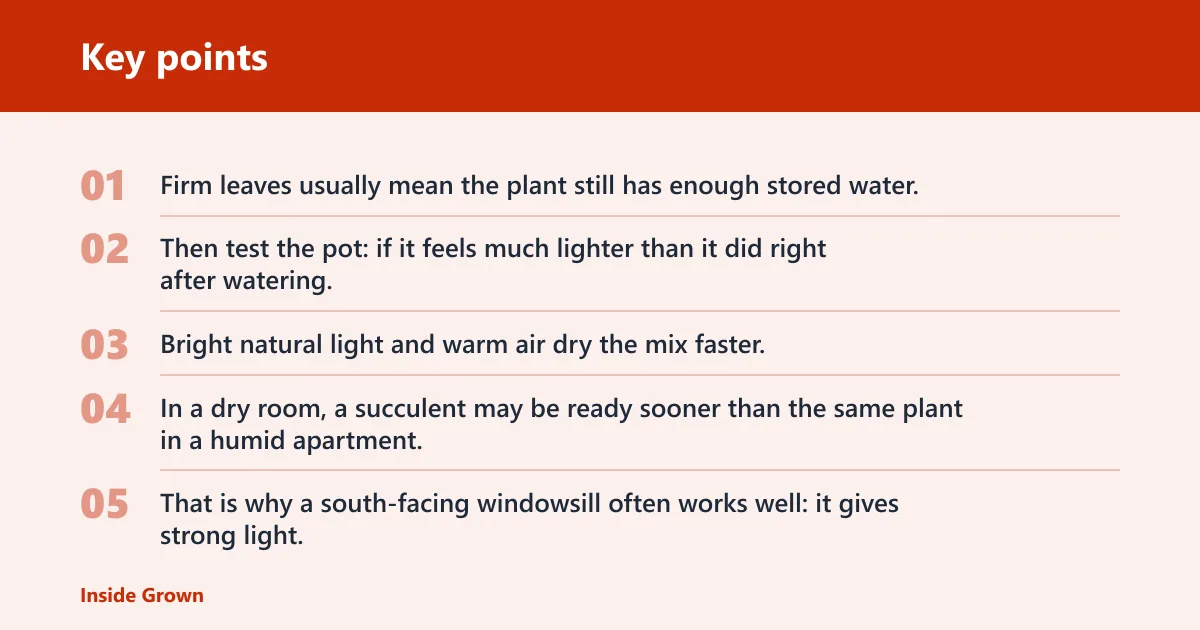
Look for slight leaf softness, not collapse. Firm leaves usually mean the plant still has enough stored water. Then test the pot: if it feels much lighter than it did right after watering, it may be time. Finally, read the room. Bright natural light and warm air dry the mix faster; low light and winter dormancy slow the process.
Humidity matters too. In a dry room, a succulent may be ready sooner than the same plant in a humid apartment. That is why a south-facing windowsill often works well: it gives strong light, which helps the plant dry at a workable pace. A shady shelf usually means slower drying and longer waits between waterings.
How to treat special cases
Haworthia and Gasteria often tolerate slightly more regular moisture than many desert succulents, but they still need dry-down between waterings. Lithops are far stricter and can rot quickly if watered like a typical jade plant. Epiphytic succulents can also break the usual pattern, so read the species before copying a generic schedule.
Watering frequency often drops in winter dormancy because cooler, darker conditions slow growth and drying. That does not mean “never water”; it means the plant uses less and the mix stays damp longer. Indoor succulents are often watered every 2-3 weeks in summer in one desert-based routine, then every 3-4 weeks in winter, but your room can push that shorter or longer.
What to do after overwatering
If a succulent has been overwatered, pause watering right away. Let the mix dry fully before you water again. If the plant is limp, yellowing, or smells sour, unpot it and inspect the roots, since root rot is the main overwatering failure mode and usually follows wet soil plus poor drainage.
When to unpot and inspect roots
Unpot if the soil stays wet for days, the base feels soft, or the leaves are dropping even though the pot is not lightening. Healthy roots should look firm. Brown, mushy, or hollow roots point to rot. Trim damaged roots with clean tools, let the plant air-dry, and repot into a dry, fast-draining mix.
Do not rush the recovery with more water. That only feeds the problem. After repotting, wait until the new mix is dry before watering again. If most roots were lost, the plant may need a longer pause than usual so fresh cuts can dry and new roots can form.
Frequently asked questions
How do I water succulents indoors?
Water only when the mix is completely dry, then water thoroughly until excess drains out. Use a pot with drainage when possible, a gritty succulent mix, and room-temperature water. Avoid misting and avoid small, frequent sips. The goal is a full wet-dry cycle, not constant moisture.
Do I water succulents deeply or lightly?
Water deeply. Soak the mix until water runs from the bottom, then let it dry fully before the next watering. Light watering wets only the top layer and can leave roots thirsty near the bottom while the upper mix stays damp enough to invite rot and fungus.
How often should I water indoor succulents?
There is no fixed calendar that fits every plant. Many growers start with 14-21 days, but the real answer depends on light, pot size, drainage, humidity, and season. Bright light and small pots dry faster. Winter and low light slow drying and stretch the interval.
How long can succulents go without water?
Quite a while, because they hold water in leaves, stems, and roots. A healthy indoor succulent in a cool, low-light room can last longer between waterings than one in a bright, warm window. The plant’s condition and the soil’s dryness matter more than the calendar.
Do succulents like water?
They do like water, but only in the right pattern. Succulents need water to stay alive and grow, yet they are built for infrequent watering. Their roots want a full drink followed by a dry period. Constant moisture is what causes trouble, not water itself.
Can succulents survive in water?
Most common indoor succulents are not meant to live in water long-term. Keeping roots submerged invites rot because they need air as well as moisture. Some stems can be propagated in water for a short time, but that is different from growing a potted succulent with roots sitting in water.