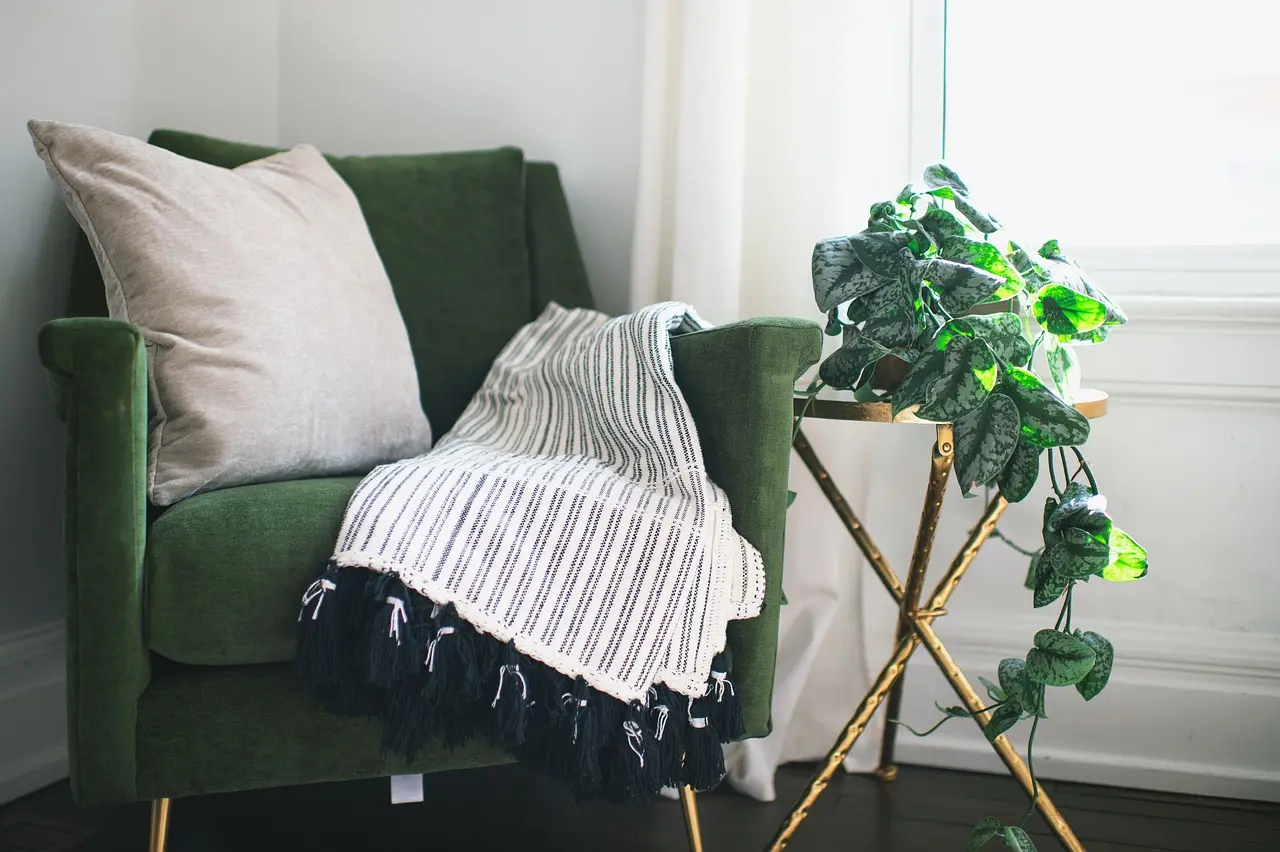
How to Care for Houseplants in Low-Humidity Homes
If your home stays below 40% relative humidity, move moisture-sensitive plants away from vents and windows first, then add a humidifier only for plants that still show dry-air stress after about a week. Left alone, low humidity can cause crispy leaf edges, stalled growth, and watering mistakes that rot roots. This guide shows how to tell whether the fix is plant choice, placement, or a targeted humidity change.
Why low humidity stresses houseplants

Relative humidity is the amount of moisture in the air compared with what air can hold at that temperature. When indoor air is dry, leaves lose water faster, so some plants dry out faster than their roots can replace that moisture. Many tropical houseplants prefer humidity between 40% and 60%, and some, such as Chinese evergreens, prefer around 60% to 70%.
Most homes have average or low humidity levels, especially in arid climates, and winter heating can make that worse. Plants from hot, humid, tropical-like conditions such as Monstera and Calathea usually show stress first. Dry air does not mean every plant needs the same treatment. It means you need to match the plant to the room, or change the room for the plant.
What relative humidity means indoors
A hygrometer gives you the number instead of a guess. If a room reads in the 30s or low 40s, it is often dry enough to stress humidity-sensitive plants, especially near registers, drafty windows, or hot forced-air heat. That reading matters more than how the room feels to you.
Why leaves lose water faster in dry air
Leaves release moisture through tiny openings. In dry air, that moisture leaves faster than roots can keep up, so the plant may curl, brown, or stall. If the soil is already dry, the plant can look thirsty even before the potting mix is fully depleted. That is why leaf symptoms and soil checks must be read together.
Which plants need the most humidity?
Humidity-demanding plants usually come from consistently moist habitats. They are the ones most likely to react to dry vents, winter heat, and AC. If your home stays dry year-round, place those plants in rooms that naturally hold more moisture or add a real humidity source. Do not force every tropical plant into the driest corner of the house.
How to tell if humidity is the problem
Start with a hygrometer, then compare the plant’s symptoms with the room it occupies. If a plant sits near a heater, AC vent, sunny glass, or a drafty window, dry air may be part of the problem even when watering looks correct. The goal is to separate humidity stress from underwatering, overwatering, salt burn, and temperature shock.
Use a hygrometer first
Confirm the room before changing care. A plant in a bathroom may live in very different air than one on a bedroom shelf. If one room is consistently drier, that room needs a different plant choice or a targeted humidity fix. Guessing often leads to extra watering, which can create a second problem.
Separate humidity stress from underwatering
Low humidity and underwatering can look similar, but the fix is not always the same. Humidity stress often shows up as crispy edges, curling, or stalled growth while the potting mix is still somewhat moist. Underwatering usually pairs with dry soil all the way through the pot. If the soil is bone dry, it is usually safe to water.
Watch for vent, window, and heater exposure
Plants near heat vents, air conditioners, and drafty glass lose moisture faster. In winter, a windowsill can be colder and drier than the rest of the room. In summer, AC can create the same drying effect. Move the plant before you change the watering pattern. That simple step often solves the problem faster than adding water.
Say your pothos sits on a shelf 18 inches above a heating vent and the leaves start curling inward while the pot dries in half the usual time. That pattern points to location stress first. Moving it across the room may help more than watering sooner.
Low-humidity houseplant triage
Use the symptom to narrow the cause before you change care. This table separates humidity stress from common look-alikes, then points you toward the right fix. It also tells you when to move the plant, when a humidifier makes sense, and when the better answer is a tougher species.
| Symptom | Likely cause | Quick test | Immediate fix | Move plant, add humidifier, or switch species? |
|---|---|---|---|---|
| Crispy tips | Dry air, salt buildup, or both | Check humidity and the soil surface; look for white crust on the pot | Move away from vents, flush soil if salts are visible, water only when needed | Move plant first; add humidifier if the room stays dry |
| Curling leaves | Humidity stress or heat draft | See whether the plant sits near a vent, heater, or drafty window | Relocate to steadier air and confirm soil moisture | Move plant |
| Stalled growth | Low humidity, low light, or seasonal slowdown | Check room light and humidity together | Improve light first, then add humidity if the plant is a humidity-lover | Add humidifier or switch species, depending on the room |
| Fast-drying soil | Dry air, strong light, or a small pot | See whether the pot dries much faster than usual after a placement change | Water in the morning, then reassess placement | Move plant if the spot is harsh; humidifier only if the plant needs it |
| Leaf drop | Humidity stress, drafts, or sudden room change | Check for a recent move, heater use, or AC exposure | Stabilize the room and avoid overwatering | Move plant |
| Brown edges | Dry air or fertilizer salts | Look for dry room air plus crust on the pot rim | Rinse excess salts from the soil and raise humidity if needed | Move plant first; add humidifier if the room is dry |
| Wilting with wet soil | Overwatering and possible root rot | Feel the mix below the surface; if it stays soggy, stop watering | Let the pot drain, improve air flow, and wait before watering again | Switch watering habits, not humidity first |
| Dusty foliage or pale leaves | Low light, dust, or poor air circulation | Wipe one leaf and compare its color in brighter, indirect light | Clean leaves gently and move the plant to better light if needed | Move plant if light is poor; humidity is secondary |
Which plants handle dry air best?
Choose plants that tolerate the room you actually have. Pothos tolerates low levels of humidity and also does well in the low light common in many homes. Snake plant grows well inside homes with little care. Aloe vera generally dislikes high humidity and needs bright light. Cornplant, or Dracaena fragrans, tolerates low humidity and does well in bright, indirect light.
Pothos
Pothos is one of the easier choices for a drier home, but it still prefers soil that dries moderately before watering. Some varieties handle dry air better than others, so watch how a specific plant responds after you place it. Too little humidity could turn your pothos yellow, especially if the pot also dries too fast.
Snake plant
Snake plant is a good fit for rooms where care needs to stay simple. It grows well inside homes with little care and prefers well-drained soil. Dry indoor air is usually less of a problem for this plant than soggy soil, which can do more harm than the humidity level itself.
Aloe vera
Aloe vera is better suited to bright, dry indoor conditions than many tropical plants. It dislikes high humidity, so it is often a better match for a sunlit room than a steamy bathroom. Water only after the soil dries, and avoid keeping it in a damp mix.
Cornplant (Dracaena fragrans)
Cornplant tolerates lower humidity and prefers bright, indirect light. If it becomes too tall or leggy, pruning a single stem can help manage its shape. This plant is a practical option for a dry living room, especially when the alternative is forcing a humidity-loving plant into a poor spot.
Where dry-air plants fit in the home
Put humidity-tolerant plants in rooms that stay dry, bright, or both. Save bathrooms, kitchens, and other naturally humid rooms for plants that want more moisture in the air. If a room is close to a heater or vent, a tougher plant is usually the better answer than trying to force a tropical species to adapt.
How to add humidity without overdoing it
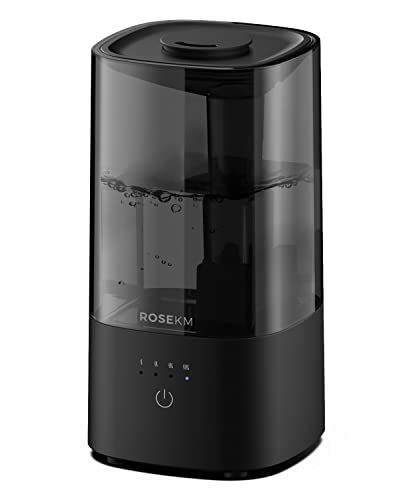
Use a humidifier when the plant needs more moisture in the air than the room can supply on its own. This works best for a small cluster of humidity-loving plants, or for one plant that keeps showing dry-air stress after you move it away from drafts and vents. Do not treat a humidifier as a fix for a wrong plant in the wrong room.
When a humidifier is worth it
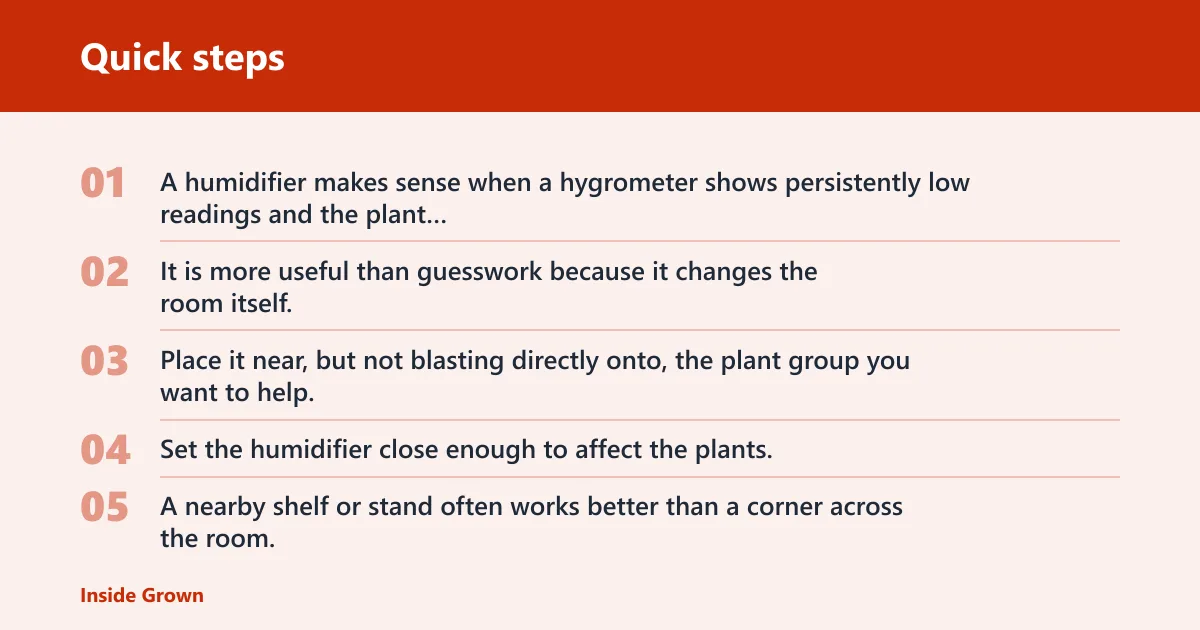
A humidifier makes sense when a hygrometer shows persistently low readings and the plant is a known humidity-lover. It is more useful than guesswork because it changes the room itself, not just the leaf surface. Place it near, but not blasting directly onto, the plant group you want to help.
Where to place a humidifier
Set the humidifier close enough to affect the plants, but not so close that water condenses on leaves, walls, or windows. A nearby shelf or stand often works better than a corner across the room. The point is steady air moisture, not a wet surface or constant leaf drip.
Pebble trays and misting: limits and upkeep
Pebble trays can help a little in a small area, but they need ongoing water maintenance and do not replace a humidifier in a truly dry room. Misting is temporary at best and often too brief to matter for most dry homes. It can also leave leaves wet without changing the room’s humidity in a lasting way.
Why bathrooms and kitchens help
Bathrooms and kitchens often stay more humid than bedrooms or living rooms, especially after showers or cooking. Those rooms can suit humidity-loving plants better than a dry shelf near a heat register. Even then, check for light and airflow. A humid room with poor light still causes problems.
Suppose a Calathea sits in a 35% humidity bedroom and drops leaves after a winter move from a kitchen shelf. The move from a humid room to a dry one can explain the change by itself. A humidifier or a return to the kitchen may help more than extra watering.
How should you water in a dry home?
Low humidity often makes potting mix dry faster, so check soil before watering rather than following a rigid calendar. For most houseplants that need watering, a top up every 2-3 weeks is common, but the room, pot size, and light level can change that. Watering is best done in the morning, and room-temperature water helps the plant avoid another stressor.
Check soil before watering
Use your finger or a moisture check to see whether the mix is actually dry below the surface. If the soil is bone dry, it is usually safe to water. If it still feels damp, wait. This matters even more in dry homes, because fast surface drying can trick you into watering too soon.
Morning watering and room-temperature water
Morning watering gives the plant time to absorb moisture and dry down during the day. That lowers the chance of damp soil sitting cold overnight. Room-temperature water is a safer default than very cold water, especially when the plant is already dealing with dry indoor air.
Avoid root rot from wet soil
Do not water more just because the air is dry. Root rot risk rises when the soil stays wet too long, especially in cooler or darker rooms. If the plant moves into a winter spot with less light, it will usually need less frequent watering, not more. Wet soil plus low light is a bad pairing.
What to do during winter heating season
Winter heating season often creates some of the driest indoor air of the year, and plants can show that shift quickly. Move them away from vents and drafty glass, then check each room separately. A heated living room, a cool bedroom, and a humid bathroom may all need different care. Do not apply one watering plan to all three.
Move plants away from vents and drafty glass
A plant sitting beside a heating vent or against cold, drafty windows gets hit from both sides. The air dries it out, and the temperature swing adds stress. Shift humidity-sensitive plants a few feet away first. That small move can reduce leaf loss and crispy tips before any other change.
Expect faster drying in heated rooms
Heated rooms often dry soil faster, especially for smaller pots and thirstier plants. Check those pots more often, but still use the soil as the guide. A warmer room does not always mean more watering. If the plant is in a darker winter spot, it may need less water than you expect.
Adjust light and watering as rooms change
Rooms change in winter. Sun angles shift, windows cool down, and heaters run more often. If a plant starts to struggle after a move, revisit both placement and watering. Sometimes the fix is simply to move a humidity-sensitive plant into the room that naturally suits it better.
Frequently asked questions
How do you care for houseplants in a low-humidity home?
Start by checking room humidity with a hygrometer, then move humidity-sensitive plants away from vents and drafty windows. Choose species that tolerate dry air when the room stays below 40% relative humidity. Water only after checking the soil, and use a humidifier only for plants that still show dry-air stress.
How do you increase humidity for houseplants without overdoing it?
Use a humidifier for the plants that need it, especially in a room that stays dry all day. Place it near the plants, but not blasting directly onto leaves or walls. Pebble trays and misting can help a little, but they are limited and need regular upkeep.
Which houseplants do best in low humidity?
Pothos, snake plant, aloe vera, and cornplant are practical choices for drier homes. Pothos tolerates low humidity and low light. Snake plant handles little care. Aloe vera prefers bright light and dry conditions. Cornplant tolerates lower humidity and does well in bright, indirect light.
Do houseplants help with humidity in a room?
Do not count on houseplants to change room humidity enough to solve a dry home. Their main value here is that some species tolerate dry air better than others. If a room is truly dry, a hygrometer and a humidifier give you more control than plant size or leaf count.
How often should you water houseplants in dry air?
There is no fixed schedule that works for every dry room. Low humidity can make soil dry faster, so check the mix before watering. For many houseplants, a top up every 2-3 weeks is common, but the right timing depends on pot size, light, heat, and airflow.
What are signs that low humidity is stressing a houseplant?
Look for crispy tips, brown edges, curling leaves, leaf drop, and stalled growth. These signs are more convincing when the plant sits near a vent, heater, AC unit, or drafty window. If the soil is still wet, though, the issue may be overwatering rather than dry air.
Are pebble trays or misting worth it for indoor plants?
They can be worth a small try, but only as limited supports. Pebble trays need water kept in them, and misting is temporary. Neither is a substitute for a humidifier in a truly dry room. If a plant needs steady humidity, change the room conditions instead.
How do you care for indoor houseplants in winter heating season?
Move plants away from vents and cold glass, then recheck soil more often because heated rooms dry faster. Expect the same plant to need a different watering rhythm than it did in fall. If a plant also gets less light in winter, reduce watering rather than increasing it.