How to Water Houseplants When You Travel
For most common short trips, a deep watering before you leave is the simplest option; for longer gaps, use a wick or reservoir matched to the plant and pot. Miss the timing and you get wilt, root stress, or dried-out soil. This guide matches watering method to trip length, plant type, pot size, and home conditions.
This guide is part of our Houseplant care guide for healthy indoor plants series.
What to check before you leave
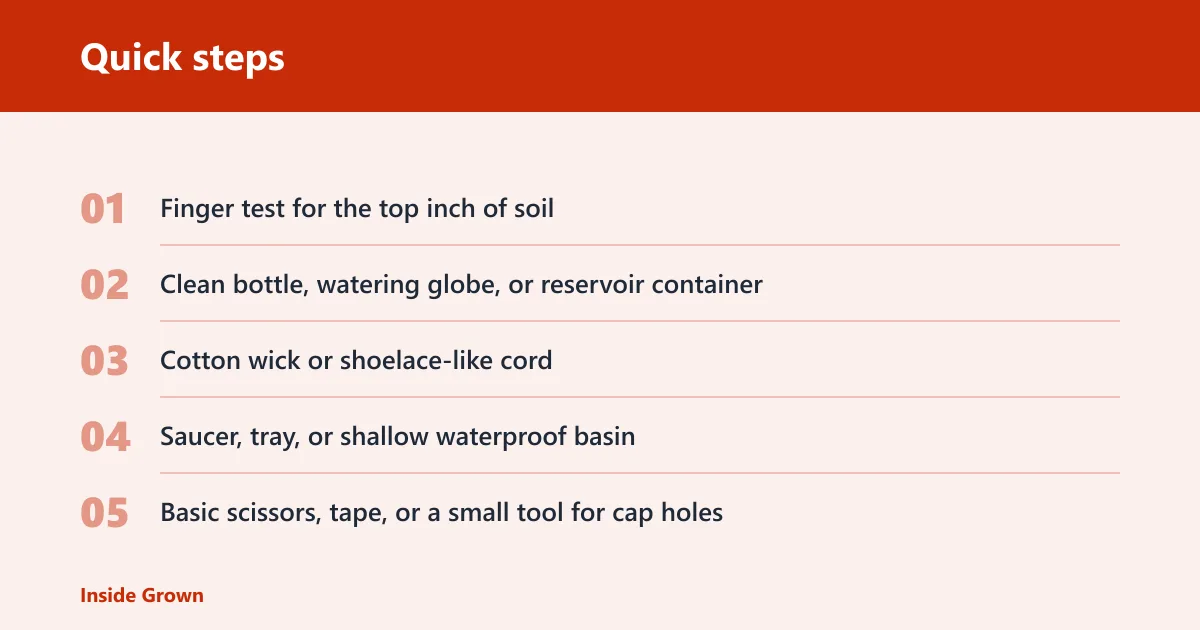


Start with the top inch of soil. If it feels dry, water deeply before you leave so the chosen method has a full reservoir to work from; if it still feels damp, skip that soak and avoid leaving roots wet for no reason. Pot size, room heat, and light change how fast the soil dries.
- Finger test for the top inch of soil
- Clean bottle, watering globe, or reservoir container
- Cotton wick or shoelace-like cord
- Saucer, tray, or shallow waterproof basin
- Basic scissors, tape, or a small tool for cap holes
Suppose a 6-inch pothos sits in a hot west-facing window. A dry top inch means the plant will pull through water faster than the same plant in a shaded room, so the pre-trip soak matters more than the gadget.
Vacation watering decision table
| Trip length | Plant type | Pot size | Watering method | Prep step | Failure risk |
|---|---|---|---|---|---|
| 2 days | Most foliage plants | Small to medium | Pre-trip deep watering | Water until the root ball is fully moistened, then drain | Low, unless the room is very hot |
| 5 days | Tropicals and mixed collections | Small to medium | Glass bottle reservoir | Use a clean wine bottle, or a smaller soda or beer bottle, with the neck set several inches into the soil | Moderate if the opening clogs or drains too fast |
| 7 days | Thirstier houseplants | Medium | String drip system | Place one end of a cut shoelace in soil and the other in water | Moderate if the wick is too thin or slips out |
| 10+ days | Grouped plants | Small to large | Bathtub method or commercial self-watering device | Raise pots above standing water and confirm drainage control | Higher if pots sit in water or the setup is untested |
| Heatwave conditions | Any fast-drying plant | Any | Wick plus bottle or commercial device | Move plants away from direct sun, hot glass, and vent blasts, then test the setup 24 hours before leaving | High if evaporation outpaces refill rate |
How long can houseplants go without water?
Most houseplants can handle a short absence if the soil starts evenly moist and the room stays cool. Two days usually needs only a good soak. Around 5 days often calls for a bottle reservoir. For about a week or more, a wick, tray, bathtub setup, or a device matched to the plant and pot is commonly used.

2-day trips
A deep watering before departure is usually enough for common foliage plants in average indoor conditions. Keep plants away from direct sun and away from vents. Smaller pots dry faster, so a sunny windowsill shortens that window.
5-day trips
This is the range where a glass bottle reservoir starts to help. A clean wine bottle or a smaller soda or beer bottle can work if the opening controls flow well. (Wikihow)
7-day trips
For a week away, a wick or string drip system is safer for many tropicals and small pots. The soil must already be moist, or the wick may not start evenly. Grouping plants also slows drying by reducing direct air movement.
10+ day trips
Longer absences need a more reliable setup than a simple bottle for most homes. Use a bathtub method for grouped plants only if drainage is managed and pots are elevated above standing water. Otherwise, a commercial self-watering device or sitter is safer.
Heatwave conditions
Heat changes the plan. A plant that would coast for 5 days in a cool apartment may need extra help near a hot window or radiator. Move it away from direct light, use a method that refills gradually, and test again before you leave.
How do you set up the watering method?
Choose the method that fits the plant and trip length, then test it about 24 hours before you leave. The test catches clogged openings, a bottle that drains too fast, or a wick that does not reach the water. If the soil is dry at the start, water it first so the system does not have to catch up from zero.
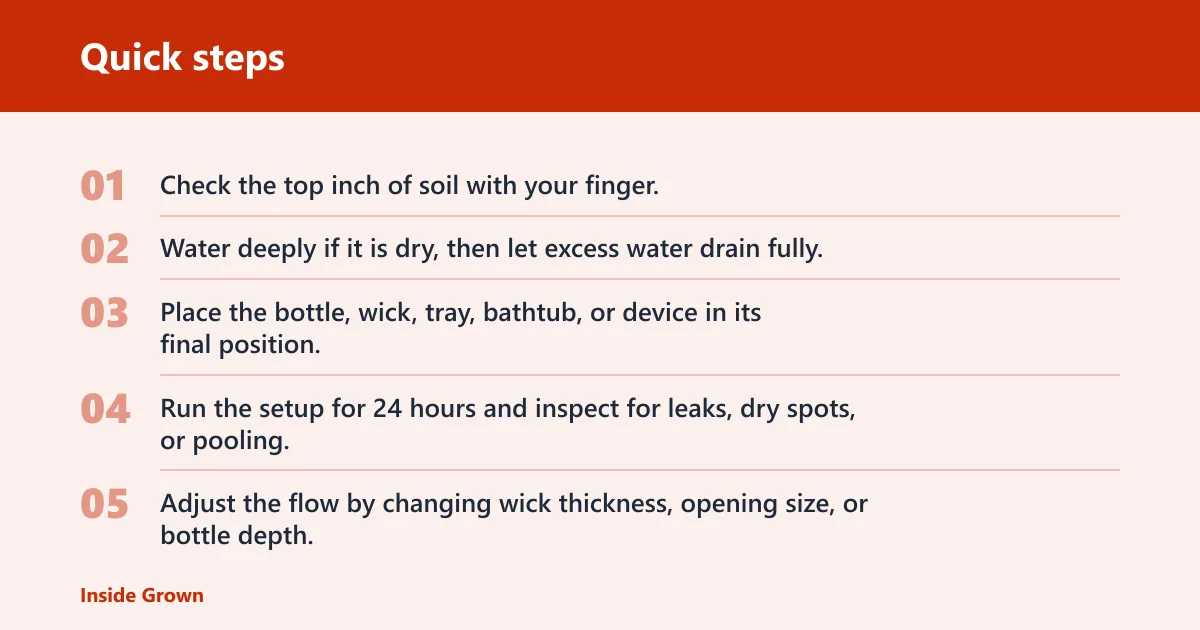
- Check the top inch of soil with your finger.
- Water deeply if it is dry, then let excess water drain fully.
- Place the bottle, wick, tray, bathtub, or device in its final position.
- Run the setup for 24 hours and inspect for leaks, dry spots, or pooling.
- Adjust the flow by changing wick thickness, opening size, or bottle depth.
- Top up the reservoir as needed, then recheck after several hours.
Turn a clean bottle into a watering globe
Use a clean wine bottle as a DIY water globe. Turn it upside down so it can feed water into the soil over time; a smaller soda or beer bottle can also work. The bottle neck should sit several inches into the soil. This is a short-trip option, not a fix for dry soil and hot rooms.
Build a string drip system
Cut a cotton shoelace or similar wick material, place one end in the soil and the other end in a water container. Use a container that sits lower than the pot, choose a wick about shoelace thickness, and keep one end buried in the soil while the other stays in the water. This low-cost setup gives gradual watering and works well when you need a slower feed than a bottle can provide.
Set up a glass bottle reservoir
Use a clean wine bottle, or a smaller bottle if the pot is compact. The bottle can be used without a lid, or with holes punched in the cap. Soil texture matters; very airy mixes can empty the bottle faster than dense mixes.
Arrange a tray or bathtub setup
Use this for grouped plants or a small collection. Keep pots raised above standing water so drainage stays under control, and use a shallow layer of water with the pots on a riser so the bases are not sitting in water. Avoid this method for plants that should not stay wet for long periods. The method supports bottom watering while away, but only if the pots can draw moisture without sitting in a puddle for days.
Which method fits your plants?
Plant type matters as much as trip length. Succulents and other dry-soil plants need less frequent water and usually do better with a dry spell than with a constant reservoir. Tropical plants dry faster and may need a wick or bottle sooner. Moisture-loving plants usually need the most careful planning.
Succulents and other dry-soil plants
These usually need the least intervention. A deep watering before a short trip is often enough, and a large reservoir can keep the soil too wet. If the mix stays damp for too long, step down to a very slow wick or skip the extra device.
Tropicals that dry faster
Pothos, philodendron, and similar plants often respond well to a wick or bottle reservoir when the trip passes the 5-day mark. Hot windows and HVAC vents increase evaporation, so move these plants to a cooler spot before you leave.
Moisture-loving plants
These need the most careful match between container and method. A saucer or tray reservoir can work for smaller collections, but only if runoff is controlled. If the soil dries fast in your home, a commercial self-watering device may be the safer choice.
Large pots versus small pots
Large pots hold water longer and often need less help. Small pots dry faster and may need a wick, bottle, or globe sooner, especially in low humidity. Match the reservoir size to the root ball; a huge reservoir in a small pot can leave roots too wet.
Common mistakes
Most failures come from timing, not the container itself. The same method that works for one room can fail in another because of heat, light, pot size, or a dry soil mix that repels water. Fix the condition first, then the container.
- Skipping the pre-trip soak: water deeply before leaving if the soil is dry.
- Using no 24-hour test: set the method up a day early so you can fix leaks and clogs.
- Ignoring drainage: raise pots above standing water and never leave roots submerged.
- Choosing flow that is wrong for the plant: succulents usually need less, tropicals often need more.
- Leaving plants in hot sun: move them away from the brightest window if the trip is longer than a weekend.
A common first-timer mistake is putting a bottle globe into bone-dry soil and expecting it to work right away. The soil can pull water unevenly, or not at all, so the bottle appears “empty” while the root ball stays dry. Wet the soil first, then test again after several hours.
If that did not work, try the next larger reservoir or a wick system. For example, if a bottle empties in a day, switch to a thicker wick or move the plant to a cooler, shadier spot before your next trip. If the pot stays wet, cut flow by using a smaller opening or a shorter wick.
Frequently asked questions
How do I water indoor plants while on vacation?
Check the top inch of soil first, then water deeply if it is dry. For trips under a week, a bottle globe or deep soak often works; for longer absences, use a wick, tray, bathtub setup, or a commercial device matched to the pot size and room conditions.
How can I keep houseplants alive while on vacation?
Start with the plant’s soil, pot, and light level. Water before you leave, then choose a slower method for thirstier plants or small pots. Keep them away from hot direct sun, group them if possible, and run a 24-hour test before you go.
Should I soak plants before I leave town?
Yes, if the topsoil is dry. Water until the root ball is fully saturated, then let excess drain so the plant starts from a stable moisture level. Do not soak again if the soil is already damp, because that raises the risk of root stress.
Are watering globes or bottle systems better for houseplants?
For short trips, either can work if flow matches the plant. A globe or bottle is simplest for a few days, while a wick gives slower delivery for a week or more. The better choice is the one that empties at the same pace the soil dries.
What’s the easiest DIY self-watering method for indoor plants?
A clean bottle turned upside down is usually the easiest. It needs few parts, can be made from a wine bottle, and works by releasing water into the soil over time. Use it for short trips and test the flow 24 hours before leaving.
How to water houseplants when on holiday
Match the setup to trip length. Use a deep soak for a short holiday, a bottle for about 3-5 days, a wick for longer gaps, and a tray or bathtub setup only when drainage is controlled. Hot rooms usually need a slower, more reliable method.