How to Care for Pothos Plants Indoors
Keep pothos in bright, indirect light, water only when the top 1 to 2 inches of soil are dry, and use a pot with drainage holes. Miss those basics, and you usually get yellow leaves, root rot, or long bare stems. This guide shows the symptom, the likely cause, and the care fix.
What your pothos is telling you


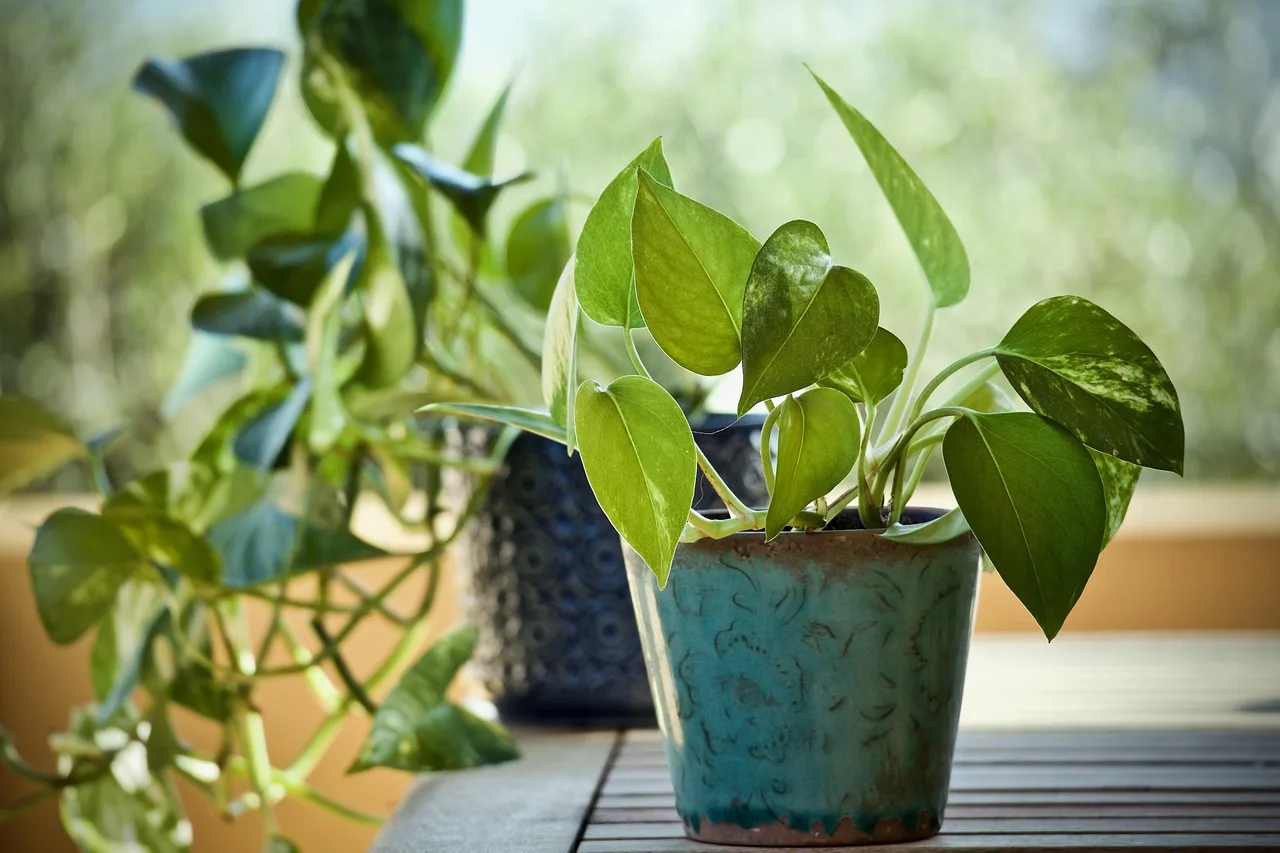
Pothos, or Epipremnum aureum, is a trailing or climbing indoor vine with heart-shaped leaves. It is forgiving, but its leaves, stems, and soil still send clear signals. Read those signals first, then adjust light, water, soil, or pruning instead of changing everything at once. (WISC)
Start with three checks: feel the top of the soil, look at leaf color and shape, and inspect the stems near the pot. Dry leaves with hard soil point to a different fix than soft yellow leaves in wet mix. That difference matters.
A pothos in a north-facing room with vines stretched far from the pot and wide gaps between leaves often suggests too little light. That usually points to too little light, not a watering problem. Move it closer to bright indirect light and trim above a node rather than adding more water.
Pothos care decision table
| Symptom or situation | Most likely cause | Quickest fix | Next check after 7 days |
|---|---|---|---|
| Dry topsoil | The top layer is dry, but the lower root zone may still hold moisture | Water deeply until moisture reaches the root zone, then let excess drain fully | Feel the top 1 to 2 inches again before watering |
| Soggy soil | Water is sitting too long, often because the pot drains poorly or the mix stays heavy | Pause watering, empty the saucer, and improve drainage if the mix stays wet | Check for a faster-drying mix and any soft roots or a sour smell |
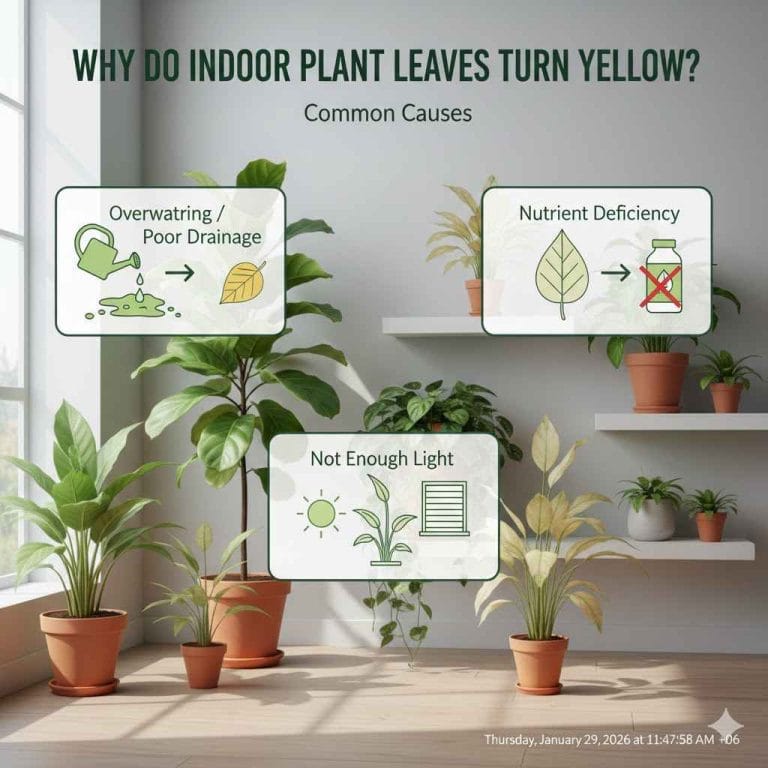
| Yellow leaves | Often overwatering, though low light can also slow the plant and weaken leaves | Let the mix dry more between waterings and move the plant to brighter indirect light | See whether new leaves stay green and firm |
| Crispy tips | Dry air, underwatering, or salt buildup from fertilizer | Water on a steadier cadence, raise humidity if the room is dry, and flush excess fertilizer if needed | Check whether new tips stay green instead of browning |
| Curling leaves | Too little water, hot dry air, or strong direct sun | Check soil moisture first, then move the plant out of harsh sun and away from vents | Look for leaves that relax and stop curling |
| Leggy growth | Low light | Move to brighter indirect light and prune long stems above a node | New growth should emerge closer together |
| Faded variegation | Not enough light for a variegated type | Move it closer to bright indirect light without direct sun | New leaves should show stronger patterning |
| Drooping after watering | Roots may already be stressed from soggy soil or compacted mix | Stop watering until the top layer dries, then check drainage and roots | See whether the plant firms up instead of staying limp |
| Roots circling the pot | The plant is rootbound | Repot into a container 1 to 2 inches wider with fresh mix | Water should spread through the new mix instead of running straight out |
| Dust-covered leaves | Surface dust blocks light and clogs leaf pores | Wipe leaves with a damp cloth | Leaves should look cleaner and take light better |
What light does pothos need indoors?
Bright, indirect light is the best indoor setting for pothos. It tolerates low light, but low light slows growth and reduces variegation. Avoid direct sunlight, which can scorch leaves. If the plant is variegated, it usually needs more light than a plain jade-green pothos.
Best placement for bright indirect light
Place pothos a few feet from an east- or west-facing window, or near a bright window with a sheer curtain. The goal is strong ambient light without hard sun on the leaves. A bright room with no direct rays is usually a better fit than a dim corner.
When low light is acceptable
Low light is acceptable if you want slower growth and do not mind longer gaps between leaves. It is less suitable for variegated types, which can fade or lose pattern. If the plant leans hard toward the window, the light is probably too low.
Signs direct sun is too strong
Pale patches, scorched edges, or a washed-out look often point to too much direct sun. Move the plant back from the glass or filter the light. A little morning sun may be tolerated by some plants, but bright indirect light is the safer target indoors.
How often should you water pothos?
Water pothos only when the top 1 to 2 inches of soil are dry. Every 1 to 2 weeks is common, but the cadence changes with temperature, humidity, pot size, and light. A warm, bright room dries faster than a cool room with still air.
Use the top 1 to 2 inches as your cue
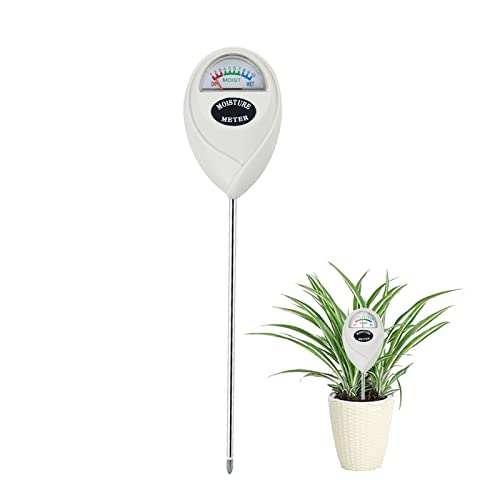
Stick a finger into the mix before watering. If the top layer feels dry but the lower soil still has some moisture, hold off a bit longer. If the soil feels dry down to that first 1 to 2 inches, water thoroughly until excess drains out.
How room temperature and humidity change timing
Warmer rooms and brighter windows usually mean faster drying. Dry winter air can pull moisture from the pot more quickly, while cooler rooms can slow drying. In average indoor humidity, pothos usually settles into a once-every-1-to-2-weeks pattern, but the soil should decide, not the calendar.
Picture a pothos on a shelf above a heater vent in winter. The topsoil may dry fast, but the air can still be too dry for the leaves. In that case, check the pot more often, move it away from the vent, and consider a humidifier if the tips keep browning.
What to do after overwatering
If the soil stays soggy, stop watering and let it dry. Empty any saucer, and make sure the pot is not sitting in runoff. If the mix stays wet for many days, the plant may need a better-draining mix or a pot with drainage holes.
What to do after underwatering
If the leaves are limp, the soil is dry, and the pot feels very light, water deeply and let the excess drain. If the plant perks up within a day or two, the fix is usually a steadier cadence. Repeated bone-dry cycles can cause crispy tips and stunted growth.
Soil, pot, and drainage basics
Use a well-draining potting mix. A houseplant mix works well, and perlite or coco coir can help if drainage is weak. Slightly acidic to neutral soil is fine. Drainage holes are required so water does not sit at the roots and raise root rot risk.
Choose a mix that dries at a sensible pace
A mix that holds some moisture but does not pack tightly is the goal. If water pools on top or the pot stays wet too long, the mix is too dense. A little perlite opens it up. Coco coir can help the blend breathe while still holding some moisture.
What to do with a compacted nursery pot
New store-bought pothos often arrive in compacted mix that holds water longer than you want indoors. If the pot stays wet after purchase, wait until the top layer dries, then slide the plant out and inspect the roots. Trim only clearly rotten roots, then repot into fresh mix if the old soil is dense and slow to dry.
A common first-timer mistake is buying a pothos in a decorative pot with no drainage holes and watering it on a fixed schedule. The leaves may yellow even though the surface looks dry. The issue is often wet roots below the top layer, not thirst.
How should you prune and repot pothos?
Trim above a leaf node to encourage bushier growth, and repot when the plant is rootbound. Pothos usually moves into a pot 1 to 2 inches wider with fresh soil. Pruning removes leggy vines, while repotting gives crowded roots room to keep growing.
When leggy vines need pruning
If stems are long, sparse, and mostly bare near the pot, pruning helps. Cut just above a node, where a leaf attaches to the stem. New growth usually emerges from that area and creates a fuller plant. You can use the cut pieces for propagation if each cutting has a node.
How to tell if the plant is rootbound
Roots circling the pot, water running straight through, or a plant that dries unusually fast can signal rootbound growth. The plant may also stall even with good light and regular feeding. If roots fill the container, a bigger pot is the right next step.
Repot into a pot 1 to 2 inches wider
Move into a pot that is only slightly larger. A very large container can hold too much wet mix around the roots. Fresh potting soil and a pot 1 to 2 inches wider give the plant room without turning the root zone soggy.
How to keep pothos healthy long term
Feed lightly, keep temperatures steady, clean the leaves, and take cuttings when you want more plants. Pothos grows best indoors when it gets consistent care rather than frequent changes. It adapts to average indoor humidity, but moderate to high humidity is better in dry rooms.
Fertilizer timing for active growth
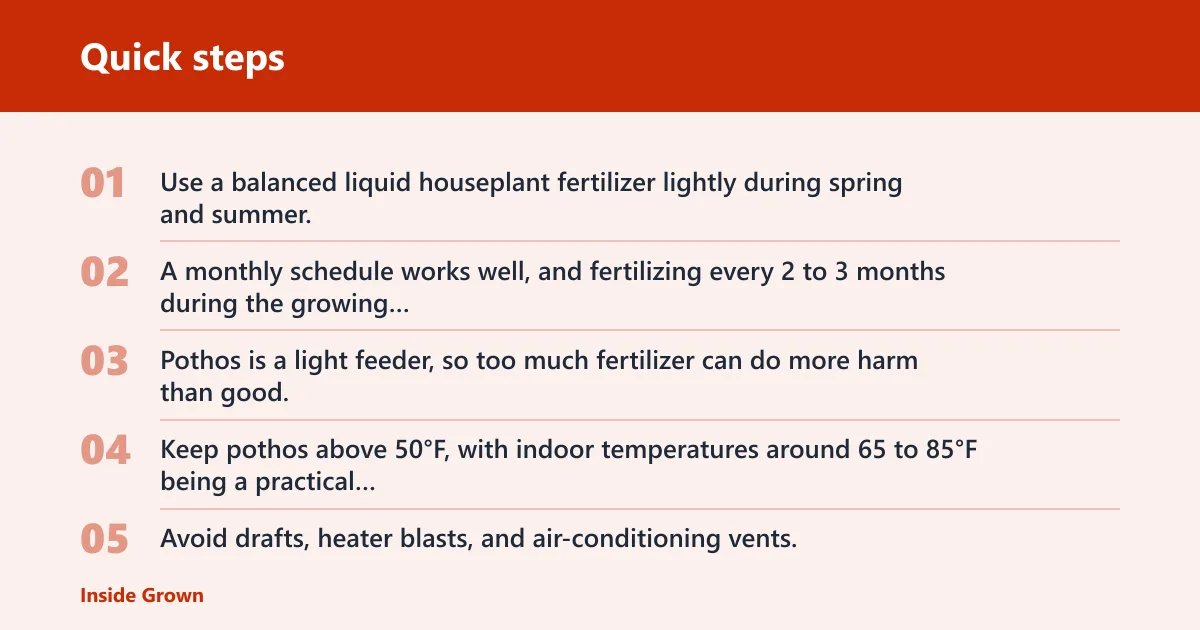
Use a balanced liquid houseplant fertilizer lightly during spring and summer. A monthly schedule works well, and fertilizing every 2 to 3 months during the growing season is also common. Pothos is a light feeder, so too much fertilizer can do more harm than good.
Humidity and temperature checks
Keep pothos above 50°F, with indoor temperatures around 65 to 85°F being a practical target. Avoid drafts, heater blasts, and air-conditioning vents. If the room is dry, misting or a humidifier can help, though the plant usually adapts to average indoor humidity.
Leaf dust and routine cleaning
Wipe leaves with a damp cloth when dust builds up. Clean leaves absorb light better and look healthier. This simple step matters more in bright rooms where the plant can actually use that light. Dust can also hide early pest damage, so regular cleaning helps with inspection.
Propagation from stem cuttings
Pothos can be grown in water or soil from stem cuttings. Each cutting needs a node, since that is where roots form. Cut below a node, place the node in water or moist mix, and keep it in bright indirect light while roots develop.
For pet safety, place pothos where cats and dogs cannot chew the leaves or reach fallen cuttings. The plant contains calcium oxalate and is mildly toxic to cats and dogs. High shelves, hanging planters, and rooms pets do not enter are safer than a low table or floor stand.
Frequently asked questions
How often should I water a pothos indoors?
Water when the top 1 to 2 inches of soil feel dry. Every 1 to 2 weeks is common, but warm rooms, bright windows, and dry air can speed drying. Cooler rooms or higher humidity usually slow it down, so check the soil instead of watering on a fixed schedule.
Why are my pothos leaves turning yellow?
Yellow leaves often mean overwatering, especially if the soil stays soggy or the pot lacks drainage holes. Low light can also cause weaker growth and yellowing over time. Check the soil first, then the light. If the mix stays wet, change the watering pace and drainage setup.
When should I repot a pothos?
Repot when roots circle the pot, water runs through too fast, or the plant dries out unusually quickly. Move it into a pot 1 to 2 inches wider with fresh potting soil. That size change gives room without trapping excess moisture around the roots.