Signs your houseplant is overwatered: how to save it
If the soil is soggy, roots smell sour, or leaves yellow and drop, act in 60 seconds: let a minor case dry, unpot if the stem feels soft, trim roots that are brown or mushy, and repot now if rot is moving through the root ball. Leave it alone and roots lose oxygen, rot spreads fast, and one bad watering mistake can kill the plant in days. This guide gives a severity checklist, quick rescue steps, and the exact point to cut roots or repot.
This guide is part of our Houseplant care guide for healthy indoor plants series.
What you’ll need before you start


- Sharp, sterilized pruning shears
- Clean pot or scrubbed container with drainage holes
- Fresh potting mix
- Newspaper for wicking excess moisture
- Gloves and a tray or towel for cleanup
📊 Overwatering is called the "#1 killer of houseplants" on Blooming Expert. Source: How to Save an Overwatered Plant (Step-by-Step Rescue Guide).
Quick answer: is your plant overwatered?
Use the soil, roots, and smell together. If the top is damp but the pot feels only slightly heavy, dry it out. If soil still feels wet a couple of inches down, it may be worth unpotting the plant and checking the roots. If roots are brown or black and mushy, repot now. If the stem is soft and rot has spread, odds are poor.
Printable overwatering triage table
| Stage | Soil feel | Root appearance | Smell | Next action |
|---|---|---|---|---|
| Mild | Top layer wet; 2 inches / 5 cm down is only damp | No inspection needed yet, or roots are still white/tan and firm | No odor | Stop watering, increase air movement, and let the pot dry |
| Moderate | Wet through the top 2 inches / 5 cm | Some brown or black roots, but many still firm | Faint sour smell | Unpot, trim rot, repot in fresh mix |
| Severe | Saturated soil that stays wet for days | Many brown or black, soft roots | Strong sour or sewer-like smell | Prune hard, keep only firm roots, repot immediately |
| Likely unrecoverable | Waterlogged for 1–2 weeks or longer | Most roots are mushy or gone | Rot smell from the base and soil | Discard if no firm roots remain |
Act now versus watch for 24 hours
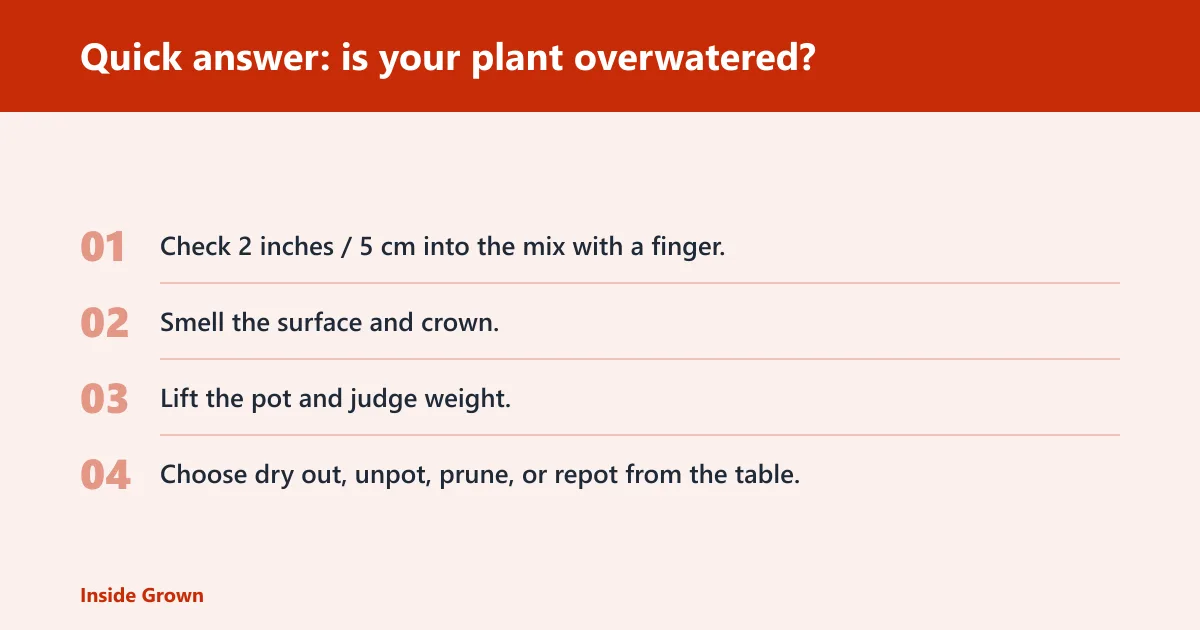
- Check 2 inches / 5 cm into the mix with a finger.
- Smell the surface and crown.
- Lift the pot and judge weight.
- Choose dry out, unpot, prune, or repot from the table.

What are the first signs of overwatered houseplants?
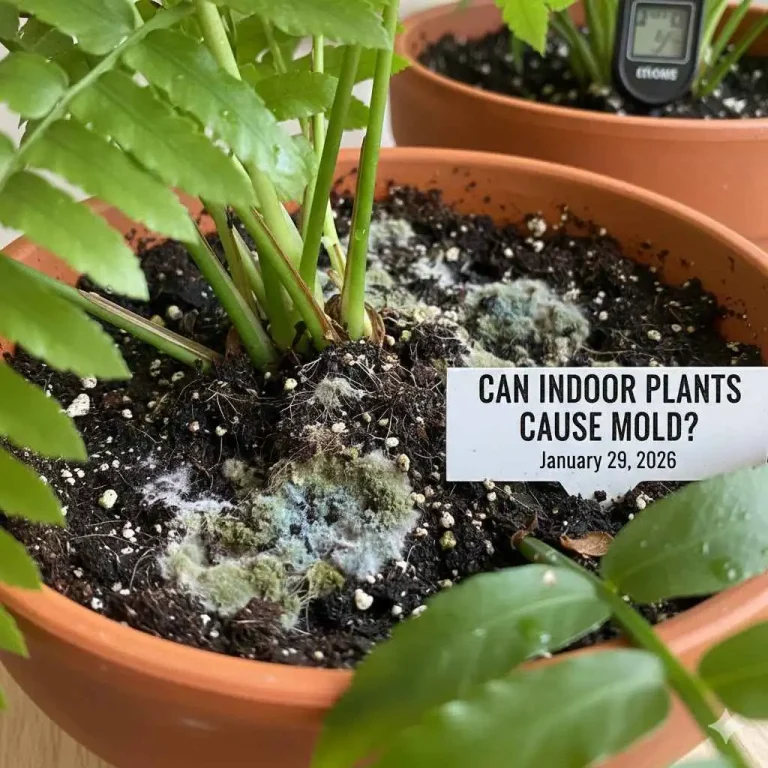
The earliest signs are wet-soil wilting, yellow leaves, and slower growth. Add mushy stems, mold on the soil surface, a sour smell, and fungus gnats, and the pot is usually staying too wet for too long. Wilting while the mix is still wet is a strong clue that roots are losing function.
Signs that point to root stress
- Leaves yellowing from the lower growth first
- Plant droops even though the mix is still wet
- New leaves come in smaller or stall
- Stem base feels soft instead of crisp
- Soil surface turns slick, moldy, or stays dark for days
How can I tell if my houseplant is overwatered or just thirsty?
Thirsty plants usually perk up after watering, while overwatered plants stay limp in wet soil. Check the surface and then probe 2 inches / 5 cm down. Dry, light soil points to thirst; wet, heavy, sour-smelling soil points to overwatering. A plant that normally likes more moisture may still need drainage.
Use the finger test the right way
- Press a finger into the mix to 2 inches / 5 cm.
- Feel for dampness, not just a dry crust on top.
- Lift the pot and compare its weight to a dry pot of the same size.
- Check whether the leaves are soft and limp in wet soil, not just drooping after a dry spell.
Plants that can confuse the diagnosis
Some houseplants dislike drying out completely and can droop when too dry, then recover fast after watering. Others hate constant wetness and fail quickly in soggy mix. When a plant’s normal water habit is unknown, soil feel and root odor matter more than leaf posture alone.
When can I dry out an overwatered plant instead of repotting?
Dry it out only when the soil is wet but roots are still firm, pale, and odorless. Mild cases often recover with a pause in watering, more light, and air movement. If the pot is still saturated, newspaper wicking can pull out extra moisture before the next check. Once roots turn soft or brown, drying alone is usually too late.
Save the plant in the mild stage
- Stop watering immediately.
- Move the plant to brighter indirect light near a window, away from direct midday sun.
- Set a fan nearby or open a window for a steady breeze.
- Wait until the top layer dries before checking again.
- If the mix is still soaked, set the pot on layers of newspaper overnight.
Should I unpot an overwatered plant right away?
Unpot right away when the stem is soft, the pot smells sour, or wet soil has stayed that way for several days. Blooming Expert notes roots can be stressed after 24–48 hours in wet soil, and 3–7 days makes damage probable. If the plant has sat in wet soil for 1–2 weeks or longer, root rot is almost certain.
Save the plant in the moderate stage
- Slide the plant out of the pot.
- Shake off loose wet mix.
- Inspect the roots for brown or black mushy sections.
- Cut rotten roots with sterilized pruning shears.
- Repot in fresh potting mix and a container with drainage holes.
How do I save a plant with root rot?
Save it by removing every soft, brown, or black root you can find, then repotting only the firm, pale ones in fresh mix. Healthy roots are white or light tan and firm to the touch; rotten roots are soft, dark, and often smell sour or sewer-like. The more firm roots remain, the better the recovery odds.
Save the plant in the severe stage
- Unpot the plant and rinse or tease away the soggy mix.
- Trim away all brown or black mushy roots.
- Keep only white or light tan, firm roots.
- Repot into fresh potting mix in a clean container with drainage holes.
- If only a small healthy core remains, cut back watering and reduce leaf load if the plant can tolerate it.
How far rot has spread changes recovery odds
If only a smaller portion of the root system is rotten, recovery may be realistic. If a large portion of the roots is gone, the plant may still have a chance if the crown and main stems are still firm. If rot reaches the stem base and most roots are mush, the plant may not have enough tissue left to rebound.
What do healthy roots look like compared with rotten roots?
Healthy roots are white or light tan and firm to the touch, with no odor. Rotten roots are often brown or black, soft, and easy to crush between your fingers. A sour smell usually means tissue is breaking down. If the root ball feels slimy or collapses when lifted, rot is already advanced.
Root inspection checklist
- Healthy: pale color, firm texture, no smell
- Rotten: brown or black, mushy, sour odor
- Bad sign: roots snap or peel away as a soft sheath
- Bad sign: stem base is soft where it meets the soil
How long can a plant sit in wet soil before it becomes serious?
It becomes serious fast. Roots can be stressed after 24–48 hours in wet soil. By 3–7 days, damage is probable. At 1–2 weeks or longer, root rot is almost certain. Some plants tolerate more moisture than others, but standing wetness is the warning sign that matters most.
If that didn’t work, try this next
- If the soil still feels wet after 24 hours, stop watering and improve airflow.
- If it is still wet at 48 hours, unpot and check the roots.
- If any roots are mushy, trim them and repot in fresh mix.
- If the base smells sour and most roots are gone, keep only firm tissue or discard the plant.
Can fungus gnats mean my plant is overwatered?
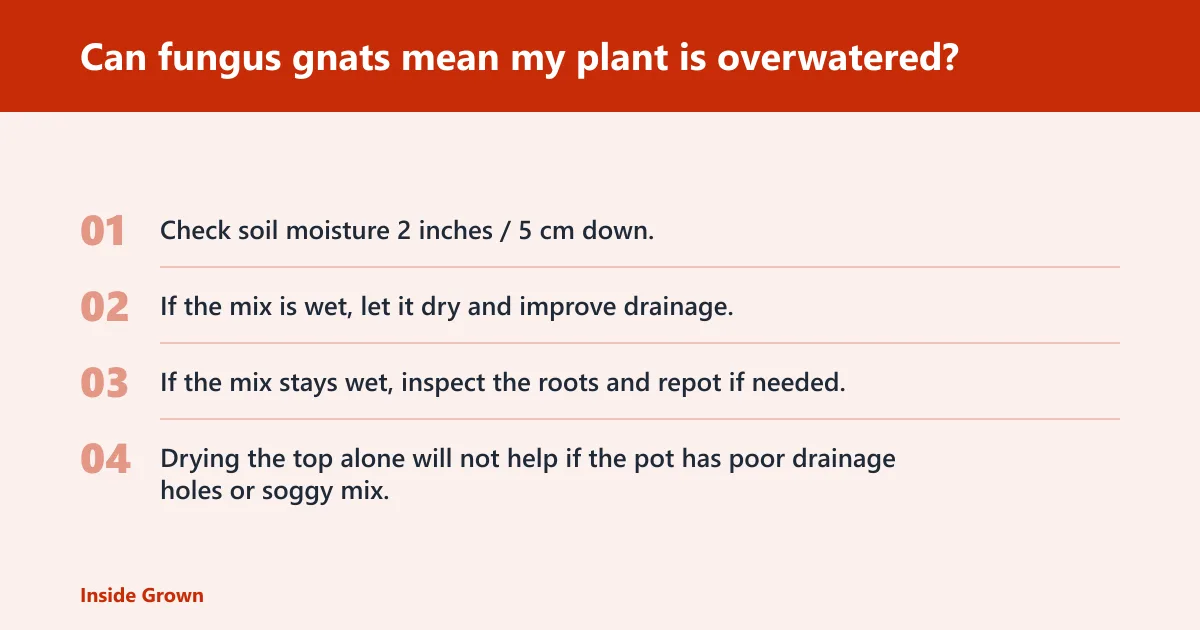
Yes, fungus gnats often mean the mix has stayed too moist, but they are not proof by themselves. Bob Vila notes they favor constantly moist potting mix, and that points to a watering problem worth checking. If gnats appear with wet soil, mold, or yellow leaves, the pot is likely staying too wet.
What to do when gnats show up
- Check soil moisture 2 inches / 5 cm down.
- If the mix is wet, let it dry and improve drainage.
- If the mix stays wet, inspect the roots and repot if needed.
- Drying the top alone will not help if the pot has poor drainage holes or soggy mix.
Common mistakes that slow recovery
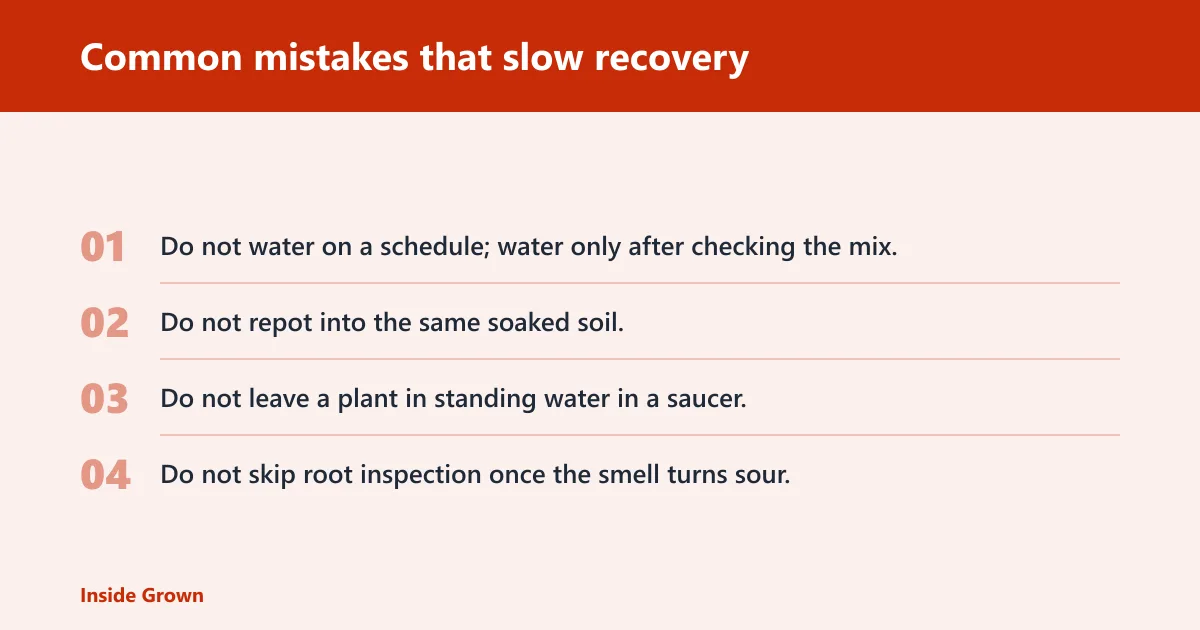
Watering again too soon is often a major mistake. Reusing soggy mix, leaving rotten roots attached, and keeping the plant in a pot without drainage holes all trap moisture around damaged tissue. After rescue, the plant needs air around the roots, not another wet cycle.
- Do not water on a schedule; water only after checking the mix.
- Do not repot into the same soaked soil.
- Do not leave a plant in standing water in a saucer.
- Do not skip root inspection once the smell turns sour.
What should I do after repotting an overwatered plant?
After repotting, keep the plant in bright indirect light, add airflow, and pause watering until the new mix begins to dry. The roots need oxygen more than extra moisture right now. If the plant is limp, resist the urge to give it another drink. Fresh mix and drainage holes do the work first.
How do I prevent overwatering from happening again?
Check the pot before every watering. Use drainage holes, let the top layer dry, and test 2 inches / 5 cm down before adding more water. A pot that feels heavy and cool is usually still wet. If the plant’s growth slows or the soil stays soggy, move to a lighter mix and a pot that drains.
Frequently asked questions
How can I tell if my houseplant is overwatered or just thirsty?
Check the soil 2 inches / 5 cm down and smell the pot. Dry, light mix means thirst. Wet, heavy, sour-smelling mix means overwatering. A thirsty plant usually perks up after watering; an overwatered one often stays limp even when the soil is still wet.
What are the first signs of overwatered houseplants?
Look for wilting in wet soil, yellow leaves, and slower growth first. If the stem turns mushy, the soil grows mold, or fungus gnats keep appearing, move from waiting to inspection. Those signs mean the roots may already be under stress.
Should I unpot an overwatered plant right away?
Yes, if the plant smells sour, the stem is soft, or the soil has stayed wet for days. Unpotting lets you see whether healthy, firm roots remain. If most roots are still white or tan, trim only the rotten parts and repot in fresh mix.
How do I save a plant with root rot?
Unpot it, remove all mushy brown or black roots with sterilized pruning shears, and repot the plant in fresh potting mix with drainage holes. Keep only roots that are firm and pale. Afterward, hold water until the mix begins to dry.
What do healthy roots look like compared with rotten roots?
Healthy roots are white or light tan, firm, and odorless. Rotten roots are brown or black, soft, and often smell sour or sewer-like. If roots smear between your fingers, they are no longer functional and need to be cut away.
How do I prevent overwatering from happening again?
Check soil before every watering instead of following a calendar. Use drainage holes, keep the mix airy, and wait until the top layer and the area 2 inches / 5 cm down are drying before watering again. That habit prevents most repeat cases.