How to Care for Philodendron Houseplants
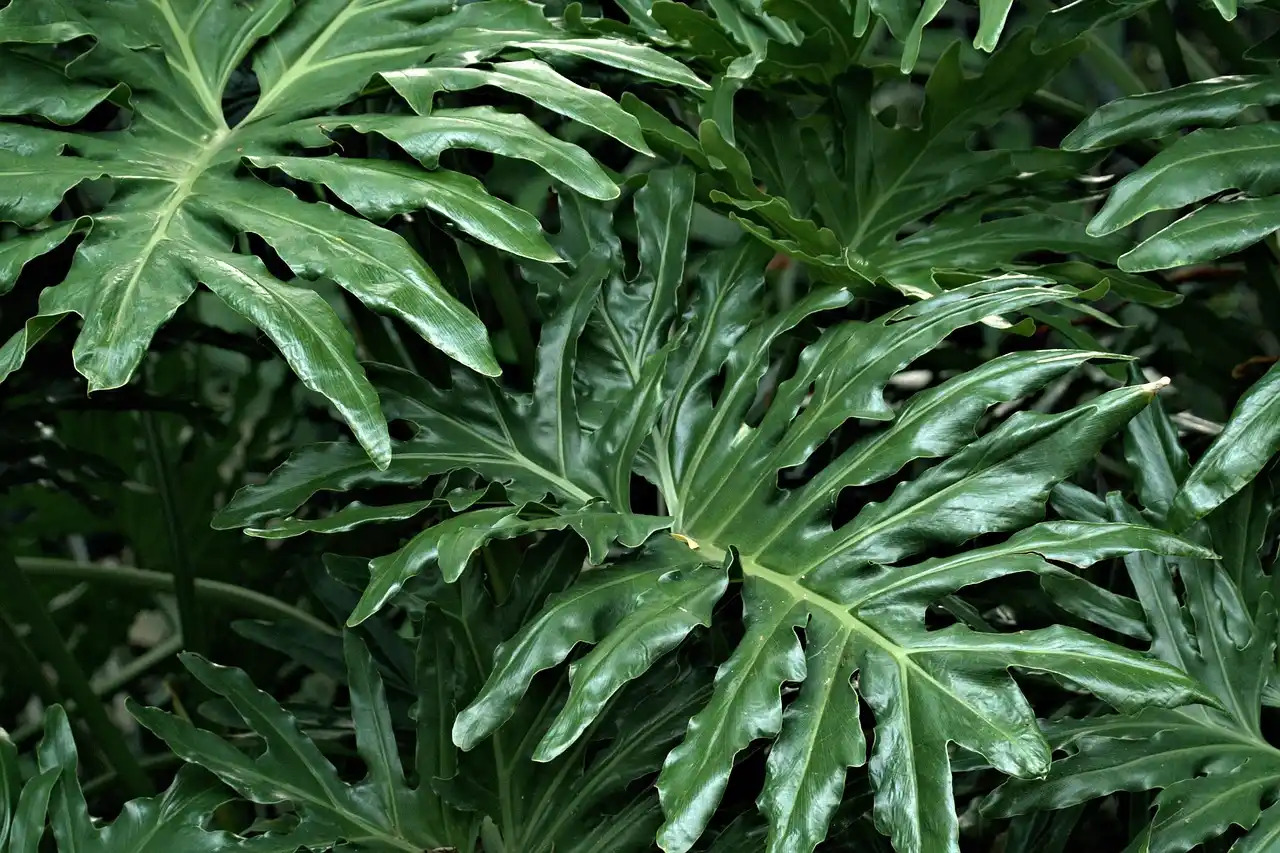
Care for philodendron houseplants by matching light, water, and humidity to the plant type: vining types want brighter indirect light and steadier moisture, while self-heading types tolerate slightly lower light and drying a bit more between waterings. Wrong care leads to yellow leaves, root rot, leggy growth, and brown tips. This guide shows you how to read leaf signals, choose the right light, and adjust watering for common philodendron types.
Philodendron basics
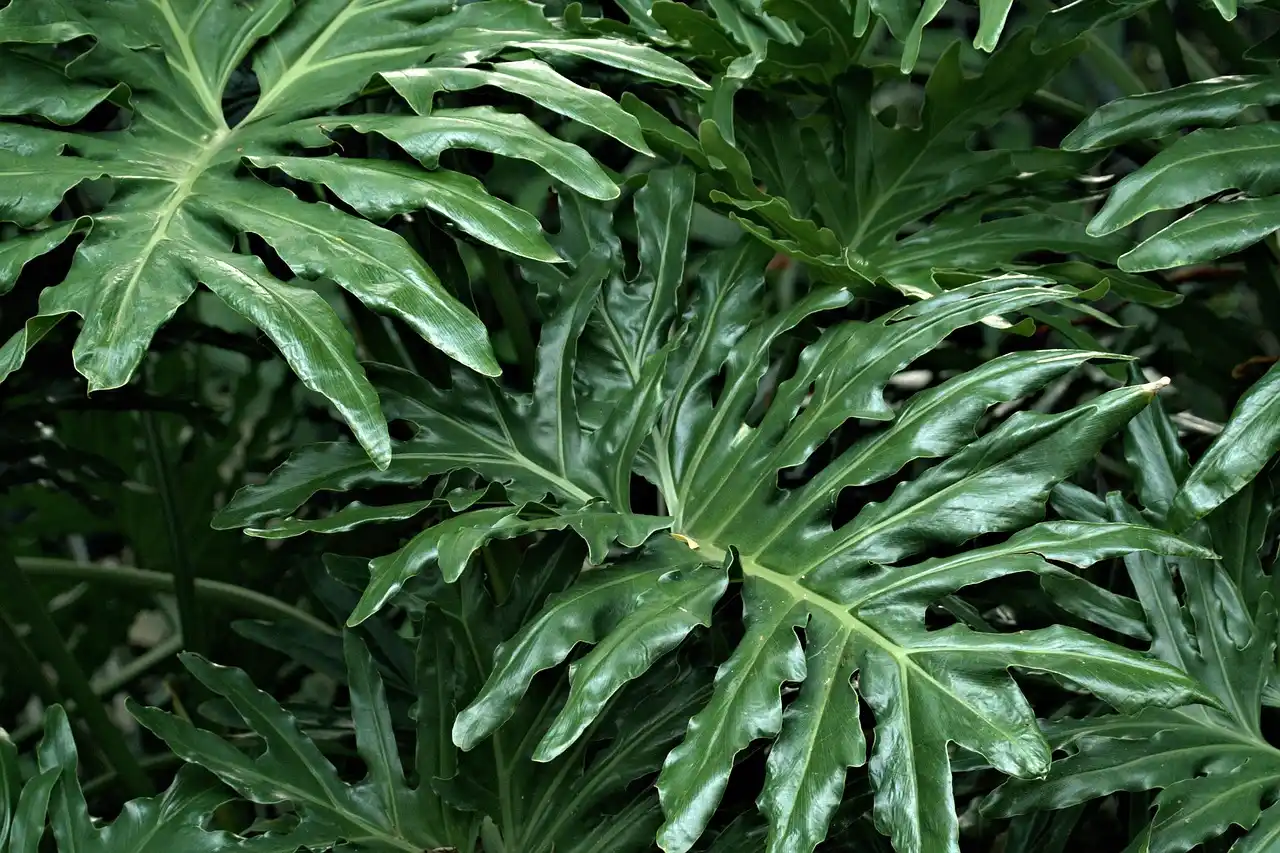
Philodendrons sold for indoor growing are often grouped as heartleaf vines, climbing types with aerial roots, and self-heading plants that form a clump instead of a long vine. They are tropical aroids, so they prefer warm indoor conditions, steady moisture without soggy soil, and air that is not overly dry. Keep in mind that philodendrons are toxic to pets and people if ingested.
Know the growth habit first
Heartleaf philodendrons trail or climb easily and often do best with brighter light than many people give them. Climbing types often grow best when you give them a support pole or trellis, because the stems root at nodes and can stretch when they search for light. Self-heading types stay fuller at the base and often handle slightly less light, but they still need enough brightness to avoid sparse growth.
Why tropical aroid care matters indoors
As aroids, philodendrons do best in a mix that holds some moisture while still letting air reach the roots. That balance matters more than a strict calendar. Warmth, indirect light, and a pot with drainage holes help the roots keep working without sitting in stagnant water.
What light does your philodendron need?
Bright indirect light is commonly the indoor target for most philodendrons. Medium light can work, but growth usually slows. Direct sun can scorch leaves, while low light often leads to longer stems, wider spacing between leaves, and smaller new growth. Put the plant where it gets strong daylight without harsh rays hitting the foliage.
How to read too much sun
If leaves pale, look washed out, or develop dry patches on the side facing the window, the plant may be getting too much direct light. Move it back from the glass or filter the light with a sheer curtain. South- and west-facing windows are often usable if the plant is set a few feet away from the hot beam.
How to read low light
Low light usually shows up as stretched stems, fewer new leaves, and a plant that leans hard toward the window. Self-heading types may also lose their compact shape. If the room is dim, move the plant closer to the brightest window you have, or use a brighter spot with indirect light for part of the day.
How often should you water a philodendron?
Water philodendrons when the top about 1 to 2 inches of soil dry out, rather than on a fixed schedule. The exact timing changes with pot size, room light, temperature, and season. A smaller pot in bright light can dry faster than a large pot in a cool room, so check the soil before watering again.
Use soil dryness, not the calendar
Press a finger into the soil surface. If the top inch feels dry, it is usually time to water. If it still feels damp, wait. The goal is even moisture with a dry top layer between waterings, not constant sogginess. A pot that stays wet for many days is more likely to invite root rot.
Adjust for season and pot size
Plants often need less water in winter because light is weaker and growth slows. Larger pots also hold moisture longer than small pots. Suppose a philodendron in a 6-inch pot near a bright east window dries in five days in summer, but the same plant may take 10 days or longer in winter. That change is normal.
Best soil for philodendron roots
Use a well-draining aroid-style mix that stays lightly moist yet lets air move through it. A common blend includes potting soil, orchid bark, and perlite. The soil should hold enough water for the roots to access, while still leaving spaces for air. This structure helps prevent root rot, which is common when a heavy mix stays wet too long.
Why bark and perlite help
Orchid bark opens the mix and keeps it from packing down. Perlite adds drainage and air pockets. Potting soil supplies moisture retention and some nutrients. Together, those ingredients create the kind of root environment philodendrons prefer indoors.
Drainage holes are not optional
Choose a pot with drainage holes so excess water can leave the container. A decorative cachepot is fine if the inner pot drains freely and is emptied after watering. If water collects at the bottom, roots may sit wet for too long and decline.
Philodendron care by room conditions
Most philodendrons prefer moderate to high humidity, warm indoor temperatures, and steady air that is not blasted by vents. Typical household humidity is often enough for many plants. Dry air can slow growth and cause crisp leaf tips, but a humidifier or pebble tray is optional support, not a requirement for every home.
Temperature, vents, and drafts
Keep philodendrons away from cold drafts, heater blasts, and air-conditioning vents. Sudden swings can stress foliage and slow growth. Warm indoor conditions are best, and cold stress can damage leaves even before the plant looks badly wilted.
When misting helps, and when it does not
Misting is optional. It may briefly raise moisture around the leaves, but it does not replace stable humidity or proper watering. If the plant has crisp tips from dry air, a humidifier is usually a better long-term fix than repeated misting.
How to keep growth steady indoors
Feed philodendrons with a balanced houseplant fertilizer during active growth, then reduce or stop feeding in winter. Trim leggy stems to encourage branching, and remove yellow or damaged leaves as they appear. When the plant outgrows its container, repot into a slightly larger pot with fresh mix and drainage holes.
Fertilizer timing and limits
Use fertilizer sparingly. Too much can burn roots or leaves. Feeding makes the most sense when the plant is actively growing and receiving enough light. In lower-light months, cut back or stop feeding because the plant uses nutrients more slowly.
Pruning for fuller growth
Use clean, sharp scissors to cut leggy stems back to a node. Nodes are the points where leaves and aerial roots form, and cuts there can be propagated. Removing damaged leaves also helps the plant direct energy to healthy growth instead of repairing tissue that will not recover.
When to repot
Repot when roots circle the pot, water runs through too fast because the root ball is packed, or growth slows despite good light and watering. Choose a pot only slightly larger than the current one. A container that is too large can leave extra soil wet for too long.
Philodendron care decision table
| Plant type | Room light | Soil dryness | Leaf symptoms | Likely cause | Next action |
|---|---|---|---|---|---|
| Heartleaf vine | Bright indirect | Top inch dry | Healthy new leaves, steady vine growth | Care is on track | Water thoroughly, then let the top layer dry again |
| Climbing type | Medium light | Still damp after many days | Long stems, fewer leaves | Too little light plus slow drying | Move closer to brighter indirect light and wait before watering |
| Self-heading type | Bright indirect | Wet and heavy | Yellow leaves, drooping | Overwatering, possible root stress | Let the mix dry more, check roots, and improve drainage |
| Heartleaf vine | Direct sun on leaves | Dry at surface, but leaf edges look scorched | Brown patches, pale leaves | Too much direct sun | Move back from the window or add a sheer curtain |
| Any type | Low light | Normal dryness | Curling, weak stems, smaller leaves | Light stress and slow growth | Increase light first, then reassess watering |
| Any type | Any indoor light | Top layer dry, lower soil soggy | Yellow leaves, soft stems, sour smell | Root rot risk from overwatering | Stop watering, inspect roots, and repot into fresh airy mix if needed |
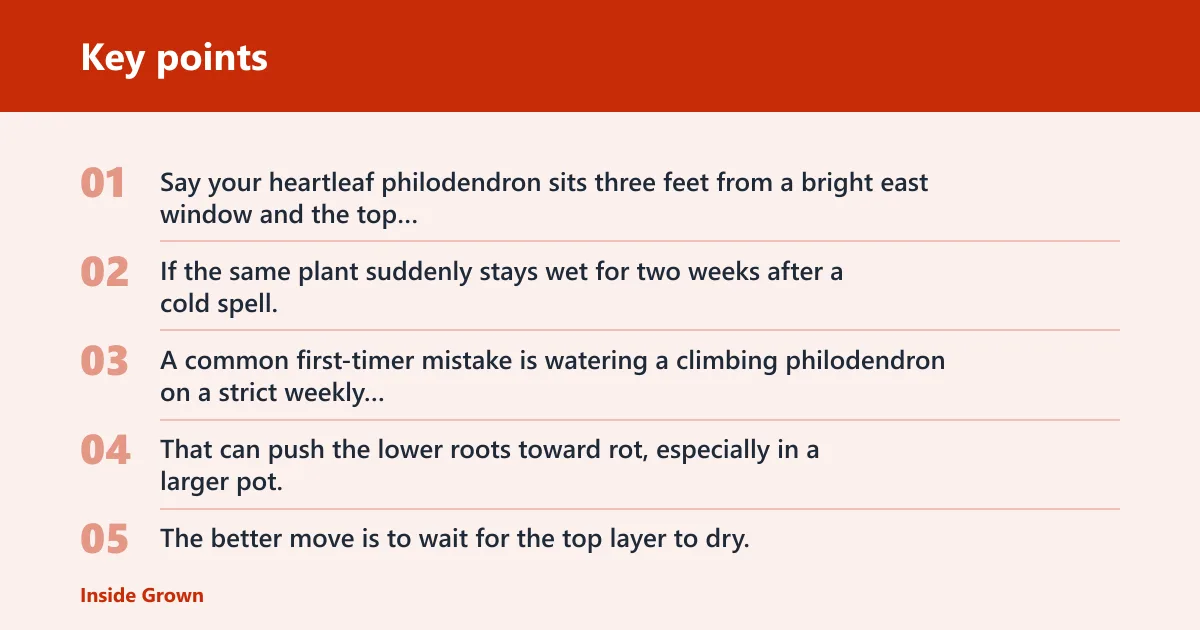
Say your heartleaf philodendron sits three feet from a bright east window and the top inch of soil dries every six days. That setup is usually workable. If the same plant suddenly stays wet for two weeks after a cold spell, the slowdown points to lower light and lower evaporation, so watering should be reduced.
A common first-timer mistake is watering a climbing philodendron on a strict weekly schedule even when the pot is still damp. That can push the lower roots toward rot, especially in a larger pot. The better move is to wait for the top layer to dry, then water deeply and let excess drain away.
Common problems and pests
Yellow leaves, curling leaves, drooping, and brown tips usually point to a care mismatch rather than a mystery disease. Yellowing often follows overwatering or root stress. Curling can come from dry air, low light, or inconsistent watering. Brown tips often point to dry air, salt buildup, or stress from drafts.
How to know if it is overwatered
An overwatered philodendron often has soil that stays wet, limp or yellowing leaves, and sometimes a musty smell from the pot. If the base of the stem feels soft, root rot may be starting. Check drainage first, then assess the roots if the plant continues to decline.
Inspect for pests early
Check the undersides of leaves and the stems for spider mites, mealybugs, aphids, and scale. Early signs can include speckling, cottony clusters, sticky residue, or tiny moving dots. Treat early so the infestation does not spread to nearby plants.
Frequently asked questions
How do I care for a philodendron house plant?
Give it bright indirect light, water when the top 1 to 2 inches of soil dry out, and keep it in a warm spot with a well-draining mix. Climbing types usually want a bit more light and steadier moisture than self-heading plants. Watch leaves for yellowing, curling, and brown tips.
How often should I water a philodendron plant?
Water when the top inch of soil feels dry. The exact interval depends on pot size, light, season, and temperature, so a fixed schedule is less useful than a soil check. In winter, most plants dry more slowly and need water less often.
What kind of light does a philodendron need indoors?
Bright indirect light is the best indoor light for most philodendrons. Medium light can work, but growth usually slows. Direct sun can scorch leaves, while low light often causes stretched stems, smaller leaves, and a thinner plant overall.
What soil is best for philodendron plants?
A well-draining aroid mix is the best choice. Use potting soil, orchid bark, and perlite to keep the mix airy while still holding some moisture. Good drainage matters because philodendron roots decline quickly when they stay wet for too long.
Should I mist my philodendron?
Misting is optional, not required. It may give a brief boost in surface moisture, but it does not replace proper humidity or correct watering. If the air is dry and leaf tips are crisping, a humidifier is usually more useful than repeated misting.
When should I repot a philodendron?
Repot when roots circle the pot, water moves through too fast, or growth slows even though light and watering are adequate. Move up only one pot size and refresh the soil. A pot that is too large can hold excess moisture and raise rot risk.