Can You Overwinter Geraniums Indoors Without Losing Them?
Yes—geraniums can overwinter indoors, and the method you choose should match your light, temperature, and space: keep them growing, store them dormant, or root cuttings. Done poorly, they stretch, rot, or dry out, and you lose the plant before spring. Use the brightest spot you have, the coolest safe storage you have, and a container with drainage holes plus a free-draining potting mix when the plant needs repotting.
Which geraniums survive indoors?
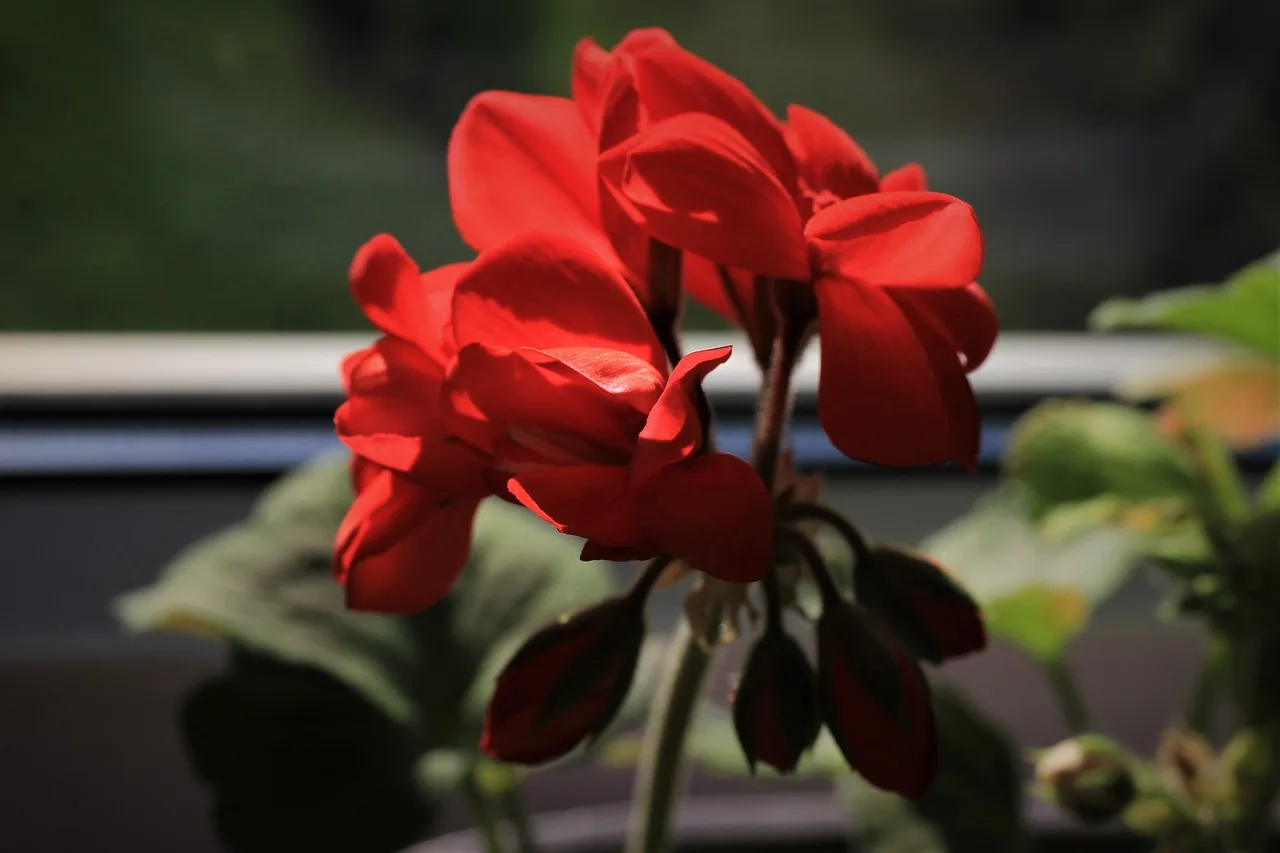



Yes, if you are growing Pelargonium types sold as annual geraniums, not hardy geraniums. The tender plants can be kept as indoor houseplants, stored dormant in a cool dark place, or backed up with cuttings. They are damaged by freezing and are only reliably hardy in USDA zones 10 to 11.
What kind of geranium you have matters
Garden geraniums sold for summer containers are usually Pelargonium. They do not have a dormant period, so the winter plan is about keeping the plant alive, not helping it sleep through cold weather. Hardy geraniums are a different group and do not use the same overwintering methods.
Why frost timing matters
Bring plants indoors before the first frost. A practical trigger is when nighttime temperatures fall to around 45°F, not after a hard freeze. Waiting too long risks blackened foliage, damaged stems, and a plant that looks alive above the soil line but fails later.
The three overwintering paths
Most home gardeners have three workable choices. Keep the plant growing in a bright window, store it dormant in a cool dark place, or take cuttings and start fresh plants for spring. The right choice depends on your window light, your cool storage space, and how much room you have indoors.
Which method fits your house?
Match the method to the home you actually have. A bright south- or west-facing window supports active growth, a cool basement or attached garage can suit dormant storage, and a small apartment may be better served by cuttings or by one compact potted plant rather than several large pots.
Bright window and cool room
If you have a bright south- or west-facing window and a room around 55°F to 65°F, keep the plant growing. This setup works well when you want a living plant that stays compact and leafy through winter. If light is weaker, a grow light on a timer helps keep stems from stretching.
Cool basement or attached garage
If you have a cool, dark, dry spot that stays above freezing, dormant storage is usually the better fit. The ideal range is about 40°F to 50°F, and another commonly cited range is 45°F to 55°F. Stored plants can sit for months if conditions stay cool and dry enough.
No extra light or limited space
If you do not have strong winter light and space is tight, cuttings are often the cleanest option. A few 4- to 6-inch tips take little room, root in a small tray, and give you a compact plant for spring. That can be easier than carrying a large pot through winter.
Geranium overwintering method table
This table maps common home conditions to the method that fits best. Use it as a decision guide, not a fixed rule. If your conditions fall between two rows, choose the method that demands less from your space and less from your light.
| Home condition | Recommended method | Ideal temperature range | Watering frequency | Main failure risk |
|---|---|---|---|---|
| Bright south- or west-facing window | Keep growing indoors | 55°F to 65°F | Water only when soil dries | Leggy growth from low light |
| Cool basement | Dormant storage in paper bag or box | 40°F to 50°F | Monthly check only | Desiccation or mold if too dry or damp |
| Attached garage | Dormant storage | 45°F to 55°F | Monthly check only | Freeze damage if temperature drops too low |
| No extra light | Cuttings as backup | Warm indoor rooting, then cooler growth | Keep rooting mix lightly moist | Rot from wet media or weak light |
| Limited shelf or floor space | Cuttings or one compact pot | 55°F to 65°F for active growth | Water only when soil dries | Pest carryover in crowded plants |
How do you prepare plants before they come in?
Preparation starts before the plant crosses the threshold. Inspect for pests and disease, trim back long growth, and move the plant into a pot with drainage holes and a well-draining potting mix if needed. That gives you a cleaner plant and lowers the chance of rot, pests, or shock indoors.
Inspect for pests and disease
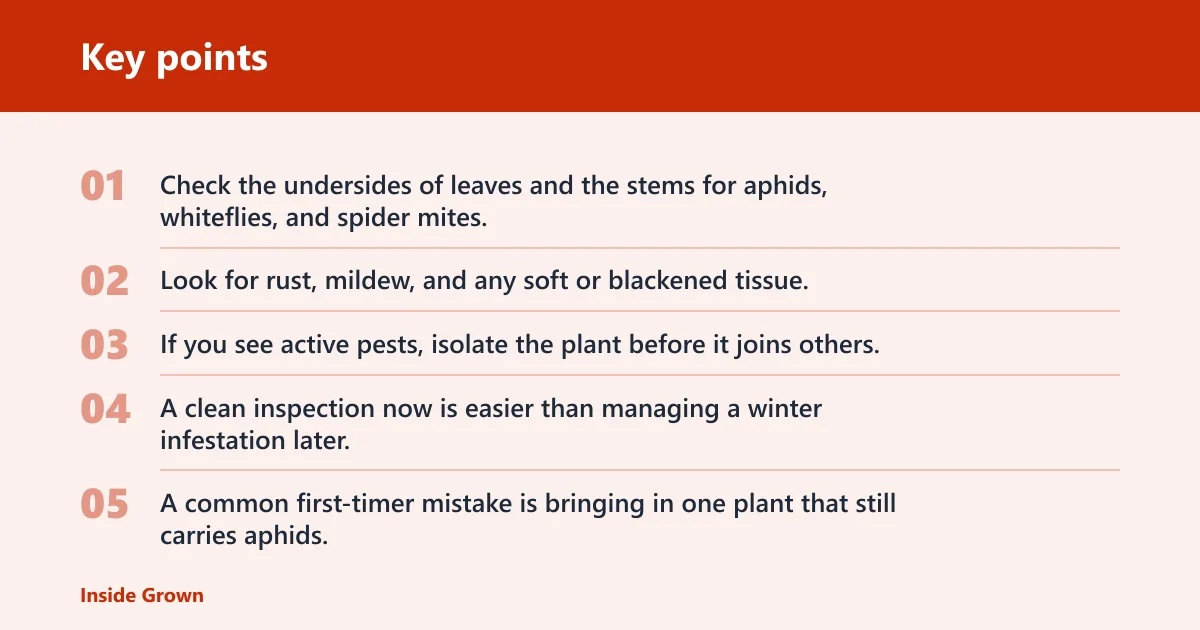
Check the undersides of leaves and the stems for aphids, whiteflies, and spider mites. Look for rust, mildew, and any soft or blackened tissue. If you see active pests, isolate the plant before it joins others. A clean inspection now is easier than managing a winter infestation later.
A common first-timer mistake is bringing in one plant that still carries aphids, then discovering a week later that the pests have moved to nearby houseplants. Quarantine the geranium first, even if it looks fine from a distance. A few days of separation can prevent a much larger problem.
Trim back long growth
Cut back leggy stems before or after you bring the plant inside. Keep healthy green growth if you plan to overwinter it as a houseplant. For dormant storage, a lighter framework is fine. Avoid removing so much that the plant has no viable green tissue left if you intend to keep it growing.
Choose the right pot and mix
Use a pot with drainage holes and a potting mix that drains fast and does not stay wet for long. Avoid oversized pots, because extra soil holds too much moisture and can encourage rot. If the plant is rootbound, move it up just one size rather than jumping to a much larger container. Geraniums do better snug than soggy.
Keep geraniums growing indoors
Indoor houseplant overwintering works best when you can give the plant steady light and moderate cool temperatures. A bright, south- or west-facing window is often the first choice for indoor overwintering. If the plant sits more than three feet from a window, light loss becomes a real problem, so add a grow light if needed.
Light and temperature targets
Keep the plant in a room around 55°F to 65°F. That range slows growth enough to keep the plant compact while still allowing it to stay active. If your only bright spot is farther from the glass, a grow light on a timer is a practical fix. Without enough light, stems stretch and leaves thin out.
Watering schedule
Water only when the soil dries. Geraniums do not want constantly wet roots indoors, especially in cooler rooms. Check the top layer and the pot weight before watering. If the mix still feels damp, wait. If the soil stays wet for too long, root rot becomes the main risk.
Pest and disease watch
Indoor air can favor spider mites, while crowded foliage can invite mildew. Watch for sticky residue, fine webbing, speckling on leaves, or powdery patches. Remove damaged leaves promptly. Good airflow, bright light, and careful watering prevent most of the problems that build up during winter.
Store geraniums dormant
Dormant storage is a good fit when you have a cool, dark, dry room and want the least space-demanding option. Use a paper bag or cardboard box, keep the plant above freezing, and check it about once a month. This method can carry plants for months if the storage stays cool.
How to bag or box plants
Lift the plant, remove loose soil, and let it dry slightly before storage. Place it in a paper bag or cardboard box in a cool, dark location. The key is dry air without freezing temperatures. Do not seal the plant in plastic, which traps moisture and invites rot.
Suppose you have an attached garage that stays around 50°F but dips colder on very cold nights. That can work if the plant is kept away from the coldest wall or door. If the space drops toward freezing, move the plant elsewhere before damage starts.
Temperature and moisture targets
For dormant geranium storage, aim for about 40°F to 50°F. Another acceptable cool-storage target is about 50°F to 60°F, but the plant still needs to stay dry enough that it does not rot. Pelargoniums do not have a dormant period, so this is a managed rest, not true dormancy.
Monthly check routine
Check stored plants about once a month. Look for shriveled stems that need a light moisture adjustment, and inspect for mold, mushy spots, or pests hiding in the folds of the plant. If the stems are collapsing or the storage smells damp, the setup is too wet. If they look paper dry, the plant may need a little moisture.
Can you root geranium cuttings indoors?
Yes, and cuttings are a strong backup when you do not have ideal space for a full plant. Take 4- to 6-inch tips, root them at a leaf node in a moist gritty mix, and use rooting hormone if you want. This option uses little room and gives you a fresh, compact plant for spring.
Take 4- to 6-inch tips
Choose healthy, nonflowering shoots and cut 4- to 6-inch tips. Remove the lower leaves so the stem can sit in the rooting mix without extra foliage rotting below the surface. A clean cut and a small container are enough. You do not need a large pot for this stage.
Root at a leaf node
Place the stem so a leaf node sits in the moist gritty mix, because roots form from that area. A little rooting hormone can help, but it is optional. Keep the mix just moist, not wet. Too much water is the fastest route to rot at this stage.
When cuttings make the best backup
Cuttings are the best fit when the parent plant is large, pest-prone, or hard to place indoors. They also help if your basement is too warm for storage but too dim for active growth. A small tray of cuttings can be easier to manage than a full-sized pot in winter.
Spring restart and hardening off
Plan the return before winter ends. Pot up overwintered plants in late winter or about six to eight weeks before the last frost date. Then cut back to healthy green growth, move the plant into fresh light, and harden it off before it goes back outside. Sudden sun and wind can damage tender indoor growth.
Pot up at the right time
Garden Gate recommends potting up geraniums six to eight weeks before the last frost date. That timing gives the plant time to start active growth again before outdoor conditions improve. New growth often appears in 7 to 14 days after potting up, so do not rush the move outdoors right away.
Harden off before outdoor return
Acclimate the plant gradually to outdoor conditions over several days to a week. Start with a sheltered spot in light shade, then increase exposure little by little. This step matters even if the plant looks healthy indoors. Indoor leaves are tender, and direct sun can scorch them fast.
Frequently asked questions
Can you keep geraniums indoors over winter?
Yes. Keep them indoors as houseplants if you have a bright south- or west-facing window and a cool room around 55°F to 65°F. Water only when the soil dries. If your light is weak, move the plant closer to the window or add a grow light on a timer.
Can you keep geraniums inside over the winter?
Yes, but the method should match your space. A bright window supports active growth, while a cool basement or garage supports dormant storage. If neither is available, take cuttings. The plant is more likely to survive winter when the method fits the home, not the other way around.
Can I bring my geraniums indoors for the winter?
Yes, and you should bring them in before the first frost. A good target is when nighttime temperatures fall to around 45°F. Do not wait for a hard freeze, because cold injury can shorten the plant’s life even if the foliage does not collapse immediately.
How much light do geraniums need indoors in winter?
They need bright light, ideally from a south- or west-facing window. If the plant sits more than three feet from a window, light loss becomes noticeable. A grow light on a timer is a good backup when the natural light is weak or the room is deep and dim.
Should geraniums be cut back before bringing them inside?
Yes, trimming helps. Cut back leggy growth before or after bringing the plant indoors, depending on the method you choose. Keep healthy green growth if the plant will stay active. If you are storing it dormant, a more reduced plant is easier to manage in a box or bag.
Do geraniums need to be watered while overwintering indoors?
Actively growing plants do, but only when the soil dries. Dormant stored plants need much less attention, usually just a monthly check. The key is not to keep the mix constantly wet. Wet roots, low light, and cool temperatures are the fastest path to rot.