Can You Bring Rosemary Inside for the Winter?
Yes, you can bring rosemary inside for winter, but only if you can give it very bright light and cool temperatures; otherwise, leave hardy plants outside with protection or take cuttings. Poor winter care usually leads to leggy growth, leaf drop, or plant death. This guide explains how to choose between indoor overwintering, outdoor protection, and cuttings.
Can you bring rosemary inside for the winter?


Yes, but not every plant is a good fit. Rosemary, or Salvia rosmarinus, is a Mediterranean evergreen that wants dry, well-drained soil, full sun, and roots that do not stay wet. In USDA zones 7 to 10, rosemary can often overwinter outside. In zone 6b and colder, moving rosemary indoors or giving it strong protection is usually safer.
When indoor overwintering makes sense
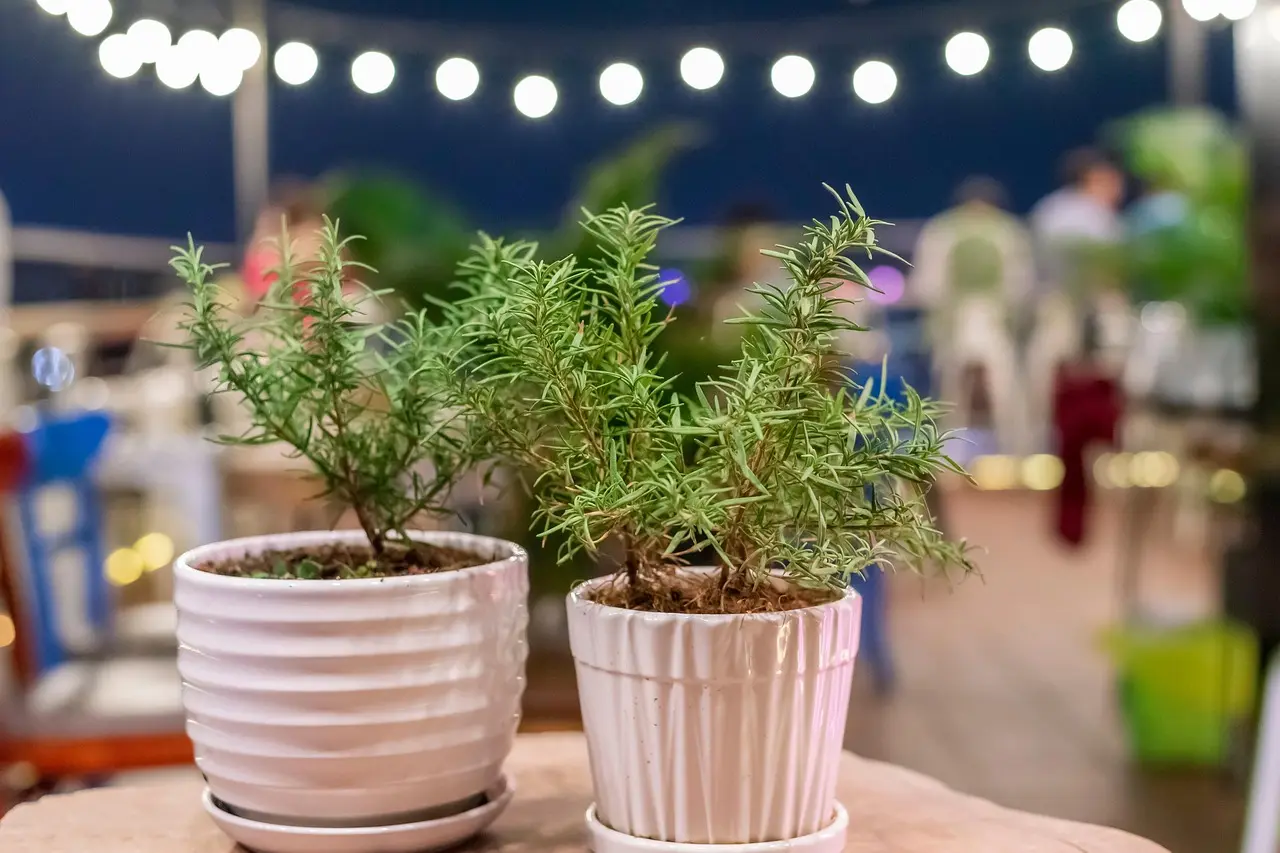
Bring rosemary inside when it is already in a pot, compact enough for a bright window, and the room can stay cool. University extension guides for container herbs consistently stress bright light and drainage. If the plant is healthy and the root zone can stay on the dry side, indoor overwintering is worth trying.
When leaving it outside is the better call
Leave rosemary outside when it is planted in the ground, already woody and oversized, or growing in a climate where winter is cold but not severe. In those cases, mulch and shelter often make more sense than digging up a mature shrub. Large in-ground plants usually take more damage from transplant shock than from a protected winter outdoors.
That is especially true in border-line areas. A sheltered wall, 3 to 6 inches of mulch, and wind cover can carry some plants through a mild but cold winter better than a move indoors, where light and humidity may both be wrong.
Rosemary winter checklist
Use this checklist before you decide. The goal is to match the plant to the space, not force every rosemary into the same winter plan. If more than one item in the left column fails, the safer choice is often a different branch.
| Branch | Check | What to do |
|---|---|---|
| Bring inside now | Potted plant; compact size; healthy roots; full sun window or supplemental light; pests not present | Move to a pot with drainage, trim lightly, and acclimate to indoor light |
| Leave outside and mulch | In-ground plant; zone 7 to 10 or a mild microclimate; roots established; sheltered site available | Add 3 to 6 inches of mulch and reduce wind exposure |
| Take cuttings instead | Plant is woody, leggy, pest-prone, rootbound, or too large to move cleanly | Root healthy 5-inch stems indoors as backup plants |
Say your rosemary is in a 10-inch pot, sits near a south window, and has no visible pests. That plant is a solid indoor candidate. Suppose the same plant is 3 feet tall, rootbound, and already dropping needles in low light. Cuttings or outdoor protection are better bets.
Which rosemary plants move indoors best?
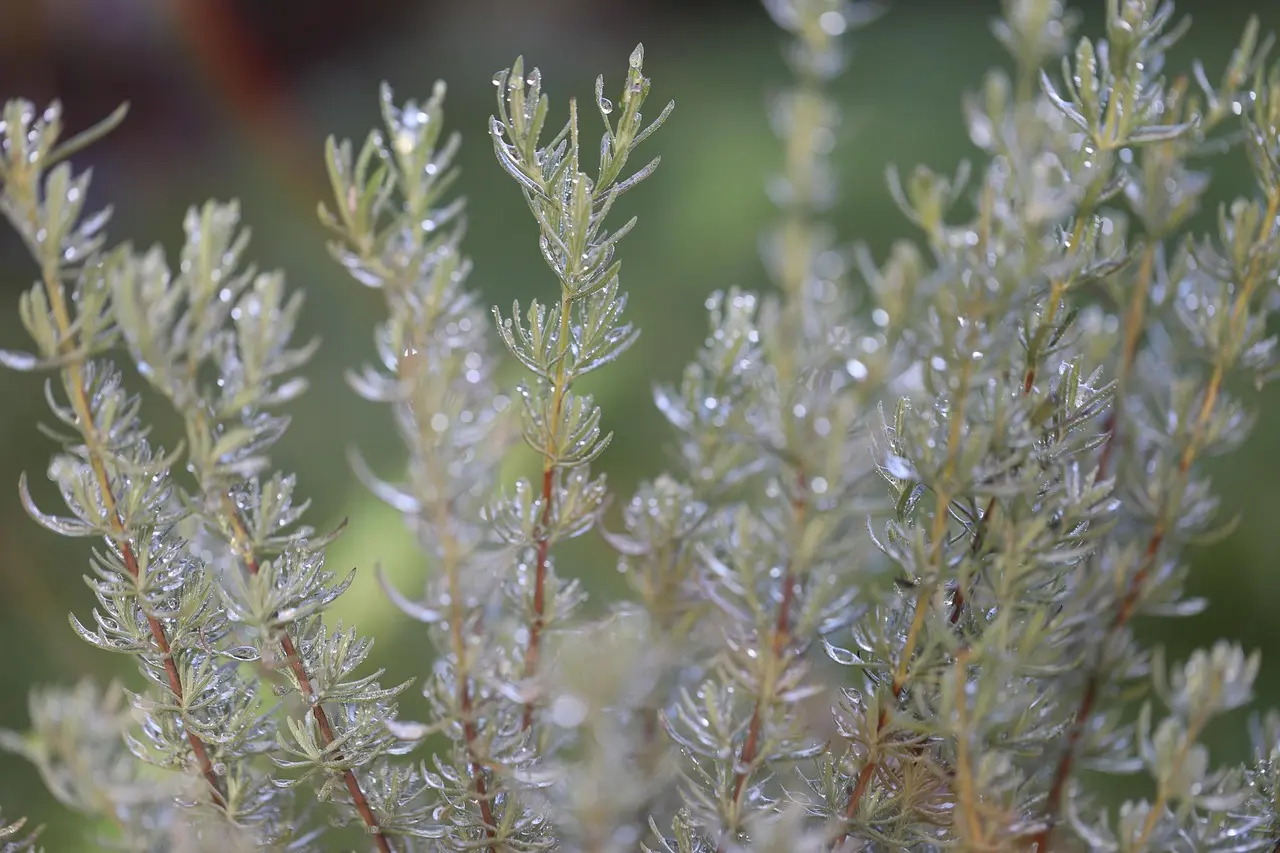
Potted rosemary usually moves indoors better than in-ground rosemary because the root ball comes up with less disturbance. Younger, smaller plants also adjust more easily than old, woody shrubs. The bigger and older the plant, the more likely it is to stall after the move or lose foliage.
Potted plants vs. in-ground plants
Container-grown rosemary is the easiest winter candidate because the root system is already contained. A pot can be shifted, checked, and repotted with less shock. By contrast, a plant lifted from the ground loses root mass and often struggles to replace it while indoor light is limited.
For an established in-ground plant, outdoor protection is often the better winter plan unless the climate is severe. A large shrub dug from the ground and moved into a pot may lose enough roots that it cannot keep up with transpiration indoors.
Size, age, and woody growth
Smaller plants handle the move better. Older rosemary often has woody stems and a sparse interior, and that form does not always recover well indoors. Light pruning can help, but a very leggy plant is more likely to drop leaves than to fill back in.
If the plant has become too large for its pot, root pruning can help keep it in the same container. Keep it modest. Rosemary does better with restraint than with a hard reset.
Pest checks before the move
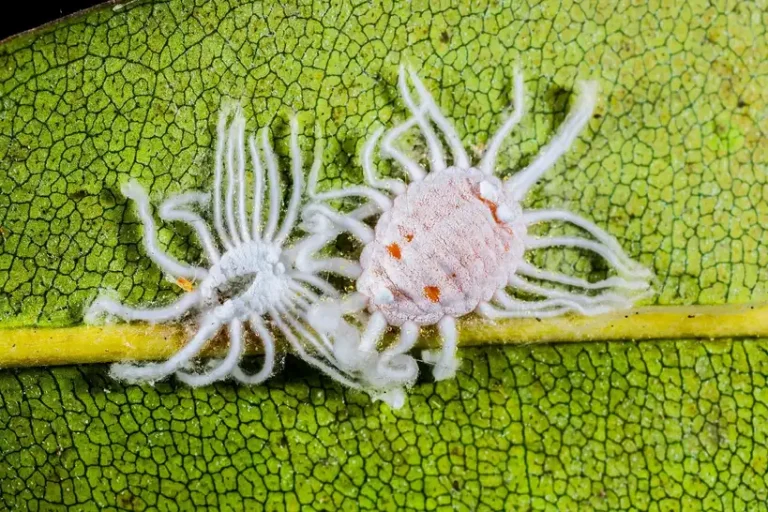
Check stems, needle bases, and the underside of leaves before bringing rosemary inside. Look for aphids, spider mites, scale, and whiteflies. Indoor heat makes pest problems spread quickly, and a stressed herb gives them an easy target.
- Check for insects and sticky residue.
- Rinse foliage if needed and let it dry fully.
- Remove dead or crowded growth.
- Decide whether the plant is compact enough for a bright indoor spot.
How do you bring rosemary inside?
Move rosemary indoors by trimming it lightly, repotting only if needed, and placing it in the brightest spot you have. The plant should go from outdoor conditions to indoor light in a controlled way, not straight from full sun to a dim corner. That shift is a common reason for decline.
Trim before the move
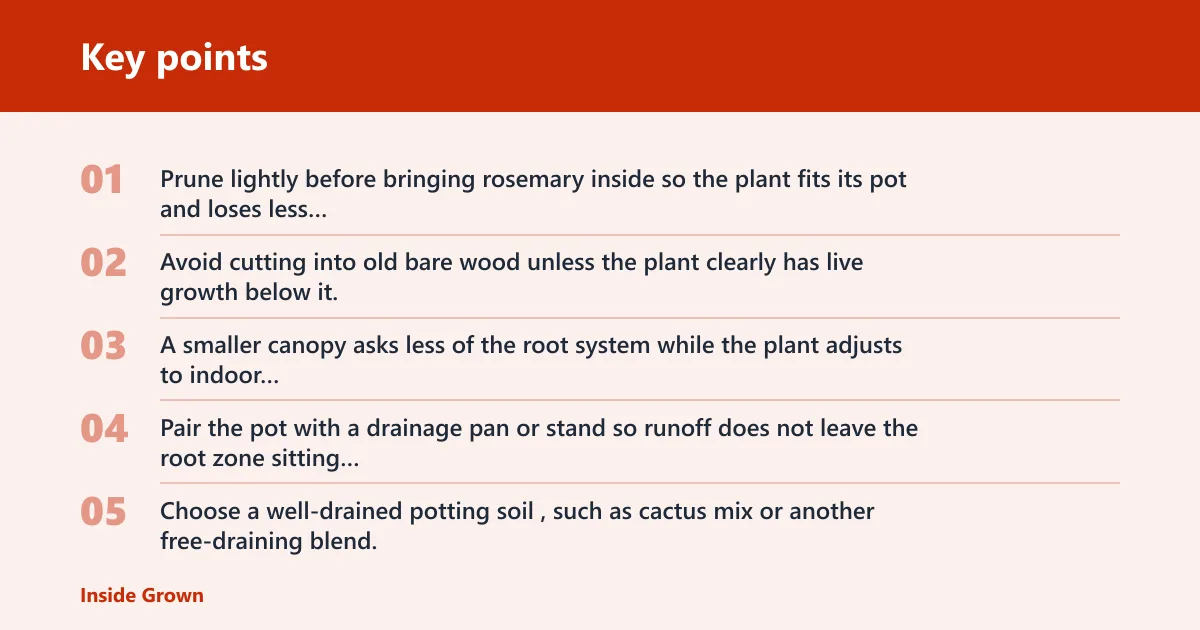
Prune lightly before bringing rosemary inside so the plant fits its pot and loses less moisture from extra foliage. Remove dead tips and overly long stems. Avoid cutting into old bare wood unless the plant clearly has live growth below it.
Pruning also reduces stress after the move. A smaller canopy asks less of the root system while the plant adjusts to indoor conditions.
Pot size, drainage hole, and soil
Use a pot with at least one drainage hole. Drainage is not optional. Pair the pot with a drainage pan or stand so runoff does not leave the root zone sitting in water.
Choose a well-drained potting soil, such as cactus mix or another free-draining blend. It may be amended with worm castings, sand, or compost, but the mix must not stay soggy. A container that holds moisture like a houseplant mix will push rosemary toward root rot.
Acclimate the plant to indoor light
Place the pot in the brightest available location, usually a south- or west-facing window. University extension advice on overwintered herbs is consistent here: strong light matters more than room decor. If daylight is weak for several hours a day, a supplemental grow light may be needed.
Do not put the plant far from the glass and expect it to adapt. Indoor rosemary wants the strongest light you can provide, not average room light.
What indoor care does rosemary need?
Indoor rosemary needs dry roots, strong light, and air that is not overly damp around the leaves. Water only when the soil is dry, not on a fixed daily routine. University of Maryland Extension and similar guides emphasize checking the medium rather than following a calendar.
Light and window placement
Full sun is the standard. Indoors, that usually means the brightest south- or west-facing window available. If the plant leans, stretches, or loses lower leaves, the light is too weak.
Rotate the pot a little every week or two so one side does not weaken more than the other. That helps keep growth even without forcing the plant to reach hard toward the glass.
Watering schedule
Water only when the top of the soil has dried and the pot feels lighter. Overwatering is one of the fastest ways to lose rosemary indoors. A practical interval is often around every two weeks, but temperature, pot size, and light can change that schedule.
Drain excess water from the pan after watering. If water remains under the pot, the roots can sit wet even when the surface of the soil looks fine.
Humidity without soggy roots
Dry indoor air is a common problem, especially when heat is running. Misting the foliage once or twice a week can help, and some gardeners raise ambient moisture around the plant. Keep that moisture on the leaves and air, not in the root zone.
That difference matters. A water-filled drainage pan or frequent misting should not replace proper drainage. Moist leaves are not the same thing as wet soil.
Should you keep rosemary outside instead?
Yes, if your climate and plant size make outdoor survival more likely than indoor survival. In zone 7 to 10, many rosemary plants can stay outside with some support. In colder zones, a sheltered site and mulch often beat a stressful move indoors, especially for large in-ground shrubs.
Mulch depth and sheltered spots
A 3 to 6 inch layer of mulch at the base can help protect roots before the first frost. Put it down after the soil cools, not when the weather is still warm. A sheltered spot near a wall can also reduce temperature swings and wind damage.
For mild but cold winters, that kind of protection can be enough. It is especially useful when the plant is too large to lift without serious root loss.
Burlap and wind protection
Burlap helps in exposed areas by blocking drying wind and some direct winter burn. It works best as part of a shelter plan, not as a wrap that traps moisture around the roots. Rosemary dislikes wet feet more than it dislikes cool air.
If the soil drains well and the roots stay protected from long wet periods, outdoor survival improves. Wet, cold soil is the real threat.
When outdoor overwintering beats indoor care
Outdoor overwintering usually wins when the plant is already established in the ground, the zone is not too cold, and the site drains well. It also wins when the home is dim, warm, or dry enough to stress the plant. In those conditions, indoor care becomes a fight against the room itself.
That is why potted rosemary and in-ground rosemary are not equal winter candidates. One can be moved. The other often should not be.
Can you take rosemary cuttings in winter?
Yes. Cuttings are a practical backup when the parent plant is too large, too woody, or too stressed to overwinter well indoors. Healthy 5-inch actively growing stems can root indoors, giving you a smaller replacement plant while the parent either rests or stays outside.
Best stem length and cutting quality
Choose healthy 5-inch stems with fresh growth, not brittle woody ends. Make the cut from a vigorous section and remove the lower leaves so the stem can be placed in rooting medium. Weak or damaged stems usually fail before roots form.
Take several cuttings if the plant is valuable or if winter conditions are uncertain. That spreads the risk.
Rooting indoors
Root the cuttings indoors in a bright spot with steady moisture in the rooting medium, not waterlogged conditions. University extension propagation guides generally recommend keeping the medium evenly moist and warm enough for rooting, while avoiding saturation. Once roots form, the young plant can be potted separately.
This method is useful when the parent rosemary is old or leggy. A cutting often adjusts to indoor conditions more easily than a large established plant.
Why cuttings can be the safer backup
Cuttings bypass some of the worst winter problems: transplant shock, oversized canopies, and pest carryover from an old plant. They also give you insurance if the mature plant drops leaves or dies back indoors. For many gardeners, that is the cleaner winter plan.
If the parent plant survives, the cuttings still help. If it does not, the cuttings become next season’s rosemary.
Troubleshooting rosemary winter problems
Use this table when a rosemary plant starts declining indoors or after a cold snap. The fastest fix is to match the symptom to the cause and correct the growing conditions before more roots or foliage are lost.
| Problem | Likely cause | What to do |
|---|---|---|
| Yellowing needles | Overwatering, poor drainage, or low light | Let the mix dry more between waterings, empty the saucer, and move the plant to brighter light |
| Dropping needles | Light stress, root disturbance, or sudden indoor change | Improve light, reduce temperature swings, and avoid frequent moving or repotting |
| Root rot | Wet soil and a container without reliable drainage | Remove the plant from saturated soil, trim damaged roots, and repot into a free-draining mix |