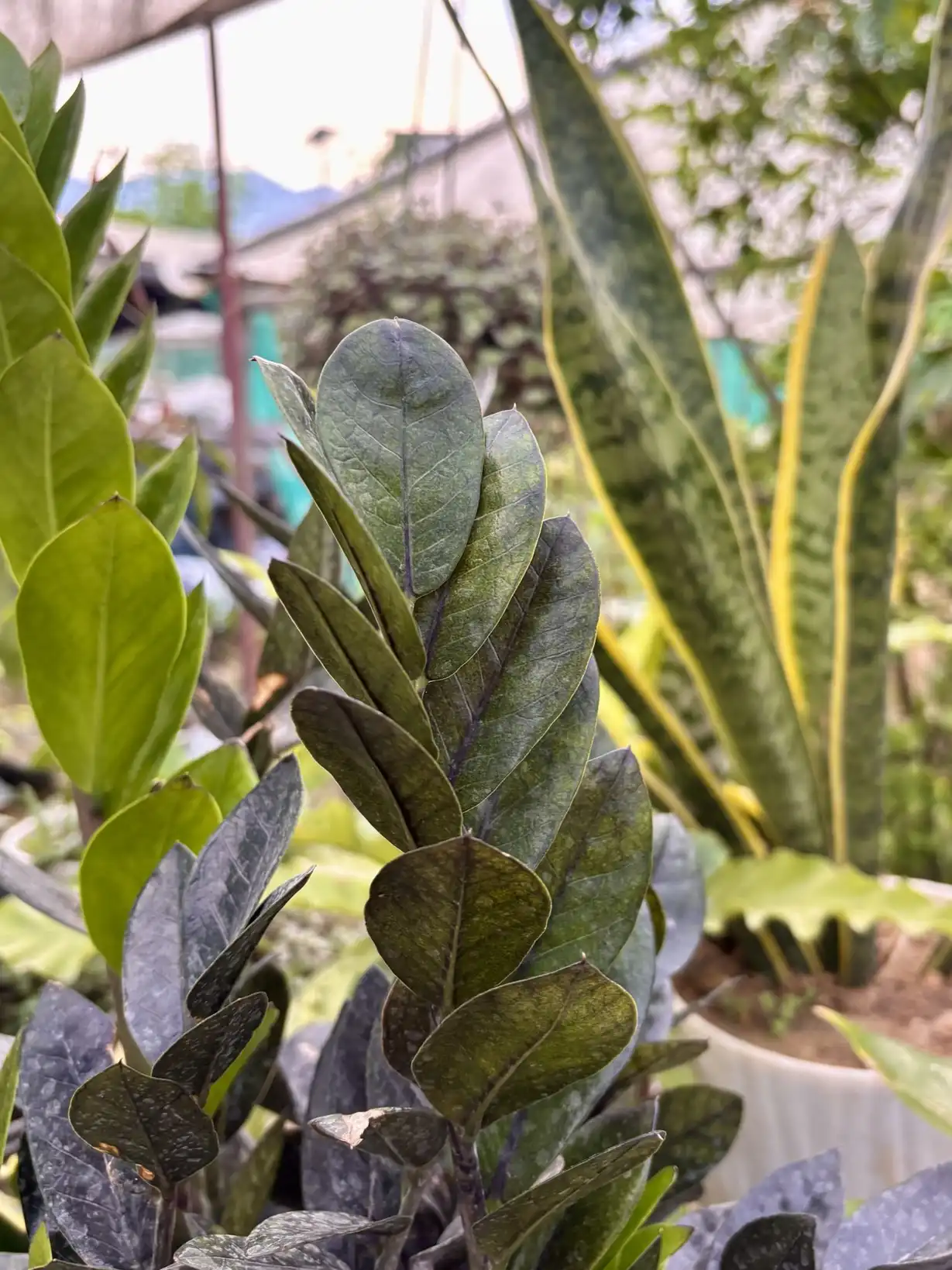
How to Care for ZZ Plants Indoors
For indoor ZZ plant care, give bright indirect light, a pot with drainage holes, and water only when the mix is dry at least 2 to 3 inches down; in low light, that may mean every 3 to 6 weeks. Watering too often is the fastest route to rhizome rot and yellow stems. This guide covers light, pot size, soil, watering frequency, Raven ZZ care, and winter adjustments.
ZZ plant care basics
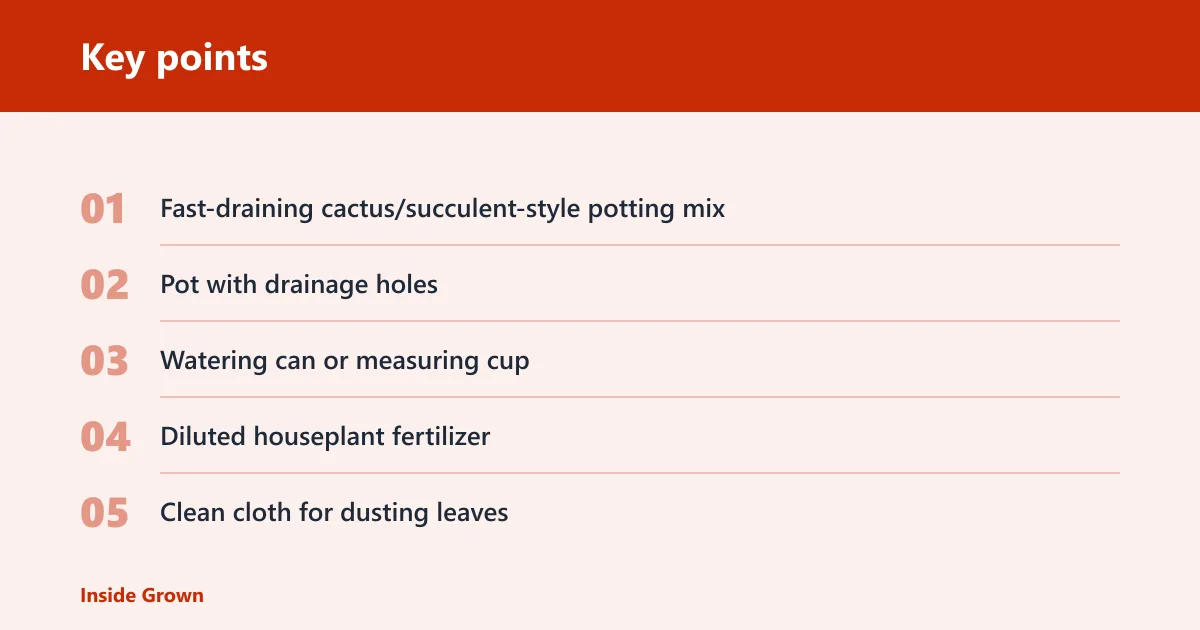


ZZ plant, or Zamioculcas zamiifolia, is a slow-growing indoor houseplant with thick stems, glossy leaflets, and potato-like rhizomes under the soil. It handles lower light better than many houseplants, but it still grows best in bright indirect light. Keep it away from pets and children who may chew on it, since it is toxic if ingested.
What you’ll need
- Fast-draining cactus/succulent-style potting mix
- Pot with drainage holes
- Watering can or measuring cup
- Diluted houseplant fertilizer
- Clean cloth for dusting leaves
- Optional cachepot only if the inner pot can drain fully
How do you water a ZZ plant indoors?
Check the potting mix first, then water deeply only after the top 2 to 3 inches are dry. If the plant sits in a darker room, a cooler room, or a larger pot, dry-down takes longer and watering should be spaced out. In winter, growth slows and the plant usually needs less water.
- Insert a finger or moisture probe 2 to 3 inches into the mix.
- If it feels damp, wait.
- If it feels dry that deep, water until liquid runs from the drainage holes.
- Empty any saucer or cachepot after 5 to 10 minutes.
- Recheck in a few days instead of on a fixed calendar.
Say your ZZ sits in a 10-inch pot near an east window. If the top layer is dry but the lower mix still feels cool and damp, wait another week. A larger pot holds more moisture, so the root zone dries slowly even when the surface looks ready.
ZZ care checklist
| Check | Yes | No | Action |
|---|---|---|---|
| Light is bright and indirect | Move on | Move closer to a window or accept slower growth in lower light | Keep out of direct sun |
| Pot has drainage holes | Move on | Repot into a draining inner pot | Do not let water sit under the roots |
| Pot is close to root-ball size | Move on | Step down to a smaller container | Oversized pots stay wet too long |
| Soil is dry 2 to 3 inches down | Water once, then drain fully | Wait | Use winter spacing if growth is slow |
| Stems are wrinkled, not yellow and mushy | Water now | Inspect roots for rot | Wrinkling points to drought stress |
How should you place and pot a ZZ plant?
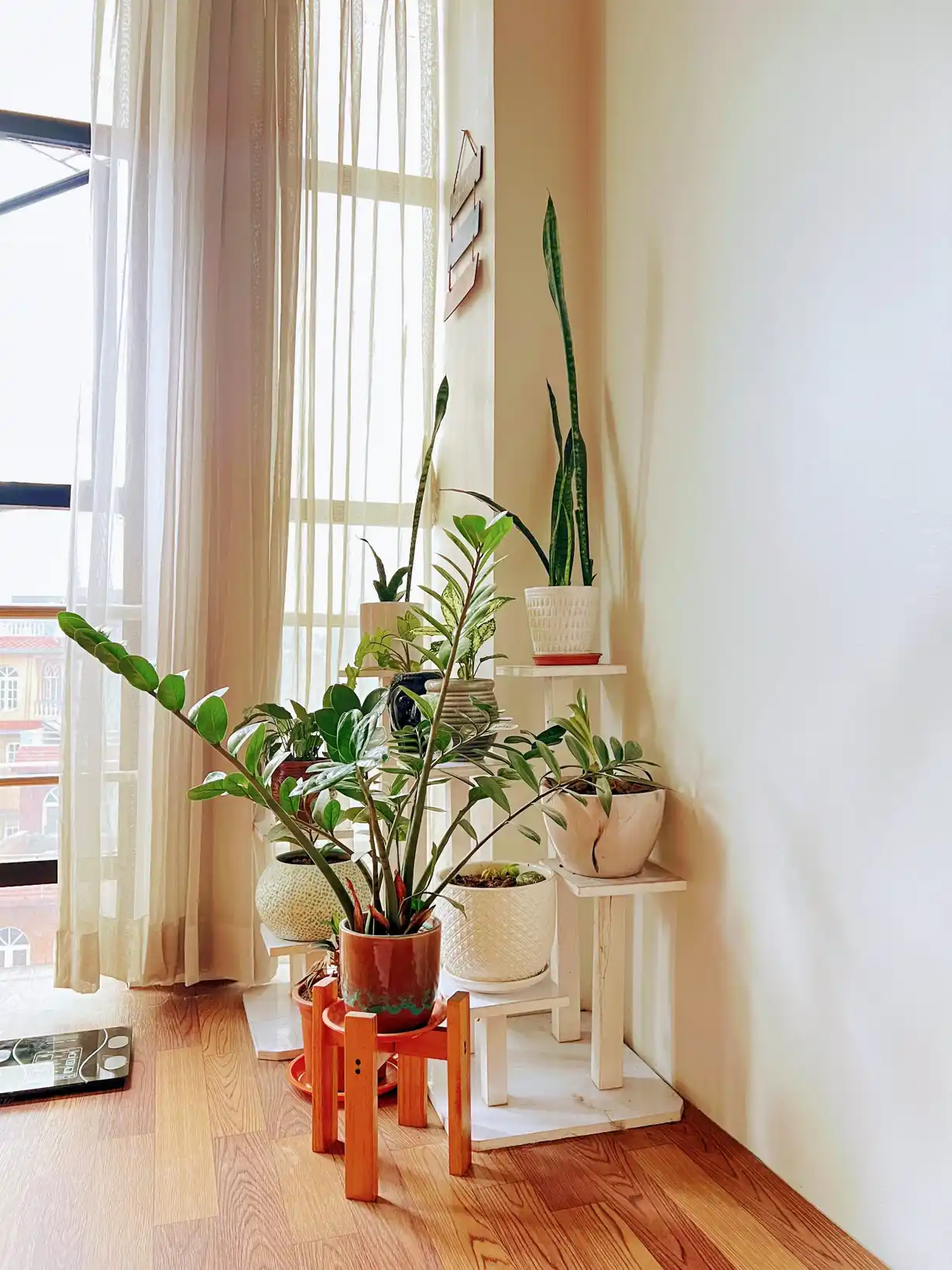
Bright indirect light is the best placement. An east window, or a spot a few feet back from a south or west window, usually works well. Direct sun can scorch leaves, especially on dark cultivars. Use a fast-draining mix with air spaces around the roots, and keep the pot close to the root ball size.
- Choose a pot with drainage holes.
- Fill it with a cactus/succulent-style mix.
- Set the root ball so the crown stays above the soil line.
- Leave only about 1 to 2 inches of empty space around the root ball.
- If you use a cachepot, empty runoff after watering.
How do Raven ZZ plants differ?
Raven ZZ and other black ZZ cultivars follow the same care routine as green ZZ plants. New leaves often emerge greener, then darken as they mature. Give the plant bright indirect light and avoid harsh direct sun, which can stress dark foliage. Water by soil dryness, not by leaf color.
Picture a Raven ZZ near a south window with thin curtain light. The new growth may start lime green, then turn deep burgundy-black over several weeks. That color shift is normal. It does not mean the plant needs more fertilizer or more water.
In winter, ZZ plants grow more slowly, use less water, and dry out more slowly in cooler rooms. Keep them near the brightest indirect light you have, but move them back from cold glass and drafty doors. Reduce watering until the top 2 to 3 inches of mix dry again.
Winter adjustment steps
- Move the plant away from cold windowsills and heating vents.
- Check the mix every 10 to 14 days instead of watering on a schedule.
- Water only when the lower root zone is dry, not just the surface.
- Stop fertilizing until spring unless new growth resumes.
Common mistakes
Overwatering on a fixed schedule is the main error. ZZ plants do not need constant moisture, and oversized pots stay wet long enough to damage rhizomes. A cachepot can hide runoff, which keeps roots sitting in water. Feeding too often also causes trouble, especially in winter.
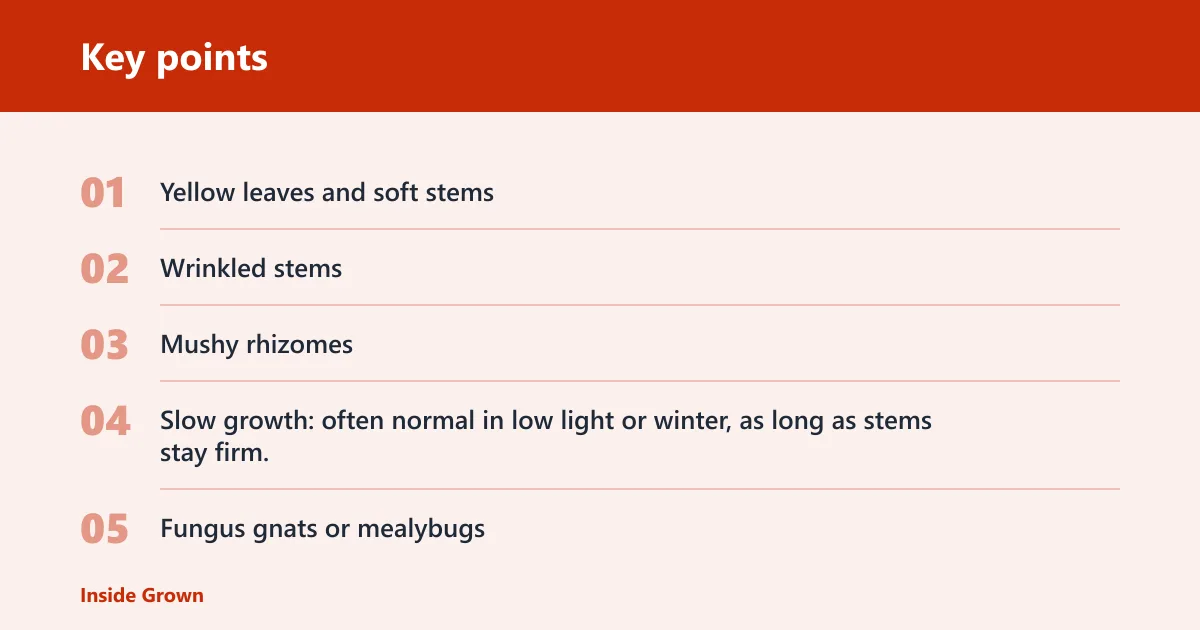
- Yellow leaves and soft stems: often points to too much water, especially if the soil stays damp.
- Wrinkled stems: usually means the plant has gone too dry, not that it needs a bigger pot.
- Mushy rhizomes: root rot is likely; cut back watering and inspect drainage.
- Slow growth: often normal in low light or winter, as long as stems stay firm.
- Fungus gnats or mealybugs: improve drying time and wipe pests off early.
If that didn’t work, try this next
- Unpot the plant and inspect the rhizomes if stems are yellow and soft.
- Trim away any black, mushy sections with clean scissors.
- Repot into a smaller draining pot with fresh mix if the old container was too large.
- Move the plant to brighter indirect light if growth is weak and the mix is drying very slowly.
Fertilizer and cleanup
Feed lightly in spring and summer with a diluted houseplant fertilizer, often at about half the label strength. ZZ plants do not need heavy feeding, and too much fertilizer can leave salts in the mix. Remove yellowing stems at the base, dust the leaves with a soft cloth, and trim damaged foliage for a cleaner look.
A common first-timer mistake is to feed a slow-growing ZZ every month year-round. That usually adds more stress than benefit. Skip fertilizer in low light or winter unless the plant is actively pushing new growth.
Frequently asked questions
How to take care of zz plant indoor watering
Water from the top until runoff appears, then let the pot drain fully. Check again only when the soil is dry 2 to 3 inches down. If the plant sits in a cool or dark room, stretch the interval, because evaporation slows and roots stay wet longer.
Is zz plant good for indoor?
Yes. It handles average home humidity, typical indoor temperatures, and lower light better than many houseplants. It is also slow growing, which makes routine care simple. Keep in mind that it is toxic if ingested, so place it where pets and children will not chew it.