
How to Plan a Botanical Garden Day Trip
Plan a botanical garden day trip for about 3 to 5 hours, then match the route to your transport and energy. If the round trip takes longer than your visit, choose a closer garden or drop extra stops. Bad timing can mean rushed walking, missed blooms, and a long day with little to see. This guide covers visit-length planning, transport checks, seasonal timing, and a simple decision framework for first-time visitors.
How long should you plan to stay?
Plan your visit around the time you can actually spend inside the gate. For a first trip, about 90 minutes gives you time for one or two signature areas, while about 3 hours leaves room for a calm walk, a short break, and a backup stop if one area is closed or crowded.
Half-day visits suit travelers who want a slower route, a café stop, or a tram ride. Full-day visits fit large gardens, several collections, or a slower pace because of kids, older companions, or mobility needs.
Botanical garden day trip matrix
| Visit length | Transport mode | Must-see priorities | Food plan | Weather fallback | Accessibility needs |
|---|---|---|---|---|---|
| 90 minutes | Drive or direct transit with one transfer | Main entrance, signature collection, one rest stop | Eat before arrival; carry water only | Move to covered exhibits or shorten the route | Choose paved paths and the closest visitor center |
| 3 hours | Drive with parking buffer or transit with a 20-minute buffer | Signature collection, children’s area, one guided or tram stop | Snack or café break inside the visit | Build in one indoor or sheltered pause if available | Check restrooms, route grades, and wheelchair rental availability |
| Full day | Drive if parking is available; transit only if service is frequent | Several collections, seasonal bloom areas, tram or guided tour | Picnic area or café plus extra water | Plan a shorter outdoor loop and a longer indoor stop if weather turns | Map the steep or inaccessible sections before you go |
What you’ll need
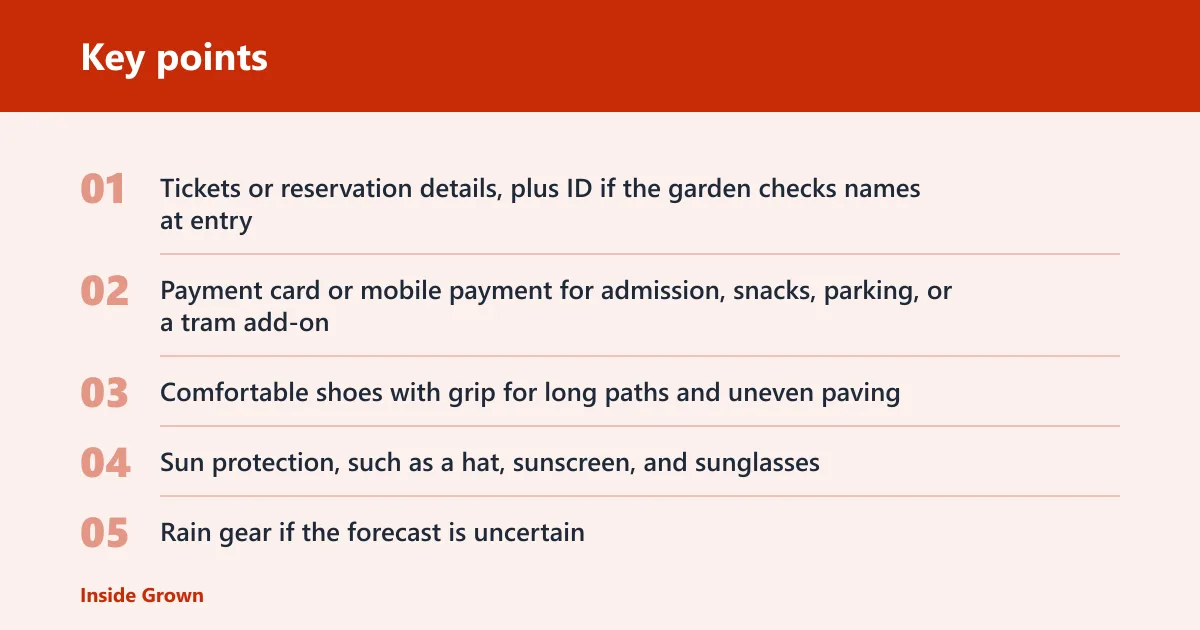
- Tickets or reservation details, plus ID if the garden checks names at entry
- Payment card or mobile payment for admission, snacks, parking, or a tram add-on
- Comfortable shoes with grip for long paths and uneven paving
- Sun protection, such as a hat, sunscreen, and sunglasses
- Rain gear if the forecast is uncertain
- Water and a snack, especially if food service is limited
- A charged phone with map access and saved reservation details
- Notes on accessibility needs, stroller needs, or mobility limits
- Pick your visit length first, then cut the route to match it.
- Check the garden’s main collections and choose one priority area.
- Build in about a 20-minute buffer for parking, transit transfers, or ticket lines.
- Reserve or pre-purchase entry if the garden uses timed or limited admission.
- Pack water, weather gear, and any accessibility items you need.
- Decide in advance whether you want a café stop, picnic, or a fast exit.
- Adjust the plan by 30 minutes if the garden is larger than expected, then recheck your route and food plan.
How do you get there and arrive on time?
Choose the travel mode that fits your visit length, then add buffer time before the gate opens or your ticket window starts. Driving works best when parking is clearly available, while transit suits central gardens with frequent service and a short walk from the stop to the entrance.
Look for the entry point named on your ticket or confirmation. Large gardens may have more than one gate, and the wrong arrival point can waste about 10 to 20 minutes before your visit even starts.
Arrival logistics
- Check the address, entry gate, and parking instructions the day before.
- Estimate drive time or transit time, then add a 20-minute buffer.
- Look for parking availability and whether buses, rideshares, or tour vehicles have separate rules.
- Set your arrival target for about 15 to 30 minutes before timed entry, if the garden uses it.
- Walk straight to the correct entrance desk or visitor center instead of circling the grounds first.
Suppose a garden is about ten miles from a cruise terminal or hotel district. That short distance can still turn into a late arrival if traffic, parking, and check-in all stack up, so leave early and avoid adding another stop before entry.
What should you check before you leave?
Check daily hours, seasonal closures, event hours, ticket availability, food rules, and accessibility notes before you start the trip. Many gardens change hours for events, close sections for weather or maintenance, and limit entry on busy days, so a quick review can prevent a wasted drive.
Rain-or-shine policies matter too. If the garden stays open in bad weather, shift to shorter outdoor loops, more sheltered stops, and less time in exposed areas.
Hours, tickets, and access details
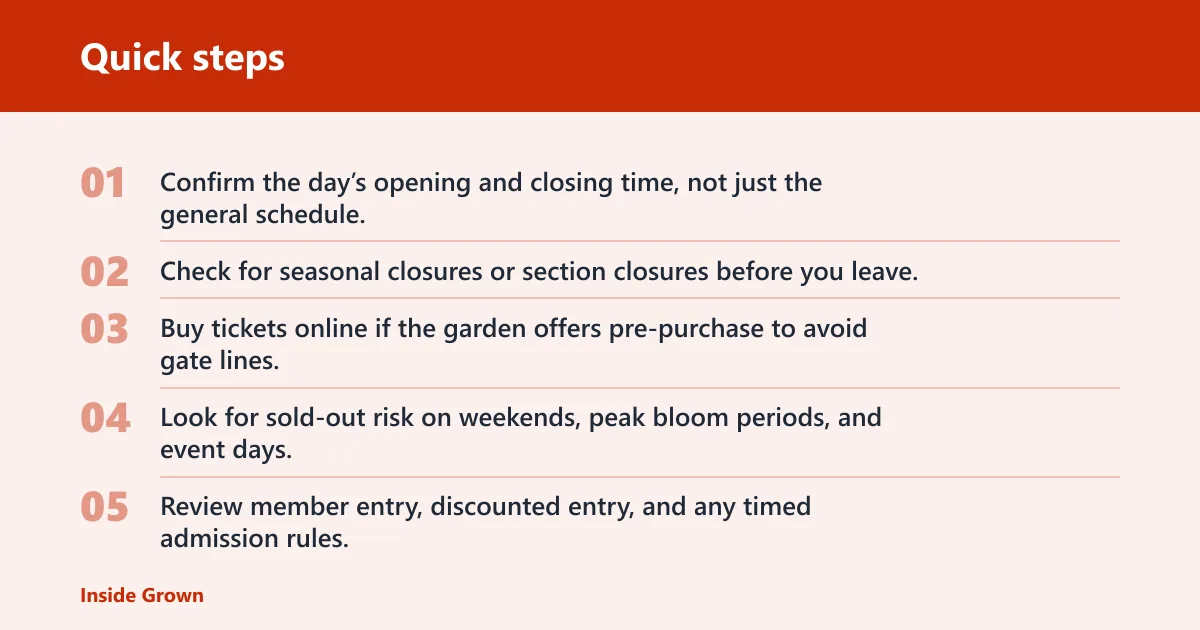
- Confirm the day’s opening and closing time, not just the general schedule.
- Check for seasonal closures or section closures before you leave.
- Buy tickets online if the garden offers pre-purchase to avoid gate lines.
- Look for sold-out risk on weekends, peak bloom periods, and event days.
- Review member entry, discounted entry, and any timed admission rules.
- Read food rules, picnic rules, and whether outside food is allowed.
- Check wheelchair access, restroom locations, steep paths, and rental availability.
NYBG says school groups must arrive 15 minutes early to check in, and groups arriving more than half an hour late are cancelled. NYBG also says programs run rain or shine, all school groups must bring lunches, there are no indoor lunch facilities, bus parking is not available within the Garden, and special access needs should be shared at least 48 hours before the visit. Those details show why timing and access questions belong in the planning stage, not on arrival.
Botanical garden planning matrix

This matrix turns visit length into a practical same-day plan. Use it to match the day trip to your transport, your group, and your energy level instead of forcing one garden visit style onto every trip.
| Visit length | Transport | Priority route | Food plan | Weather backup | Checklist |
|---|---|---|---|---|---|
| 90 minutes | Drive or direct transit | Main gate, signature plants, one loop, exit | Eat before you arrive | Shorten the route and skip open lawns if heat or rain builds | Tickets, water, shoes, phone, one map screenshot |
| 3 hours | Drive with parking buffer or transit with one backup route | Signature collection, children’s area, one tram or guided tour stop | Café stop or packed snack | Move to sheltered areas and reduce the walk by one section | Tickets, weather layer, snack, restrooms, accessibility notes |
| Full day | Drive if parking is clear; transit if service is frequent | Several collections, seasonal bloom area, slower second loop | Picnic area or café, plus refillable water | Split the visit into outdoor and sheltered blocks | Tickets, sun protection, rain gear, mobility plan, food rules |
Norfolk Botanical Garden is generally open daily from 9:00 a.m. to 5:00 p.m., about ten miles from the cruise terminal, and a focused garden visit is about 90 minutes on foot while a relaxed full tour is closer to three hours. That is a useful model for planning: if your travel time is already long, keep the visit short and simple.
Norfolk Botanical Garden also says the tram is wheelchair accessible at most stops. That kind of detail changes the route choice, especially for visitors who want more coverage without adding a long walking loop.
Which stops should you prioritize?
Choose one main interest and build the route around it. A first visit goes better when you see fewer areas well than when you try to cover every path and end up rushing through all of them.
Best stops by interest
- Signature collections: Start with the garden’s best-known plant areas, then add one nearby seasonal bed or conservatory.
- Children’s area: Put this early in the day while attention and energy are higher, then use the rest of the visit for a shorter adult-oriented loop.
- Tram or guided tour: Choose this when the garden is large, the weather is hot, or one companion prefers less walking.
- Quiet visit: Pick the least crowded paths, then keep the route short and skip the farthest sections.
UC Botanical Garden at Berkeley covers 34 acres and has over 10,000 kinds of plants. A garden that size needs a plan. Without one, the day can turn into a string of half-finished detours. (Berkeley)
Picture a couple with one person interested in orchids and the other wanting a light walk. The better plan is one orchid stop, one café break, and a short exit route, not a full perimeter loop that leaves both people tired and annoyed.
What should you bring on a botanical garden day trip?
Bring items that keep the visit flexible: tickets, shoes, weather layers, water, and a way to check directions or closures on your phone. The right kit depends on the time of year and the length of the walk, but the basics stay the same for most gardens.
Pack for exposure first. Botanical gardens are often mostly outdoors, so sun, heat, wind, and sudden rain affect the day more than many first-time visitors expect.
Weather and walking prep
- Wear comfortable shoes with enough support for gravel, steps, and long paths.
- Carry sunscreen, a hat, and sunglasses for open sections.
- Bring a rain jacket or compact umbrella if the forecast could change.
- Use layered clothing when temperatures swing between morning and afternoon.
- Carry more water on hot days and plan shorter loops in direct sun.
A common first-timer mistake is treating a botanical garden like a short indoor museum stop. A hot, 3-hour visit needs water, shade breaks, and a slower pace; otherwise, the second half of the day becomes a tired walk to the exit.
Common mistakes
Most problems come from planning too much or checking too little. The fix is simple: trim the route, confirm the entry details, and set one backup plan for weather, food, and timing.
- Arriving without checking hours or closures: Confirm the day’s schedule, event changes, and any seasonal closure before departure.
- Skipping the ticket plan: Buy ahead when timed entry or sold-out risk is possible, especially on peak weekends.
- Underpacking for weather or walking: Bring shoes, water, and sun or rain protection even for short visits.
- Ignoring food limits: Check whether outside food is allowed and whether a café or picnic area is open.
- Missing accessibility details: Review restrooms, steep areas, and rental options before choosing a route.
Prevention is straightforward: before leaving, save the gate location, parking note, and admission details in your phone so you are not hunting for them at the entrance.
Frequently asked questions
How do I get to a botanical garden for a day trip?
Choose the fastest route that gets you to the correct entrance, not just the nearest address. If you are driving, add a 20-minute buffer for parking and walking to the gate. If you are using transit, check the last return departure before you commit to a longer visit.
How long should I plan to stay at a botanical garden?
Plan 90 minutes for a quick visit, about 3 hours for a relaxed visit, and a full day only if the garden is large or you want multiple stops. If travel time is longer than the visit itself, shorten the route or choose a closer garden.
How do I check botanical garden hours before I go?
Look for the day’s opening time, closing time, and any event-related changes on the garden’s main visitor information page. Check for seasonal closures and rain-or-shine notes before you leave home, especially if your trip depends on one timed entry window.
What season is best for a botanical garden day trip?
The best season depends on what you want to see. Bloom-heavy periods are best for flowers, while milder weather often makes the walking easier. If your schedule is flexible, choose the season that matches the collection you care about most and the weather you can handle.
Can I bring food or snacks to a botanical garden?
Many gardens allow some form of food break, but the rule may be limited to picnic areas or café purchases. Check outside food rules before you pack a meal. If you are visiting with kids or on a long route, confirm where you can actually stop and eat.
Is a botanical garden worth visiting if I only have a few hours?
Yes, if you plan it as a short visit instead of a full tour. Focus on one signature collection, one rest stop, and one exit route. A few hours is enough to get a strong first impression without trying to see every path or display.
Is a botanical garden day trip good for kids or mobility needs?
Yes, if you choose the right route and check access details first. Look for wheelchair access, accessible restrooms, and the easier paths between major stops. For kids, a tram, guided tour, or children’s area can help keep the day short and manageable.