Gardening Techniques for First-Year Vegetable Gardens
Start with a small bed, 3 to 5 easy crops, and skip high-maintenance plants. Year one should teach you soil, watering, spacing, and pest control. If you start too large, you spread seed, time, and attention too thin, and the garden slips fast. This guide covers what to do first, what to ignore, which crops fit a beginner plan, and the simplest decisions that keep a first vegetable garden on track.
This guide is part of our Gardening techniques series.
What should you focus on in year one?


Use the first season to learn the garden, not to chase a big harvest. Your main job is to choose a workable site, plant on time, water on a steady schedule, weed before the bed gets out of control, and harvest when crops are ready.
Leave oversized layouts, rare crops, and complex bed systems for later. A first garden should teach you how sun, soil, moisture, and timing interact in your yard.
Set a small list of goals
Keep the goal list short. Plant a few crops that suit your climate, keep the soil covered, and learn how often each bed needs water.
A strong first-year target is a tidy bed with healthy plants, a steady harvest from a few crops, and no major loss from neglect. That is enough.
Decide what to ignore this year
Skip large trellising projects, sprawling crop collections, and any plan that depends on daily attention you do not have. It also makes sense to avoid ambitious succession planting until the basics feel routine.
Say your yard has room for a 12×20-foot patch, but you can only work it on weekends. A smaller bed with fewer plants will usually produce better results than a larger space that dries out, weeds over, and never gets harvested on time.
📊 Beginner gardens should get at least 6–8 hours of direct sunlight daily. Source: How to Start a Vegetable Garden (Beginner’s Guide).
How big should your first vegetable garden be?
Keep the first garden small enough that you can water, weed, and harvest it without falling behind. A 4×4 or 4×8 raised bed works well for beginners, and a 10×10-foot in-ground plot is also manageable. Bigger than 12×24 feet is too much for most first-timers.
Leave paths every 4 feet or so if you use in-ground rows, so you can reach plants without stepping on soil. Compacting the soil makes roots work harder and reduces airflow near the surface.
Match the size to your weekly time
Size the garden to your labor budget, not your wish list. If you can only spare a short amount of time each week, one bed is better than two. If you have more time later, you can expand next year.
Start small and expand next year instead of planting more space than you can maintain now. First-year success comes from keeping tasks small enough to repeat.
| Garden setup | Beginner fit | Why it works | Main caution |
|---|---|---|---|
| 4×4 raised bed | Very good | Easy to reach from all sides; simple to water and weed | Can dry faster than ground soil |
| 4×8 raised bed | Very good | Still manageable, with enough room for a few crops | Needs regular watering and mulch |
| 10×10-foot in-ground plot | Good | Works well if soil drains and paths are planned | Do not make the rows wider than you can reach |
| More than 12×24 feet | Poor for year one | Leaves room for many crops | Too much weeding, watering, and harvesting for most beginners |
What site gives a first-year garden the best odds?
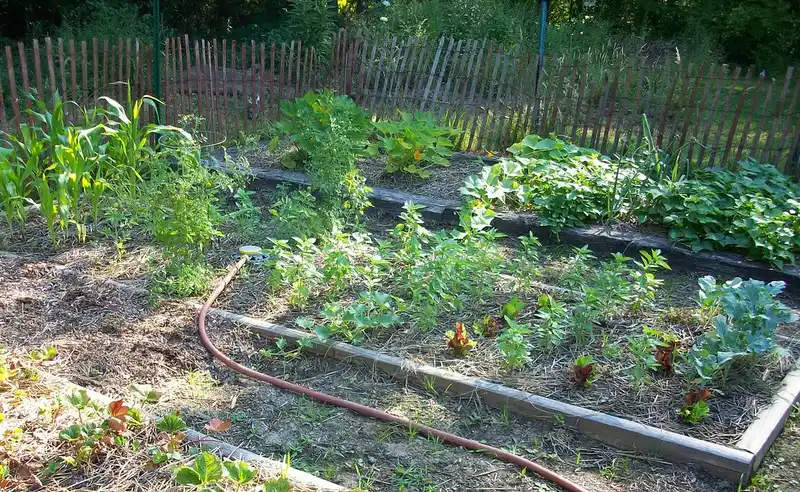
Choose a spot with 6–8 hours of direct sun daily, well-drained soil, and easy access for watering, weeding, and harvesting. Shelter from strong winds matters too, because wind can damage young plants and reduce pollination.
Dry, open ground is often better than a pretty corner that stays wet or gets shaded by afternoon. Wet soil can cause root rot, so poor drainage is a real problem.
Check sun, wind, and access
Look at the site across the day, not just at noon. Trees, fences, sheds, and neighboring buildings can change light levels more than expected.
Keep the bed close enough that carrying a watering can or hose feels easy. If access is awkward, weekly care gets skipped first.
Choose the right layout for the space
Raised beds help when the site has poor drainage or compacted soil. In-ground beds work well when the native soil drains properly and can be improved. Containers can fit small spaces, but they dry faster and usually need more attention.
Whatever you choose, keep the soil loose and make maintenance simple. A garden that is easy to reach is a garden you are more likely to keep up with.
How do you prepare soil before planting?
Start with a soil test, then adjust pH and nutrient levels before planting. Mix in compost or other organic matter, because that improves structure, water movement, and fertility in one step. Finish with mulch to hold moisture and slow weeds.
Good first-year soil work does not need to be fancy. It needs to be checked, practical, and done before roots go in.
Use a soil test to guide changes
A soil test tells you what the garden actually needs instead of guessing. If pH is off, some nutrients become harder for plants to use. If fertility is low, compost or other organic matter can help build it back up.
Do not pile on amendments without a reason. Too much of the wrong material can create problems that are harder to fix later.
Mulch after planting
Mulch helps hold moisture and cuts down on weeds. That matters in a first-year bed because weeds compete for light, water, and space before the crop canopy closes.
Use a mulch layer that still lets water reach the soil. Check it after heavy rain or wind.
Which crops are easiest in the first year?
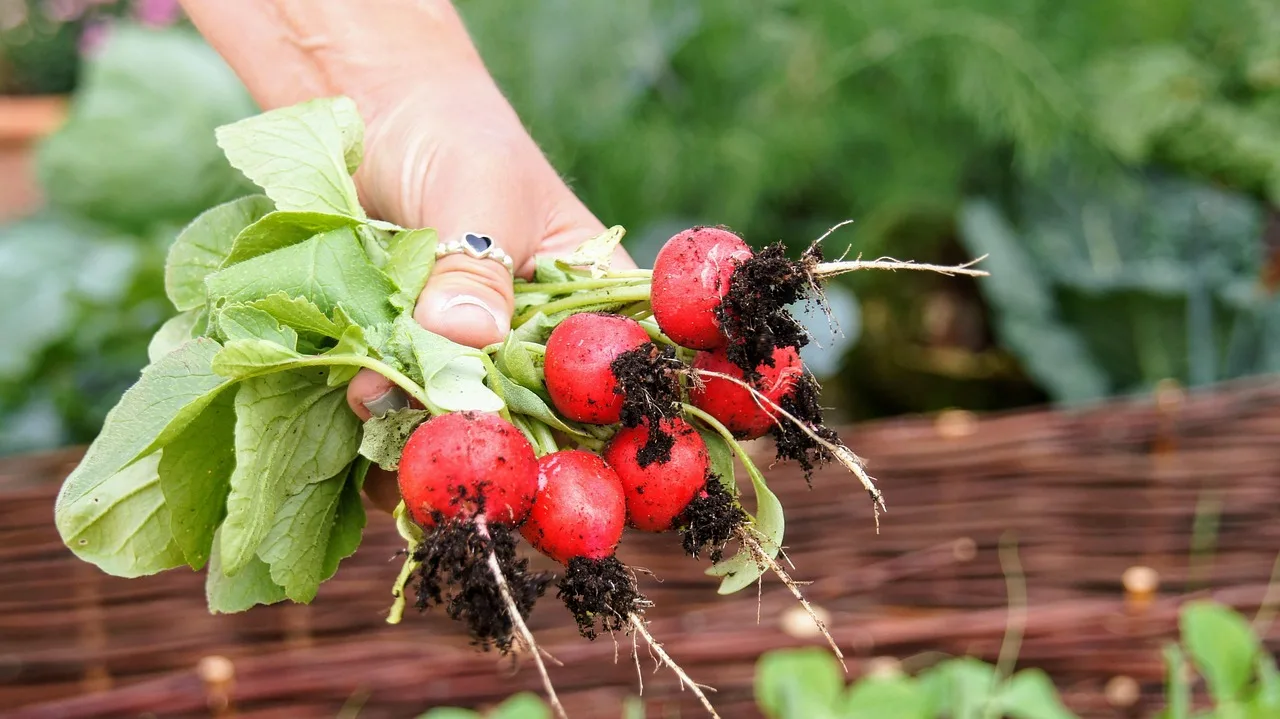
Begin with crops that match your space, season length, and attention level. Lettuce and radishes are fast and useful for learning timing. Green beans are simple if they get enough sun. Tomatoes, zucchini, and peppers need more room and more patience.
Easy does not always mean low risk. Some crops are quick but touchy, while others are forgiving but need more space or more time to pay off.
| Crop | Setup difficulty | Days to harvest | Space need | Watering sensitivity | Beginner risk |
|---|---|---|---|---|---|
| Radishes | Low | Fast | Low | Medium | Low to medium |
| Lettuce | Low | Fast to medium | Low | High | Medium |
| Green beans | Low | Medium | Medium | Medium | Low |
| Tomatoes | Medium | Long | High | High | Medium to high |
| Zucchini | Medium | Medium | High | Medium | Medium |
| Peppers | Medium to high | Long | Medium | High | Medium to high |
How each crop fits a first garden
Radishes are a good starter because they are fast, but they can get woody or split if watering swings too much. They teach quick feedback.
Lettuce is also beginner-friendly, though it is sensitive to heat and uneven moisture. It can bolt in warm weather, which sends it to flower and makes leaves bitter.
Green beans are straightforward if the site gets enough sun and the bed is not crowded. They give a useful harvest without demanding a large footprint.
Tomatoes, zucchini, and peppers are common beginner crops, but they need more space, more season length, or more careful watering than the quick crops above. That makes them better as a second step, or as one or two plants in a small plan.
Simple crop choices by climate
In hot, windy sites, lettuce may struggle unless it gets afternoon protection and steady water. In wet sites, choose the highest ground you have and avoid overwatering, since soggy soil invites root problems.
In short-season areas, favor fast crops like lettuce and radishes, then add a few warm-season plants only if your frost window allows enough time. In a long season, you have more room to experiment later.
When should you plant cool-season and warm-season crops?
Use the average last spring frost date as the main timing guide. Plant cool-season crops in early spring, then wait until after frost for warm-season crops. Seed packets also list germination temperatures, which matter when soil is still cold.
Planting too early can stall growth, while planting too late can shorten harvest time. Timing is one of the first-year skills that pays off quickly.
Use frost dates, then check soil warmth
Cool-season crops like lettuce and radishes can go in early if the soil is workable. Warm-season crops such as tomatoes, zucchini, beans, and peppers should wait until after the last frost.
For seeds, check the packet for germination temperatures. If the soil is colder than the crop prefers, sprouts may be slow or uneven.
Plan for weather swings
A late cold snap can slow young plants. Covering or delaying planting is often better than rushing seedlings into poor conditions.
Suppose tomatoes go in during a cool, wet stretch. Growth can stall, and blossom drop may follow later once flowers form under stress.
What does first-year maintenance look like week by week?
First-year maintenance is mostly a steady loop: water, weed, check growth, and harvest on time. Avoid overwatering, because soggy soil can damage roots, and do not wait for weeds to become large jobs.
Watch sun exposure as the season changes. Nearby trees may leaf out, shadows may move, and a site that looked sunny in spring may become less bright later.
Basic tools to keep on hand
- Garden trowel for small holes and transplanting seedlings
- Hand pruners for harvesting and trimming plants
- Watering can or hose for young plants
- Garden gloves for handling soil and foliage
- Garden fork or spade for turning and loosening soil
A month-by-month first-season checklist
- Month 1: Pick the site, test the soil, clear debris, and map the bed or plot.
- Month 2: Add compost or other organic matter, adjust pH or nutrients if needed, and install mulch after planting.
- Month 3: Plant cool-season crops early, then keep the bed evenly watered and weeded.
- Month 4: After the last frost, plant warm-season crops and add supports if needed.
- Month 5: Harvest frequently, remove damaged leaves, and watch for pests or disease.
- Month 6: Keep watering steady, thin crowded plants if needed, and note what performed well.
- Month 7 and later: Finish the season by recording what to change next year, including spacing, crop choice, and bed size.
Common first-year problems and what to do
Bolting happens when leafy crops like lettuce send up flowers and turn bitter. Reduce heat stress with earlier planting, steadier watering, and timely harvests.
Blossom drop on tomatoes or peppers often follows heat, wind, or irregular moisture. Keep watering consistent and avoid letting the root zone swing from dry to soaked.
Pest pressure often gets worse when beds are crowded or stressed. Remove damaged leaves, harvest promptly, and keep weeds down so pests have fewer hiding places.
Uneven watering causes split fruit, stunted growth, and weak roots. Water deeply enough to reach the root zone, then let the top layer dry a bit before watering again.
What mistakes do first-time vegetable gardeners make?
Common mistakes include starting too big, planting too many crops, using a poor site, and skipping regular care. Overwatering, crowding plants, and ignoring sun exposure also cause a lot of first-year failure.
Another mistake is treating all crops the same. Fast crops, fruiting crops, and heat-sensitive crops do not need the same schedule or the same amount of attention.
Set a realistic success metric
Good enough in year one means the garden stays alive, productive, and manageable. If the bed gives you some lettuce, radishes, beans, or a few tomatoes without constant rescue work, that is a successful first season.
Yield should be measured against learning, not perfection. A smaller harvest from a well-managed bed beats a large plan that collapses in midsummer.
Climate-specific first-year notes
Hot climates call for better mulch, more frequent watering checks, and some afternoon shade for tender crops. Windy sites need shelter or a more protected bed location. Wet sites need drainage first, not extra watering. Short-season gardens should favor quicker crops and fewer long-season plants.
Do you need raised beds for your first vegetable garden?
No. Raised beds are helpful, but they are not required. Use them if drainage is poor, the soil is compacted, or you want easier access. In-ground beds work fine when the native soil drains well and can be improved with compost.
Containers can also work for a very small start, but they need more frequent watering and are less forgiving in heat. The best layout is the one you can keep up with.
Choose the layout that fits your site
Raised beds are useful when you need cleaner edges, better drainage, or a simple path system. In-ground plots suit larger spaces and can be easier to expand later. Containers are best for patios, small yards, or a few plants only.
The main rule is easy access. If you cannot reach plants without stepping where roots live, the layout needs to change.
How do you improve your soil before planting vegetables?
Use a soil test, mix in compost or other organic matter, adjust pH and nutrient levels if needed, and mulch after planting. That sequence gives roots a better start and reduces the chance that the bed dries out too quickly or stays too wet.
Soil improvement is less about adding a lot and more about adding the right thing in the right order. That keeps a first garden from becoming a guesswork project.
What to watch after planting
Check for crusting, dry patches, and standing water. Those signs tell you whether the bed is holding moisture too tightly or draining too quickly.
If leaves look pale, plants stall, or the bed dries in a day, note it for next season. First-year gardening is partly about reading the site.
How often should you water a new vegetable garden?
Water often enough to keep young plants from drying out, but do not keep the soil soggy. New beds need close attention because roots are shallow at first and weather can change fast. A steady routine is better than frequent light splashes.
Check the soil before watering again. If it is still damp below the surface, wait. If it is dry, water deeply so moisture reaches the root zone.
Keep watering practical
Use the easiest tool that lets you reach the bed without hassle, whether that is a watering can or hose. If the bed is far from a water source, first-year care gets harder than it needs to be.
Uneven watering is one of the fastest ways to lose a beginner crop. Regular, moderate moisture supports steady growth and fewer surprises.
Frequently asked questions
What should I do in the first year of a vegetable garden?
Focus on site choice, small scale, simple crops, and steady care. Plant a few vegetables that fit your season, keep the soil covered with mulch, and learn how often the bed needs water and weeding. Year one should teach timing and maintenance, not chase maximum yield.
How do I start a vegetable garden for the first time?
Start by choosing a sunny, well-drained spot with easy water access. Test the soil, add compost, and decide on a small layout such as a 4×4 or 4×8 raised bed or a 10×10-foot in-ground plot. Then plant only a short list of easy crops.
How big should my first vegetable garden be?
A first garden should be small enough to maintain every week without stress. A 4×4 or 4×8 raised bed works well for beginners, and a 10×10-foot in-ground plot is also manageable. If you are tempted to go bigger than 12×24 feet, wait until next year.
What vegetables are easiest to grow the first year?
Begin with lettuce, green beans, and radishes if you want crops that help you learn timing fast. Tomatoes, zucchini, and peppers are also common beginner crops, but they need more space, more season length, or more attention to watering and weather changes.
When should I plant vegetables in my first garden?
Use the average last spring frost date as your main timing marker. Plant cool-season crops in early spring, then wait until after frost for warm-season crops like tomatoes, zucchini, beans, and peppers. Seed packets can help you match planting time to soil temperature.
How much sun does a vegetable garden need?
Beginner gardens should get at least 6–8 hours of direct sunlight daily. Less light usually means slower growth, smaller harvests, and more disease pressure. Check the site at different times of day so trees, fences, and buildings do not hide the shade problem.