
Is Vermiculite Safe for Vegetable Gardens? Quick Guide
Yes—horticultural-grade vermiculite is generally safe for vegetable gardens, and I use it when I need better moisture retention and air space in seed-starting mixes or containers. Skip it in already wet, heavy beds. The wrong grade, or the wrong material, wastes money and can leave seedlings waterlogged or short of oxygen. Here’s how I check when vermiculite helps, when to avoid it, and how to verify the bag is horticultural grade.
This guide is part of our Garden safety concerns: what is safe to use series.
What vermiculite is and why gardeners use it



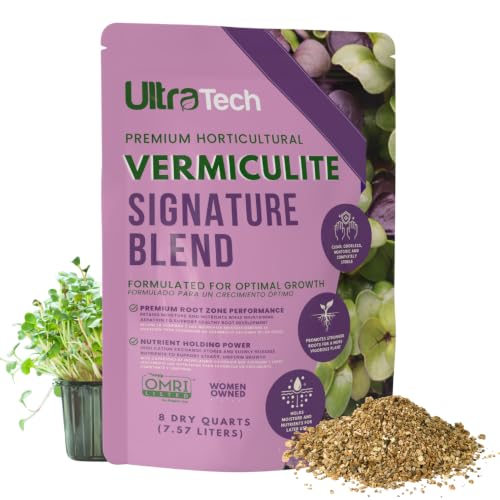
Vermiculite is a naturally occurring mineral, a magnesium-aluminum-iron silicate, that gardeners use as a soil amendment. It is light, porous, and does not break down over time. In mixes, it can absorb three to four times its weight in water, which helps hold moisture while still leaving room for roots and air.
For vegetable gardening, that matters most in seed-starting blends, propagation trays, and potting mixes that dry too quickly. It can also help soil structure and raise water retention in some beds. It is less useful where the root zone already stays wet.
How horticultural vermiculite behaves in soil mixes
Horticultural vermiculite is not a fertilizer. It does not feed plants directly, but it can help roots reach water and nutrients more evenly. It also helps plants take up potassium, ammonium, magnesium, and calcium by keeping the root zone from swinging from dry to saturated.
That is why I see it so often in seed starting and cuttings. It keeps small roots anchored while cutting the chance that a tray dries out between waterings. In containers, it can slow how fast the mix collapses and crusts on top.
Where it helps most in vegetable gardening
It tends to fit best in leafy greens, transplants, and indoor starts that need steady moisture. Lettuce, kale, basil, tomatoes, and peppers often do well when the mix needs more water holding without turning dense. Root crops are different. Carrots, radishes, and beets want a finer, looser bed structure with strong drainage, so heavy vermiculite use is usually a poor match.
According to Is Vermiculite Safe for Organic Gardening? Here’s What You Need To Know! – The Small Town Homestead — The Libby, Montana mine supplied about 70% of U.S. commercial vermiculite from 1919 to 1990.
Is vermiculite safe for vegetable gardens?
Yes, horticultural-grade vermiculite is generally considered safe for vegetable gardens when it comes from a reputable supplier and is used as directed. The main safety concern is not the garden bed itself; it is dust inhalation and the risk from older, non-garden vermiculite products. Fresh, labeled garden material is the right choice.
The practical rule is simple: use horticultural vermiculite for seed starting, propagation, and some mix recipes, but do not use old attic or insulation material. If the bag is unlabeled, dusty, or came from a building site, treat it as suspect until verified.
When horticultural-grade product is the right choice
Choose it when you want moisture retention plus more air space in a mix. That includes seed trays, propagation cells, hanging baskets, and some raised-bed blends where the soil is a little too quick to dry. It is also useful when compost is still coarse and you need a light conditioner.
If a vegetable bed already stays damp after rain, vermiculite usually adds the wrong thing. More water-holding in a wet bed can mean slower warming, weaker roots, and a greater chance of oxygen stress.
Does vermiculite contain asbestos?
Some older vermiculite products were contaminated with asbestos, and that is the real reason gardeners still ask about it. Modern horticultural vermiculite sold today is generally described as asbestos-free, but old stock and non-garden material deserve caution. The problem is inhalation exposure, especially during handling and cleanup. (epa.gov)
Do not assume all vermiculite is the same. Source matters. Grade matters. Age matters. A bag from a garden supplier is a different product from loose material found in an attic or around old insulation.
Why older vermiculite raises concern
Legacy risk is tied to certain mined material, not to every scoop of garden vermiculite. Dust from older product is the concern because asbestos fibers are dangerous when inhaled. That is why the safer approach is to avoid vermiculite of uncertain origin, especially material taken from older buildings.
Why Libby, Montana still matters
The Libby, Montana vermiculite mine supplied about 70% of U.S. commercial vermiculite from 1919 to 1990. That mine is part of the safety context because some material from that supply chain was linked to asbestos contamination. Even now, older bags or attic fill can carry that history into a home garden decision.
How to buy the right vermiculite and handle it safely
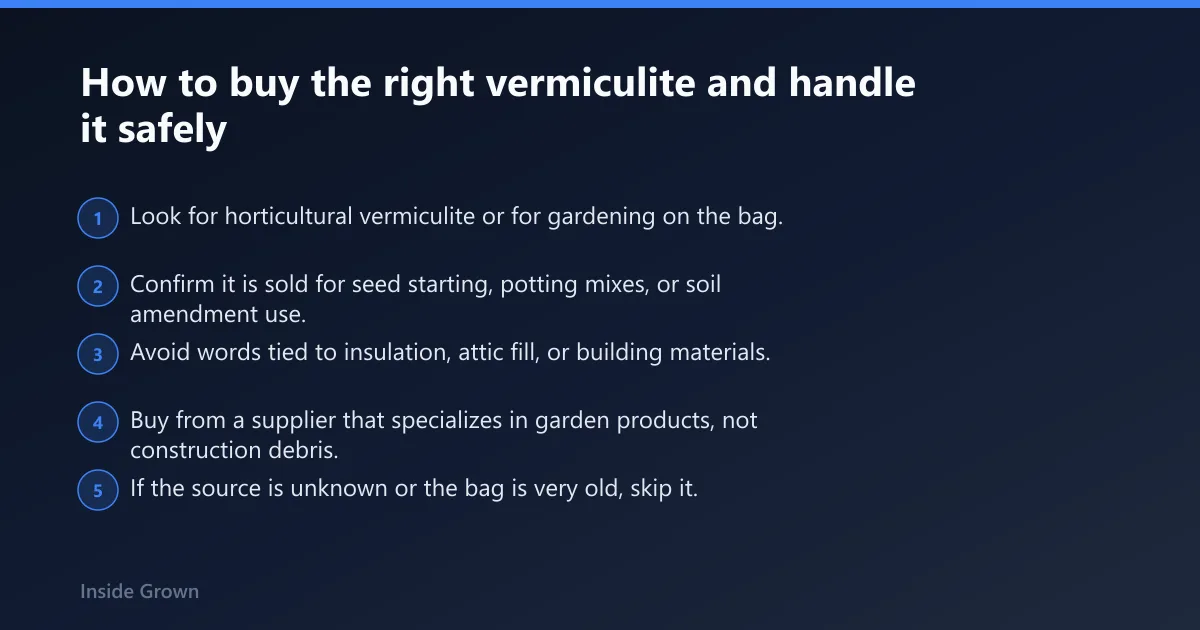
Buy horticultural vermiculite from a garden supplier with a clear label indicating it is for seed starting, potting mixes, or soil amendment use. That label is the first filter. Avoid attic insulation, loose-fill building material, or any bag that lacks a clear garden-use label. If the packaging is vague, stale, or dusty from storage damage, do not treat it as garden grade.
Handle it like fine dust. Open bags outdoors or in a well-ventilated place. Wear a protective mask and dampen the material before mixing when dust is likely. That simple routine lowers inhalation exposure during the messy part of the job.
What labels and supplier details to check
- Look for horticultural vermiculite or for gardening on the bag.
- Confirm it is sold for seed starting, potting mixes, or soil amendment use.
- Avoid words tied to insulation, attic fill, or building materials.
- Buy from a supplier that specializes in garden products, not construction debris.
- If the source is unknown or the bag is very old, skip it.
Dust-control steps before and during mixing
- Open the bag outdoors if possible.
- Wear a mask when pouring or measuring dry material.
- Lightly dampen vermiculite before blending it into a mix.
- Pour slowly to avoid a dust cloud.
- Clean surfaces with wet methods rather than sweeping dry dust around.
Use the decision checklist: source, dust, and garden fit
This fast check helps decide whether a specific batch belongs in the garden. If any one part fails, do not use it. The issue is usually source or fit, not vermiculite itself. A good bag in the wrong bed can still cause problems.
| Scenario | Source verification | Dust-control steps | Garden-use fit |
|---|---|---|---|
| Seed starting | Use only bagged horticultural vermiculite from a garden supplier | Wear a mask; dampen before mixing | Good fit for trays, cuttings, and germination mixes |
| Raised beds | Use horticultural label only | Mask during blending; pre-wet if dusty | Good in modest amounts when the bed dries fast |
| Container vegetables | Check that it is garden grade, not insulation grade | Mask for dry pouring; mix outdoors if possible | Good fit in potting mixes that need more water holding |
| Clay soil | Garden grade is still required, but source is only part of the decision | Mask and dampen, then mix sparingly | Use only in small amounts; may become too wet or soggy |
| Old attic material | Do not use; source is unacceptable for food gardening | Do not disturb if contamination is possible | Wrong fit; treat as building material waste |
When vermiculite helps vegetable crops, and when it does not
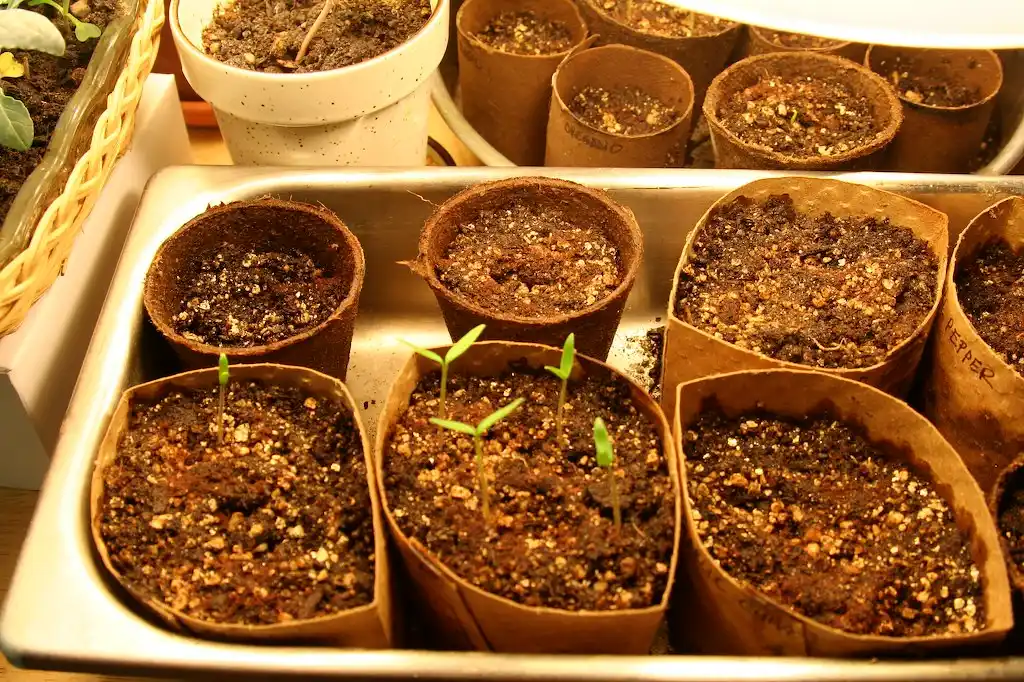
Vermiculite helps when the mix dries too fast and young roots need steady moisture. It is useful in seed starting, propagation, containers, and some raised beds. It is less useful in beds that already hold water well, and it can be the wrong call for crops that prefer a drier root zone.
Seed starting and propagation
For seedlings and cuttings, vermiculite supports germination by keeping the surface evenly moist. It also helps root anchoring, which matters when tiny roots are trying to establish before the top growth has much size. Many growers use it as part of a light, fine-textured starting blend.
Moisture retention in container mixes and raised beds
In containers, vermiculite helps buffer watering mistakes by holding water longer than many coarse mix ingredients. In raised beds, it can be mixed in lightly when the bed drains well but dries too quickly in warm weather. It is a moisture tool, not a fix for poor soil structure.
When drainage or crop type makes it a bad fit
Heavy clay is where vermiculite can backfire. The page notes it can be too wet or soggy when mixed with clay soil, and that is the pattern gardeners see when the bed already drains slowly. Root crops also dislike a bed that stays too moist or compacted. Leafy greens and transplants are usually more forgiving.
What are safer alternatives to vermiculite?
Several substitutes work better when the goal is more air space, better drainage, or a different moisture pattern. The best choice depends on the crop and the bed. No single amendment fits every vegetable system, so compare the job first and the product second.
Pumice
Pumice is a strong choice for containers and mixes that need extra air without much breakdown over time. It improves drainage more than water holding, so it suits succulents and many container vegetables better than a wet clay bed does. For root crops, it can be useful when the mix is too tight.
Peat moss and coco coir
Peat moss and coco coir both hold water well. They are closer to vermiculite on moisture retention, though they behave differently in mix structure. Coir is often used in seed starting and containers when a fine, consistent texture is needed. Peat moss can work too, but it tends to be more acidic and can compact if overused.
Compost and perlite
Compost adds nutrients and biological activity, which vermiculite does not. It is better for long-term bed building. Perlite is often a better match when the main goal is added air space and drainage rather than water storage. In vegetable beds, perlite often suits heavier soils more cleanly than vermiculite does.
Frequently asked questions
Is vermiculite safe for vegetable gardens
Yes, horticultural-grade vermiculite is generally safe for vegetable gardens when it comes from a reputable supplier and is used for its intended purpose. The main caution is older or unknown material, especially anything that looks like insulation or building fill rather than a garden amendment.
Is vermiculite good for vegetable gardens
It is good for vegetable gardens when the soil or mix needs more water retention and a little more air space. It works especially well for seed starting, cuttings, container vegetables, and some raised beds. It is a poor choice for beds that already stay wet or for crops needing a drier root zone.
Is vermiculite safe for gardening
Horticultural vermiculite is generally safe for gardening, but the handling matters. Dust can irritate the lungs, so mask use and dampening are sensible. Older vermiculite from unknown or building-related sources should be avoided because the asbestos concern is tied to legacy contamination, not to garden-grade product.
Does vermiculite contain asbestos
Older vermiculite sometimes did, which is why the topic still comes up. The concern is tied to legacy sources, including the Libby, Montana mining history. Modern horticultural vermiculite sold for gardening is generally described as asbestos-free, but old stock and attic material should not be used.
Can you use vermiculite in raised beds
Yes, but only when the bed needs more moisture retention and the drainage is already decent. In a raised bed that dries fast, vermiculite can help young plants and leafy greens. In a bed that already stays wet or compacted, it can make the balance worse rather than better.
Should I wear a mask when handling vermiculite
Yes, a mask is a good idea when handling dry vermiculite because the dust is the part most likely to cause trouble. Dampening the material before mixing also helps. Those two steps are simple and practical, especially when opening bags, measuring, or blending it into dry potting mixes.