Soil Mix for Botanical Garden Plants in Containers
Use a container mix matched to the plant: 2 parts quality potting mix plus 1 part pine bark or coconut coir plus 1 part perlite for most botanical garden plants, leaner and faster-draining for succulents, and wetter for moisture lovers. Wrong mix causes root rot, drought stress, poor bloom, and uneven container displays. This guide gives ingredient choices, three mix types by plant need, and simple checks to catch bad soil before plants fail.
Why container soil choices make or break plants


Container plants need a mix that stays light, keeps air around roots, drains after watering, and still holds enough moisture between waterings. A true potting mix is made for containers, so it stays loose, airy, and predictable in a pot. Garden soil does not behave that way.
Why roots fail in the wrong mix
When a mix stays wet too long, roots lose oxygen and rot starts. When it dries too fast, plants wilt, buds abort, and foliage goes limp between waterings. When a mix compacts, water moves unevenly through the pot, so the top may look dry while the center stays soggy.
Display goals matter too. A pot near full sun and wind dries faster than the same mix under shade or in a protected courtyard. Small pots need finer control than large decorative containers, which hold more moisture and often allow more compost or bark without becoming heavy or stale.
Best ingredients for container mixes
Most useful container mixes combine a moisture-holding base with one or more drainage amendments. Pre-made mixes may contain sphagnum peat moss, aged bark fines, perlite, and sometimes coir, wood fiber, sand, pumice, or compost. Calcined clay also appears in some growth media used in container culture research settings.
Peat moss and coconut coir
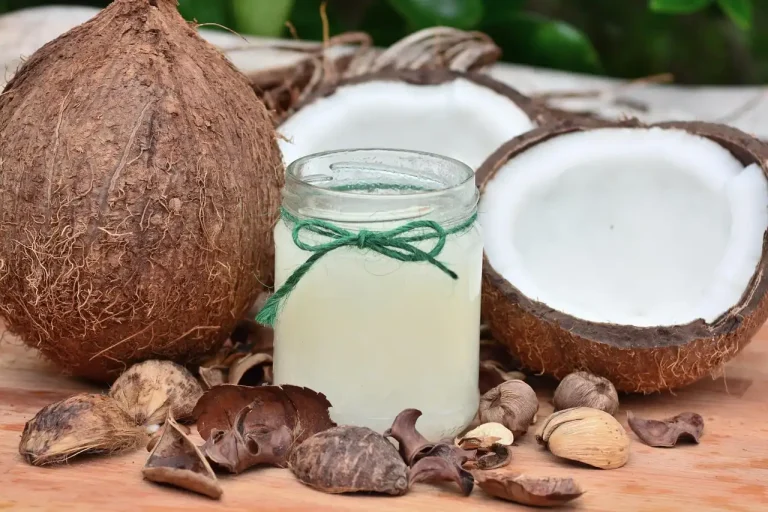
Sphagnum peat moss is a common base ingredient because it holds water while keeping some air in the mix. Coconut coir can do the same job and often works as a swap for peat. Either one helps if your pots dry too quickly, but neither should stand alone in a container mix.
Perlite, pumice, and calcined clay
Perlite improves drainage and aeration, so it is one of the simplest ways to speed water movement through a mix. Pumice does the same job and can add weight and structure without making the pot soggy. Calcined clay is used in some growth media for container culture because it supports air space and moisture balance.
Compost and aged bark fines
Compost adds nutrients, structure, and beneficial microbes. It works well in larger outdoor containers, where extra weight is less of a problem. Aged bark fines add structure and help keep the mix open. Too much compost in a small pot can hold excess moisture and contribute to salt buildup.
Vermiculite for water retention
Vermiculite adds air space and supports drainage while also helping hold moisture. It can help in mixes for seedlings, shallow pots, and plants that need steadier moisture than a straight bark-and-perlite blend provides. In heavier watering situations, it works best as part of a balanced formula rather than as the only amendment.
Can I use garden soil or topsoil in pots?
Garden soil or topsoil is usually a poor choice for containers because it is too dense, compacts easily, and raises the risk of drainage failure. EarthBox says topsoil belongs in the ground, not pots, and warns that it is dense and heavy. Use a potting mix designed for containers instead.
Why topsoil compacts in containers
Soil from the ground is built for in-ground structure, not for a bounded pot. In containers, repeated watering squeezes air out of the root zone. That collapse leaves less oxygen for roots and makes irrigation less predictable, especially in small pots where there is little room for error.
Disease and drainage risks
Dense soil also holds water around roots longer than most ornamental container plants can tolerate. That raises the risk of root rot and other disease problems. It can also carry weed seed, insects, or pathogens into a display pot, which is a poor trade for a plant that should look consistent and healthy.
When outdoor beds and pots differ
In the ground, rainfall can move through a much larger soil volume. In a pot, every inch of the mix matters. A bed can forgive a heavy soil texture; a container cannot. That is why a mix with air spaces and drainage matters more than a garden soil label or a dark, crumbly look.
Choose a mix by plant type
Match the mix to the plant’s growth habit and the display conditions. Tropical foliage plants usually want more moisture retention. Succulents and alpine plants need faster drainage. Flowering containers often do best with a balanced mix that dries between waterings without staying wet for days. Shade containers usually need less evaporation loss than full-sun pots.
Fast-draining mix for succulents and alpines
Use a lean mix when roots must dry quickly. A common formula is about 1 part potting mix, 1 part perlite or pumice, and 1 part bark fines or coarse mineral material. This suits alpines, many succulents, and plants that dislike long wet periods. If the pot is small and the sun is strong, drainage matters even more.
Balanced mix for flowers and mixed displays
For annual flowers, mixed ornamental pots, and many general display plants, a common starting point is about 2 parts quality potting mix, 1 part bark fines or coir, and 1 part perlite. This keeps the pot open enough for roots while still holding moisture and nutrients between waterings.
Moisture-retentive mix for tropical foliage
Tropical foliage plants in containers often need a mix that stays evenly moist but not saturated. Increase peat moss or coir slightly, then keep enough perlite or pumice in the blend to preserve air spaces. In hot sun, this type of mix reduces drought stress and helps foliage stay steady between irrigations.
Light mix for shade containers
Shade containers lose less water than full-sun pots, so they can use a light but slightly more moisture-holding mix. A fine-textured container mix works well here, especially for plants with smaller root systems. Purdue recommends fine textured germination mixes, which reflects how smaller roots benefit from a finer, more even medium. (Lib Docs)
Container mix decision table
Use this table to match plant group, pot size, exposure, and watering habit to a mix profile. The failure symptoms column helps you spot the wrong mix before the display declines.
| Plant group | Container size | Sun exposure | Watering frequency | Recommended mix profile | Ingredient ratio | Failure symptoms |
|---|---|---|---|---|---|---|
| Succulents and alpines | Small to medium pots | Full sun | Frequent check, water only when partly dry | Fast-draining | 1 part potting mix, 1 part perlite or pumice, 1 part bark fines | Waterlogging, soft stems, stale odor |
| Flowering annuals | Medium pots and window boxes | Sun to part sun | Regular watering | Balanced | 2 parts potting mix, 1 part bark fines or coir, 1 part perlite | Wilt between waterings, uneven bloom, shrinkage from the pot edge |
| Tropical foliage | Medium to large pots | Part sun or bright shade | Moderate to frequent watering | Moisture-retentive | 2 parts potting mix, 1 part coir or peat moss, 1 part perlite or vermiculite | Rapid dry-down, leaf curl, crispy margins |
| Shade containers | Small to medium pots | Shade or filtered light | Moderate watering | Light balanced | 2 parts potting mix, 1 part peat moss or coir, 1 part perlite | Waterlogging after rain, weak growth, algae on the surface |
| Large decorative outdoor pots | Large pots | Sun or part sun | Regular to frequent watering | Balanced with compost | 2 parts potting mix, 1 part compost, 1 part bark fines or perlite | Heavy pot, slow drainage, salt crust, soggy lower root zone |
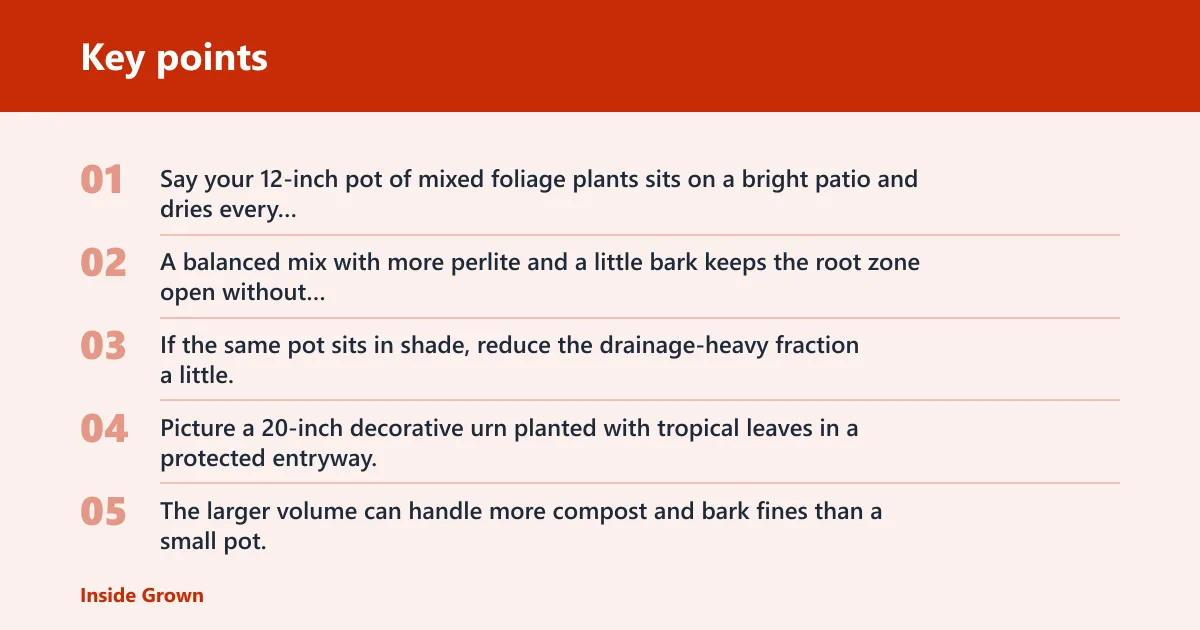
Say your 12-inch pot of mixed foliage plants sits on a bright patio and dries every other day. A balanced mix with more perlite and a little bark keeps the root zone open without pushing the plant into constant wilt. If the same pot sits in shade, reduce the drainage-heavy fraction a little.
Picture a 20-inch decorative urn planted with tropical leaves in a protected entryway. The larger volume can handle more compost and bark fines than a small pot, but only if drainage holes stay clear and the mix does not turn dense at the bottom. Large pots reward consistency. They also hide problems longer.
How do I make a soil mix drain faster for potted plants?
To make a mix drain faster, increase the share of perlite, pumice, or bark fines and reduce the moisture-holding portion. A simple change is to move from a balanced formula toward a leaner one with more mineral or coarse organic material. Do this for succulents, alpines, and any pot that stays wet too long.
Add more perlite or pumice
Perlite and pumice are the quickest fixes for a mix that stays soggy after watering. They add pore space and help oxygen reach the roots. If a pot dries too slowly in cool weather or low light, increasing one of these amendments can improve recovery without rebuilding the whole container.
Increase peat or coir for drier mixes
If the opposite problem appears, add more sphagnum peat moss or coconut coir. That raises water-holding capacity and can make a mix more forgiving in full sun or windy locations. Use this carefully in small pots, because too much moisture retention can leave roots wet for too long.
Where compost fits in larger pots
Compost fits best in larger outdoor containers, where it can add nutrients, structure, and some extra weight. The same source lists compost as one of the ingredients in container-friendly mixes and says it can be mixed in every 1 to 2 years. In smaller pots, keep it modest to avoid sogginess and salt buildup.
When should you refresh container mix?
Refresh container mix when it shrinks, collapses, drains slowly, or no longer re-wets evenly after watering. Most container media break down over time as fine particles fill air spaces. A top-up can help a large pot, but a full replacement is better when roots are crowded or the mix has turned dense.
Signs of breakdown and shrinkage
Look for a potting surface that sinks lower, pulls away from the container wall, or crusts over after irrigation. Water that pools on top before sinking in is another sign. If the plant is watered on schedule but still shows wilt, the mix may have lost structure rather than the plant lacking water alone.
When to replace versus top up
Top up a large decorative pot when the root system is still healthy and the mix only needs fresh material near the surface. Replace the mix when the pot has a sour smell, repeated waterlogging, or obvious compaction through the full depth. Fine roots that circle the pot may also point to a full reset.
Seasonal refresh for display pots
A seasonal refresh keeps ornamental containers looking even. Remove the top layer, loosen the upper root zone, and replace the lost volume with fresh mix matched to the plant type. This is especially useful for mixed displays, where one plant may dry faster than the others and distort the whole arrangement.
Frequently asked questions
What is the best soil mix for botanical garden plants in containers?
The best mix is the one that matches the plant and the pot. For most container botanical plants, start with a quality potting mix and adjust with bark fines, coir, perlite, pumice, or compost based on how fast the pot dries. The target is drainage, air space, and reliable moisture between waterings.
What ingredients should a container soil mix have for flowers and foliage plants?
Flowers and foliage plants usually do well with sphagnum peat moss or coir for moisture, perlite for aeration, and bark fines for structure. Compost can help in larger outdoor pots, but keep it moderate in smaller containers. Vermiculite can help if the mix dries too quickly between waterings.
How often should container soil be refreshed or replaced?
Refresh container mix when it starts to shrink, crust, or drain slowly. Many display pots benefit from a surface refresh each season and a fuller renewal when the mix has broken down or the roots have filled the container. The same source notes that compost can be mixed in every 1 to 2 years.
Which bagged potting mix is best for outdoor containers?
Choose a bag labeled for containers or outdoor containers, not garden soil. A good bagged mix should be light, fluffy, and built to hold water while still draining well. Look for peat moss, bark fines, perlite, vermiculite, compost, or coir on the ingredient list, then adjust it for the plant type.