Plants for a Tropical Botanical Garden Theme
Build a tropical botanical garden bed with three layers: tall canopy plants, mid-height understory foliage, and bright accents. In cold zones, use hardy stand-ins or container plants that can be lifted before frost. Skip that structure and the planting reads flat, loses its layered tropical look, and often falls apart after the first cold snap or dry spell. This guide helps you choose canopy, understory, and accent species by climate, light, and care level for beds, borders, and containers.
What makes a garden feel tropical?


A garden feels tropical because of leaf size, leaf shape, repeated color, and dense planting, not because of one plant type. Big leaves catch the eye first. Then layered height and closely spaced foliage keep the bed from reading thin or tidy.
Bright blooms matter, but they work best when they repeat through the planting. One flowering plant can look stranded. Several plants with bold foliage, plus one or two vivid color breaks, read as a single design.
Tropical-looking versus truly tropical
That split matters in colder climates. Some plants are truly tropical or subtropical and need warm winters. Others only look tropical and can handle cooler regions as annuals, lifted containers, or hardy stand-ins.
Use that split on purpose. A hardy rose mallow can anchor a border in zones where a true bird-of-paradise would fail outdoors. In a botanical-garden style bed, that difference lets you keep the same look without asking every plant to survive the same winter.
A practical planting matrix
| Plant | Zone | Mature height | Light | Moisture | Display role | In-ground or container |
|---|---|---|---|---|---|---|
| Hibiscus moscheutos | USDA zones 5-9 | 3 to 8 feet tall | Full sun | Moist to evenly moist soil | Canopy or tall midlayer | In-ground; large container also possible |
| Hibiscus syriacus | USDA zones 5-9 | 8 to 12 feet tall | Full sun to partial afternoon shade | Moderate moisture | Canopy | In-ground |
| Hosta spp. | USDA zones 3-9 | 6 to 8 inches to 48 inches tall | Dappled or partial shade | Even moisture | Ground layer or midlayer | In-ground or container |
| Canna spp. | USDA zones 8-10 | 18 inches to over 6 feet tall | Partial shade to full sun | Moist soil | Midlayer | In-ground or container |
| Caladium spp. | USDA zones 9-11 | 18 to 24 inches tall | Bright, indirect light | Moist, well-drained soil | Edge or accent | In-ground or container |
| Alocasia spp. | USDA zones 9-11 | 2 to 6 feet tall and wide indoors | Bright, indirect light | Consistently moist, not soggy | Accent | Container |
| Bird-of-Paradise (Strelitzia) | USDA zones 10-12 | About 5 feet tall | Bright indirect light or filtered sun | Moderate moisture | Canopy or focal accent | Container in cooler zones; in-ground in warm zones |
| Bougainvillea | USDA zones 9-11 | 20 to 30 feet long | Full sun | Low to moderate moisture | Canopy, screen, or vertical accent | In-ground or container |
| Bromeliaceae | USDA zones 9-10 | 1 inch to 3 feet tall | Part shade | Moderate moisture; good drainage | Accent | Container or in-ground in mild climates |
| Sweet potato vine (Ipomoea batatas) | Zones 11 or annual | 6 to 16 inches tall | At least 6 hours of full sun | Even moisture | Edge, spill, or groundcover | Container or seasonal in-ground annual |
| Hibiscus moscheutos | USDA zones 5-9 | 3 to 8 feet tall | Full sun | Moist to wet soil | Canopy | In-ground |
| Hosta spp. | USDA zones 3-9 | 6 to 8 inches to 48 inches tall | Shade | Even moisture | Ground layer | In-ground or container |
How do you layer a tropical garden?
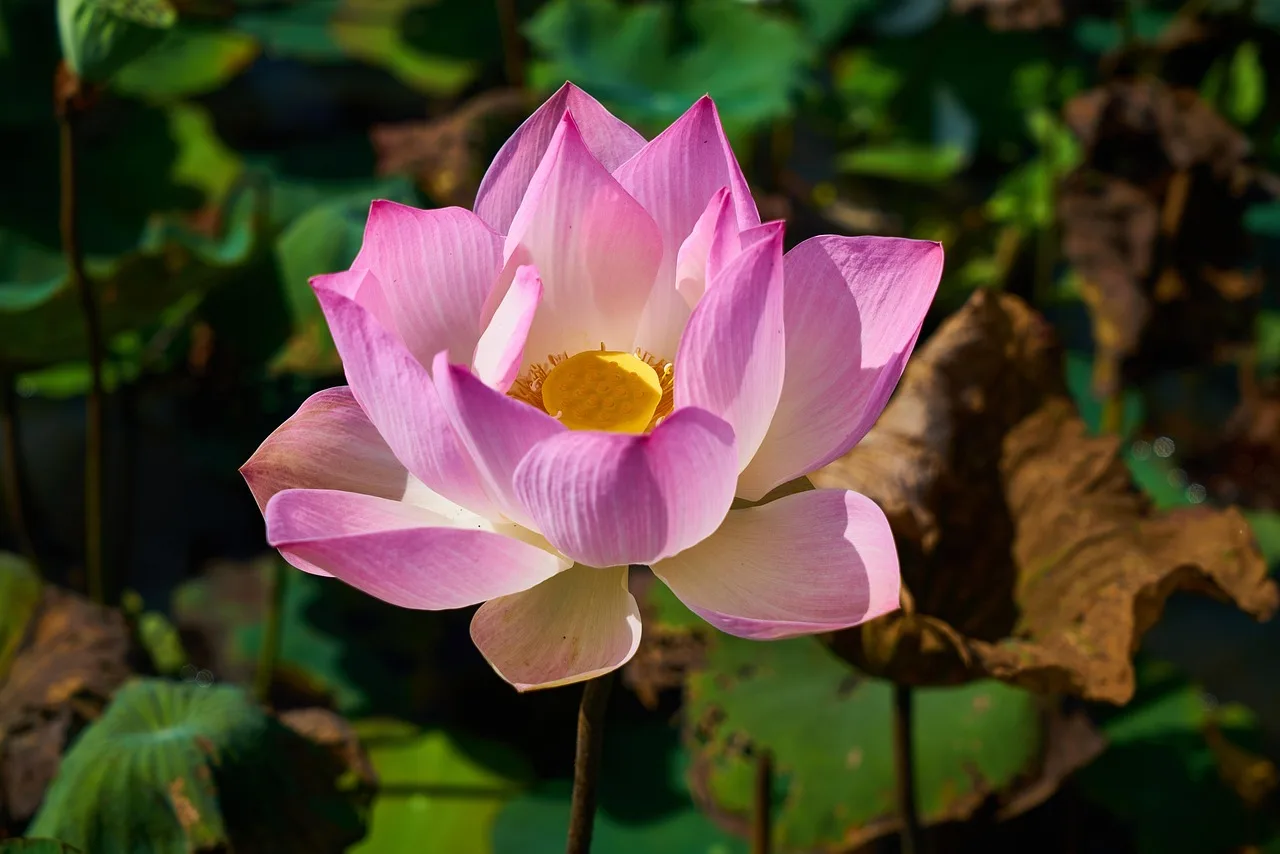
Build the bed from the back down: canopy plants first, then midlayer foliage, then ground layer and accents at the front. That order adds depth, hides bare soil, and gives each leaf shape room to read cleanly.
Canopy plants for height and shelter
Use canopy plants to set the top edge of the composition. Hibiscus syriacus fits that role in sun, with 8 to 12 feet of height and flowers in white, pink, red, or purple. Bougainvillea also works where hardiness allows, climbing or sprawling 20 to 30 feet long.
Canopy plants should either screen a fence or frame a path. They also create a sheltered pocket for shade-tolerant plants beneath them. That matters in a botanical-garden style bed, where visitor flow improves when one zone leads naturally into the next.
Midlayer plants for mass and movement
Midlayer plants fill the middle of the bed with large leaves, vertical stems, and repeated texture. Cannas are the clearest fit. They grow from 18 inches to over 6 feet tall and bring large tropical-looking leaves with summer bloom.
Rose mallow also works here. It is hardy in USDA zones 5-9, reaches 3 to 8 feet tall, and flowers can reach 8 inches wide. That combination gives you a bold seasonal anchor without relying on true tropics.
Edge and accent plants for color breaks
Use accents to break up all that green. Caladiums bring bright color in shade or semi-shade. Bromeliads add year-round color and a different leaf form. Sweet potato vine spills over edges and softens hard lines.
Alocasia can also serve as a focal accent, especially in containers or protected beds. Its heart- or arrow-shaped leaves read exotic fast. Keep it in bright, indirect light and steady moisture, or it will look tired and sparse.
Which tropical plants work in full sun?
Full sun suits the boldest flowering and foliage plants, but only if the soil stays evenly moist enough for the species involved. For tropical-style beds, the best sun plants are the ones that keep a strong silhouette and do not thin out under heat.
Rose mallow and rose of Sharon
Rose mallow and rose of Sharon are the strongest sun-first choices here. Rose mallow gives you large flowers and a softer perennial silhouette. Rose of Sharon gives you height, structure, and a shrub form that can act like a small canopy in a mixed bed.
Use rose of Sharon where you want a taller screen. Use rose mallow where you want large, late-season blooms without a woody mass taking over the border. Both need room, and both read better when planted in groups rather than as isolated specimens.
Cannas and bougainvillea
Cannas fill the midlayer with upright leaves and bright summer color. They are useful near water features, paths, or any place where a vertical leaf rhythm matters. In warmer zones, they can be a main structural plant rather than a seasonal filler.
Bougainvillea is a sun plant for warm climates and containers. It can reach 20 to 30 feet long and grow up to 3 feet per year. That makes it useful on trellises, arbors, and walls, but it will need support and regular pruning to stay in bounds.
Sweet potato vine for spill and coverage
Sweet potato vine is not a true tropical shrub, but it is one of the fastest ways to make a bed look full. It can spread 3 to 6 feet wide and up to 10 feet long, so it works as an edge plant, a container spiller, or a temporary groundcover in warm weather.
A common first-timer mistake is placing sweet potato vine in thin soil with too little sun. The vine then stretches instead of filling, and the bed starts to look stringy. Give it at least 6 hours of full sun and enough moisture to keep the leaves broad.
Which tropical plants work in shade?
Shade beds depend more on foliage shape than on flowers. In a tropical-looking shade border, the best plants carry the design with leaf texture, size, and color contrast. Bright indirect light, dappled shade, and partial shade are the conditions to target.
Hostas for foliage structure
Hosta spp. are the easiest structural answer for shade. They grow from 6 to 8 inches tall up to 48 inches tall, and can spread as wide as 6 feet. That range lets you use them as ground layer, midlayer, or edging, depending on cultivar and space.
They are especially useful for a tropical effect because the leaves provide mass without demanding flowers. In dry shade, though, hostas thin out and scorch at the edges. Keep soil evenly moist and give them room to expand.
Caladiums, bromeliads, and alocasia
Caladiums are a strong choice for bright shade. They are suitable for USDA zones 9-11 and typically grow 18 to 24 inches tall. Dwarf forms stay under 12 inches, which makes them useful for front edges, small beds, or container collars.
Bromeliads bring year-round color and an epiphytic habit that feels distinctly tropical. They fit part shade in zones 9-10. Alocasia adds a bigger, more architectural leaf, but it needs bright indirect light and steady moisture or it will lose size and vigor quickly.
Tropical plants for containers and cold zones
Containers let you use tropical-looking plants as seasonal displays even when winter would end them outdoors. This is the easiest way to borrow the tropical look in zones below the plant’s hardiness range, and it also makes replacement simpler each year.
Annual tropicals for one-season displays
Sweet potato vine, caladium, and cannas are the most useful annual-style choices in cooler climates. They create fast volume, then exit cleanly when frost arrives. That is often better than trying to force a marginal plant through winter indoors, especially if space is limited.
Say your border gets six weeks of strong summer heat and then a hard frost. A container of canna, caladium, and sweet potato vine gives full tropical volume for the season, then can be composted or lifted before temperatures drop.
Container plants that move with the weather
Bird-of-paradise, alocasia, bromeliads, bougainvillea, and even rose mallow in a large pot can be moved to match light and temperature. That flexibility is useful on patios, entryways, and courtyards where the display needs to shift through the season.
Bird-of-paradise is listed for zones 10-12, so colder climates should treat it as a container plant. Its fall-to-spring bloom period and filtered-light preference under canopy make it a good focal plant indoors or under a bright overhang.
Replacement strategy for seasonal beds
For a seasonal tropical bed, plan replacement before planting. Choose one backbone plant, one midlayer filler, and one or two accents. When the first plant slows, the others keep the bed from going bare.
Staggering the planting also helps. A bed with only one species usually looks open once that species finishes flowering or starts to stretch. Mixed layers hide the gaps and keep the display full longer.
How do you keep tropical plants full?
Keep tropical plants full by matching light, moisture, and spacing to each plant’s growth habit. Sparse growth usually comes from too little sun, too much shade, dry air, or crowding that blocks the lower leaves. Fix those conditions early.
Spacing for canopy closure
Plants should meet, not crowd. Space canopy plants so they can touch at maturity without collapsing into each other. Midlayer plants should fill the lower space beneath them. That gives you a closed view from path level without inviting mildew from poor airflow.
If a plant is meant to cover ground, give it enough room to spread. Sweet potato vine and hosta both need usable width. Underplanting too tightly can leave bare stems visible, which breaks the tropical effect fast.
Water and humidity management
Many tropical-looking plants want steady moisture, not waterlogged soil. Cannas, caladiums, hostas, and rose mallow all do better with even moisture than with repeated dry-down cycles. Dry soil often shows up first as smaller leaves and a thinner plant.
Humidity stress matters too. Alocasia and caladium can decline in dry, hot air, especially in containers. If leaves crisp at the edges or go limp in midday sun, move the plant to brighter shade and improve moisture consistency before adding fertilizer.
Pruning, deadheading, and replanting
Prune to keep the structure visible. Bougainvillea needs control to stay compact. Cannas and hostas need old foliage removed as it declines. Deadheading flowers can redirect the bed back toward leaf mass when bloom ends.
Keep a spare set of seasonal plants ready for gaps. A container plant that weakens can be replaced quickly with a similar height and leaf shape. That is often easier than trying to nurse a sparse plant through a display period where fullness matters more than rescue.
Frequently asked questions
What plants make a garden feel tropical?
Plants with large leaves, bold texture, repeated color, and layered height make a garden feel tropical. Cannas, hostas, caladiums, bromeliads, alocasia, sweet potato vine, and hibiscus all help, but the strongest effect comes from combining canopy, midlayer, and edge roles instead of using one plant alone.
Which tropical-looking plants can grow in cooler climates?
Hostas, rose mallow, rose of Sharon, and cannas are the easiest cooler-climate stand-ins. Sweet potato vine is useful as a seasonal annual. For colder zones, use container plants or hardy shrubs that mimic tropical scale, then swap in true tropicals only where winter allows.
What are the best tropical plants for shade?
Hostas are the safest shade choice because they bring size and structure without needing sun. Caladiums work in bright shade, bromeliads handle part shade, and alocasia can suit bright indirect light. In deep shade, avoid sun lovers that stretch thin and lose their leaf mass.
What are the best tropical plants for full sun?
Rose mallow, rose of Sharon, cannas, bougainvillea, and sweet potato vine are the strongest full-sun options here. They create height, color, and spread, but they still need enough moisture to stay full. In hot, dry sites, leaf scorch and lean growth appear quickly.
Which tropical plants need high humidity and moist soil?
Caladiums, alocasia, and hostas prefer steady moisture, and caladium and alocasia are especially sensitive to dry air. Rose mallow and cannas also perform best with even moisture. If the soil dries between irrigations, leaves get smaller, edges burn, and the display loses density.
How do I keep tropical plants looking lush instead of sparse?
Match each plant to the right light, keep the soil evenly moist, and plant in layers so the bed closes in over time. Replace weak seasonal plants before gaps open. If a plant gets leggy, it usually needs more light or a tighter position in the composition.