How Plants Move Water From Roots to Leaves
Plants move water in three linked stages: roots absorb it from moist soil, xylem carries it upward through the stem, and leaves lose it through stomata, which is commonly described as helping draw more water upward. If any stage slows, leaves wilt, growth stalls, and roots or stems can fail under drought or disease. This guide explains each stage and shows how to read visible signs to find where the process is breaking down.
How water moves through plants

Water moves through plants in a linked chain. Roots take in water from moist soil, xylem transports that water and dissolved minerals upward, and leaves release water vapour through stomata. That loss from the leaf surface creates the pull that keeps the column moving.
The three-stage path: entry, lift, and loss
Think of the path as entry, lift, and loss. Entry happens in the roots. Lift happens in xylem tissue, which works like the plant’s pipework. Loss happens mainly from leaves, where transpiration draws more water upward through the stem.
This is not a mechanical pump. Plants do not push water upward the way a heart moves blood. The movement depends on osmosis, transpiration, and the physical behaviour of water molecules in a narrow column.
Why water movement matters for growth and cooling
Water does more than keep tissues wet. It helps maintain cell turgor, which keeps stems and leaves firm. It also carries mineral nutrients to growing tissues and supports cooling as water evaporates from leaves. Plants convert water and carbon dioxide into oxygen and sugars through photosynthesis, but only around two per cent of absorbed water is used in processes like photosynthesis and tissue building.
A common first-timer mistake is to treat wilting as a simple sign of “not enough watering.” A plant in hot wind may wilt even when the soil is damp, because leaf loss is racing ahead of root uptake.
How do plant roots take up water?

Roots absorb water from soil by osmosis, and they work best when their surfaces stay in close contact with moist soil. Roots also need oxygen and nutrients, so waterlogged soil can slow uptake by cutting off air around the root system. When that happens, water entry and root function both suffer.
Osmosis and moist soil contact
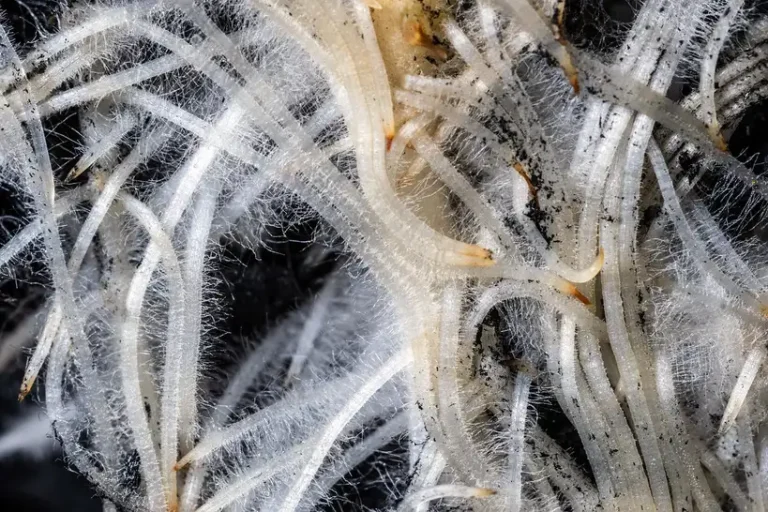
Osmosis moves water from a region of higher concentration to one of lower concentration. In plants, that draws water into root cells and onward through tissues. The root hairs need actual contact with moist soil particles, because dry gaps around the roots interrupt the pathway.
Roots absorb water and mineral nutrients together at the soil interface. That matters because the same stream that carries water into the plant also feeds the xylem with soluble nutrients for shoots and leaves.
Why roots also need oxygen and minerals
Roots are living tissues. They use oxygen for respiration, and they need it from air spaces in the soil. Saturated soil can shut down that oxygen supply, which slows energy use in the roots and weakens water uptake. That is why a plant in soggy compost may look thirsty even though the pot is wet.
Suppose a newly potted tomato droops within a day of repotting. The likely issue is not simply “dryness.” Root contact with the mix may be poor, fine roots may have been disturbed, and the root zone may be holding too little oxygen for steady uptake.
What does xylem do?

Xylem is the vascular tissue that carries water and minerals from roots to shoots and leaves. The RHS describes xylem vessels as the pipework in plant stems that transport water and minerals. They form the main upward route once water leaves the root region. (Wikipedia)
Xylem as the plant’s water-carrying tissue
Xylem vessels transport water and dissolved minerals through stems and into leaves. They keep the supply moving through long distances inside the plant body, from the root system to the growing tips and leaf blades.
Xylem works as a continuous column. Water molecules cling together and stick to vessel walls, which helps maintain the column while water moves upward. That continuity matters, because a break in the column slows transport and can interrupt supply to the top of the plant.
Cohesion, adhesion, and the continuous water column
Cohesion keeps water molecules together. Adhesion helps them stick to the vessel walls. Those two forces support upward movement as a column, especially when transpiration is pulling from above. This is why water can rise through a plant without being pumped from below by a mechanical device.
Water movement through xylem also delivers soluble nutrients. Mineral nutrients ride with the water stream to leaves and other growing tissues, where they support new cells and active growth.
| Term | One-sentence meaning |
|---|---|
| Root uptake | Water enters roots from moist soil by osmosis, with oxygen and minerals also moving through the root zone. |
| Xylem lift | Xylem carries water and dissolved minerals upward through a continuous column from roots to shoots and leaves. |
| Stomatal loss | Leaves release water vapour through stomata, and that loss helps pull more water upward through the plant. |
Why does water move to the leaves?
Water moves to the leaves because transpiration creates the pulling force that lifts it upward. Leaves lose water vapour through stomata, and that loss draws more water from the xylem below. Warm or windy weather increases this pull because evaporation rises, while cool or humid air slows it down.
Transpiration as the pulling force
Transpiration is water loss from leaf pores and internal leaf surfaces. As water evaporates, it lowers the water level in the leaf and creates a pull that moves more water up through the plant. This is the main reason water flows from roots to leaves at a steady rate.
How stomata and guard cells control loss
Stomata are small pores on the surface of leaves. They open and close with guard cells, which act like doors around each pore. When roots detect dryness or leaf water loss is too fast, a chemical signal closes the pores. That helps conserve water during stress.
Warm, windy weather speeds up transpiration, so water need rises. Cool or humid weather slows transpiration, so water loss drops. The same plant can therefore look fine in a shaded, still corner and wilt quickly in dry wind.
Picture a basil plant on a sunny balcony where hot wind dries the leaves by midday. The roots may still be wet, but the stomata can be losing water faster than the xylem can replace it. The leaves droop first, because that is where the loss is happening.
Can plants get water through their leaves?
Leaves do not use their pores to take in most of the plant’s water supply. Stomata mainly release water vapour and oxygen for gas exchange, while root uptake remains the main route in. In cool or humid air, water loss from leaves slows, but the plant still depends on roots for steady supply. (Wikipedia)
Why leaf pores release water instead of taking in most of it
Stomata open for gas exchange, especially to let carbon dioxide in for photosynthesis and oxygen out. Water vapour also leaves through the same pores. That is part of normal function, not a side effect the plant can ignore. Guard cells balance opening and closing to manage that exchange.
When water loss slows in cool or humid air
Cool or humid conditions reduce evaporation from the leaf. That lowers transpiration and weakens the pull on the xylem. The plant may need less water at that moment, but the root-to-leaf pathway still matters. Slow leaf loss does not mean the plant is drinking through its leaves.
Water movement troubleshooting table
Use the symptom to find the stage most likely failing. Then check the most likely cause. This table keeps root uptake, xylem lift, and stomatal loss separate, so you can match the visible sign to the part of the transport chain that needs attention.
| Plant symptom | Likely transport stage failing | Most likely cause |
|---|---|---|
| Wilting after repotting | Root uptake | Roots lost contact with moist soil, fine roots were disturbed, or the root zone is low in oxygen. |
| Drooping in hot wind | Stomatal loss | Transpiration is faster than water replacement, so leaves lose water before roots can refill them. |
| Yellowing with soggy soil | Root uptake | Waterlogging limits oxygen around roots, which slows uptake and can damage root function. |
| Slow growth after drought | Xylem lift | Water supply has been interrupted, so mineral delivery and cell expansion stay low even after watering resumes. |
| Leaf edges crisping during a heat wave | Stomatal loss | Rapid water loss outpaces root uptake, and guard cells close the pores to conserve water. |
| Stems limp but soil feels damp | Root uptake | Compacted, waterlogged, or root-bound soil can block oxygen and slow the root side of the pathway. |
What changes water flow?
Heat, wind, humidity, drought, and waterlogging all change the balance between water entering roots and water leaving leaves. Water movement also affects cell turgor and mineral delivery, so any slowdown can show up as soft stems, stalled growth, or pale new leaves.
Heat, wind, humidity, drought, and waterlogging
Warm or windy weather increases transpiration and water need. Cool or humid weather reduces transpiration. Drought lowers the supply at the root surface, and waterlogging cuts oxygen to roots. Each factor changes a different part of the same transport system.
When roots sense dryness, they send chemical signals that help close stomata. That response protects the plant from losing water too fast, but it also slows carbon dioxide entry and can reduce growth if stress continues.
How mineral delivery and cell turgor depend on flow
Mineral nutrients move with water through xylem, so a weak flow can limit delivery to new leaves and shoots. Cell turgor also depends on water inside cells. Low turgor makes leaves and stems go limp, even before any tissue dies.
A beginner-friendly rule is simple: if the roots cannot take water in, the xylem cannot move enough of it up, and the stomata cannot keep losing it at a normal rate. The whole chain slows together.
Frequently asked questions
How do plants move water?
Plants move water in a linked system: roots absorb it by osmosis, xylem carries it upward, and leaves lose it through stomata. That leaf loss creates the pull that keeps the stream moving. Cohesion and adhesion help keep the water column continuous during transport.
How does water move through plants?
Water moves through plants by entering root cells, travelling through xylem vessels, and leaving from leaves as water vapour. The movement depends on osmotic entry at the roots and transpiration at the leaves. It is a continuous flow, not a single push from one spot.
Why does water move to the leaves: water moves?
Water moves to the leaves because transpiration from stomata creates a pull from above. Leaves need water for cell turgor, cooling, and nutrient support, and they also use it during photosynthesis. The upward flow replaces the water that evaporates from leaf surfaces.
How does water move into roots?
Water moves into roots by osmosis from moist soil into root tissues. The roots need close contact with that moisture, and they also need oxygen to stay active. If the soil is waterlogged, oxygen drops and uptake slows even when water is present.
Can plants get water through their leaves: leaves mainly release water through?
Leaves mainly release water through stomata rather than absorb most of it. Stomata are built for gas exchange, and guard cells control when they open or close. In cool or humid air, water loss slows, but roots still provide the main water supply.
How do plants give off water?
Plants give off water mainly through transpiration. Water evaporates from leaf surfaces and exits through stomata as vapour, which helps create the pull that draws more water up from the roots. Warm or windy weather increases that loss, while humid air slows it.