What Is The Difference Between Botanic Gardens And Botanical Gardens?
Most of the time, people use the words “botanic garden” and “botanical garden” like they are twins. They point to the same idea: a special place filled with plants. These places are for learning and enjoying nature.
They show us many kinds of plants from all over the world.
Think of them as living museums. They hold collections of plants. These collections help us study plants and how they grow.
They also help us learn why plants are important. This is true for both “botanic” and “botanical” gardens.
The main difference between botanic gardens and botanical gardens often comes down to a slight historical nuance or institutional naming convention rather than a fundamental difference in purpose or content. Both are dedicated to the collection, cultivation, display, and preservation of a wide range of plant species for scientific research, conservation, education, and public enjoyment.
The “Botanic” vs. “Botanical” Word Play
The word “botany” is the study of plants. It comes from an old Greek word, “botanikos.” This word meant “pertaining to plants.” So, anything related to plants can be called “botanic.”
The word “botanical” is an adjective form of “botany.” It means “of or relating to botany.” So, a “botanical garden” is a garden that relates to the study of plants. It’s a place for botanical science.
In everyday talk, these words are mostly the same. Most gardens you visit are both. They are places about plants (botanic) and they are used for studying plants (botanical).
Historical Roots and Naming Conventions
In the past, there was a bit more difference. Early scientific gardens were often called “botanical gardens.” This was because their main job was science. They were places where scientists studied plants.
They grew them to see how they lived and what they could do.
As these gardens grew, they also started to show plants to the public. They wanted everyone to see the amazing plants. So, “botanic garden” became a popular name.
It felt a bit more open and less strictly scientific. It was more about the beauty and wonder of plants for all to see.
Today, many older, famous gardens have “botanic” in their name. Think of the Royal Botanic Gardens in Kew, London. Or the New York Botanical Garden.
Both are huge and important. They do both science and public display.
Garden Naming Styles: A Quick Look
Royal Botanic Gardens, Kew: Often referred to as “The Botanic.” Famous for research and conservation.
New York Botanical Garden: Known for its extensive plant collections and educational programs.
Missouri Botanical Garden: Another large institution with a focus on science and public access.
These examples show that the “botanic” name is often tied to major, established institutions.
What Makes a Garden “Botanical”?
A true botanical garden is usually a place with a clear mission. This mission involves science. They often have a large number of plant species.
These species are collected from different parts of the world. They are labeled with their scientific names. There are also details about where they come from.
These gardens might have research labs. They could have scientists working there. They might be involved in saving rare plants.
They often have special programs for students. They teach people about plant life and conservation.
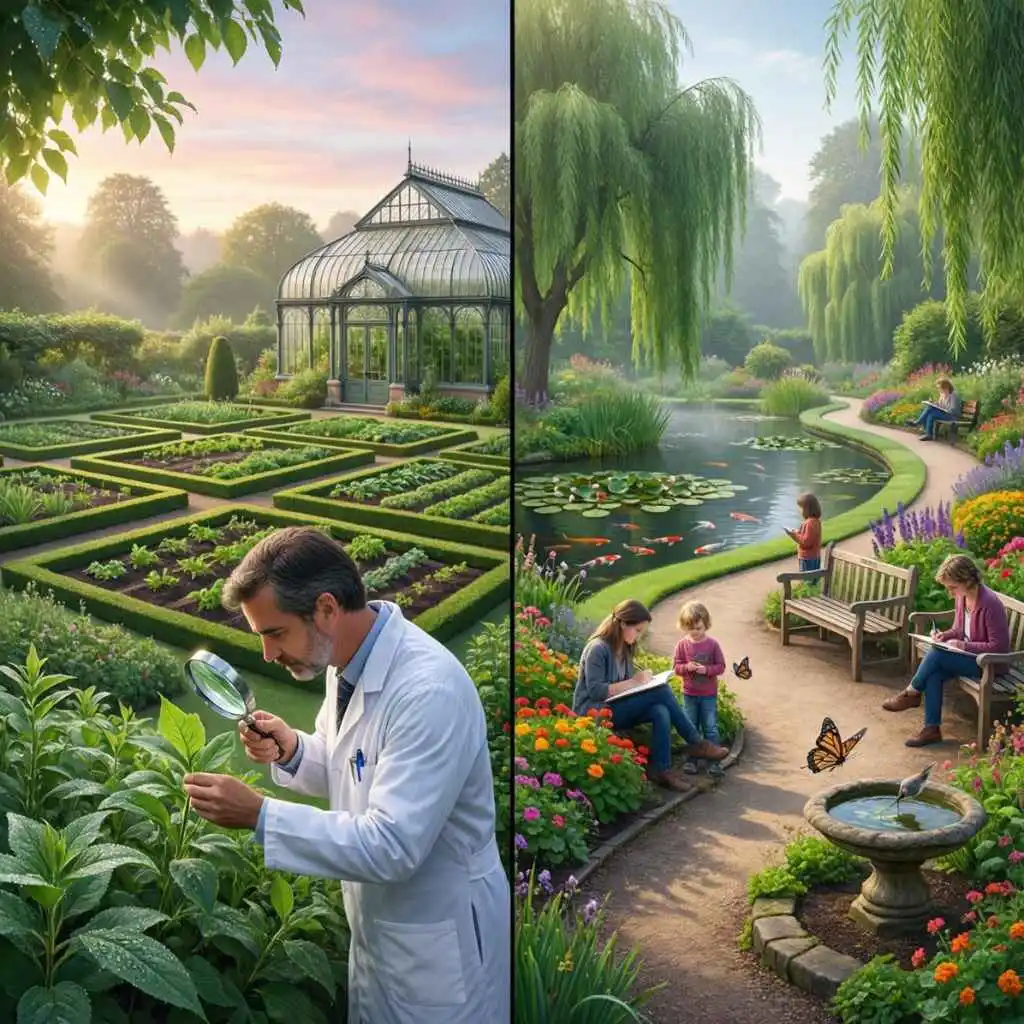
So, if a garden focuses heavily on plant science, research, and education, it might lean towards being called a “botanical garden.” It highlights the scientific side of plants.
What Makes a Garden “Botanic”?
The term “botanic garden” can feel a bit broader. It still means a place with many plants. But it might emphasize the display and public enjoyment more.
It’s a place where you go to see beautiful plants. You learn about them as you walk around.
These gardens are still educational. They still help us understand plants. But the name might suggest a focus on the overall experience.
It’s about the public’s connection to nature through plants. It’s about the plant world in a more general sense.
Many modern gardens, even those with “botanical” in their name, also aim for this broader appeal. They want to be places for everyone to enjoy. So, the lines blur over time.
My Own Garden Experience
I remember visiting a beautiful garden once. It was called the “Green Valley Botanic Gardens.” I went there on a sunny Saturday. I wanted to escape the city for a bit.
The air smelled so sweet and fresh. I saw flowers in every color I could imagine.
There were winding paths. They led me past giant ferns and tall trees. I saw a small sign next to a weird-looking cactus.
It told me its name and where it grew. I learned that it came from a very dry place. It was amazing to see it thriving here.
I spent hours just wandering. I felt so peaceful. I wasn’t thinking about strict science.
I was just enjoying the beauty. It felt like a park, but with even more amazing plants. This is what I think of when I hear “botanic garden.” It’s a place for wonder.
Understanding Plant Labels
Scientific Name: The official name of the plant, like Acer rubrum for Red Maple.
Common Name: The everyday name, like Red Maple.
Family: The plant’s family group, like Sapindaceae.
Origin: Where the plant naturally grows, like Eastern North America.
Botanical and botanic gardens use these labels to help us learn.
The Role of Institutions and History
Often, the name a garden has is simply what its founders decided. It might be based on the goals they had when they started. Or it might be influenced by what other gardens were called at the time.
For example, a garden started in the late 1800s might have chosen “botanical garden.” This was a time when plant science was really taking off. It was important to show that the garden was serious about research.
A garden started more recently might choose “botanic garden.” This could be to suggest a more modern, public-focused approach. Or it could just be because they liked the sound of it.
It’s also important to remember that many “botanical gardens” are also wonderful places for the public to enjoy. And many “botanic gardens” do serious scientific work. The names are not always strict rules.
Key Features of Most Botanical/Botanic Gardens
- Plant Collections: Large and diverse groups of plants.
- Scientific Names: Plants are usually labeled with their scientific names.
- Educational Programs: Classes, tours, and workshops for all ages.
- Conservation Efforts: Work to protect rare and endangered plants.
- Research: Studies on plant biology, ecology, and uses.
- Public Access: Open to visitors for enjoyment and learning.
When Does It Matter?
For the average visitor, the difference is usually very small. You go to a garden to see plants, learn about them, and enjoy nature. Whether it’s called “botanic” or “botanical” often doesn’t change that experience.
The distinction might matter more if you are a scientist. Or if you are involved in plant research or conservation. In those fields, the specific mission and resources of an institution are important.
The name might hint at those deeper details.
For instance, if you need to find a place that does cutting-edge plant genetics research, you might look for a “botanical garden” with a strong research department. If you want a beautiful place for a relaxing walk among flowers, either name will likely lead you to a good spot.
What This Means for Your Visit
When you plan to visit a garden, don’t get too caught up in the name. Both “botanic” and “botanical” gardens offer a lot. They are both treasures for our communities.
What should you look for? Consider what you want from your visit. Do you want to see specific types of plants?
Are you interested in a garden tour? Do you want to attend a workshop? Most gardens, regardless of their exact name, offer a mix of these things.
Check the garden’s website before you go. It will tell you about their collections. It will list their events and programs.
It will show you what to expect. This is more helpful than just the name.
Quick Checks Before You Go
Website Visit: Always check the garden’s official website.
Special Exhibits: Look for current plant displays or events.
Location: Is it easy to get to? What are the hours?
Accessibility: Is it easy to walk around for everyone?
These details are more important for your enjoyment.
Real-World Scenarios
Let’s imagine two scenarios. In the first, Sarah wants to find a place to learn about local wildflowers. She sees a sign for the “Pine Ridge Botanic Garden.” She thinks this sounds like a good place to see native plants.
She expects a pleasant walk and maybe some information.
In the second scenario, David is a student. He needs to do a project on plant adaptation. He looks for gardens that might have research facilities.
He finds the “City Centre Botanical Institute.” This name suggests a strong focus on science and study.
Both Sarah and David will likely have good experiences. Sarah will enjoy the beauty of the botanic garden. David might find a research partner or specific plant examples at the botanical institute.
The names give clues. But the actual offerings are what matter most. It’s like the difference between a “kitchen” and a “culinary center.” Both involve food, but one might be more about home cooking, and the other more about professional training.
Contrasting Gardens: A Common Idea
Myth: Botanic gardens are just pretty flower displays.
Reality: Many botanic gardens have significant scientific and conservation roles.
Myth: Botanical gardens are only for scientists.
Reality: Most botanical gardens are very welcoming to the public and offer educational programs.
The labels are less about strict rules and more about emphasis.
Common Misconceptions
One big mix-up is thinking that “botanic” means only trees and “botanical” means only flowers. That’s not true at all. Both types of gardens can have trees, flowers, shrubs, ferns, and all sorts of plants.
Another idea is that “botanic” gardens are always older and “botanical” gardens are always newer. While many old, grand gardens use “botanic,” there are also very old gardens with “botanical” in their name. And many new gardens use “botanic” too.
The most important thing is that these places are dedicated to plants. They are centers for learning and appreciation. The exact word in the name is secondary to their mission.
When to Worry (Or Not to Worry)
You generally don’t need to worry about the difference. If you see a garden labeled “botanic” or “botanical,” it’s a safe bet it will be a wonderful place to visit. They are designed for enjoyment and education.
If you are looking for specific scientific research or conservation programs, then looking deeper into the garden’s mission is key. This information is usually on their “About Us” page online. It will tell you if they have dedicated labs or research staff.
For most people, the question of “botanic” versus “botanical” is a fun bit of trivia. It’s not a barrier to a great day out surrounded by nature.
Quick Tips for Enjoying Any Garden
Stay on Paths: Protect the plants and avoid getting lost.
No Picking: Leave the plants for others to see and for the garden’s health.
Respect Wildlife: Gardens are homes for birds and insects too.
Take Photos: Capture the beauty, but be mindful of others.
Ask Questions: Staff and volunteers are usually happy to help.
Simple Checks You Can Do
If you’re really curious about a specific garden, here’s how you can check its focus:
- Look at the “About Us” page on their website. This will explain their history and mission.
- See if they mention research or conservation work. This points towards a stronger “botanical” focus.
- Check their event calendar. Are there lots of workshops and lectures? This shows an educational drive.
- Read visitor reviews. What do people praise most? The beauty? The learning opportunities?
These checks will give you a clear picture, no matter the name.
Quick Fixes and Tips
This isn’t really about “fixes” because there’s no problem! It’s more about understanding. Here are some tips for your garden visits:
- Go when the weather is nice. A sunny day makes any garden better.
- Wear comfortable shoes. You’ll likely be doing a lot of walking.
- Bring water. Especially on warm days.
- Don’t try to see it all at once. Pick a section to focus on.
- Take your time. Enjoy the peace and quiet.
These simple tips can make any garden visit more enjoyable.
Frequent Questions
Are all university plant collections called botanical gardens?
Not always. While university plant collections often have strong research and educational ties, like botanical gardens, they might be called “arboretums,” “herbaria,” or simply “plant collections.” The term “botanical garden” usually implies a public-facing institution with a broad mission.
Can a garden be both a botanic and a botanical garden?
Yes, absolutely! Most gardens fit both descriptions. The terms overlap greatly.
Many institutions use “botanical garden” even if they have a strong public appeal and display focus.
Does the size of a garden matter for its name?
Not directly. While many large, famous gardens have “botanic” or “botanical” in their names, there are smaller gardens that also use these titles. Size isn’t the deciding factor for the name.
Is “botanic garden” an older term than “botanical garden”?
Historically, “botanical garden” was more common for early scientific collections. “Botanic garden” became popular later, often emphasizing public display and broader appeal. But both terms have long histories.
What if a garden has “Conservatory” in its name?
A conservatory is usually a building with glass walls and roof. It’s designed to grow plants that need specific warmth and humidity. Many botanical and botanic gardens have conservatories as part of their collections.
Are there official rules for naming a garden “botanic” or “botanical”?
There are no strict, universal rules that dictate which name must be used. The naming is often a historical choice, an institutional decision, or a reflection of the garden’s primary focus at its founding. Major organizations like Botanic Gardens Conservation International (BGCI) recognize gardens based on their functions, regardless of exact naming.
In Summary
So, while there’s a slight lean towards science for “botanical” and public display for “botanic,” the difference is small. For most of us, these terms describe the same wonderful places. They are hubs of plant life and learning.
Enjoy your visits!