Why Leaves Lose Water and How Plants Control It
Leaves lose water because stomata open for carbon dioxide entry, and guard cells control that loss by adjusting pore size in response to light, water status, and internal timing. If that control slips, plants dry out, photosynthesis drops, and growth slows. This guide explains the water-loss trade-off, then shows how starch, circadian timing, and guard-cell behavior help plants regulate it day and night.
What stomata do
Stomata are microscopic openings in the leaf epidermis, often on the lower surface in many species. In most plants, they open in daylight and close at night. When they open, carbon dioxide enters the leaf for photosynthesis. The same opening also lets water vapour escape, so every gain in gas exchange comes with a water cost.
Stomata are usually concentrated on the leaf surface, often more densely on the underside in many species. That placement helps the leaf balance gas exchange against drying, because wind, heat, and low humidity can pull water out faster from exposed surfaces.
How guard cells move stomata
Each stoma is surrounded by a pair of guard cells. Those cells control opening and closing by changing shape, which changes the width of the pore. When guard cells gain water and become more curved, the pore opens. When they lose water, the pore narrows or closes.
Guard cells respond to internal leaf signals, not only outside light. They react to water status, sugar supply, carbon dioxide level, and the plant’s timing system. That is why stomatal movement is a controlled response, not a simple on-off reflex.
Why leaves lose water
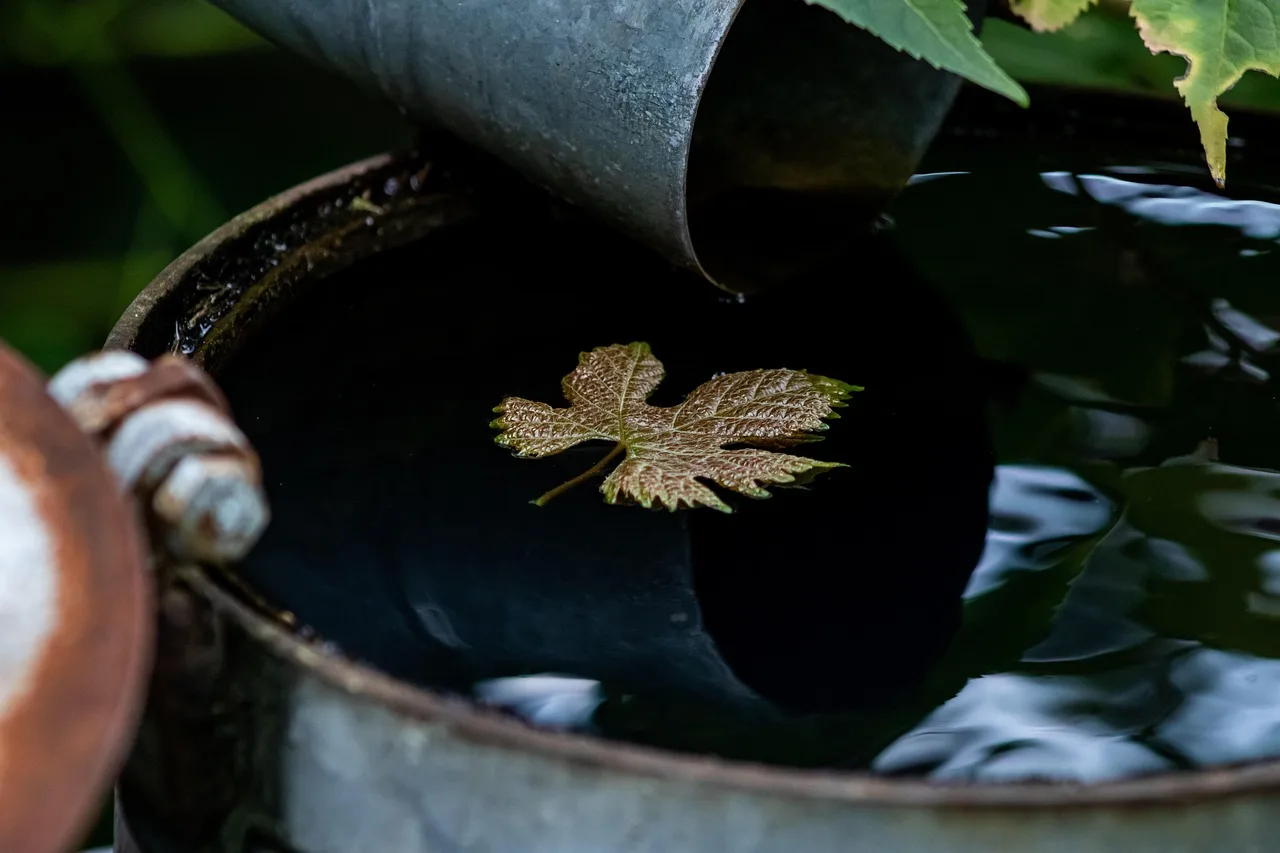
Leaves lose water through transpiration, the movement of water vapour out of the leaf. This loss is tied to photosynthesis because open stomata allow carbon dioxide to enter at the same time. The plant accepts some water loss in exchange for carbon gain, since carbon dioxide is required to build sugars and new tissue.
That trade-off is central to plant life. A closed leaf saves water, but it also limits carbon uptake. An open leaf gains carbon, but it risks dehydration. Plants manage that balance rather than eliminating water loss altogether.
Why plants accept the cost
Water loss is not a defect in plant function. It helps drive the pull that moves water and dissolved minerals from roots to leaves, and it keeps the leaf supplied while photosynthesis runs. The problem starts when the loss becomes too high for the plant’s water supply or when stomata stay open longer than needed.
Say your houseplant sits near a bright window on a dry afternoon. Its stomata may stay open long enough to support photosynthesis, but if the air is very dry, the same open pores can drain water faster than the roots replace it. The result is more carbon gain for the plant and a larger drain on its water budget.
Why stomata open by day
In most plants, stomata open during the day because daylight drives photosynthesis. Carbon dioxide demand rises when light is available, so opening the pore helps fuel sugar production. At night, that same exchange is usually less useful, so stomata close to save water when sunlight is absent.
Day opening also fits the plant’s carbon economics. When photosynthesis is running, the leaf can use incoming carbon dioxide right away. When photosynthesis is off or slowed by darkness, the benefit of open stomata drops while the water cost remains.
How opening changes by species
Most plants follow the day-open, night-close pattern, but not all species behave exactly the same way. Some keep a small amount of nighttime transpiration, and that residual loss can be inefficient. The point is not that night loss is universal. It is that the size and timing of the loss vary by species and variety.
Suppose a drought-sensitive variety and a more water-efficient variety grow under the same 12-hour night. The first may allow more nocturnal reopening, while the second keeps stomata tighter. The difference matters because both plants face the same dark period, yet they do not spend water at the same rate.
Circadian clock and leaf starch
The plant’s internal timer is called the circadian clock. It is set by day and night cycles and helps control daily rhythms in stomatal movement. That timing system means stomata do not respond only to immediate light or darkness; they also follow an internal schedule.
Leaf starch adds another layer. Starch is made during the day through photosynthesis, then used at night to generate sugars. In this way, starch acts as a temporary metabolic store, linking daytime carbon capture to nighttime sugar supply and guard-cell behavior.
That link matters because sugars can influence guard cells. When starch is broken down at night, the resulting sugar supply helps shape signals inside the leaf. Those signals can shift how far stomata open, which means the day’s photosynthesis can affect the next night’s water loss.
How starch affects stomatal rhythm
Researchers studying Arabidopsis thaliana used this plant as a model for water-loss dynamics. The work also used computational tools called PhenoLeaks to analyse transpiration from high-throughput phenotyping data. In the study, severe mutations in starch metabolism prevented stomata from reopening at night.
That finding gives the mechanism real shape. If a plant cannot process starch normally, it cannot generate the same night-time sugar signal. Guard cells then miss part of the message that would otherwise alter opening at night, so nocturnal stomatal behavior changes.
Leaf water-loss mechanism map
| Mechanism step | Drought-sensitive plants versus water-efficient plants |
|---|---|
| Daytime photosynthesis | Both types capture carbon dioxide through open stomata, but water-sensitive plants may keep pores open longer when conditions are mild. |
| Leaf starch buildup | Both build starch during the day. Plants with weaker control of later stomatal timing may accumulate a starch signal that feeds into nighttime opening. |
| Night sugar supply | Starch is broken down at night to generate sugars. In drought-sensitive plants, that sugar flow can be linked to more reopening risk. |
| Circadian timing | The circadian clock stays aligned with day/night cycles, but timing can interact differently with starch signals across varieties. |
| Stomatal reopening risk | Water-sensitive plants may show more residual opening and more inefficient nighttime transpiration. Water-efficient plants tend to hold stomata tighter after dark. |
Can plants lose water at night?
Some species may continue to lose water after dark through nighttime transpiration. That loss is often lower than daytime loss, but it can still matter because it brings little or no photosynthetic gain. When stomata stay partly open at night, the water spent may not pay back in carbon capture.
Residual nighttime transpiration can be inefficient water loss. It is not the same as full daytime transpiration, and it does not occur equally in all plants. The amount depends on species, variety, internal timing, and how strongly guard cells respond to night signals.
A common first-timer mistake is to treat any night water loss as abnormal. A small amount can occur in some plants without signaling damage. The better question is whether the amount is large enough to weaken water balance or interfere with expected night closure.
When night loss matters most
Nighttime transpiration matters most when water supply is limited, air is warm, or the plant already struggles to hold stomata closed after dusk. It also matters in species or varieties known to reopen more at night. In those cases, the loss can reduce water-use efficiency without adding carbon gain.
For students, that means daytime and nighttime transpiration should not be lumped together. Daytime water loss is part of normal gas exchange for photosynthesis. Nighttime loss is a separate issue, because it often brings less benefit for the same or similar water cost.
Why this matters for growers and students
This mechanism helps you separate normal leaf function from avoidable water loss. If a plant looks stressed in the morning after a warm, dry night, the cause may be night transpiration combined with limited root uptake. If a plant closes stomata too hard in the day, photosynthesis can drop and growth can slow. The goal is balance, not maximum closure.
For growers, the practical takeaway is simple: species and varieties can differ. A plant with stronger nocturnal stomatal reopening risk may need tighter attention to irrigation timing, greenhouse humidity, or variety choice. For students, the key idea is that leaf water loss is regulated, not accidental.
- Check whether the plant is losing water mainly in daylight or after dark.
- Separate normal daytime transpiration from residual nighttime transpiration.
- Look for species or variety differences before treating night loss as a universal problem.
- Remember that starch, sugar supply, and the circadian clock can shift stomatal rhythm after sunset.
- Use the pattern, not a single wilted leaf, to judge whether water loss is becoming inefficient.
Frequently asked questions
Why do leaves lose water?
Leaves lose water because stomata open to admit carbon dioxide for photosynthesis. Those open pores also let water vapour escape through transpiration. The plant accepts that trade-off because carbon intake supports sugar production, but the water loss has to stay within the plant’s ability to replace it.
How do stomata control water loss?
Stomata control water loss by opening and closing in response to guard-cell changes. When the two guard cells swell, the pore opens and transpiration rises. When they lose water, the pore narrows or closes. This lets the leaf adjust gas exchange while limiting unnecessary drying.
Why do stomata open during the day and close at night?
In most plants, stomata open during the day because light drives photosynthesis and carbon dioxide demand is high. At night, photosynthesis drops and the plant closes stomata to save water when sunlight is absent. That pattern reduces waste while keeping daytime carbon gain possible.
What is transpiration in plants?
Transpiration is the loss of water vapour from leaves. It happens mainly through stomata and is linked to gas exchange for photosynthesis. Daytime transpiration is a normal part of leaf function, but some species may also show residual nighttime transpiration, which can be less efficient.
What role does starch play in stomatal movement?
Starch is made during the day through photosynthesis and used at night to generate sugars. Those sugar changes can influence guard cells and shift stomatal behavior. In the study discussed here, severe starch-metabolism mutations prevented stomata from reopening at night, which shows starch can shape nocturnal movement.