Is Lime Safe for Vegetable Gardens?
Garden lime is commonly used in vegetable beds when a soil test shows the pH is too low. Use the right type and follow the label rate, because overliming can lock up nutrients and stunt crops. Used without a test, lime can push soil pH too high, leaving plants with yellow leaves, poor root growth, and weak yields. This guide explains when lime helps, when it is unnecessary, which lime types fit beds, raised beds, and containers, and how to avoid over-liming. For a broader baseline on acidity management, see our internal guide to soil pH testing.
Safely applying garden lime to acidic vegetable soil


Yes, garden lime is safe for vegetable gardens when you use the correct product, apply it only to acidic soil, and avoid breathing the dust or getting it on skin and eyes. The main risk is not the limestone itself; it is using the wrong type, applying too much, or fixing a pH problem that does not exist. University extension guidance consistently places the practical vegetable-garden target near pH 6.0 to 7.0, with many crops doing best slightly acid to neutral.
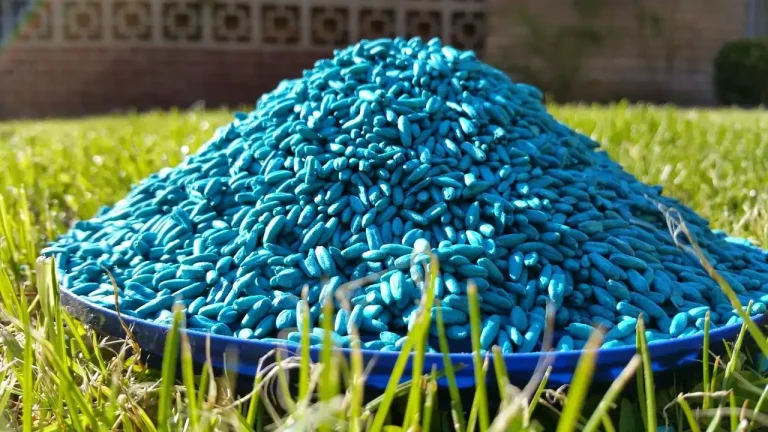
Garden lime comes from ground limestone, and its active ingredient is calcium carbonate. It changes soil pH slowly, which makes it a practical choice for home beds when you want a steady shift rather than a sharp one. Extension recommendations note that lime reacts gradually because it must dissolve and move through the root zone; soil moisture, particle size, incorporation depth, and temperature all affect how quickly the change shows up.
When lime is the wrong choice
If your soil is already alkaline, lime is the wrong choice. Soil pH above 7 means the soil is alkaline and does not need more lime. Adding it can raise pH enough that many plants may not grow well, and it can trigger deficiencies in iron, zinc, and other nutrients. If a soil report already shows pH in the upper range, the better fix is usually not lime but diagnosis of drainage, salinity, or nutrient imbalance; see our related guide to nutrient deficiency diagnosis.
Quicklime is also the wrong choice for home vegetable soil. It is generally not recommended for home vegetable gardens because it is caustic and harder to use safely. Hydrated lime is more potent than garden lime and is sometimes used agriculturally, but it is usually inappropriate for home vegetable beds because it raises pH much faster and leaves less room for error.
When should you add lime?
Add lime only after a soil test shows acidity that needs correction. Most vegetables perform best in soil with pH between 6.0 and 7.0, so the goal is usually to move acidic soil into that range, not to apply lime on a set schedule. University extension soil-test recommendations generally use the current pH, target pH, soil texture, and buffer pH or lime requirement to decide how much to apply.
The best time to apply garden lime is in autumn. Early spring is the backup window, but it should be at least 2 to 3 months before planting because lime needs weeks or months to react in soil. In cool or dry weather, or when lime is left on the surface, the reaction can be slower; in moist, lightly worked soil it tends to move faster.
How long lime needs to react
Lime is a slow-acting amendment. It does not fix pH overnight, and it should not be used as a rescue treatment after plants are already struggling. Fall application gives it time to move through the root zone before spring planting. Extension sources commonly note that finely ground lime incorporated into moist soil works faster than coarse material left on the surface, but full pH correction still takes time.
Picture a 4-by-8-foot bed that tested low in late October. Spreading lime then gives winter moisture and time to work on the soil. Waiting until the week before transplanting leaves too little time for the pH change to settle, especially in cold soils where microbial activity and dissolution are slower.
Garden lime vs quicklime
Garden lime and quicklime are not the same thing. Garden lime is ground limestone, usually calcium carbonate, and it is the standard choice for home vegetable beds. Quicklime is calcium oxide. It is much harsher, not suitable for garden soil, and can injure skin, eyes, and the respiratory tract.
Calcium carbonate, calcitic lime, and dolomitic lime
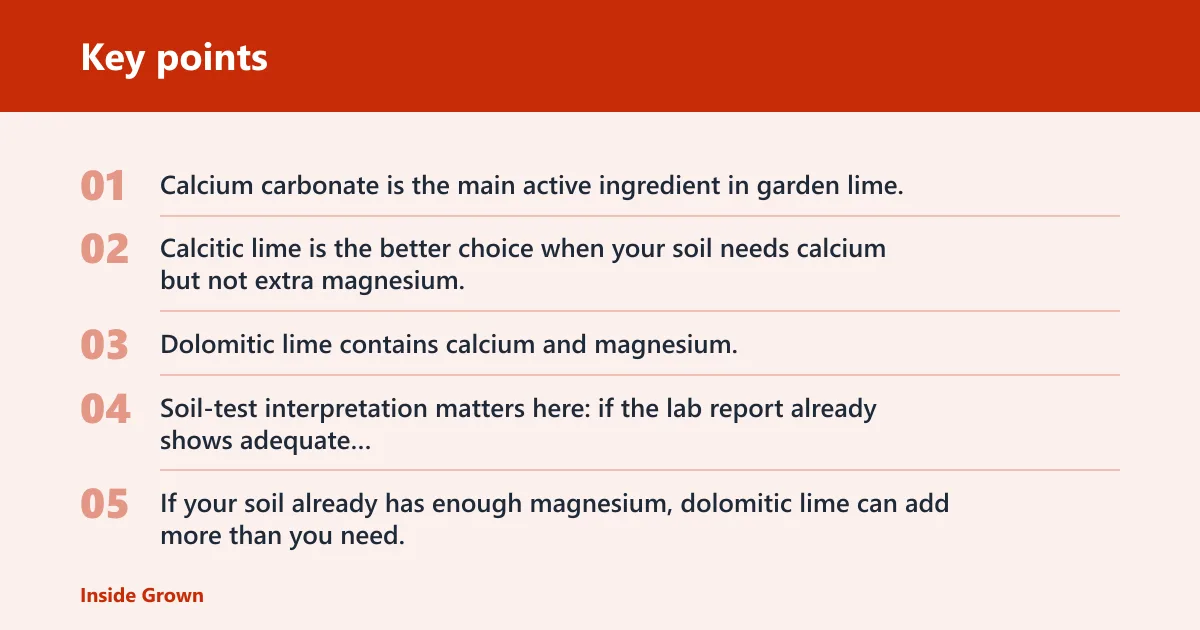
Calcium carbonate is the main active ingredient in garden lime. Calcitic lime is the better choice when your soil needs calcium but not extra magnesium. Dolomitic lime contains calcium and magnesium, so it fits soils that are low in both nutrients. Soil-test interpretation matters here: if the lab report already shows adequate magnesium, calcitic lime is usually the safer fit; if magnesium is low or the soil is naturally deficient, dolomitic lime may solve two issues at once.
That choice matters. If your soil already has enough magnesium, dolomitic lime can add more than you need. If a soil test points to low magnesium along with low pH, dolomitic lime is often the cleaner fix. Real lab metrics to watch include pH, buffer pH or lime requirement, and the magnesium level reported on the test.
Why hydrated lime and quicklime are poor choices
Hydrated lime works fast and is more potent, which is part of why it is less commonly recommended for home gardens. Quicklime is even less forgiving. Both raise pH more aggressively than ground limestone, which makes them poor fits for vegetable beds where precision matters.
For home gardeners, the safer default is garden lime based on calcium carbonate, not the faster industrial versions. If a label or supplier calls the product “ag lime,” “garden lime,” or “agricultural limestone,” check the neutralizing value before using it, because product strength changes the rate needed.
Vegetable garden decision matrix
Use this table as a first pass, not a substitute for a soil test. It maps common garden situations to the safest lime choice and the main caution to keep in mind.
| Garden scenario | Use lime? | Safest lime type | Caution note |
|---|---|---|---|
| Soil pH below 6.0 | Yes | Calcitic garden lime unless magnesium is also low | Test first and follow the label rate; too much can push pH too high. |
| Magnesium deficiency | Yes, if the test confirms low pH and low magnesium | Dolomitic lime | Do not use it just because plants look pale; confirm the deficiency with testing. |
| Established beds | Sometimes | Fine garden lime applied carefully | Topdress only as directed; avoid dumping granules against stems or crowns. |
| Containers | Sometimes, but with caution | Small measured doses of garden lime | Container mixes change quickly; over-application can swing pH fast. |
| Brassica beds | Yes, if soil is acidic | Calcitic or dolomitic lime based on soil needs | Brassicas tolerate and often prefer slightly less acid soil, but testing still comes first. |
| Already-alkaline soil | No | None | Soil pH above 7 means extra lime is unnecessary and can create nutrient lockout. |
Say your tomato bed in a raised frame tests at pH 5.7 and the soil report shows low magnesium. Dolomitic lime is the better fit than calcitic lime, but only if the report also supports liming. If the same bed tested at 7.2, the answer would be no lime at all. For raised beds and mix management, see raised-bed soil management.
How much lime should you use?
How much lime you use depends on soil pH, texture, and the soil test recommendation. Sandy, loamy, and clay soils need different general lime rates because they hold acidity differently. A soil test kit or lab report tells you whether lime is needed and helps prevent over-liming. The rate also changes with the product’s neutralizing value: a material with higher ECCE/ENV or similar effective value needs less product than a lower-value lime to deliver the same pH shift.
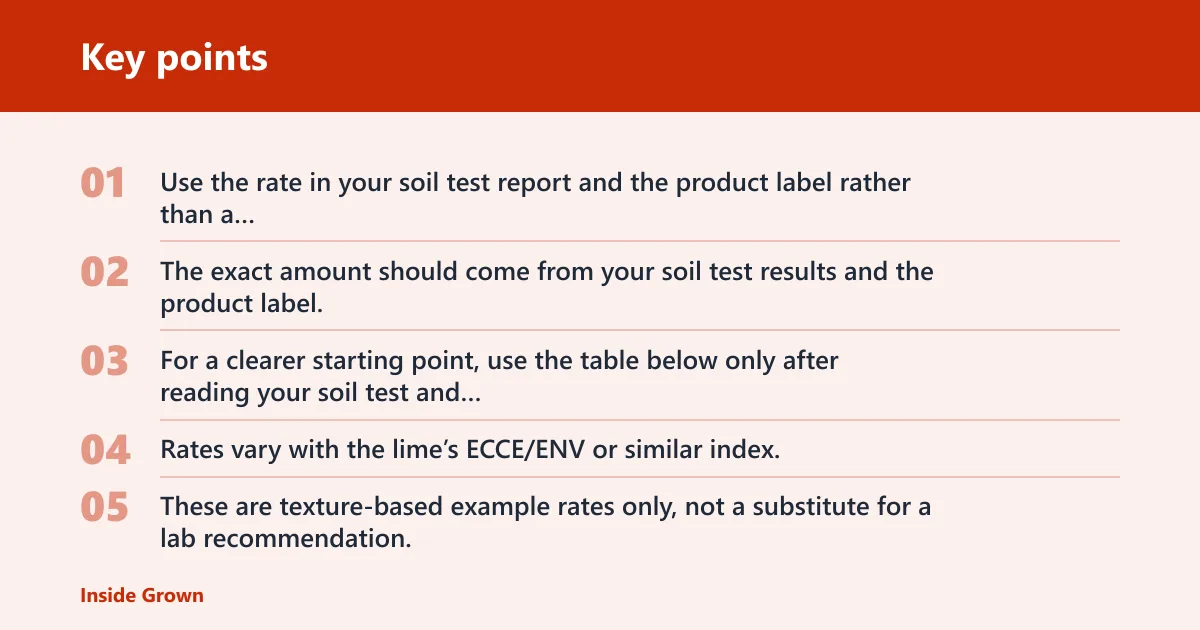
Use the rate in your soil test report and the product label rather than a one-size-fits-all example. The exact amount should come from your soil test results and the product label.
For a clearer starting point, use the table below only after reading your soil test and the label’s neutralizing value. Rates vary with the lime’s ECCE/ENV or similar index, so a stronger product needs less material than a weaker one to achieve the same correction.
| Soil texture | Approx. target pH shift | Example rate at 50% ECCE/ENV | Example rate at 100% ECCE/ENV | Equivalent area |
|---|---|---|---|---|
| Sand | About 0.5 to 1.0 pH unit | 700 g | 350 g | Per 10 m² (about 108 sq ft) |
| Loam | About 0.5 to 1.0 pH unit | 800 g | 400 g | Per 10 m² (about 108 sq ft) |
| Clay | About 0.5 to 1.0 pH unit | 1 kg | 500 g | Per 10 m² (about 108 sq ft) |
These are texture-based example rates only, not a substitute for a lab recommendation. University extension guides commonly adjust lime needs by soil texture because clay buffers acidity more strongly than sand, and by product neutralizing value because not all liming materials are equally concentrated.
Why over-liming causes trouble
Too much lime can lock out essential nutrients like iron and zinc. The common signs are chlorosis, weak growth, and poor root development. The soil may still hold moisture and nutrients, but the plant cannot take them up well because the pH is too high.
A common mistake is assuming a patch of stunted seedlings means the garden needs lime when the real issue is compacted soil or poor drainage. Yellowing can come from many causes, including watering errors, nitrogen shortage, or compacted roots. A soil test is the cleaner way to sort that out. If the symptoms look like a nutrient issue, compare them against our guide to nutrient deficiency diagnosis.
Can you mix lime with manure or fertilizer?
Lime can be a problem with fresh manure and with ammonium-based fertilizers because those materials can lose nitrogen more readily when conditions are alkaline. Space them apart and use soil test results to decide what comes first. Extension guidance commonly advises separating liming from fresh manure applications because ammonia volatilization losses are more likely when alkaline materials meet nitrogen sources.
Fresh manure is the biggest timing conflict. If you need both amendments, apply manure first or later in the season, then leave time before liming, or lime first and wait before adding manure. The key is separation, not stacking both on the same day. If you are deciding between organic amendments, our related article on compost vs manure can help with the timing tradeoff.
Safer sequencing for vegetable beds
- Test the soil pH before adding either amendment.
- If pH is low, apply lime in autumn or at least 2 to 3 months before planting in early spring.
- Mix lime into the soil where possible, or topdress carefully around established plants.
- Wait before applying fresh manure or a heavy nitrogen feed.
- Retest soil later if the bed was very acidic or if you used a larger correction.
How to apply lime correctly
Apply lime on a dry, windless day. Wear protective clothing, gloves, and a dust mask or respirator if the product is very dusty when handling it. That matters because the fine dust can irritate skin, eyes, and lungs even though the product is common in garden centers.
Work the lime into the soil when you can. In new beds, mix it through the root zone. In established beds, apply it carefully to the surface and water it in according to the label. Keep the product away from stems and foliage when possible. If you are liming brassica beds, align the application with crop rotation and soil-prep timing; see our brassica growing guide.
Established beds and containers
Can you use lime around established plants? Yes, but with care. Established beds leave less room to correct mistakes, so use smaller amounts, spread them evenly, and avoid piling lime near plant crowns. The goal is a gentle pH shift, not a sudden soil reset.
Containers need extra caution because the soil volume is small. A small excess can change the mix faster than it would in an in-ground bed. Use only the amount your soil test or potting mix guidance supports, and avoid guessing.
Frequently asked questions
Is lime safe for vegetable gardens?
Yes, lime is safe for vegetable gardens when you use garden lime, not quicklime, and only after testing shows acidic soil. The main hazards are over-application, the wrong product, and dust exposure during handling. Used correctly, lime is a standard soil amendment for acidic vegetable beds.
Is lime good for a vegetable garden?
It is good for a vegetable garden when the soil is too acidic. Most vegetables perform best in soil with pH between 6.0 and 7.0, so lime can move acidic soil toward that range. It is unnecessary in soils that already test neutral or alkaline.
What is the difference between garden lime and hydrated lime?
Garden lime is ground limestone, usually calcium carbonate, and it works slowly. Hydrated lime is more potent and acts faster, which makes it less suitable for routine home garden use. Quicklime is even harsher and should not be used in home vegetable soil.
Can I use lime around established plants?
Yes, but use it carefully and in measured amounts. Established plants leave less room for correction, so avoid heavy applications and keep lime off stems and leaves. A soil test and the product label should guide the rate before you treat an existing bed.
How long before planting should lime be applied?
Fall is the best time to apply lime. If you wait until early spring, apply it at least 2 to 3 months before planting so it has time to react. Lime works slowly, so last-minute applications usually do not change pH enough before transplanting. In cool climates or on dry ground, give it even more lead time if the soil is not worked in well.