Is Iron Phosphate Safe for Vegetable Gardens?
Yes, iron phosphate is generally safe for vegetable gardens when you use it exactly as labeled, keep granules off edible leaves, and apply only the package rate. Misuse can waste money, miss slugs, or leave bait where pets can reach it. This guide covers crop safety, pet and wildlife risks, and correct application.
What iron phosphate


Iron phosphate is a pesticide compound made of iron, phosphorus, and oxygen. In the U.S., it has been registered for pesticide use since 1997 and appears in granular slug and snail bait products for home gardens and crops. It works only when the pest eats the bait.
Granular bait basics
Slug and snail bait granules go on the soil surface, not sprayed on leaves. That matters because the label controls where the product belongs, how often it can be used, and whether it can be used in an edible bed or in organic production. Different products can have different directions.
Iron phosphate breaks down into iron and phosphate, and both occur naturally in soil. After application, iron becomes part of compounds naturally found in soil. That helps explain why the ingredient has low toxicity compared with many other pesticide choices.
📊 Iron phosphate has been registered for pesticide use in the U.S. since 1997. Source: Iron Phosphate Fact Sheet.
Is iron phosphate safe for vegetable gardens?
Yes, iron phosphate is generally safe for vegetable gardens when you use a product labeled for that setting and keep the granules where slugs travel, not on leaves or harvested produce. The crop-safety question is about correct use on edible plants, not about eating the bait or ignoring the label.
Edible crops and harvest timing
Competitors often blur this point: safety on edible crops is not the same as safety after harvest. If the label allows use around vegetables, follow the listed directions for placement and any harvest-related instructions on that specific product. Do not assume every iron phosphate bait has the same directions.
If a label says a product can be used in vegetable gardens, that does not mean you should scatter it across edible foliage. Keep granules on bare soil, around slug travel routes, and away from heads, leaves, and stems that you will harvest soon. Misplacement creates avoidable contact.
Raised beds and in-ground beds
Raised beds are not automatically safer or riskier than in-ground beds. The same rule applies: use only a product that is labeled for the site, place bait on the soil surface, and keep it where pets, children, and wildlife are less likely to reach it. Cover only the slug route, not the crop.
Say your lettuce bed is 4 feet by 8 feet and slugs are chewing the outer rows after rain. A narrow band of labeled bait around the bed edge and near damaged transplants makes more sense than scattering granules through the whole bed. That reduces waste and keeps the product away from edible leaves.
What “safe” means here
“Safe” does not mean harmless in every situation. It means the ingredient is considered very low in toxicity when eaten, and the main risk comes from poor placement, overapplication, or accidental ingestion by pets or children. Skin contact can happen too, and slight eye irritation is possible.
How iron phosphate works on slugs
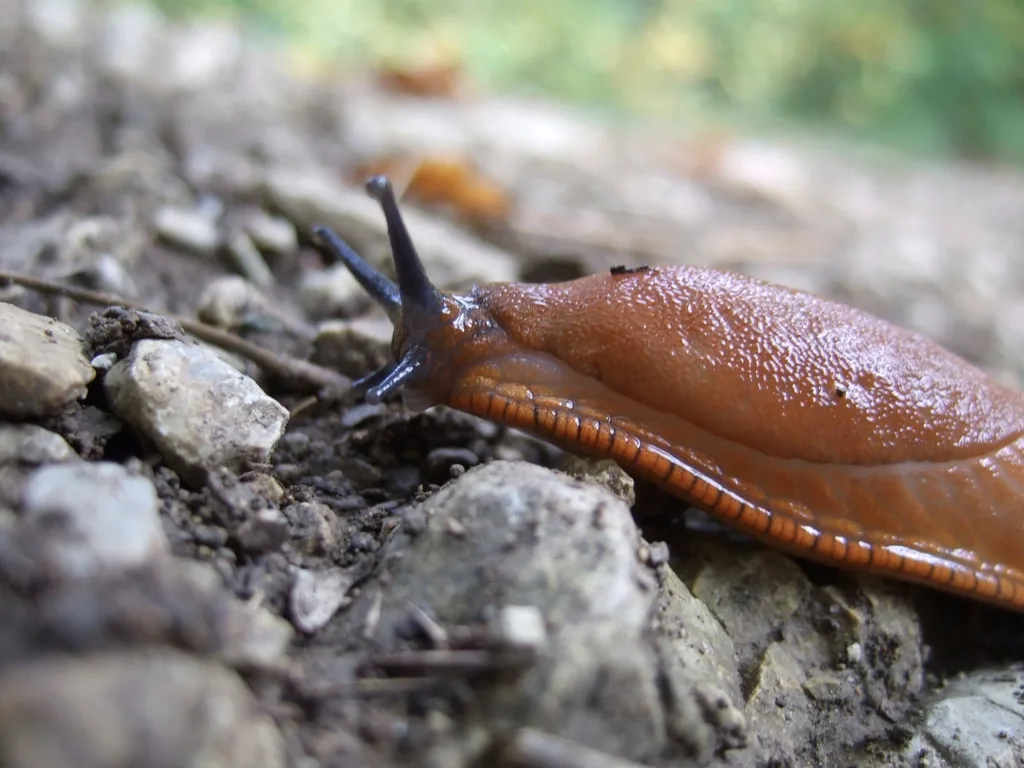
Iron phosphate kills slugs and snails when they eat it. The bait damages digestive tissue, which stops feeding and leads to death. That is why it works best where the pests actually move and feed, and why it does little good if rain washes it away or if you bury it in mulch.
Why it has to stay on the soil surface
The product is made in granular form, and it is not likely to be inhaled because of that formulation. It must be on or near the soil surface where slugs travel. If you place it on dry mulch, under thick leaf litter, or on top of a wet irrigation splash zone, you can lose control or waste material.
Weather and irrigation
Wet weather can affect performance and may cause the bait to break down faster. If bait becomes soggy, disperses, or is diluted by irrigation, slugs may ignore it or the product may break down faster. The practical answer is simple: apply only as the label directs, avoid overwatering immediately after application unless the label calls for it, and reapply only on the schedule the label allows.
A common first-timer mistake is spreading bait across an entire wet bed because damage looks severe after rain. That can put more product where no slugs are feeding and more product where pets can reach it. A tighter placement pattern usually works better than a heavy broadcast.
Is iron phosphate safe for pets and wildlife?
Iron phosphate is generally lower risk than many older slug baits, but it is not pet-proof or wildlife-proof. Dogs have been reported to become sick after eating larger amounts of iron phosphate bait, and the same caution is commonly extended to cats, chickens, and visiting wildlife if they can reach the granules. Label compliance matters.
Dogs, cats, and accidental eating
The main household hazard is accidental ingestion. Dogs may be drawn to bait because it is in pellet or granule form. Large amounts of iron can cause illness, even though the active ingredient is considered very low in toxicity when eaten at labeled exposure levels. Keep bait off paths, patios, and play areas.
If a dog or child eats slug bait, treat it as a product exposure, not as an ordinary snack incident. Check the package, keep the container, and contact poison control or a veterinarian if the amount is unknown, the product label is missing, or symptoms begin. Do not wait for a clear pattern if the exposure seems significant.
Wildlife corridors and backyard access
Backyards that border hedges, brush, ponds, or bird habitat need extra care. Wildlife safety is not a blanket yes. If rabbits, birds, or other animals can access the bed, place bait only where the label allows and only in a way that reduces access. Avoid leaving loose granules in open feeding areas.
Iron phosphate garden decision table
This table separates common garden situations that gardeners often mix together. It gives a yes/no recommendation, the main reason, and a label-check reminder for each case. Use it as a screen before you buy or apply a product.
| Garden scenario | Recommendation | Main risk level | Why | Label-check reminder |
|---|---|---|---|---|
| Edible bed | Yes, if labeled for vegetables | Low when used correctly | Suitable for slug control on the soil surface; avoid edible leaves and harvestable parts | Confirm the package says it can be used on food crops and follow any harvest directions |
| Raised bed | Yes, with care | Low to moderate | Easy to place bait accurately, but pets may reach raised edges more easily | Check site approval and keep granules away from the top lip and open walkways |
| Pet-access yard | No, unless access is controlled | Moderate | Dogs may eat bait, and large amounts of iron can make them sick | Look for pet warnings, keep animals out during and after application, and store the bag securely |
| Wet climate | Yes, but only with close timing | Moderate | Wet weather can reduce performance and increase the chance of overapplication | Check reapplication limits and any directions about rain or irrigation |
| Heavy slug pressure | Yes, as part of a plan | Moderate | Iron phosphate can help, but severe pressure often needs cleanup, hand-picking, or barriers too | Verify the label rate and combine with non-chemical controls instead of increasing dose |
| Organic certification use | Maybe, product-specific | Low to moderate | Some products are approved for organic agriculture, but approval depends on the exact product | Check the label and any organic listing before purchase |
How do you apply iron phosphate in a vegetable garden?
Apply it on the soil surface where slugs travel, not across edible leaves or stems. Keep the pattern tight, especially near transplants, under leaf edges, and around damp hiding places. Use only the amount and timing on the label, because overapplication does not improve control and can increase exposure.
Where to scatter granules
Place granules around the base of vulnerable plants, along bed edges, and near obvious slug trails. Avoid dumping bait into the center of a bed unless the label calls for it. Near transplants, a narrow ring or short line is usually better than a broad broadcast.
Reapplication and timing
Read the label before every use. Some products may allow repeat use after rain or after a set interval, while others do not. Do not guess. A product that has been approved for home garden use still needs exact timing and site directions to stay within label limits.
- Identify the slug damage and confirm that slugs or snails are the likely cause.
- Choose a product labeled for vegetable gardens or the crop area you want to protect.
- Spread granules on the soil surface near active slug paths, not on harvestable plant parts.
- Keep children, pets, and chickens away during application and until the area is managed as the label directs.
- Check after rain, irrigation, or heavy dew, then reapply only if the label allows it.
Does iron phosphate count as organic?
Sometimes. Some iron phosphate products are approved for organic agriculture, but approval is product-specific and label-specific. You cannot assume that every bait with the same active ingredient meets organic rules. The exact formulation, inert ingredients, and listing status all matter.
Why listing status matters
Organic approval depends on the product on the shelf, not just the ingredient name on the front panel. Before buying, check the label for organic approval language and any listing that the certification program recognizes. If the package does not clearly state it, do not assume it qualifies.
Alternatives for slug control in vegetable gardens
Iron phosphate is one option, not the only one. Hand-picking, habitat cleanup, and copper barriers can work well in small beds or where pet access makes bait a poor fit. In heavy pressure, a mixed approach often beats relying on one product alone.
Hand-picking and habitat cleanup
Remove slugs at dusk or early morning, and clear boards, dense weeds, and other damp hiding places to help reduce bait exposure. This takes more labor, but it avoids bait exposure entirely. If you have a small bed and mild pressure, this may be enough without any pesticide product.
Copper barriers and physical exclusion
Copper strips, collars, and other barriers can help protect individual plants or small raised beds. They are useful where you want no bait near pets or wildlife corridors. They do not kill slugs; they block or discourage movement, which makes them a good fit for targeted protection.
Suppose a gardener has a small raised bed beside a dog run. In that setting, a copper collar around seedlings and evening hand-picking may be a better first choice than scattered bait. The key variable is pet access, not slug pressure alone.
Frequently asked questions
Can iron phosphate be used on edible crops?
Often yes, but only if the specific product label allows it. The same active ingredient can appear in products with different directions and different approval status. Check the crop list, any harvest timing instructions, and whether the bait is meant for soil-surface use in food gardens.
How long does iron phosphate take to work on slugs?
It works after slugs eat it, so control depends on feeding and placement. You may see less feeding damage before you see dead slugs because affected pests stop eating first. If bait is wet, buried, or placed away from slug routes, performance will be slower or uneven.
What happens if a dog eats iron phosphate slug bait?
A dog may get sick, especially after eating a large amount. Iron phosphate is considered very low in toxicity when eaten at labeled exposure levels, but dogs have become sick after eating large amounts of iron. If ingestion is possible, contact poison control or a veterinarian with the product label in hand.
Is ferric phosphate safe for wildlife?
It is lower risk than many baits, but not automatically safe for wildlife. If birds, rabbits, chickens, or other animals can reach the granules, exposure can still happen. Use only labeled products, keep bait on the soil surface where intended, and avoid placing it in open wildlife corridors.