Gardening Techniques for Sandy Soil Improvement Plan
For sandy soil, rebuild the root zone with a moderate layer of compost each spring and fall, plus a living cover crop or mulch when possible. Those three moves do most of the work. Skip them, and water, fertilizer, and roots slip past the feeding zone fast. This guide lays out a season-by-season plan for making sandy beds hold more moisture and nutrients.
This guide is part of our Gardening techniques series.
What you’ll need before you start


- Finished or well-aged compost
- Mulch: shredded leaves, wood chips, straw, or bark
- Drip irrigation line, emitters, or soaker tubing
- Slow-release fertilizer, or a plan for split feeding
- Cover crop seed for the off-season
- Soil test kit or lab sample bags
- Measuring tape or ruler
- Flat rake and hand fork
- Test the bed first, then mark where roots actually feed.
- Add compost to the root zone before any other amendment.
- Set drip irrigation before the bed dries out again.
- Mulch the surface after planting or after top-dressing.
- Sow a cover crop in the off-season where beds will sit bare.
- Use split fertilizer doses instead of one heavy application.
How sandy soil behaves in the garden
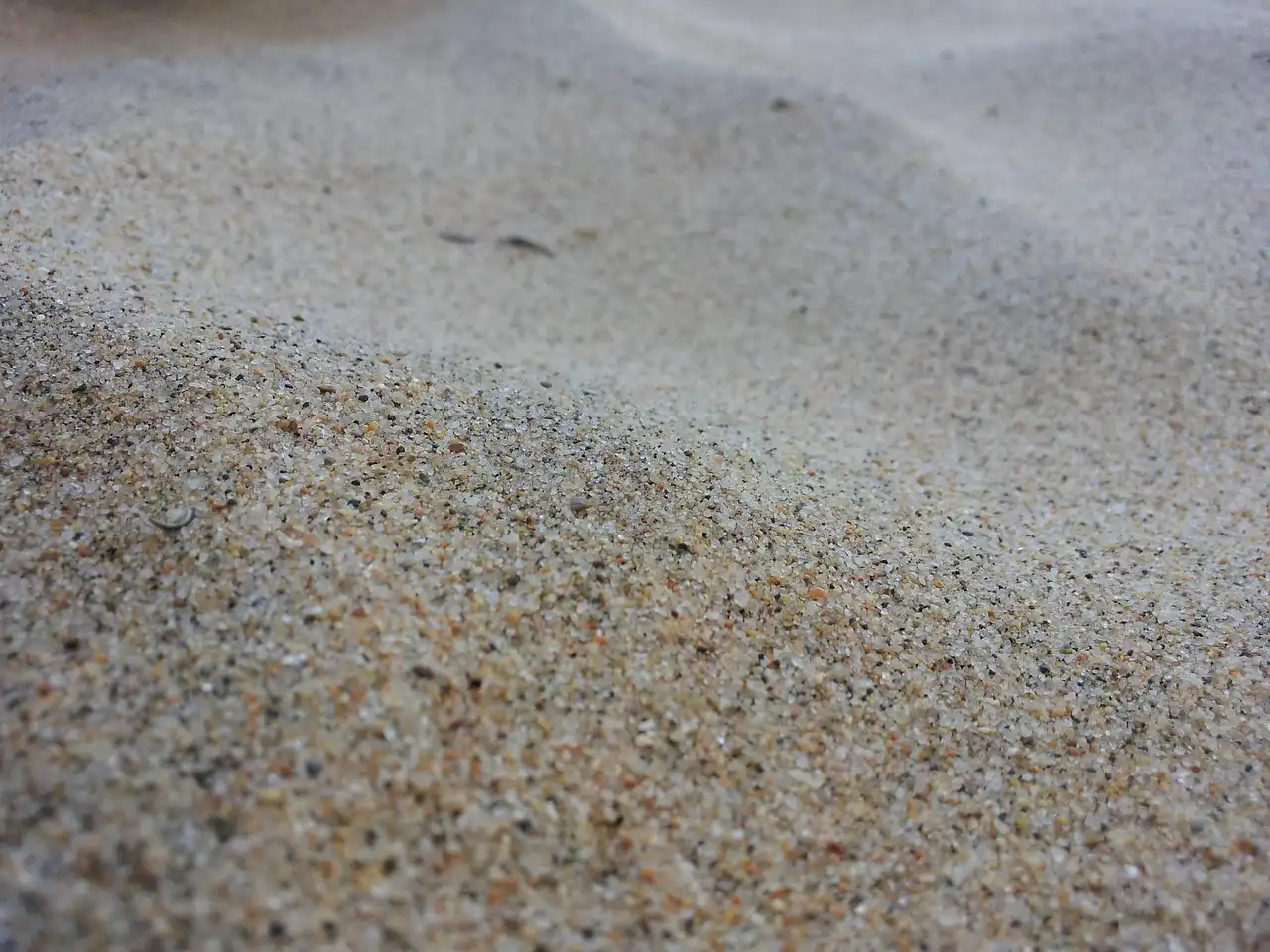
Sandy soil drains fast, so water and soluble nutrients move below the root zone before plants can use them. I do not fix that by piling on more fertilizer. I build the root zone with organic matter, then slow evaporation and runoff at the surface.
What that means for roots, mulch, and fertilizer
Roots in sandy beds need a moister, steadier zone, not a loose top layer with repeated flushes of water. Organic matter is the main long-term fix because it improves water retention, nutrient holding, and soil structure. Mulch protects that zone. Split feeding keeps fertilizer where roots can catch it.
Which beds need the fastest intervention
Vegetable beds come first because they are fed and watered often. New beds in the yard come next, especially if they sit in full sun. Perennials can tolerate a slower rebuild, but they still benefit from the same root-zone work before the next hot season.
What should you do first in sandy soil?
Start with a soil test, then map where the root zone is thin, dry, or bare. Top-dress or lightly incorporate compost in the feeding zone, then install drip irrigation before plants dry out. That sequence prevents wasted fertilizer, wasted water, and another season of shallow roots.
Step 1: Audit the bed
Measure the bed size, note sun exposure, and look for crusting, rapid drying, or leaching after rain. Check pH and basic fertility before adding anything else. Sandy soil often looks hungry because it cannot store nutrients for long.
Step 2: Fix the root zone first
Apply finished or well-aged compost as a generous initial layer, then work it into the upper root zone where roots feed. That is the part of the bed that matters most in year one. A shallow surface sprinkle does much less.
Step 3: Put water on a schedule
Install drip irrigation or soaker tubing before planting if possible. Broad sprinkler watering wastes more water in sandy soil because it wets areas plants do not use and leaves the upper layer dry again too quickly. Drip keeps moisture closer to the root zone.
Step 1: Add compost to the root zone
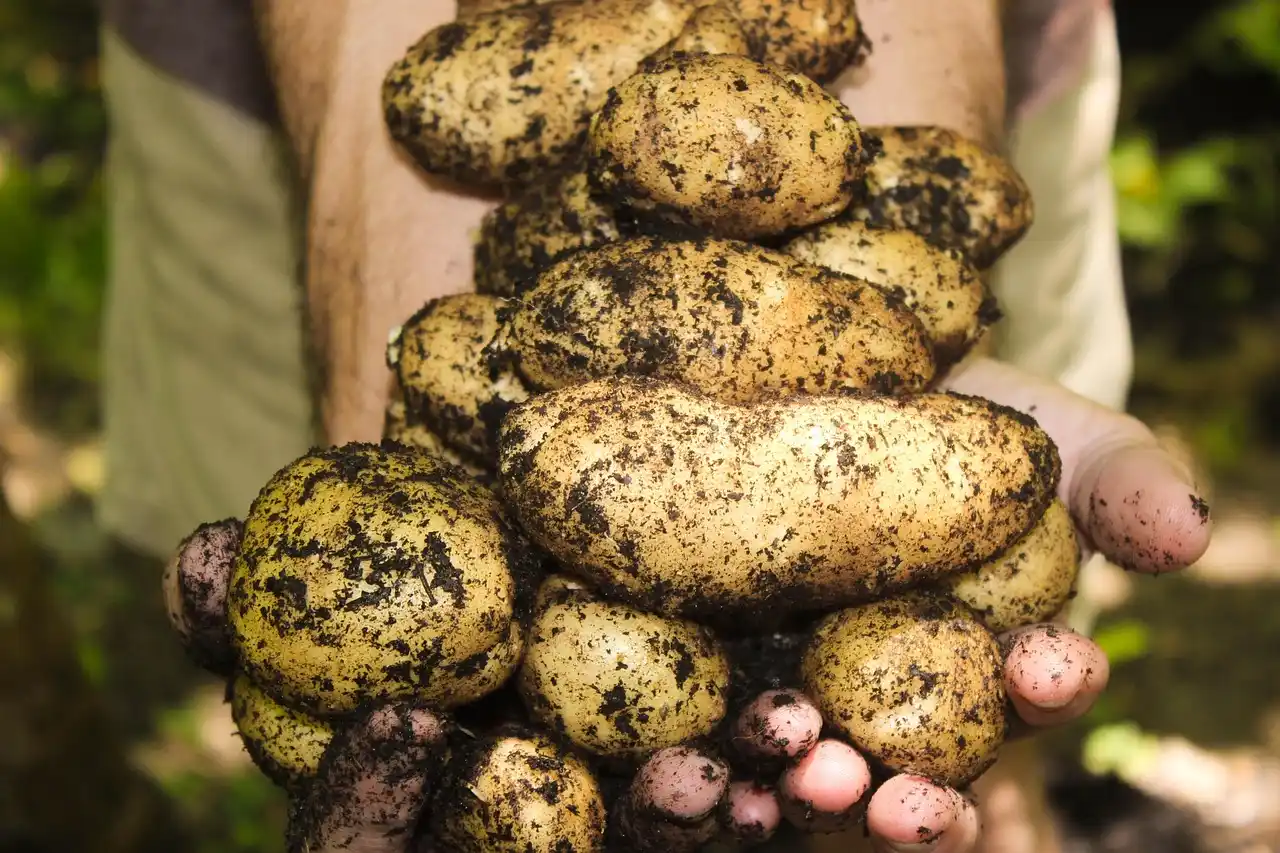
Compost is the best all-around amendment for sandy soil because it feeds biology, increases water retention, and helps nutrients stay put longer. Use finished or well-aged compost, not raw material. The goal is to build a stable root zone, not to create a hot, unstable mix.
How much compost should I add to sandy soil?
Use a 2–4 inch initial layer, then work it into the top 4–6 inches where roots feed. Another practical target is at least 2 to 3 inches when the bed is bare and being rebuilt. After that, plan annual maintenance additions instead of trying to fix the whole bed at once.
Compost works best when it is repeated. In sandy beds, a thin top-up every season usually does more than one heavy load followed by no maintenance. For vegetable beds, top-dress before spring planting and again after harvest. For perennials, apply around the drip line, not against stems.
Annual maintenance additions
Maintain compost with a light seasonal top-dress rather than deep digging every year. That keeps the surface biologically active and feeds the layer roots explore. If the bed is planted and cannot be turned, spread compost on top and let rain, irrigation, and soil life move it downward.
| Amendment | Primary goal | Cost | Risk if used poorly | Timing |
|---|---|---|---|---|
| Finished compost | Water retention, nutrient holding, structure | Medium | Low | Spring and fall |
| Leaf mold | Moisture retention, biology | Low | Low | Fall or early spring |
| Mulch | Reduce evaporation, weed suppression | Low to medium | Low | After planting, renew yearly |
| Cover crop | Protect bare soil, add biomass | Low | Low to medium | Off-season |
| Biochar with compost | Long-term retention | Medium to high | Medium | Mixed in before planting |
| Clay or peat | Possible texture change | Medium | High | Only with careful planning |
Step 2: Mulch the bed to slow drying
Mulch is the easiest surface fix for sandy beds because it cuts evaporation, suppresses weeds, and steadies soil temperature. Use a 2–3 inch layer and keep it off stems and crowns. Mulch does not replace compost, but it protects the compost you already added.
Should I mulch sandy garden beds?
Yes. Sandy beds lose moisture quickly, so mulch is one of the highest-payoff seasonal habits. It also cuts splash-up on leaves and slows temperature swings that stress roots. In vegetable beds, renew mulch after transplants settle. In perennials, refresh it once a year.
How mulch changes watering frequency
With mulch in place, the bed usually needs less frequent irrigation, but not deeper neglect. Check moisture under the mulch with a finger or small trowel. If the top couple of inches are dry and the root zone is fading, water slowly rather than in a quick burst.
Can cover crops help sandy soil rebuild?
Yes. Cover crops protect bare soil, add biomass, and keep roots active when a bed would otherwise sit empty. They matter most in the off-season, because sandy soil loses structure quickly when left uncovered. Cereal rye is the strongest cold-season choice for rebuilding.
When to sow them in the off-season
Plant cover crops as soon as a bed clears and there is enough time left for growth. Cereal rye is planted about 1–1.5 inches deep, and one guide recommends planting it from mid-August to September. That timing helps it establish before cold weather.
Best options for sandy beds
Cereal rye, clover, vetch, buckwheat, and cowpeas all fit different seasons and goals. Cereal rye is deep-rooted, tolerates low pH and poor fertility, and can send roots 3–6 feet deep. Clover and vetch add biomass and nitrogen. Buckwheat and cowpeas work well when warm-season cover is needed.
Why cereal rye stands out
Cereal rye holds soil in place when wind and rain would otherwise strip it. It is hardy through USDA zones 3–8, so it can carry a bed through cold months in many regions. That makes it the most reliable off-season tool for a sandy bed that needs structure fast.
Should you use biochar, leaf mold, or clay?
Biochar and leaf mold can help sandy soil, but they are not equal in cost or risk. Leaf mold is often the cheapest win when leaves are available. Biochar works best with compost. Clay and peat can help in narrow cases, but they can also fail badly if mixed carelessly.
Where leaf mold is the cheapest win
Leaf mold improves moisture retention and adds beneficial biology. It is worked into the upper few inches of soil, or spread as a fine surface layer in planted beds. When autumn leaves are plentiful, it is one of the lowest-cost ways to increase organic matter.
When biochar helps and why it needs compost
Biochar is a long-term amendment, but it should not be used alone. It works best when paired with compost so the pores fill with nutrients and microbes instead of sitting empty. One source suggests about 5% by volume, which is a good reminder to keep the rate modest.
Why clay and peat can fail if used badly
Clay can improve texture only if it is incorporated evenly and in a controlled amount; one source suggests clay at 10–20%. Too little does almost nothing, and too much can make a sticky mess. Peat moss can also be misused; one guide suggests 1 part peat to 3 parts sand, but peat is not the first choice for most gardeners.
How do you keep sandy beds productive all year?
Keep moisture, fertility, and cover steady through the season. Use drip irrigation instead of broad, frequent watering. Feed with slow-release fertilizer or split applications in smaller doses. Then adjust the plan for vegetables, perennials, and new beds so each gets the right maintenance rhythm.
How often should you water sandy soil?
Water when the root zone starts to dry, not on a fixed “every few days” rule. Sandy beds often need smaller, more frequent irrigations because they dry out quickly. Drip irrigation helps because it puts water where roots can use it and reduces waste and leaching.
How should fertilizer be timed?
Use slow-release fertilizer or split applications in small, frequent doses. Sandy soil leaches quickly, so one big feeding is easy to lose after the next rain or irrigation cycle. In vegetables, split feed through the active growing season. In perennials, feed lightly and less often.
Adjust the plan by bed type
Vegetable beds get the tightest schedule: compost before planting, mulch after transplanting, and split feed during growth. Perennials need less disturbance, so top-dress and mulch around established crowns. New beds in the yard benefit from compost in the root zone, then a cover crop or mulch to hold the line.
Prevention
Keep bare soil covered. That one habit prevents most of the drying, crusting, and nutrient loss that makes sandy beds feel impossible.
Proof asset: one-page sandy-soil decision checklist
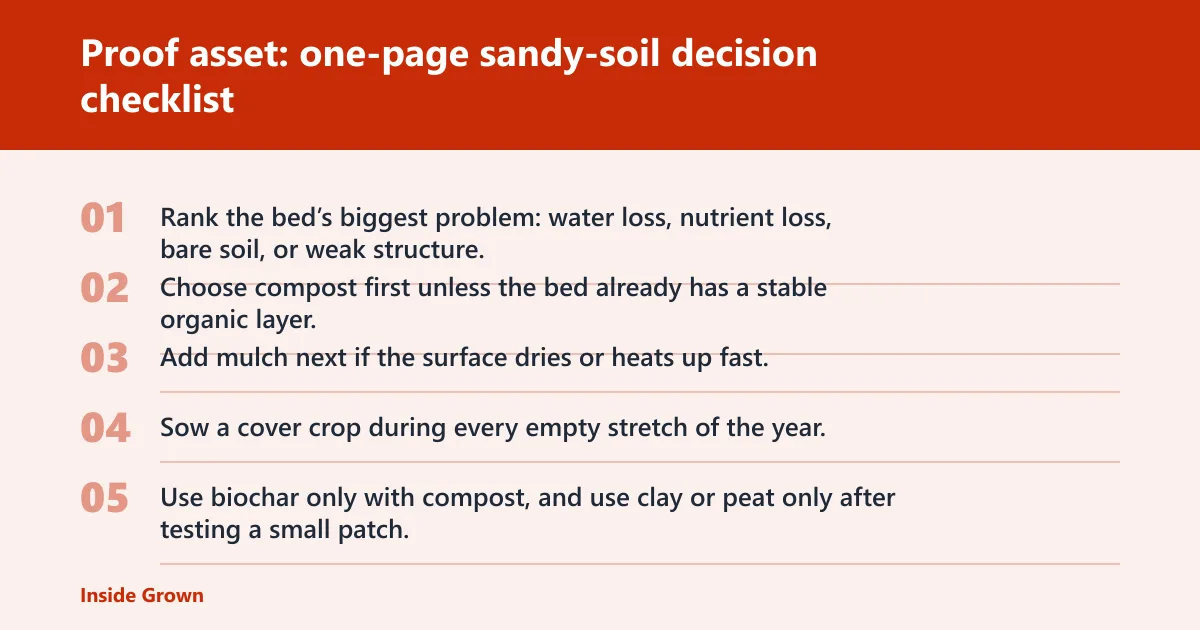
Use this checklist to choose the next move by goal, cost, and risk. It separates first-year triage from second-year rebuilding, so the bed gets stronger without overloading it with the wrong amendment.
Decision checklist
| Goal | Best move | Exact action | Cost | Risk | First year | Second year |
|---|---|---|---|---|---|---|
| Hold more water | Compost + mulch | 2–4 inches compost; 2–3 inches mulch | Low to medium | Low | Do immediately | Top up both layers |
| Protect bare soil | Cover crop | Seed after harvest or before winter | Low | Low | Use in off-season | Repeat where beds sit empty |
| Improve retention long term | Biochar + compost | Blend biochar with compost before use | Medium to high | Medium | Use in small areas first | Expand only if results hold |
| Low-cost biology boost | Leaf mold | Work into the top 2–3 inches | Low | Low | Great when leaves are free | Repeat annually |
| Fix fertility loss | Split fertilizer | Small, repeated doses | Medium | Medium | Start with the crop cycle | Keep the split schedule |
| Change texture | Clay or peat | Only with a careful blend plan | Medium | High | Use cautiously | Avoid if mixes fail |
- Rank the bed’s biggest problem: water loss, nutrient loss, bare soil, or weak structure.
- Choose compost first unless the bed already has a stable organic layer.
- Add mulch next if the surface dries or heats up fast.
- Sow a cover crop during every empty stretch of the year.
- Use biochar only with compost, and use clay or peat only after testing a small patch.
- Repeat compost and mulch in year two, then keep drip and split feeding in place.
Common mistakes
The most expensive mistake is trying to fix sandy soil with one giant amendment load. That often buries the problem instead of solving it. Another common error is leaving beds bare between crops, which invites drying, weed pressure, and nutrient loss all at once.
- Too much clay or peat: can create a heavy, awkward mix instead of better structure.
- Fresh manure or unstable compost: can burn roots or keep nitrogen tied up.
- One heavy fertilizer pass: most of it can leach beyond the root zone.
- Wrong mulch depth: too little dries out; too much can trap stems and crowns.
- Leaving soil bare: speeds erosion and moisture loss between crops.
Frequently asked questions
How do you improve sandy soil for gardening?
Start with compost, mulch, and cover crops. Compost builds water retention and nutrient holding. Mulch protects the surface. Cover crops keep roots active in the off-season. Add drip irrigation and split fertilizer applications so water and nutrients stay near the root zone instead of washing through.
What is the best amendment for sandy soil?
Finished or well-aged compost is the best all-around amendment. It improves structure, moisture retention, and nutrient storage at the same time. Leaf mold is a strong low-cost option when leaves are available. Biochar can help, but only when paired with compost, not used as a stand-alone fix.
How much compost should I add to sandy soil?
Use a 2–4 inch initial layer, then work it into the top 4–6 inches where roots feed. For ongoing maintenance, add compost each spring and fall rather than waiting for a major rebuild. That keeps the root zone active without burying established plants.
Should I mulch sandy garden beds?
Yes. A 2–3 inch mulch layer cuts evaporation, suppresses weeds, and steadies soil temperature. Keep it off stems and crowns. In sandy beds, mulch is one of the best ways to stretch irrigation and protect the compost layer underneath.
Do cover crops help sandy soil?
Yes. They protect bare soil and add biomass between crops. Cereal rye is the strongest cold-season option because its roots can reach 3–6 feet deep, it tolerates low pH and poor fertility, and it is hardy through USDA zones 3–8. Clover, vetch, buckwheat, and cowpeas fit other seasons.
How often should you water sandy soil?
Water in smaller, more frequent doses and check the root zone instead of guessing by the surface. Drip irrigation is the best delivery method because it reduces waste and leaching. During hot weather, sandy beds may need closer attention than heavier soils, especially right after planting.
Can biochar or clay improve sandy soil?
Biochar can help when mixed with compost, because the compost loads the pores with biology and nutrients. Clay can also help, but only if incorporated carefully; one source suggests 10–20%. Both can fail if overused. For most gardens, compost and mulch are safer first moves.