Gardening Techniques for Container Gardening Beginners
For beginner container gardening, start with a pot about 12 inches wide for herbs and 18 inches or larger for tomatoes and peppers. Small pots dry out fast and starve roots. This guide covers pot size, crop choice, sun, soil, and a simple watering rhythm for patios, decks, and balconies.
Start with the right container setup


Container gardening works on patios, decks, balconies, and other tight outdoor spaces. Start with drainage holes, a potting mix made for containers, and a spot that gets enough sun and easy water access. Miss one of those, and the garden gets harder to manage fast.
Keep the first setup small. A few containers are easier to handle than a large mix of pots, and each one can match a single crop and a single watering rhythm.
Choose drainage holes first
Use containers with drainage holes. They let extra water leave the pot and cut the risk of root rot. A pot without holes can hold water around the roots too long, especially after rain or a heavy watering.
If you are choosing between two nearly equal pots, pick the one with more reliable drainage. A shallow saucer can protect a deck or patio surface, but it should not trap water under the pot for long periods.
Pick a potting mix made for containers
Use a potting mix made for containers, not garden soil. Potting mix lets roots get air and should drain without staying soggy. Garden soil is too dense for most pots and can hold too much water, especially in compact containers.
Drainage matters because container roots live in a limited space. They need moisture and air, and the mix has to move between those conditions quickly.
Match container material to weight and heat
Container material matters on balconies, decks, and patios. Lightweight plastic is easier to move and adds less load to raised surfaces. Clay and ceramic are heavier and can dry faster in hot weather, which means more frequent watering.
Large pots hold more soil, so they stay moist longer and buffer root temperature better. Smaller or dark-colored pots heat up faster on sunny patios, which can stress roots on hot afternoons.
Which crops are easiest in pots?
The easiest container crops for beginners are lettuce, spinach, kale, tomatoes, and herbs. These crops fit common pot sizes and are easier to manage than crops that need deep root runs or wide spacing.
Start with crops that fit your container size and light level. That matters more than trying to grow everything at once.
Best beginner greens and herbs
Leafy greens are a smart starting point because they handle less sun than most vegetables. A 12-inch pot can hold a few lettuce plants, and the same size works well for several herbs if you keep the planting modest and avoid crowding.
Spinach and kale also fit beginner containers well. They work well when your growing spot gets less than full-day sun, especially where nearby walls or railings cut down light for part of the day.
Why tomatoes need more room
Tomato plants generally need at least a 5-gallon container, and larger tomato varieties do better in bigger pots. Tomatoes are heavy feeders and heavy drinkers, so a small container can leave them stressed, dry, and more likely to fail in hot weather.
A too-small pot limits root growth and forces you to water constantly. That is why tomatoes are often the first crop to struggle when beginners choose a decorative pot that looks big enough but is not.
Crops to skip at the start
Skip plants that need deep root volume, wide spacing, or very steady moisture if you are still learning container care. Large squash, sprawling cucumbers, and root crops that need long, even depth are harder to keep productive in a first setup.
A common first-timer mistake is putting a heat-loving tomato in a small, black pot on a south-facing patio, then watering it only when the top looks dry. By midafternoon, the plant can wilt because the root zone dries faster than expected.
How big should each pot be?
Pot size should match the crop before you buy the plant. A 12-inch pot can hold a few lettuce plants, while tomatoes usually need at least a 5-gallon container. If you want fewer problems, choose the bigger option for fruiting crops and the smaller option only for compact greens and herbs.
Undersized pots are one of the most common beginner mistakes. They dry out quickly, heat up fast, and leave roots crowded.
Simple size rules for lettuce, herbs, and tomatoes
For lettuce, a 12-inch pot is a practical starting point and can hold a few plants. For herbs, a similar pot often works if the plants are compact and not overcrowded. For tomatoes, move up to at least a 5-gallon container, and larger tomato varieties need more room still.
Keep in mind that pot diameter and depth both matter. A wide shallow planter may suit lettuce, but it is usually not enough for tomatoes that need more root volume below the surface.
Signs a plant is underpotted
An underpotted plant often dries out too quickly, grows slowly, or wilts even after watering. Roots may fill the pot and circle the inside, which limits new growth and can reduce flowering or leaf production.
Other signs include water running straight through the pot without soaking in, pale or stalled growth, and pots that feel light again only a short time after watering. If a plant needs water every day in mild weather, the container may be too small.
How much sun do container vegetables need?
Most vegetables need 6 to 8 hours of direct sunlight daily. Leafy greens can handle less sun than most vegetables, and many still do well with 4 to 5 hours. The right crop depends on how much direct light your patio, deck, or balcony actually gets.
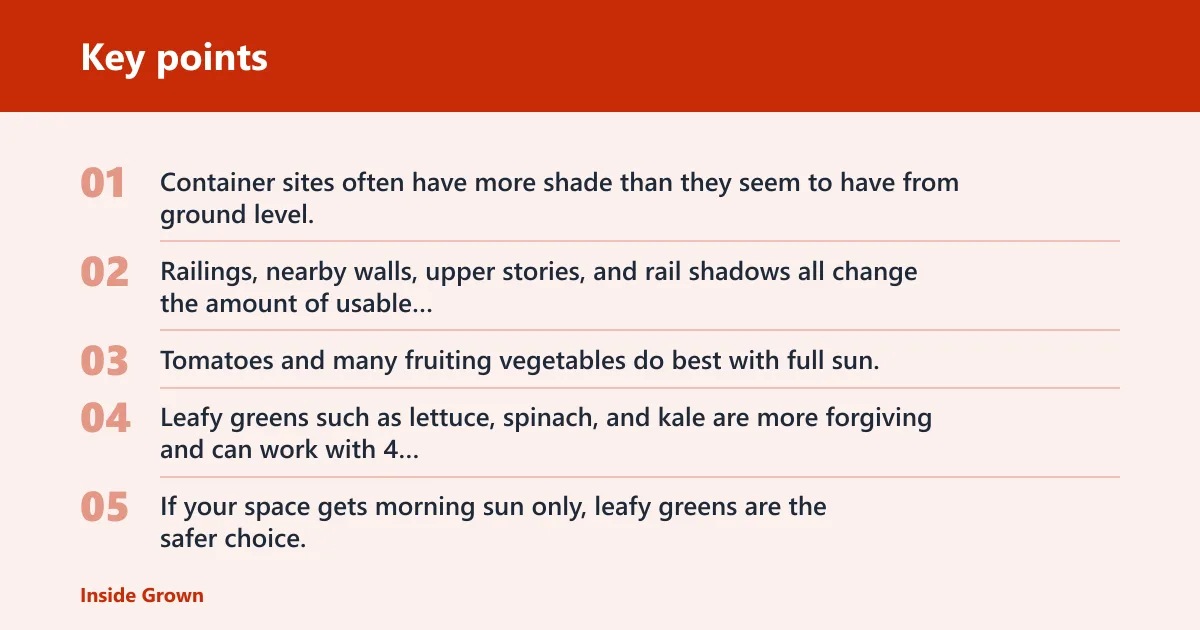
Container sites often have more shade than they seem to have from ground level. Railings, nearby walls, upper stories, and rail shadows all change the amount of usable light.
Full sun crops versus partial-sun crops
Tomatoes and many fruiting vegetables do best with full sun, which means the 6 to 8 hour range. Leafy greens such as lettuce, spinach, and kale are more forgiving and can work with 4 to 5 hours of sun.
If your space gets morning sun only, leafy greens are the safer choice. If your space gets long afternoon sun and heats up hard, tomatoes may work better if the pot is large enough and the watering rhythm stays steady.
Why patios and balconies change light quality
Patios and balconies can receive strong direct sun, but the light may shift across the day. A railing or overhead cover can turn a bright area into partial sun for part of the day, so count actual direct sun hours rather than assuming the space is sunny.
Heat also matters. A container on concrete or a dark deck surface can get much hotter than the surrounding air, which makes the pot dry faster and increases stress on roots and leaves.
What to do if your site gets less than 6 hours
If your space gets less than 6 hours of direct sun, start with leafy greens and herbs instead of tomatoes. They are more likely to give a good return in partial-sun conditions and are easier to manage while you learn the rest of container care.
You can also place pots where they get the longest light window, even if that means moving them once or twice a day. That small adjustment can make a usable spot much better for growth.
Watering container plants without guessing
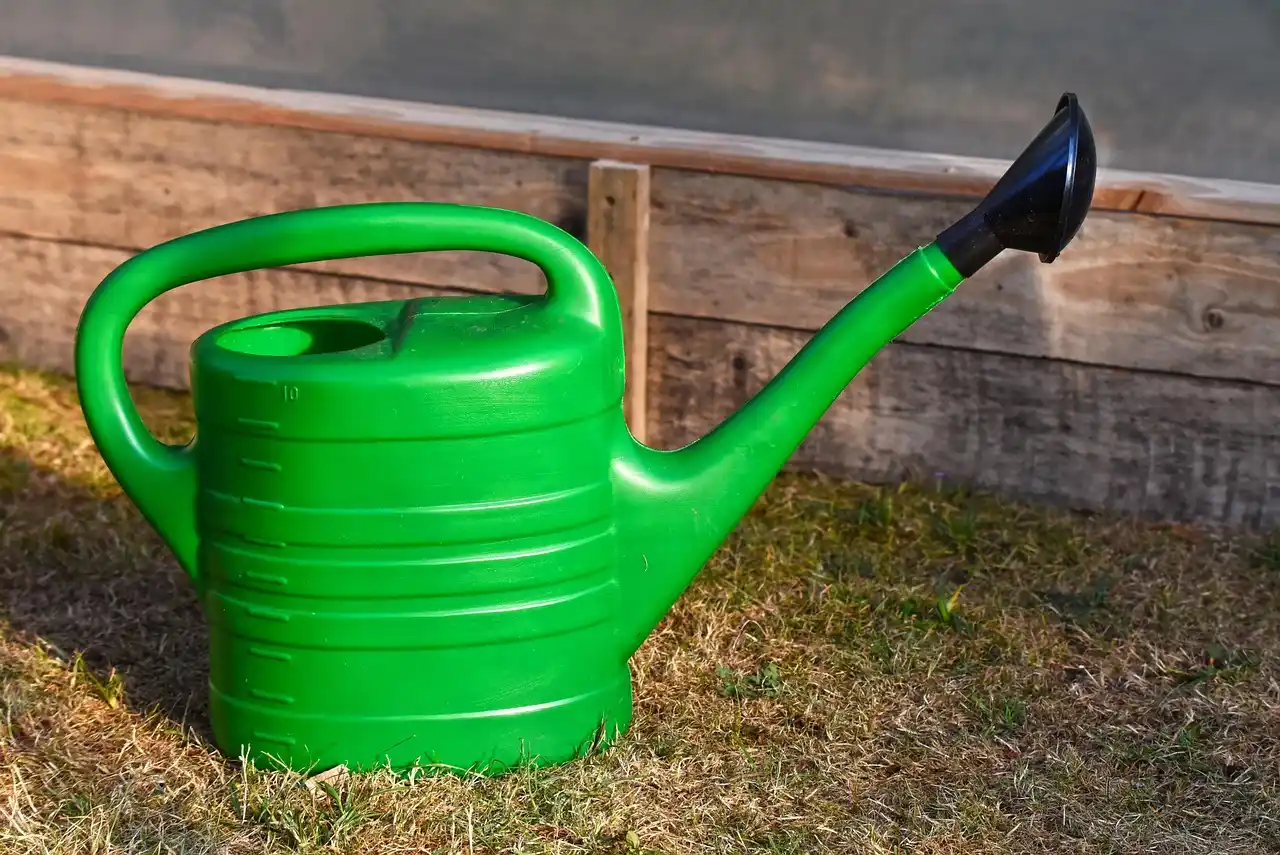
Container gardening requires more frequent watering than raised beds or in-ground gardens because pots dry out faster. The goal is consistent moisture, not constant sogginess. A dry pot is a problem, but an overwatered pot is a problem too.
How often you water depends on pot size, crop, weather, and material. Small containers and hot patios need water more often than large, shaded containers.
How often pots usually need water
There is no fixed calendar for container watering. In hot, windy, or sunny weather, some pots need water every day. In cooler or cloudy weather, they may need it less often. The key is to check the soil rather than water on autopilot.
Water until moisture reaches the root zone and a little excess drains out of the bottom, then wait until the mix begins to dry at the top before watering again.
How to check moisture before watering
Use your finger to check the top layer of mix. If the surface is dry but the soil a little deeper still feels cool and moist, you can wait. If the mix feels dry several inches down, it is time to water.
Another sign is container weight. A freshly watered pot feels heavier than a dry one, and the difference becomes easy to notice after a few checks. That helps when you have several pots with different crops and sizes.
What overwatering looks like
Overwatering often shows up as yellowing leaves, soft growth, slow growth, or a pot that stays wet for too long. If drainage holes are blocked or the mix is too dense, the roots may sit in soggy conditions and lose access to air.
Say your lettuce is in a 12-inch pot on a shaded balcony and the soil still feels wet two days after watering. The problem may be drainage, not just the amount of water you used. Check the holes and the mix before watering again.
Container starter matrix
This starter matrix gives a simple first-pass match between crop, pot size, sun, and watering. It is meant to help beginners buy the right container before planting, not after a crop has already outgrown the pot.
| Crop | Minimum container size | Sun requirement | Watering frequency | Beginner difficulty |
|---|---|---|---|---|
| Lettuce | 12-inch pot; a few plants | 4 to 5 hours direct sun is workable | Often every 1 to 2 days in warm weather | Easy |
| Spinach | 12-inch pot | 4 to 5 hours direct sun is workable | Keep evenly moist; check often | Easy |
| Kale | 12-inch pot | 4 to 6 hours direct sun | Water when top mix starts to dry | Easy |
| Herbs | 12-inch pot for compact herbs | 6 to 8 hours direct sun preferred | Moderate; let surface dry slightly | Easy |
| Tomatoes | At least a 5-gallon container | 6 to 8 hours direct sun | Frequent; may need daily checks | Moderate |
Troubleshoot common container problems
Most container failures come from the same few causes: poor drainage, too little root space, too much water, or heat stress. If you correct those early, the plant often recovers faster than if you keep adjusting fertilizer or changing crops.
Fix poor drainage before it causes root rot
Start by checking the drainage holes. If water pools at the bottom or drips out very slowly, the mix may be too dense or the holes may be blocked. Raise the pot slightly so water can move out freely and do not let it sit in standing runoff.
If the potting mix stays wet for days, repot into a draining container mix made for pots. Root rot risk rises when roots stay wet and airless.
Handle salt buildup in pots
Salt buildup can happen when fertilizer and tap water minerals collect in a container over time. White crust on the soil surface or pot rim is a common clue. The fix is to flush the pot with water until excess drains out, then let it drain fully.
Use fertilizer lightly at first, especially in small pots. A container has less buffer than a garden bed, so buildup shows up faster.
Reduce heat stress on patios
Patio heat stress shows up when leaves wilt in strong sun even though the soil is still damp. Dark containers, concrete surfaces, and reflected heat can push the root zone higher than the air temperature around it.
Move pots off hot concrete if possible, group containers so they shade each other a little, and choose larger pots when you can. Bigger pots hold moisture longer and give roots more protection from sudden heat.
Frequently asked questions
What vegetables grow best in containers for beginners?
Lettuce, spinach, kale, tomatoes, and herbs are the easiest starting crops for container gardening beginners. Leafy greens handle less sun than most vegetables, while tomatoes need more room and more sun. Match the crop to the pot size first, then place it in the sunniest practical spot.
How big should a container be for tomatoes?
Tomato plants generally need at least a 5-gallon container, and larger tomato varieties do better in bigger pots. A small decorative planter usually dries too fast and crowds the roots. Choose a container with drainage holes and enough soil volume to hold moisture between waterings.
What potting mix should I use for container gardening?
Use a draining potting mix made for containers, not garden soil. The mix should support root air access and should not remain soggy after watering. Combined with drainage holes, it helps lower the chance of root rot and makes watering more predictable in pots.
How often should I water container plants?
Water container plants more often than raised-bed or in-ground plants, because pots dry out faster. Check the soil before watering instead of using a fixed schedule. In hot weather, some containers need daily checks, while cooler conditions may stretch the interval longer.
Do container gardens need drainage holes?
Yes. Container gardens need drainage holes to let excess water escape and reduce root rot risk. Without holes, water can pool around the roots and keep the mix too wet. That is one of the fastest ways to lose a plant in a pot, especially after heavy watering.
Can I grow vegetables in pots on a patio?
Yes. Container gardening works on patios, decks, balconies, and other small spaces. Check sun, weight, drainage, and water access first. A patio with 6 to 8 hours of direct sun suits more crops, while partial sun is better for leafy greens.