Gardening techniques for clay soil improvement that work
For lighter clay, top-dressing with a couple of inches of compost each year can help; for heavier clay, raised beds or broadforking plus mulch may be more practical, and it’s best not to dig it when wet. Ignore that, and roots suffocate, water sits on the surface, and beds stay cold and unworkable for weeks. I use the same rule in my own beds: start with drainage, then match the fix to how bad the clay is. This guide shows how to choose clay-soil fixes by severity and season, with practical steps for beds, borders, and small vegetable plots.
This guide is part of our Gardening techniques series.
What makes clay soil hard to garden in?
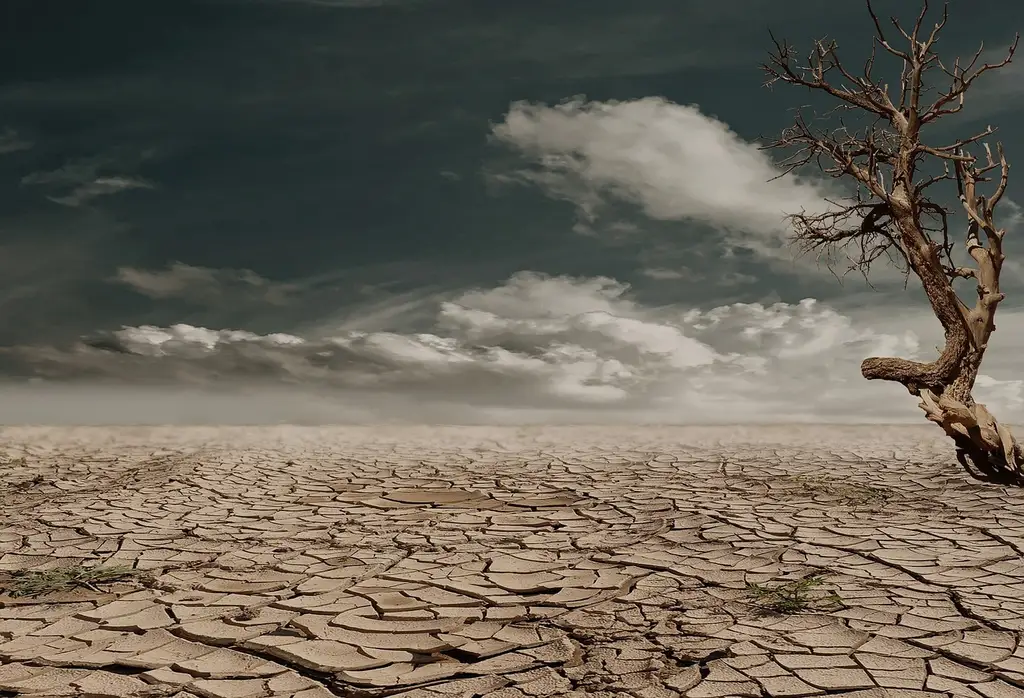
Clay soil has the smallest and densest particles among major soil types. Those fine particles pack tightly, drain slowly, and compact easily under foot traffic or repeated tillage. The upside is that clay can hold onto nutrients despite drainage problems, so the goal is structure improvement, not replacement.
How clay particles affect drainage and compaction
When clay particles sit close together, water moves through slowly and air spaces shrink. That is why clay can stay cold, slick, and sticky after rain. It also means roots have a harder time pushing through dense zones, especially where beds are walked on or worked while wet.
Why clay can be fertile yet still hard to work
Clay often stores nutrients well, but plant roots cannot use those nutrients if oxygen is limited or water sits around them. Fertility alone does not fix the structure. A clay bed can feed plants and still be a poor root zone until air space, aggregation, and drainage improve.
What signs tell you the soil needs structure work, not replacement
If the soil forms smooth ribbons when squeezed, stays shiny when smeared, and turns hard after drying, it needs structure work. If water pools after rain, digging resistance stays high, or seedlings stall in cold, damp ground, the problem is compaction and drainage, not missing topsoil.
According to How to Amend & Improve Clay Soil – In 4 Simple Steps — Winter rye can germinate in soil as cold as 33–34°F.
What should you do first in heavy clay soil?
Start by checking drainage, stickiness, and compaction before changing the bed. If the soil is wet, sticky, or smeared into a slick mass, stop working it. Match the first fix to severity: light clay can take top-dressing, while severe clay often needs beds, aeration, and a drainage plan.
Check drainage, stickiness, and compaction before touching the bed
After rain, watch how long water sits on the surface. Avoid areas where water pools after rain because wet soil can cause root rot. If a shovel meets heavy resistance, the soil cakes in chunks, or footprints linger, the site needs loosening and access control before planting.
Match the first fix to severity: light, moderate, or severe clay
Light clay usually needs regular organic matter and mulch. Moderate clay often responds well to loosening with a broadfork, digging fork, or plug coring aerator before adding amendments. Severe clay, especially where drainage is poor, often calls for raised beds, contouring, and a longer-term plan rather than a single round of digging.
Choose a short-term fix or a multi-season plan
If the bed must be planted this season, use the least disruptive fix that improves air and drainage now. If the site can wait, add cover crops, mulch, and repeated aeration over more than one season. Clay changes faster when traffic stops and wet digging stops too.
Compost, expanded shale, or both?
Well-rotted compost is the right first step for many clay beds, especially when the soil is only moderately dense. Expanded shale makes more sense where clay is heavy, drainage is poor, and lasting air space matters more than adding more organic matter. In severe clay, I use both in the same planting layer.
When well-rotted compost is the right first step
Compost should be dark, crumbly, and earthy-smelling before it goes into clay. Add it in real depth, not a token sprinkling. For light clay, top-dressing 1–2 inches each year can help build aggregation near the surface. Tiny amounts disappear fast and rarely change the root zone.
When expanded shale makes more sense than more organic matter
Expanded shale is a long-lasting inorganic amendment that creates air pockets, improves drainage and aeration, and does not decompose. It is recommended as a primary amendment for dense clay. The guide recommends spreading 1–3 inches of expanded shale, then mixing it into the amended layer at about 20–30% by volume.
How deep to work amendments into clay soil
Work amendments only into the planting layer you intend to use. Shallow beds need shallow improvement; deep root crops need deeper loosening. Mixing compost or shale too thinly on the surface rarely changes drainage below. The point is to improve the active root zone, not stir the whole yard.
How do you loosen clay without making it worse?

Loosen clay when it is moist, not waterlogged, and stop if it smears or clumps into slick ribbons. A broadfork, digging fork, or plug coring aerator can open compacted soil without full-scale disturbance. These tools help roots and water move better while protecting existing structure.
Using a broadfork for low-disturbance aeration
A broadfork is a manual aeration tool for opening compacted beds with low disturbance. Push the tines in, rock the handles back, and lift without flipping the soil. It fits best in vegetable beds or borders that need drainage help but can be improved without a full reset.
Using a digging fork for small beds and tight spots
A digging fork works well for smaller areas, corners, and narrow borders. It loosens clay without the aggressive mixing that can create more clods. Lift and wiggle the fork through the bed in a pattern that opens channels, then leave the soil surface intact as much as possible.
When a plug coring aerator helps most
A plug coring aerator is useful when compaction is broad and repeated traffic has sealed the surface. It removes cores and opens paths for water and air. It is a practical choice for larger beds, lawn-to-garden conversions, and sites that need repeated relief without deep inversion.
Why to avoid working soil when it is too wet
Wet clay deforms instead of fractures. That means tools polish the particles together, compaction worsens, and drainage can get even slower. If a handful stays glossy and sticky after squeezing, wait. One careless pass can undo months of improvement.
Can cover crops loosen compacted clay?
Yes, cover crops can loosen compacted clay over multiple seasons, especially when combined with aeration and mulch. They do not fix a badly sealed bed overnight. Their roots open channels, add biomass, and improve structure gradually, so they work best as a planned seasonal step rather than a rescue.
Winter rye for fall sowing and spring termination
Winter rye is a cold-hardy cereal cover crop that can germinate in soil as cold as 33–34°F. Sow it before fall frost, let it build roots and biomass, then terminate it before spring planting. It is a strong choice where winter protection and soil binding matter.
Daikon radish for deep rooting and cold-region use
Daikon radish has a deep taproot and is often called tillage radish. Its roots can reach 12–20 inches long and 2–4 inches wide, which helps fracture compacted clay. In cold regions it often winter-kills, leaving channels behind for spring planting and water movement.
Crimson clover for nitrogen and mild climates
Crimson clover is a legume cover crop that adds nitrogen and fits best in milder zones. It should be terminated at early bloom. Use it where winter is gentler and where the goal is both soil cover and fertility support, not only physical loosening.
Should you till clay soil or avoid tilling?
Tilling is not the default answer for clay. One-time tilling can be a decent aerator if the soil is moist, not waterlogged, but repeated tillage often creates clods, breaks structure, and invites more compaction later. Low-disturbance methods usually hold up better over time.
When tilling helps in a one-time reset
In a severely neglected bed, one light till can open the soil enough to start a garden if it is moist and workable. It may help as a reset before adding compost, shale, or a cover crop. The limit is simple: use it once, then shift to gentler maintenance.
When tilling causes more compaction and clods
If clay is too wet, tilling smears it. If it is too dry, tilling shatters it into hard clods that linger for months. Repeated tillage also destroys the gains made by roots, organic matter, and aeration. The result is often a bed that looks loose for a week and then seals again.
Why no-till or low-disturbance methods hold up better over time
No-till and low-disturbance methods protect soil pores and keep surface structure from collapsing. Mulch, cover crops, and spot aeration improve the bed without constant churn. Clay still needs intervention, but it does better when the soil is opened, fed, and left alone more often than it is turned.
Decision matrix: which clay fix fits your bed?
The best first intervention depends on severity, drainage status, budget, and time horizon. Light clay with decent drainage can often be improved with compost and mulch. Heavy, wet clay usually needs raised beds, contouring, and aeration first. Use the matrix below before reaching for a shovel or tiller.
| Severity | Drainage status | Season | Best first intervention | Time horizon |
|---|---|---|---|---|
| Light | Drains in a day or two | Spring or fall | Top-dress 1–2 inches of compost and mulch | One season to start, ongoing yearly |
| Moderate | Slow drainage, no standing water | Moist fall or spring | Broadfork or digging fork, then add compost or expanded shale | One to two seasons |
| Heavy | Pools after rain | Before planting season | Raised beds, contouring, drainage correction, then amendment | Multi-season |
| Severe compaction | Hardpan or foot traffic zone | Fall and spring | Plug coring aerator or broadfork, plus cover crop | Several seasons |
What to do and what to avoid on vegetable beds, borders, and paths
Vegetable beds need the most drainage and least traffic, so start with raised beds or a 4×4 or 4×8 raised bed for beginners. Ornamental borders can tolerate slower improvement through mulch, aeration, and cover crops. Path areas should be surfaced, not repeatedly dug, because walking on wet clay keeps the compaction cycle going.
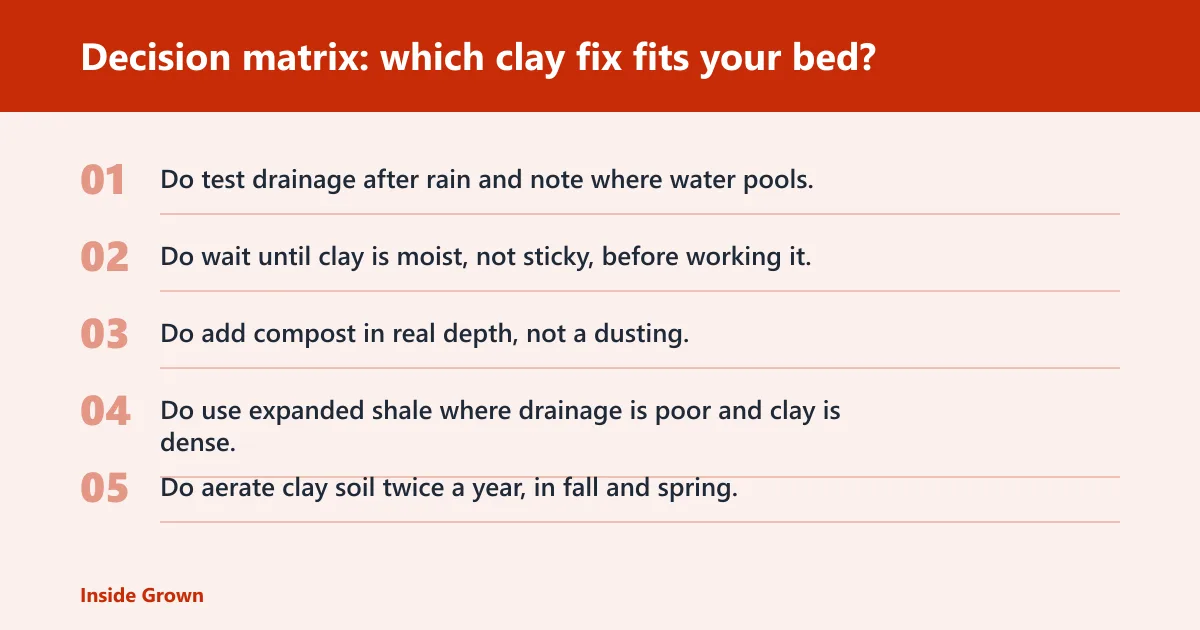
One-page checklist: do and do not
- Do test drainage after rain and note where water pools.
- Do wait until clay is moist, not sticky, before working it.
- Do add compost in real depth, not a dusting.
- Do use expanded shale where drainage is poor and clay is dense.
- Do aerate clay soil twice a year, in fall and spring.
- Do use mulch and cover crops to protect the surface.
- Do not walk on wet beds.
- Do not till as a default long-term fix.
- Do not add only a thin layer of organic matter and expect quick change.
- Do not keep digging if the soil smears into a slick mass.
Frequently asked questions
How do I improve clay soil for gardening?
Start with drainage and compaction, then choose the lightest fix that matches the site. For mild clay, add well-rotted compost and mulch. For heavier clay, use a broadfork, digging fork, or plug coring aerator, and consider raised beds if water pools after rain.
What is the best amendment for heavy clay soil?
For dense clay, expanded shale is recommended as a primary amendment because it creates air pockets and does not break down. Compost still matters, especially for biology and aggregation, but shale is often better when drainage is the main problem and structure needs lasting support.
Should I till clay soil or avoid tilling?
Avoid making tilling your default. One-time tilling can help if the soil is moist and not waterlogged, but repeated tillage can worsen clods and compaction. Low-disturbance tools, mulch, cover crops, and careful traffic control usually hold structure better over time.
How deep should I amend clay soil?
Amend the active root zone rather than the whole profile. Surface beds often respond to a few inches of compost or expanded shale worked into the planting layer. Deep-rooted crops or badly compacted beds may need deeper loosening first, followed by amendment in the same zone.
Can cover crops loosen compacted clay?
Yes, but slowly. Winter rye, daikon radish, and crimson clover all help in different ways. Rye builds biomass, daikon drills deep channels, and crimson clover adds nitrogen in milder climates. They work best over multiple seasons, not as a fast fix for waterlogged clay.
Do raised beds help with clay soil drainage?
Yes. Raised beds lift roots above the wettest layer and are often the fastest fix for poor infiltration. For beginners, a 4×4 or 4×8 raised bed is a manageable start. They are especially useful where water pools after rain or the site stays cold and sticky.
How often should clay soil be aerated?
Aerate clay soil twice a year, in fall and spring. Use a broadfork, digging fork, or plug coring aerator when the soil is moist but not soggy. That timing helps open channels before winter rains and again before the main growing season without worsening compaction.