Gardening Techniques for Summer Maintenance in Home Gardens
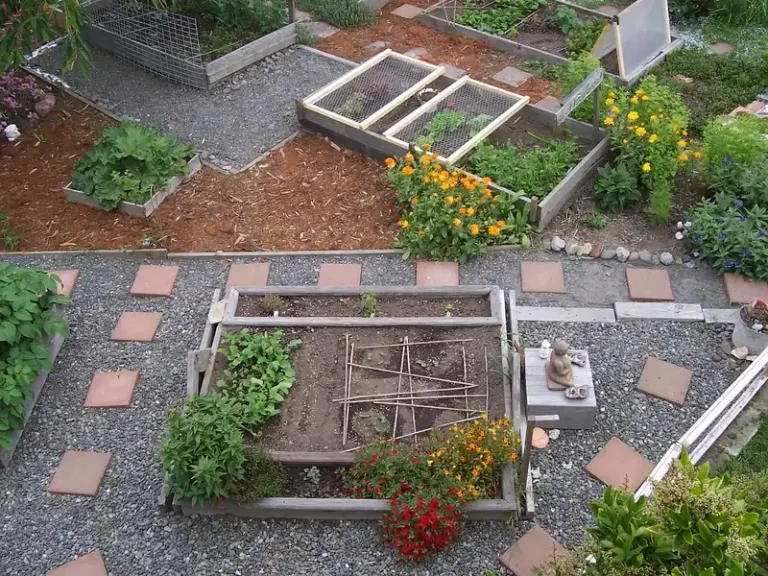
Put summer garden maintenance in this order: water containers and young vegetables first, then mulch beds, deadhead annuals, and inspect heat-stressed plants every 2–3 days. Skip that order, and you lose water, yield, and flowers fast in hot weather. This guide ranks tasks by plant type, heat, and water demand so you know what to do first.
Summer maintenance priorities


Summer care runs from late June through August, when heat load, water efficiency, soil conditions, and pest pressure all rise together. The quickest way to protect a home garden is to rank tasks by risk: hottest exposures first, thirstiest plants first, then everything else. Above about 85°F daytime temperatures, soil moisture loss tends to speed up through evapotranspiration.
Sort tasks by plant type
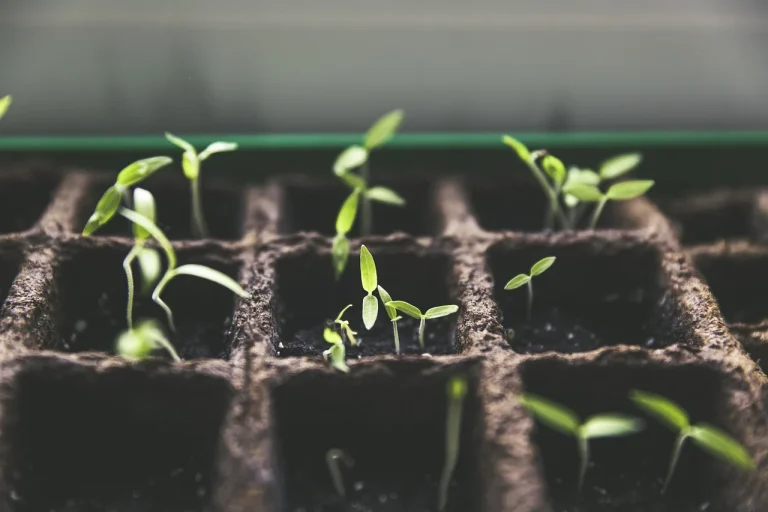
Start with new transplants, containers, and vegetables in active fruiting or flowering. These lose water fast and show damage quickly. Established perennials, woody ornamentals, and mulch-covered beds usually fall lower on the list unless they are newly planted or already showing stress.
Sort tasks by heat level
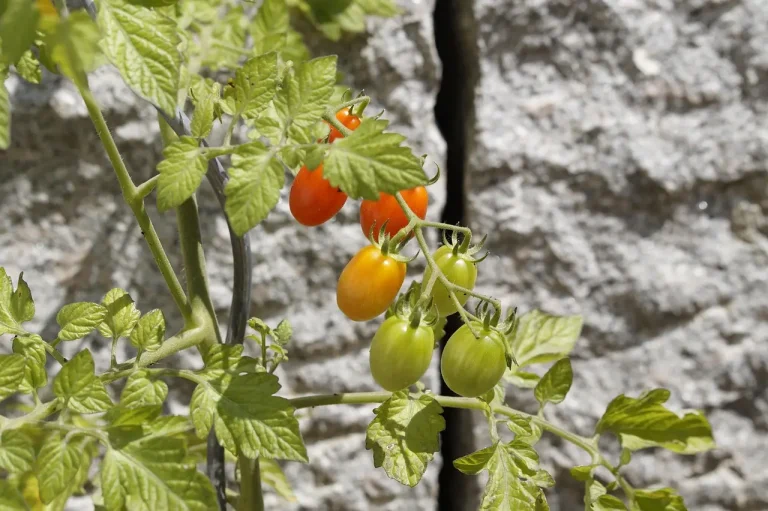
When the air is above 95°F, midday wilt in tomatoes and peppers is common. Heat stress and water stress can look similar during the day, so evening recovery matters more than the noon appearance. If the plant perks back up by evening, heat is the likely driver. Persistent wilt after sunset points to a watering need.
Sort tasks by water demand
Containers and raised beds dry faster than in-ground beds because they hold less water and warm more quickly. New plantings need more frequent attention than established perennials, which can tolerate 2- to 3-week dry stretches once rooted in. First-season roots are more vulnerable, so they stay near the front of the line.
What to do first when time is short
- Water containers and newly planted vegetables or ornamentals.
- Check leaf undersides on hot, dry plants for spider mites.
- Add mulch where bare soil is exposed.
- Deadhead annuals and remove spent blooms.
- Pause high-nitrogen feeding if temperatures are climbing past 90°F.
Suppose you have 20 minutes before work on a 94°F morning. Water the tomato container, then the newest basil transplants, then check the pepper leaves for mites. The in-ground perennial border can wait if it still has mulch and was watered deeply within the last week.
Summer maintenance triage table
| Plant type | Heat-risk signal | Immediate action | When to leave it alone |
|---|---|---|---|
| Vegetables | Midday wilt, blossom drop, cracked fruit, sunscald | Water at the root zone; shade the most exposed fruit if needed; inspect for pests | Evening recovery after a hot day, with firm soil moisture below the surface |
| Herbs | Soft growth, leaf scorch, early bolting in basil-like tender herbs or cool-season herbs | Harvest lightly, water deeply, and move containers out of the harshest afternoon sun if possible | Established woody herbs with steady growth and damp soil under mulch |
| Annual flowers | Fading blooms, droop by afternoon, fewer new buds | Deadhead spent flowers, water thoroughly, and check container mix for drying | Plants with fresh buds, good color, and morning turgor |
| Established perennials | Light droop only during peak heat | Observe first, then water only if wilt persists after sunset | Plants mulched and rooted in for more than one season |
| New transplants | Wilting, leaf roll, stalled growth, soil pulling away from the root ball | Water to settle the root zone and check daily in extreme heat | None until roots have had time to expand into surrounding soil |
| Raised beds | Surface crusting, fast dry-down, uneven watering | Use drip or soaker irrigation and mulch the surface | Only when soil stays evenly moist below the top layer |
| Containers | Rapid wilt, pale foliage, dry mix that pulls from the pot wall | Water until the root ball is fully rewet; move small pots out of afternoon sun | Only when the pot still feels heavy and the mix is damp below the top inch |
How should you water in hot weather?
Water based on root demand, not the clock. New plantings need the equivalent of 1 inch per week, while established perennials can handle 2- to 3-week dry stretches once rooted in. In hot weather, deep, infrequent irrigation is usually better than shallow daily watering because it pushes roots deeper and wastes less water to evaporation.
Established plants versus first-year plants
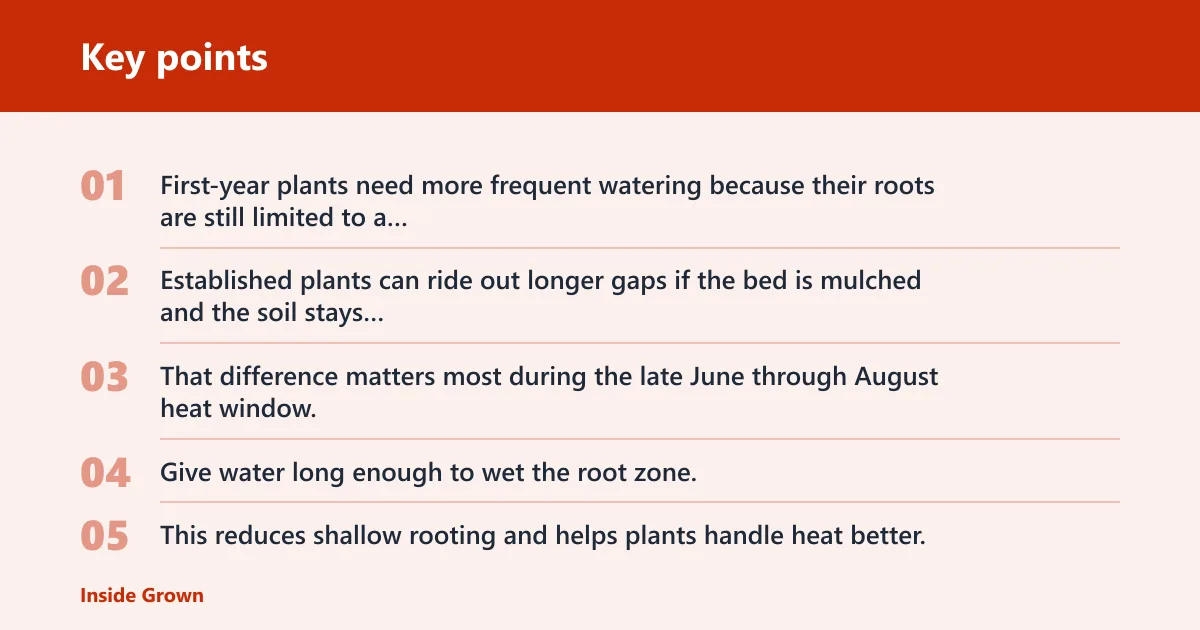
First-year plants need more frequent watering because their roots are still limited to a small volume of soil. Established plants can ride out longer gaps if the bed is mulched and the soil stays shaded. That difference matters most during the late June through August heat window, when water loss often accelerates.
Deep, infrequent watering
Give water long enough to wet the root zone, then wait until the soil begins to dry again before repeating. This reduces shallow rooting and helps plants handle heat better. Shallow splashing at the surface cools the top layer for a short time, but it does not build drought tolerance.
Drip irrigation and soaker hoses
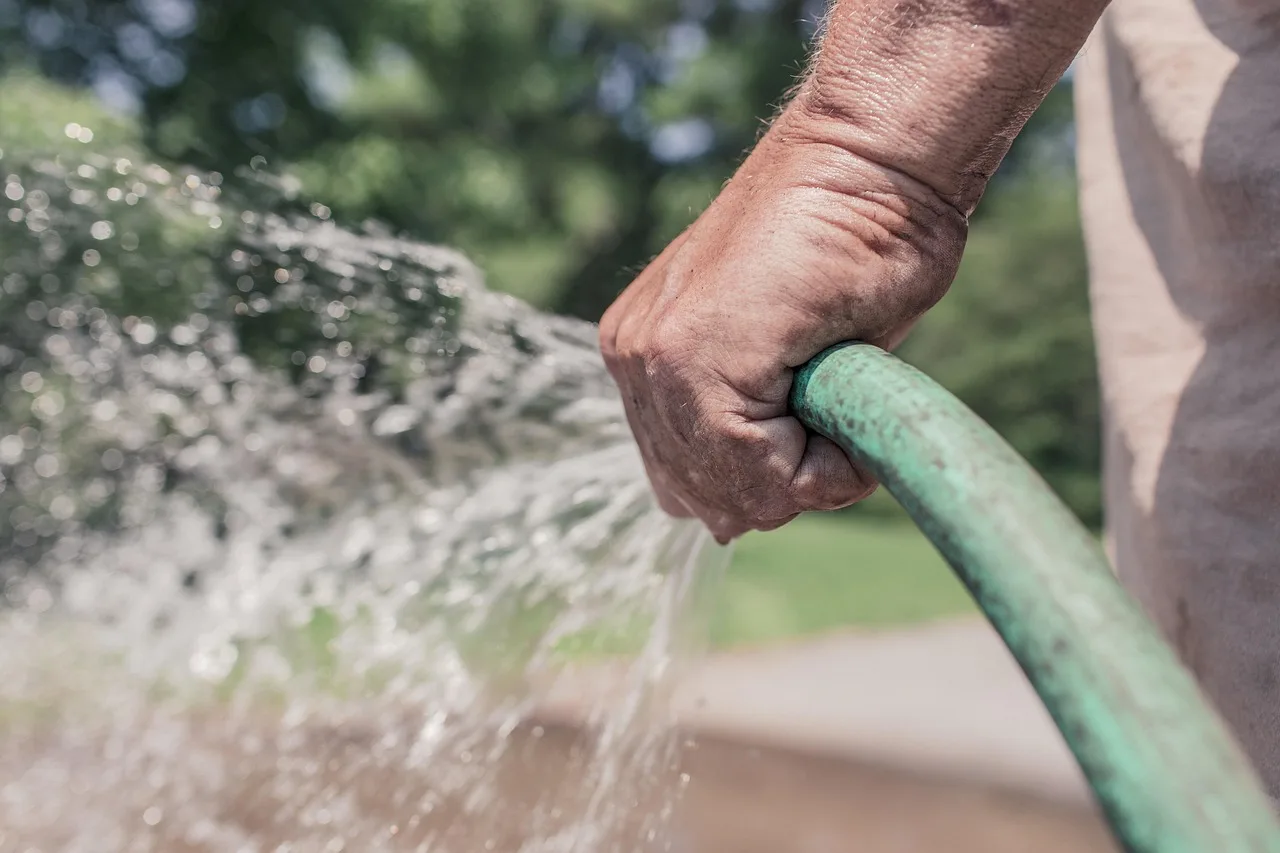
Drip irrigation delivers water to the root zone, reduces foliar disease pressure, and cuts evaporative loss. Soaker hoses do the same job in a simpler layout and are a better fit than overhead sprinklers in summer heat. Both work well for deep, infrequent irrigation in beds, borders, and rows.
How to judge water need after sunset
Check plants after sunset or in the evening, not at midday. Heat stress can fade as temperatures drop, but true water stress does not. If a plant remains wilted after sunset, the root zone is too dry or unevenly watered. If it recovers, hold off and reassess the next day.
Picture a 24-inch container of tomatoes on a patio in full sun. At 3 p.m., the leaves sag and the pot feels light. If the plant looks normal again by dusk, the problem is heat stress. If the leaves stay limp after sunset, water is overdue.
What mulch and soil checks matter most?
Mulch and soil checks are high-value summer tasks because they reduce stress before a plant shows it. Organic mulch at a 3-inch layer can lower root-zone soil temperature by 10 to 25°F. That matters when daytime temperatures run high and bare soil loses moisture quickly.
Organic mulch at 3 inches
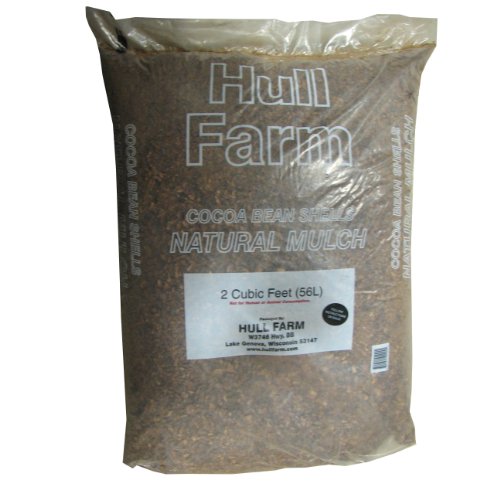
Use a 3-inch layer of organic mulch around vegetables, herbs, annuals, and ornamentals where soil is exposed. Keep mulch pulled back from stems and crowns. The goal is to shade the soil, slow evaporation, and keep the root zone cooler without trapping moisture against the plant.
Wood chips, straw, and shredded bark
Straw, shredded bark, and wood chips are standard organic choices. Straw suits vegetable rows and easy-to-renew beds. Shredded bark and wood chips work well around shrubs, perennials, and mixed borders. Choose based on the planting style, but keep the depth at 3 inches for the expected soil-temperature benefit.
Soil temperature at 4 inches
Soil above 85°F at 4 inches slows beneficial microbial activity and makes nutrient cycling less efficient. That is one reason summer feeding often disappoints in hot soil. A quick soil thermometer check in the hottest beds can tell you more than the surface looks alone.
When to leave mulch undisturbed
Leave mulch in place when it is already at depth, intact, and free of pests or rot. Do not keep raking it back to inspect the soil unless you are checking moisture or root damage. Disturb it when you need to water, refresh thin spots, or pull it away from a stem that has been buried too close.
When should you fertilize, prune, or deadhead?
Summer maintenance includes deadheading and selective pruning, but timing matters. The main rule is simple: avoid pushing soft growth when heat is already forcing plants to spend more water. High-nitrogen fertilizer should be paused when temperatures exceed 90°F because it can drive lush growth that is more drought-susceptible.
Pause high-nitrogen fertilizer above 90°F
Skip high-nitrogen feeding during heat spikes. Tender new growth dries out fast, and the plant may need more water than the root system can supply. If fertilizer is on the schedule, wait for cooler weather or use a light correction only when the plant clearly needs it and the soil is moist.
Summer pruning limits
Use summer pruning for dead, damaged, or congested growth, and for shaping after bloom on plants that tolerate it. Avoid heavy cuts during a heat wave. Removing too much leaf area raises sun exposure on stems and fruit and can increase stress faster than it solves a shape problem.
Deadheading spent flowers
Deadheading spent flowers can help annuals keep producing and reduces wasted seed set on the plant. It is a good summer task when the bed is already watered and the plants are not heat-shocked. Deadheading pairs well with a quick pest check because it puts you close to the foliage anyway.
What to avoid during heat spikes
Avoid major pruning, hard fertilizing, and any task that strips shade from fruit or tender stems during the hottest stretch of the day. If a plant already has scorched leaves or collapsed growth, the safer move is to water, shade if possible, and wait for the heat to pass before making bigger cuts.
How do you spot heat stress and pests early?
Heat stress often shows up before outright failure, so the goal is to catch it early. Midday wilt, leaf scorch, sunscald, and cracked fruit all point to different pressure points in the garden. Hot, dry weather also favors spider mites, which can move from nuisance to defoliation-level pressure within 10 to 14 days.
Midday wilt versus true drought stress
Midday wilt on a day above 95°F can be a normal heat response in tomatoes and peppers. The key question is whether the plant recovers by evening. If it does, keep monitoring. If it stays limp after sunset, the root zone needs water and probably more even irrigation than it has been getting.
Spider mite checks on leaf undersides
In hot, dry weather, inspect the undersides of leaves, especially on beans, cucumbers, roses, and other stressed plants. Spider mites often begin where foliage is dusty and dry. A quick underside check every few days can catch them before their numbers climb over 10 to 14 days.
Leaf scorch, sunscald, and cracked fruit
Leaf scorch usually signals heat and water imbalance at the leaf edge. Sunscald appears on exposed fruit and stems that lost leaf cover. Cracked fruit often follows uneven moisture, especially after a dry spell ends with a heavy watering or rain event. These are all clues to adjust irrigation and shade exposure, not reasons to flood the bed.
What to do after a heatwave
After a heatwave, inspect every high-value plant: containers, new transplants, fruiting vegetables, and anything that sits in reflected heat from pavement or walls. Refill mulch gaps, recheck the drip line or soaker hose, and prune only the tissue that is clearly dead or broken. A common first-timer mistake is to cut and fertilize immediately after a heat wave, which can compound stress.
Frequently asked questions
How do I keep my garden healthy during summer maintenance?
Start with the plants most likely to fail first, such as containers, new transplants, and fruiting vegetables. Water the root zone, refresh mulch to about a 3-inch layer where soil is exposed, and inspect stressed leaves every 2–3 days. Deadhead annuals and pause high-nitrogen fertilizer when heat rises above 90°F.
How often should I water home gardens in hot weather?
There is no single schedule that fits every bed. Newly planted perennials need about 1 inch per week, while established perennials can handle 2- to 3-week dry stretches. Containers and raised beds usually need closer attention because they dry faster, especially during late June through August heat.
What is the best mulch for summer garden maintenance?
Organic mulch is the best all-around choice for summer because it shades soil and cuts evaporation. Straw, shredded bark, and wood chips are all useful, depending on the bed. Use a 3-inch layer and keep it off stems. That depth can lower soil temperature by 10 to 25°F.
When should I prune plants in summer?
Prune lightly for dead, damaged, or congested growth, and deadhead spent flowers as part of normal upkeep. Avoid major pruning during heat spikes, especially when temperatures are above 90°F. Heavy cuts can expose stems and fruit to more sun and force the plant to spend water on recovery.
How do I stop heat stress and midday wilt in vegetables?
Use drip irrigation or soaker hoses to keep the root zone evenly moist, mulch to reduce soil heating, and shade exposed fruit if sunscald is showing up. If tomatoes or peppers wilt at midday above 95°F but recover by evening, that is heat stress. Persistent wilt after sunset means they need water.
What should I do about pests in hot, dry weather?
Check the undersides of leaves for spider mites, especially on plants already under drought pressure. They can escalate within 10 to 14 days, so early inspection matters. If the infestation is light, increase watering consistency, reduce dust, and remove heavily damaged leaves before the population spreads.