Is Rubber Landscape Border Safe for Vegetable Gardens?
Rubber edging is usually acceptable around vegetable gardens only when it stays outside the planting soil and away from edible root zones. The bigger concerns are recycled-tire material, direct soil contact, heat, and crumbly aging. Extension guidance and EPA-facing discussions of tire-derived materials consistently treat material disclosure and placement as the main safety filters; the science on leaching and runoff is still not fully settled, so cautious placement matters most.
Rubber landscape border basics
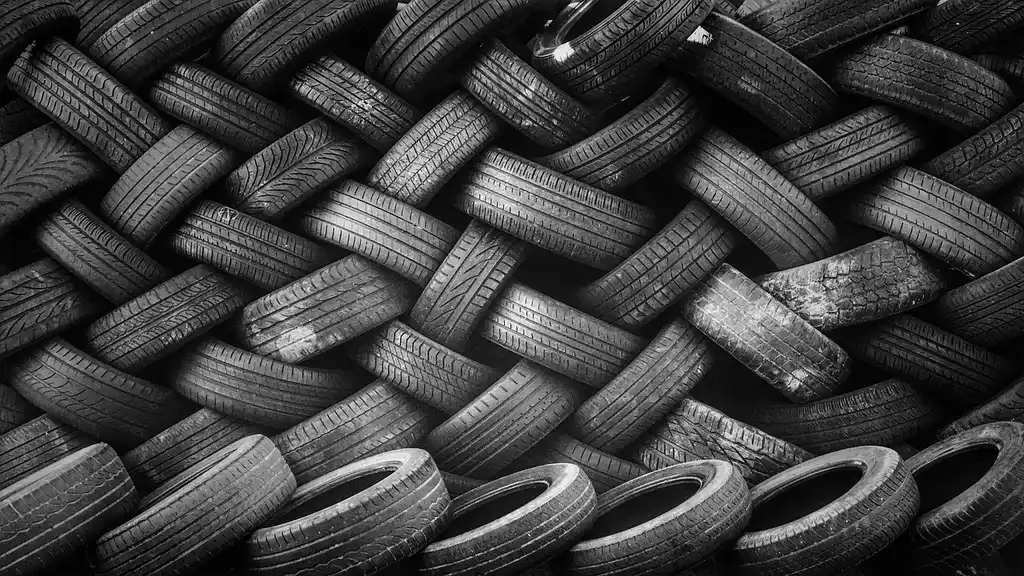


Rubber border edging is a strip used to separate garden areas, hold mulch in place, and keep soil from washing out. The material itself is not the only issue; where it sits relative to edible soil decides whether it is a simple border or a garden-contact material with higher caution.
What rubber edging is made
Rubber edging is usually made from recycled tire rubber or virgin synthetic rubber. That source matters because recycled tire products can contain complex mixtures of tire additives, fillers, and processing chemicals, while virgin rubber may have a clearer ingredient story but still needs disclosure before it is used near food crops.
- Look for the exact material type, not just “rubber.”
- Check whether recycled content is disclosed.
- Note any coating, binder, or pigment if listed.
- If the label is vague, assume the risk profile is uncertain.
Why recycled tire rubber changes the risk picture
Recycled tire rubber deserves extra caution because tires are engineered products, not inert garden materials. Peer-reviewed research on tire wear and recycled-rubber products has found complex chemical mixtures and ongoing uncertainty around the release of compounds over time, especially under heat, abrasion, and moisture. That makes source transparency more important in edible beds.
Heat, weathering, and physical wear can increase particle shedding and surface breakdown. EPA and state-level tire-material guidance generally emphasize proper use and containment, not direct food-soil contact, because the exposure picture is less predictable than with stone or untreated wood.
Is rubber landscape border safe for vegetable gardens?
It can be, but only in limited placements. Rubber edging is most defensible when it stays outside the bed and does not touch planting soil. The safety question changes fast if the edging becomes part of the bed interior, sits under mulch in the root zone, or is buried where moisture and soil can work on it continuously.
Short answer for edible beds
For vegetable gardens, the safest answer is conditional: use rubber edging only as an exterior border, not as a soil-contact layer. If it will line the inside of the bed, sit against edible soil, or function like a buried liner, choose a different material unless the manufacturer provides unusually clear food-garden guidance.
Why direct soil contact matters
Direct soil contact creates the main exposure path. Water moves through the bed, irrigation wets the edging, and soil particles rub against the surface. If the material breaks down, fragments can enter the planting area. That is a much different setup from a border sitting outside the bed wall.
Picture a 12-foot in-ground tomato bed bordered by rubber on the inside edge. Each watering sends splashback against the border, and summer heat keeps the surface warm for hours. That is a far less comfortable setup than the same strip placed outside the bed, where it only separates lawn from walkway.
When the risk is lower
The risk is lower when rubber edging sits beyond the root zone, faces mostly lawn or path traffic, and has minimal contact with mulch or irrigation runoff. It is also lower when the bed is raised and the rubber stays outside the wall, where soil does not press against it and roots are less likely to meet the material.
- Lower risk: outside the wall, away from roots.
- Lower risk: mainly separating lawn from a path or border.
- Lower risk: minimal splashback and limited wet-soil contact.
- Higher risk: inside the bed or buried in planting soil.
What changes the safety risk?
Three factors drive the risk: material source, exposure to sun and heat, and whether the edging touches soil or water. A product that looks stable at installation can age differently after a season of UV exposure, repeated wetting, and freeze-thaw movement. That is why placement and disclosure matter as much as appearance.
Recycled tire rubber vs. virgin rubber
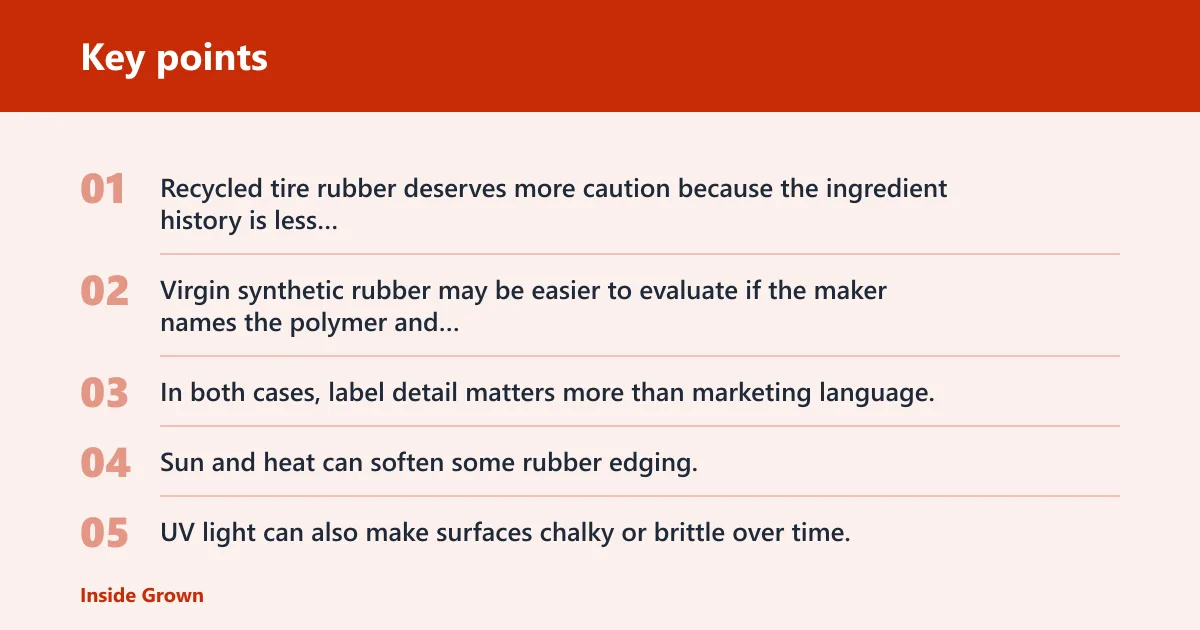
Recycled tire rubber deserves more caution because the ingredient history is less transparent. Virgin synthetic rubber may be easier to evaluate if the maker names the polymer and coating, but it is still not automatically food-safe. In both cases, label detail matters more than marketing language.
Heat, UV exposure, and breakdown
Sun and heat can soften some rubber edging, especially dark material in full afternoon exposure. UV light can also make surfaces chalky or brittle over time. Once the edge becomes crumbly, small pieces can fall into mulch, land on soil, or break loose during weeding and edging maintenance.
A common first-timer mistake is setting rubber edging in a south-facing bed because it looks neat on day one, then ignoring it through a hot season. By late summer, the border can bow outward or shed fine bits where the hose and cultivator pass.
Odor, off-gassing, and crumbly edges
Odor does not tell the whole story, but it is still useful. Strong smell often matters most when the edging is new, tightly enclosed, or heated by direct sun. Off-gassing concerns are highest when the material is fresh and the product offers no disclosure about source, coating, or recycled content.
Crumbly edges are a separate failure mode. If the border sheds particles, those fragments can mix into mulch or soil. That is a nuisance anywhere in the yard, but it is a bigger concern in a food bed where the border sits close to roots and harvest zones.
Mulch, water, and irrigation contact
Mulch contact can hide early damage. A border may look intact until you pull mulch back and find cracking underneath. Water also moves small fragments downhill, especially on sloped beds or where drip irrigation keeps one strip of the border wet week after week.
Keep in mind that edging is meant to help keep mulch and dirt from washing away. If the border itself starts shedding or deforming, it no longer does that job well, and the bed becomes harder to maintain safely.
Can you use rubber edging around raised beds?
Yes, with a narrow use case. Rubber edging is more acceptable around raised beds when it stays outside the wall and outside the soil mass. It is much less suitable as an inside liner or buried contact layer, where moisture, drainage, and plant roots create more exposure and faster wear.
Outside the wall vs. inside the bed
Outside the wall, rubber edging can help define a path, keep mulch in place, and separate lawn from the bed exterior. Inside the bed, it becomes a direct-soil material. That shifts the question from “border material” to “soil-contact material,” which is a much higher bar.
Raised beds also change height and splash patterns. A 10- to 12-inch wall can reduce the chance that soil presses directly against the edging, but only if the border stays beyond the wall. If the product runs along the bed interior, the height advantage disappears.
Soil barrier and drainage concerns
A soil barrier should separate lawn and bed without blocking drainage or trapping water against the wall. Rubber can interfere if it is buried too tightly or wrapped in a way that holds moisture. In vegetable beds, poor drainage matters because wet soil around the border can speed breakdown and root stress.
Do not place edging where it cuts across irrigation flow or creates a puddling point at the base of the bed. If water pools along the border after rain or watering, that is a sign the installation needs rethinking.
Kid and pet exposure near the bed
Kids and pets increase the practical concern because they contact borders, chew loose pieces, and track material into the bed. A crumbly edge at knee height is more likely to be handled, kicked, or pulled. If the border is in a play-heavy area, choose a harder, more stable material.
Rubber border safety table
| Scenario | Risk level | Why it matters | Safer alternatives |
|---|---|---|---|
| In-ground bed edge | Moderate | Can sit close to roots, mulch, and irrigation; heat and UV can speed cracking and crumbly edges. | Untreated wood, stone, steel edging, or a well-drained soil berm. |
| Raised bed outside wall | Low to moderate | Less direct soil contact if the border stays outside the wall and outside splash zones. | Metal edging, stone, or untreated wood if kept clear of soil contact. |
| Mulch path divider | Lower | Mostly separates walking surface from mulch; still exposed to sun and foot traffic. | Steel edging, brick, pavers, or stone restraint. |
| Bed interior liner | High | Direct soil contact raises concern about leachate, abrasion, and fragment shedding into the crop zone. | Food-safe liner only if specified for soil use; otherwise skip rubber entirely. |
| Compost-bin border | Moderate | Warm, moist conditions can increase odor and speed aging; fragments can mix into finished compost. | Metal, stone, or untreated rot-resistant wood. |
What should you buy instead?
For food gardens, the safest choices are usually materials with low contamination risk and clear material disclosure. Metal edging, stone, and untreated wood are easier to trust near edible beds because they do not rely on recycled tire content or uncertain coatings. Composite options can work too, but only when the product clearly states what is in it.
Do not rank options by appearance alone. A dark rubber border may look tidy, but contamination risk is the more important filter in a vegetable bed. If you need a soil barrier, pick a material that stays stable in moisture, sun, and freeze-thaw cycles without shedding into the root zone.
For related guidance, see our pages on raised-bed materials, food-safe mulch, safe garden plastics, and best edging materials for vegetable gardens.
What to look for on a label
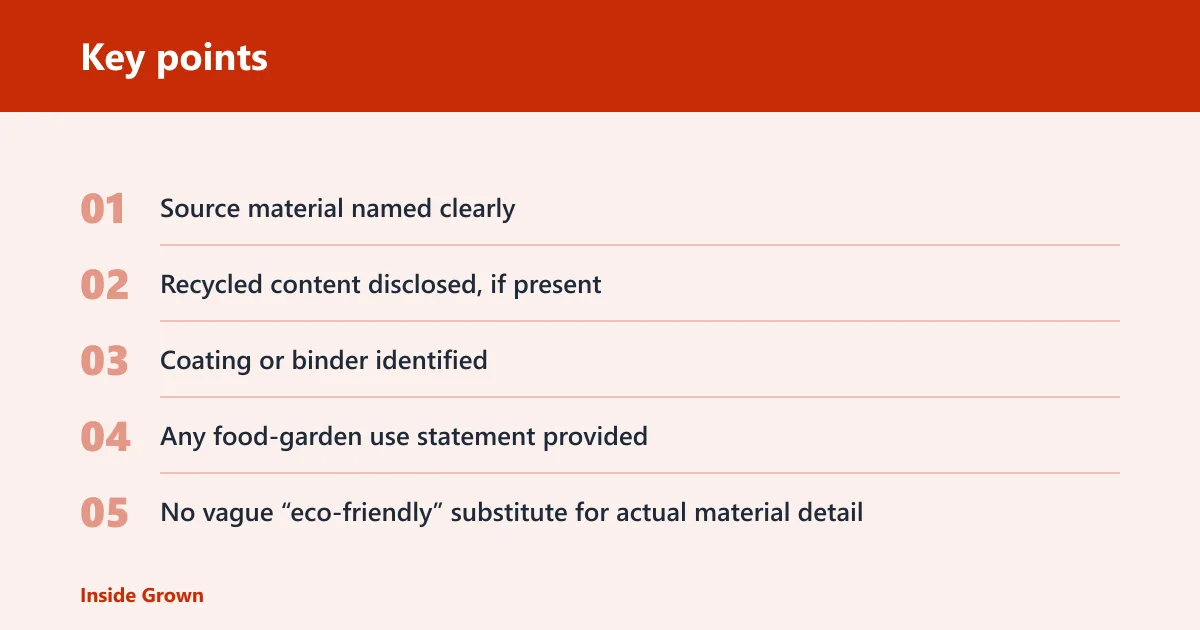
Start with source. Look for whether the edging is recycled tire rubber or virgin synthetic rubber, and whether the label names the polymer or origin. Then check for coating status, recycled content disclosure, and any claim about intended use near edible gardens. If the label is vague, treat that as a warning sign.
- Source material named clearly
- Recycled content disclosed, if present
- Coating or binder identified
- Any food-garden use statement provided
- No vague “eco-friendly” substitute for actual material detail
When to skip rubber entirely
Skip rubber edging when it will be buried inside a bed, sit where roots may reach it, or remain in constant contact with wet soil. Also skip it if you need a border that will be touched often by children, pets, or harvest baskets. In those settings, a stable non-rubber material is the cleaner choice.
- Use rubber only outside the planting soil, not as an interior liner.
- Check whether the product is recycled tire rubber or virgin synthetic rubber.
- Look for coating, recycled content, and polymer disclosure on the label.
- Avoid borders that already smell strong, feel soft in heat, or shed crumbs.
- Choose stone, metal, or untreated wood if the border will touch edible soil.
Frequently asked questions
Does rubber edging leach chemicals into soil?
That risk is hardest to dismiss when the edging is made from recycled tire rubber, has no clear material disclosure, or sits in constant wet soil. Heat, UV exposure, and abrasion can increase release potential over time. The safer move is to keep it out of the crop zone.
Can you use rubber edging around raised vegetable beds?
Yes, if it stays outside the wall and does not function as a bed liner. Raised beds reduce direct contact with the planting soil, which lowers risk. Inside the bed or against the soil face, the material is more exposed to moisture, roots, and wear.
What border materials are safest for food gardens?
Metal, stone, and untreated wood are usually easier to trust near edible beds because they do not rely on recycled tire content or uncertain coatings. The safest material is the one that stays stable in sun and water without shedding into the soil or complicating drainage.
Should edging touch soil in a vegetable garden?
Only if the material is intended for soil contact and the label clearly supports that use. For rubber edging, soil contact is the main reason to be cautious. Outside the root zone, the risk is lower. Inside the bed, especially along edible crops, the answer is generally no.
How do you keep mulch and dirt from washing into beds safely?
Use a border that matches the site: a raised, well-drained edge for a path divider, or a stable bed perimeter for in-ground beds. Edging is meant to define specific areas of a lawn and keep mulch and dirt from washing away, but it works best when drainage is not blocked.
Is recycled rubber edging better than plastic or metal for gardens?
Not for contamination risk. Recycled rubber may be durable, but its material history is less transparent than metal and often less stable than stone. Plastic can also raise disposal and aging questions. For food beds, metal or stone usually wins on clarity and low shedding.
What should I look for on a rubber edging label before buying?
Check the source material, recycled content, coating status, and whether the label names the polymer or origin. If the product does not clearly say what it is made from, where it should be used, or whether it is intended near edible gardens, do not treat it as a safe choice.