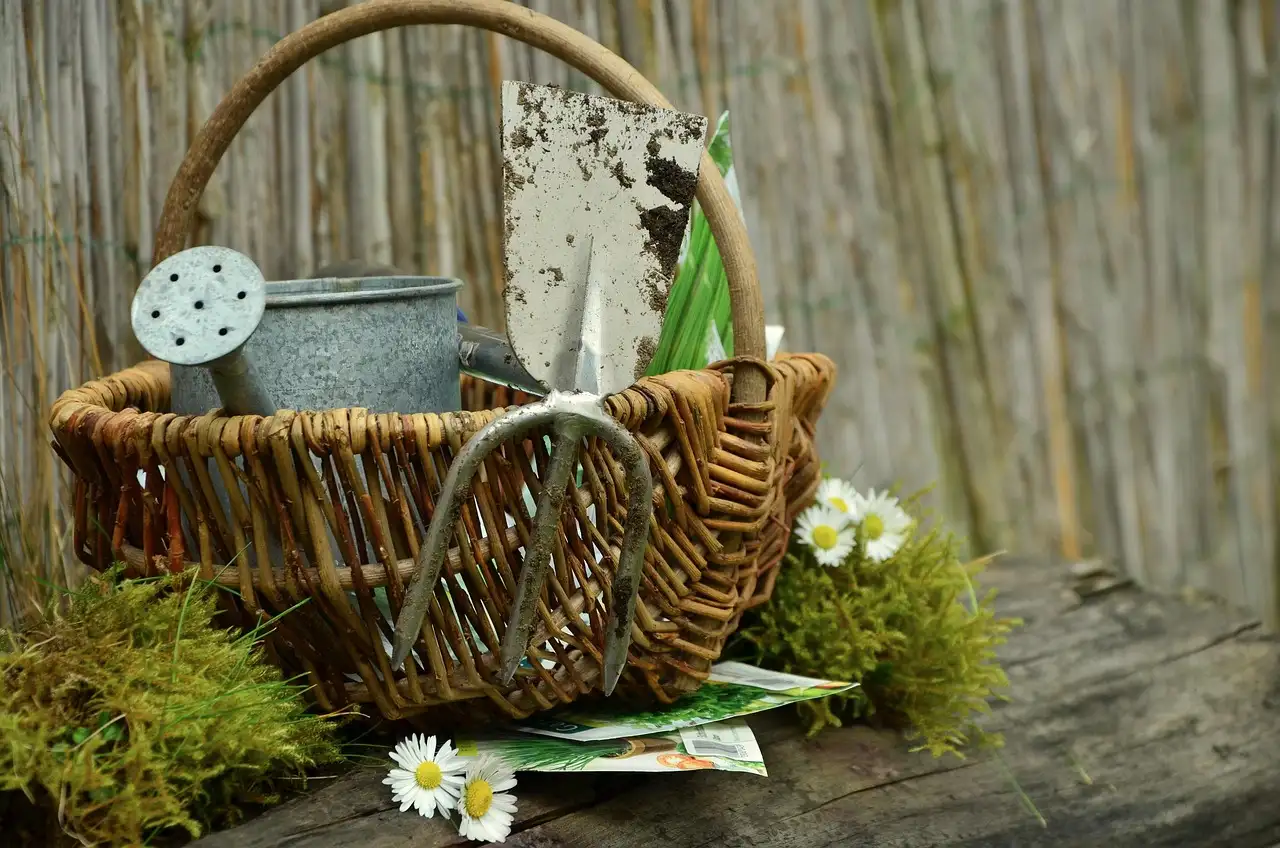
Gardening Techniques for Soil Aeration in Home Gardens
Loosen only the top about 2 to 4 inches when the soil crumbles in your hand; for lawns, core aeration is commonly used, for beds a garden fork or broadfork is often used, and wet soil is generally best left untillered. Packed soil blocks drainage, slows root growth, and makes digging far harder. This guide explains how to spot compaction, choose a bed-safe aeration method, and know when topdressing is better than disturbing the soil again.
Soil aeration opens compacted soil so roots can move through pores that carry air and water. That matters because roots need both moisture and oxygen, and compacted or poorly draining areas can push roots toward shallow growth, pooling, and even root rot. Better infiltration also cuts runoff after rain.
What soil aeration fixes


What compaction looks like in home gardens
Common signs include puddling after rain, crusting on the surface, hard digging, stunted plants, and shallow roots. Clay soil tends to show these problems sooner than loam because it compacts more easily, especially after heavy rainfall or repeated foot traffic.
Construction disturbance can leave soil packed long after the work is done. So can walking across planting beds, dragging tools over the same strip, or watering too fast on bare soil until the surface seals over.
Why air and water movement matter for roots
Roots do best when pore spaces hold both oxygen and moisture. When those spaces collapse, water sits on top instead of soaking in, and roots struggle to expand. Raised beds often drain quickly, while containers need drainage holes for the same reason: roots fail when water lingers too long.
That does not mean every dry patch needs aggressive loosening. If the soil already crumbles and drains well, topdressing and better access habits may do more than another round of digging.
How foot traffic and rain create hard soil
Foot traffic is a major compaction driver in lawns and paths. Repeated pressure squeezes air out of the soil, especially in high-use areas. Rain can do the same on bare ground by beating down the surface and pushing fine particles into tighter contact.
Clay content raises the risk further. Clay holds together tightly, so it rebounds more slowly after rain than loam does. A sloping site can also shed water unevenly, which leaves some spots saturated and others crusted hard.
How do you know your soil needs aeration?
Check the soil by hand before you reach for a tool. If a trowel meets strong resistance, water puddles instead of soaking in, or seedlings stay small even when light and moisture are adequate, compaction is likely part of the problem. Poor growth can also come from shade, pests, or low fertility, so look at the whole bed.
Simple signs to check by hand
Try a narrow trowel, hand fork, or garden fork in one test spot. If the tool stops abruptly after a shallow depth, the soil may be compacted. If a squeezed handful stays in a dense lump rather than breaking apart, that points to poor structure.
Loam usually resists compaction less than clay, so a soft loam bed that still drains poorly may need compost or drainage correction rather than aggressive aeration. In contrast, a clay bed with a hard crust and slow intake usually needs both loosening and organic matter.
When puddling points to compacted soil
Puddles that linger after normal rainfall are one of the clearest signs. Water should move into the soil profile, not sit on top for long periods. If runoff follows every storm, compacted pores are probably limiting infiltration.
Suppose a 4×4 raised bed fills with water in one corner after every heavy shower. If the bed is otherwise level, the issue may be a packed planting layer or blocked drainage path rather than a need for deeper digging across the whole bed.
When poor growth is caused by something else
Weak growth can come from too little sun, nutrient shortage, disease, or the wrong plant in the wrong place. The Almanac notes that most vegetables need 6 to 8 hours of direct sunlight daily, and roots need access to both water and air. If either light or water is off, aeration alone will not fix the bed.
Gardeners often chase the wrong problem. A bed that stays wet because it sits in a low spot may need drainage correction, while a bed on a slope may need better water capture, not more holes.
Which aeration tool fits each garden area?
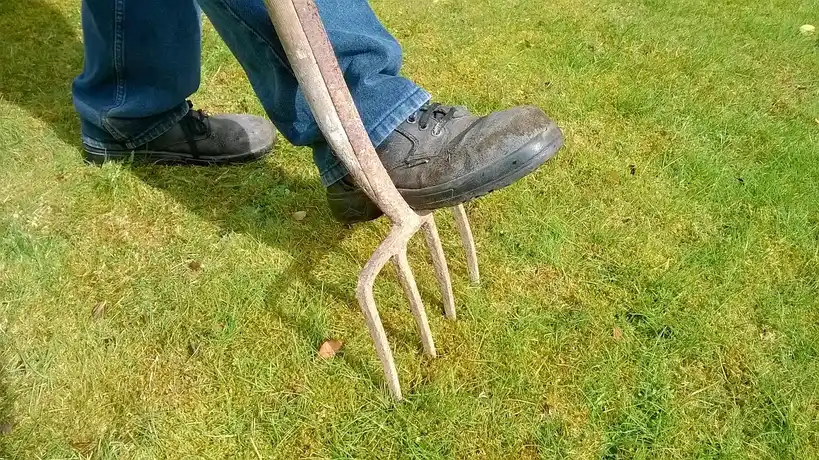
The best tool depends on scale and risk. Use a core aerator for lawns and larger areas, a spike aerator when you need a lighter mechanical option, and a garden fork for beds where machines cannot fit. Never choose a tool that tears roots or turns a bed into loose dust.
Core aerator for lawns and larger areas
A core aerator removes soil plugs. Those openings create air channels and water passages, which makes it the strongest option for lawn soil that has been packed down by foot traffic or repeated use. It is most useful where the surface area is large enough to justify machine work.
Core aeration is usually the first choice for compacted turf. It disturbs less living root area than deep tillage and leaves plugs behind to break down naturally.
Spike aerator as a lighter mechanical option
A spike aerator punches holes rather than removing plugs. That makes it a lighter mechanical option, but it does not relieve compaction as thoroughly as core aeration. It can help in some larger or heavy-work situations where full plugging is not practical.
Use it carefully. In tight clay, punching holes can sometimes smear the sides of the channel instead of opening the soil well. That is why it is a step down, not an equal substitute for core aeration.
Garden fork for beds and tight spaces
A garden fork works well in compacted garden beds and small spaces where machines cannot be used. Insert it, rock it slightly, and lift the soil just enough to open channels without flipping the whole bed. This is often the safest choice for vegetable beds and narrow borders.
For established perennial borders, keep disturbance shallow and targeted. Roots are already in place, and heavy digging can do more harm than good.
Soil aeration decision table
| Garden area | Soil type | Symptoms | Best tool | Aerate now? | Add compost? | Avoid |
|---|---|---|---|---|---|---|
| Lawn | Loam or clay | Puddling, worn paths, thin turf, slow drainage | Core aerator | Yes, if soil is dry enough to crumble | Yes, light topdressing after plugging | Working saturated soil or repeated spike-only passes |
| Raised bed | Often mixed loam with added organic matter | Crusting, hard digging, water sitting on top | Garden fork | Yes, only in compacted zones | Yes, if structure needs rebuilding | Deep tilling and stepping inside the bed |
| In-ground vegetable bed | Often clay or clay-heavy loam | Stunted plants, shallow roots, poor infiltration | Garden fork | Yes, after harvest or before planting | Yes, as topdressing after loosening | Aerating wet clay or compacting the bed again while working |
| Established perennial border | Loam or clay | Poor drainage, weak new growth, surface crusting | Hand fork or narrow garden fork | Only if compaction is clear | Yes, thin topdressing if roots are established | Broad disturbance near crowns and roots |
When should you aerate soil?
Time aeration when the soil is moist but not wet, after heavy rain has passed and before roots are under extra stress. The best windows are after harvest, before planting, or during a dry spell that leaves the soil workable. Do not aerate saturated clay.
Best timing after heavy rain or harvest
After harvest is a practical time for vegetable beds because plants are out of the way and you can rebuild structure before the next crop. In lawns, wait until the ground is soft enough to open but not so wet that the tool smears the soil.
Heavy rain can reveal where the worst compaction sits, but that does not mean you should work immediately. If the soil sticks to the tool or forms a shiny smear, wait longer.
Why wet clay should wait
Wet clay is easy to damage. Working it compresses the walls of the hole, closes pore spaces, and can make drainage worse than before. Clay soil compacts more easily than loam, so it usually needs more frequent aeration, but only under the right moisture conditions.
Picture a clay bed after a storm. The surface looks workable, but the fork comes up with sticky ribbons of soil attached. That is a sign to stop and wait for a drier day.
How often clay and loam usually need attention
Clay often needs aeration more often than loam, especially in high-traffic beds or areas hit by repeated rainfall. Loam usually needs it less often because its structure holds up better. For both, let symptoms guide timing instead of following a fixed calendar alone.
High-traffic lawn strips and paths may need more frequent work than the rest of the yard. Low-use perennial borders may need none for long stretches if mulch, access habits, and soil health are good.
Should you add compost after aerating?
Yes, compost topdressing belongs after aeration in many home gardens. It improves moisture retention and soil structure, and it can help reduce rehardened soil as the openings settle. Compost is especially useful when the bed needs rebuilding, not just a few holes.
When compost topdressing helps most
Topdressing is most useful after loosening a bed that has become dense, crusted, or thin in organic matter. A shallow layer can move into the openings and support better aggregation over time. That is helpful in vegetable beds, raised beds, and some perennial borders.
Beginner gardeners are often told to prepare soil with high-quality organic matter. That advice fits here, but it does not replace loosening when roots are blocked by compaction.
How compost supports moisture retention and structure
Compost helps soil hold moisture without sealing over as easily. It also supports the crumbs and pores that improve water movement. Garden Design includes a dedicated soil-prep section called Garden Soil 101, and its guidance on mulch and irrigation fits the same logic: keep moisture available, but do not trap water in a compacted layer.
Mulching after aeration can also help keep moisture in soil. That matters most where the surface dries fast or crusts after sun and wind.
When topdressing is enough without deeper loosening
If the soil already crumbles and only the surface is tired, compost alone may be enough. This is common in beds with decent structure but low organic matter. In that case, a thin topdress and better watering habits may solve the problem without physical disturbance.
If digging is still hard or water still ponds, compost alone is not enough. Open the soil first, then topdress.
How can you avoid making compaction worse?
Do not step on loosened beds, and do not work soil when it is too wet. Over-aerating fragile ground can break structure instead of improving it. The aim is to open pathways for air and water, not to churn the bed into finer-packed material.
Use paths, mulch, and access habits
Keep clear paths beside beds so feet stay out of the growing area. In larger gardens, limit access points and avoid crossing the same soil again and again. Mulch helps protect the surface from rainfall impact and from crusting after irrigation.
Raised beds are useful partly because they keep traffic away from the root zone. The Almanac notes that raised beds drain quickly, which makes them useful where drainage is poor, but they still need careful access habits.
Do not over-aerate fragile or wet soil
Too many passes can damage root systems, collapse aggregates, and leave the soil looser only at the top. That is especially risky in wet clay and in very young plantings. If the soil already has good intake and the plants are growing normally, leave it alone.
Compaction fixers can become compaction makers when they are used without restraint. The best rule is simple: disturb the soil only as much as the symptom demands.
Frequently asked questions
How do I know if my garden soil needs aeration?
Test for slow drainage, hard digging, crusting, or puddles that linger after rain. If roots stay shallow or plants are stunted despite enough light and water, compaction is a likely cause. A simple fork test can tell you whether the soil opens easily or resists every cut.
What is the best way to aerate compacted soil at home?
For lawns, core aeration is the strongest option because it removes plugs and opens channels for air and water. For garden beds, a garden fork is usually safer. Use the least disruptive tool that solves the problem, and stop if the soil is wet enough to smear.
How often should I aerate soil in a home garden?
There is no fixed schedule that fits every bed. Clay and high-traffic areas often need attention more often than loam or lightly used borders. Let symptoms and season guide you, especially after heavy rain, after harvest, or when digging gets noticeably harder.
Should I aerate clay soil differently than loam soil?
Yes. Clay compacts more easily and needs more caution, especially when wet. Loam usually needs less frequent aeration and is less likely to smear. In clay, wait until the soil is dry enough to crumble before you use a fork or machine.
Can I aerate garden beds without a machine?
Yes. A garden fork is the standard manual option for compacted beds and small spaces. It opens channels without the disturbance of a machine, which is better for vegetable beds and perennial borders. The key is to loosen, not invert, the soil.
Does compost help after aerating soil?
Yes. Compost topdressing helps rebuild structure, improve moisture retention, and reduce the chance that soil rehardened after loosening. It works best after compaction has already been relieved. If the bed is still hard, use compost after physical loosening, not instead of it.