Gardening techniques for succession planting schedules
Build succession planting by matching each crop’s days to maturity, then sow a new batch when the first is partway to harvest for quicker crops, or every few weeks for longer-season crops. Miss that window, and beds clog up, plants age out, and harvests leave a gap. This article covers crop timing, bed turnover, frost limits, and repeat-sowing schedules for beds, raised beds, and containers.
What succession planting means and why it works
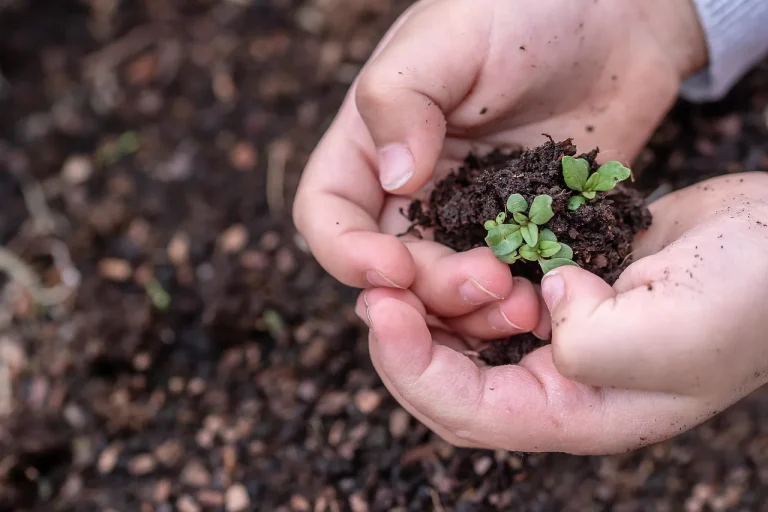
Succession planting is the planned, staggered sowing of the same crop. Gardeners Path defines it as a method of staggering propagation, and the goal is a steady supply; Epic Gardening notes that it can extend the season. Farmers’ Almanac puts the result plainly: harvests arrive in waves, not all at once.
Most home gardens do not need one giant sowing. They need a sequence. Sow a little now, sow again after the first crop is partway grown, then stop before frost or heat shuts the crop down.
Staggered sowings versus a single large planting
A single large planting makes sense only when you want one big harvest for freezing or canning. For everyday use, staggered sowings spread the work and cut the glut. They also reduce the odds that a bed sits empty after an early crop finishes.
Repeating one crop versus swapping to a different crop
Repeated sowing works best for fast crops and for beds with short turnovers. Swapping to a different crop works better when the first crop reaches its last useful sowing window, or when heat, frost, or disease makes the original crop a poor bet for the next round.
How succession planting reduces gluts and bare gaps
When you space sowings by crop speed, harvests stay closer together and beds stay occupied longer. That avoids the usual feast-or-famine pattern: too much lettuce this week, then none next week. It also gives you cleaner bed turnover because you know what follows.
How do you time succession planting around frost dates?
Use days to maturity, your last frost date, and your first frost date to set the sowing window. Days to maturity is a seed-packet metric, and Farmers’ Almanac recommends checking it on the packet. Cultivar choice matters because varieties of the same crop can mature at different speeds.
Using days to maturity to back-calculate the last sow date
Start with the first frost date for fall crops, then count backward by the crop’s days to maturity. Add a small buffer for slower autumn growth. If a packet says 55 days to maturity and your first frost is October 15, the last sow date is earlier than a straight 55-day count suggests.
How last frost and first frost set the sowing window
The last frost date tells you when warm-season crops can go in safely in spring. The first frost date tells you when cool-season crops must be far enough along to finish. Those dates are local, so a schedule that works in one garden may be early or late in another.
Why cultivar maturity varies enough to change the calendar
A “lettuce” or “bean” packet is not one fixed timeline. Early and late cultivars can differ enough to shift the last sowing by weeks. That is why the packet number matters more than the crop name alone.

Which crops are best for succession planting?
Fast crops and medium crops are the best fit. Fast crops such as radishes, lettuce, spinach, and cilantro do well with short intervals. Medium crops such as beans, beets, carrots, peas, cucumbers, and summer squash usually need more planning around frost and bed space.
Fast crops: lettuce, radishes, spinach, cilantro
These fast crops often do well with sowings about every 1 to 2 weeks. Their maturity windows are short enough that you can re-seed before the first batch fully empties the bed. That keeps the harvest steady.
Medium crops: beans, beets, carrots, peas, cucumbers, summer squash
OGW gives slower crops a 3-4 week interval, and that is a useful starting point for many medium crops. Beans and peas need frost-aware timing. Cucumbers and summer squash also need enough warmth and time to finish before cold nights slow growth.
Crops that usually need fewer repeat sowings
Some crops are poor candidates for repeat sowing because they occupy space too long or are easier to plant once in a block. Large storage onions, main-season potatoes, and long-maturing brassicas often fit a different planning system. For those, variety choice and bed rotation matter more than frequent reseeding.
How often should you sow each crop?

Use crop speed, not habit, to set the interval. Fast crops usually need short repeats, while medium crops need longer spacing between sowings. The tighter the season, the more carefully you need to stop before the crop can no longer mature before frost or heat.
Short intervals for fast crops
Lettuce, radishes, spinach, and cilantro can often be sowed every 1 to 2 weeks in cool weather. That works because they reach usable size quickly. If heat arrives early, shorten the sequence or switch to another crop.
Three- to four-week intervals for medium crops
Beans, beets, carrots, peas, cucumbers, and summer squash usually need about 3 to 4 weeks between sowings if you want staggered harvests instead of one big flush. This is where the seed packet matters. A 60-day bean and a 75-day bean do not belong on the same calendar.
When to stop repeating a crop and switch to another
Stop repeating a crop when the next sowing would miss its harvest window, when the bed needs a different root depth, or when pests and disease pressure build. If you keep sowing lettuce into early heat, for example, the leaves may bolt before you get a usable harvest.
| Crop | Common days to maturity | Sowing interval | Last safe sow date | Bed release date | Replacement crop | Heat or frost notes |
|---|---|---|---|---|---|---|
| Radishes | 25-35 | Every 1-2 weeks | First frost date minus 25-35 days, then add a small buffer | About 3-5 weeks after sowing | Spinach or lettuce | Fast bolting in heat; best in cool weather |
| Lettuce | 30-60 | Every 1-2 weeks | First frost date minus packet days to maturity | 4-8 weeks after sowing | Beets or fall spinach | Use shade cloth in hot spells |
| Spinach | 30-45 | Every 1-2 weeks | First frost date minus packet days to maturity | 4-6 weeks after sowing | Radishes | Best in cool spring and fall windows |
| Cilantro | 50-55 | Every 2 weeks | First frost date minus packet days to maturity | 6-8 weeks after sowing | Lettuce | Bolts quickly as days lengthen |
| Beans | 50-60 | Every 3-4 weeks | Last spring sowing before soil and nights turn cool | 6-8 weeks after sowing | Spinach or radishes | Stop early enough to avoid cold, wet decline |
| Beets | 55-70 | Every 3-4 weeks | First frost date minus packet days to maturity | 8-10 weeks after sowing | Leaf lettuce | Roots size more slowly in cool soil |
| Carrots | 60-80 | Every 3-4 weeks | First frost date minus packet days to maturity | 8-12 weeks after sowing | Radishes | Thin early; crowding slows root size |
| Peas | 55-70 | Every 3-4 weeks | Spring only in many climates | 6-8 weeks after sowing | Beans or cucumbers | Usually stop before summer heat |
| Cucumbers | 50-70 | Every 3-4 weeks | First frost date minus packet days to maturity | 7-10 weeks after sowing | Spinach or radishes | Need warm soil and steady moisture |
| Summer squash | 40-55 | Every 3-4 weeks | First frost date minus packet days to maturity | 6-8 weeks after sowing | Fall greens | Large leaves can crowd nearby crops |
When should you use relay planting or intercropping?
Use relay planting when a fast crop can finish before a slower crop takes over the space. Use intercropping when two crops share the bed at the same time without fighting too hard for light, water, or root room. Repeated sowing is better when one crop needs the full bed for most of the season.
Using a fast crop before a slow crop fills the bed
A common approach is to sow radishes between young carrot rows. The radishes finish first, and the carrots keep growing. That saves space in small plots and turns one planting into two harvest windows.
Choosing compatible spacing and root depth
Intercropping works best when the fast crop stays shallow and the slower crop expands later. Leaf lettuce between slow brassicas can work in a roomy bed. Two crops with similar root depth and canopy spread usually compete too much.
When repeated sowing is better than sharing space
If a crop grows unevenly or needs clean thinning, repeated sowing is usually easier than mixing it with another crop. Radishes are a better relay crop than a shared-row crop when the bed is narrow. Cucumbers often need their own space once vines stretch.
Say your 4-by-8-foot raised bed holds spring spinach and then summer beans. Spinach can finish first, the soil can get a top-dressing, and the beans can go in after a quick turnover. That sequence avoids a gap and keeps the bed productive through two seasons.
Plan your succession calendar with the worksheet
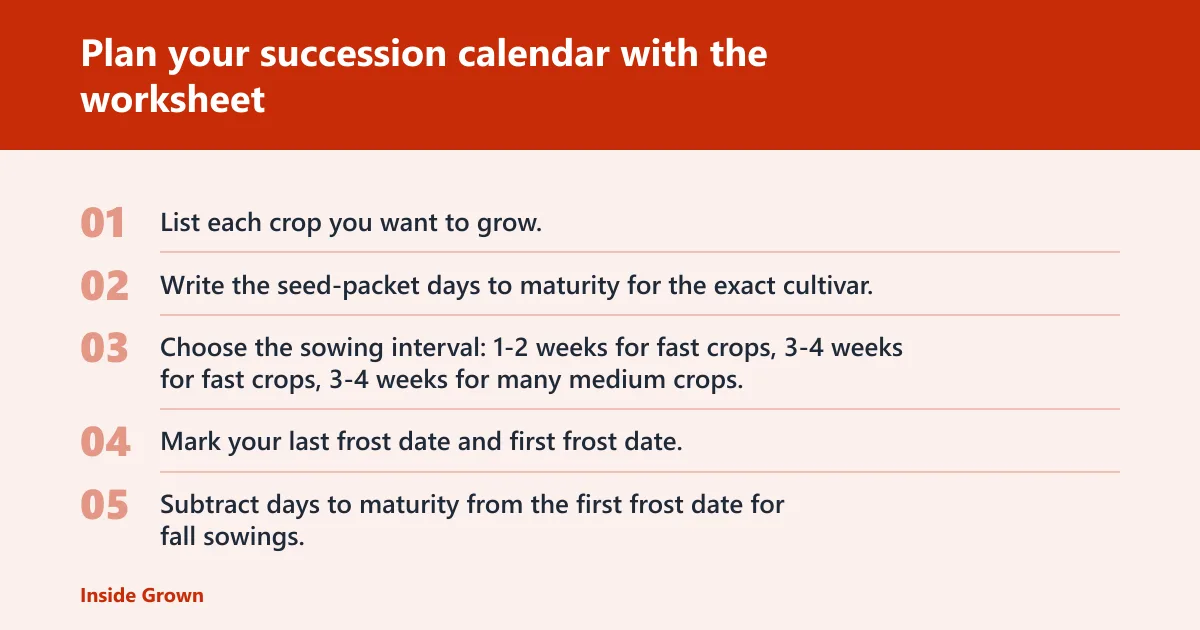
A workable calendar links crop, maturity, interval, and bed turnover. It also records what replaces each crop and whether heat, frost, or pests are likely to interrupt the sequence. Keep the worksheet short enough that you can fill it out in one sitting.
- List each crop you want to grow.
- Write the seed-packet days to maturity for the exact cultivar.
- Choose the sowing interval: 1-2 weeks for fast crops, 3-4 weeks for many medium crops.
- Mark your last frost date and first frost date.
- Subtract days to maturity from the first frost date for fall sowings.
- Add a replacement crop for each bed release date.
- Note heat, frost, bolting, and pest risks next to each entry.
Fill-in succession matrix worksheet
| Crop | Days to maturity | Sowing interval | Last safe sow date | Bed release date | Replacement crop | Notes for heat or frost risk |
|---|---|---|---|---|---|---|
| ________________ | ________________ | ________________ | ________________ | ________________ | ________________ | ________________ |
| ________________ | ________________ | ________________ | ________________ | ________________ | ________________ | ________________ |
| ________________ | ________________ | ________________ | ________________ | ________________ | ________________ | ________________ |
How to avoid common failure cases
Sowing too close together can crowd seedlings, raise disease pressure, and give you a harvest spike you cannot use fast enough. Sowing too late means the crop misses its maturity window. Overplanting one crop can also leave the next bed empty when the supply suddenly ends.
A common first-timer mistake is planting every row of lettuce on the same weekend in a 2-foot-wide bed. Three weeks later, all of it is ready at once, and two weeks after that the bed is empty. Staggering the sowing by one to two weeks fixes that.
How can you keep small spaces productive without overplanting?
Raised beds and containers are ideal for quick turnover, but they also fill up fast. In small spaces, the problem is often too many plants maturing at the same time. Use tighter spacing only when the crop size truly stays small, and keep one section free for the next sowing.
Raised beds and containers as quick-turnover spaces
Because containers dry out sooner and beds warm quickly, they suit fast crops and short intervals. That makes them good for lettuce, radishes, and herbs. The tradeoff is that one missed sowing window can leave the container idle for weeks.
Using spare gaps between slower crops
Small gaps beside peppers, tomatoes, or trellised cucumbers can hold a short-lived crop like radishes or cilantro. Use those spaces only if the larger crop will not shade them out too quickly. The goal is a short harvest before the main crop expands.
Avoiding too many plants at the same maturity stage
In a small garden, do not sow all your beans or all your lettuce on the same date unless you want one large harvest. Split the sowing into batches. That gives you room to replace finished crops without losing the whole bed at once.
How do you plan a succession planting calendar?
Start with your frost dates, then sort crops by speed and bed use. Put fast crops on short intervals, medium crops on longer intervals, and stop each sequence early enough for the crop to finish. A good calendar is simple enough to update after every harvest.
Season extension tools for tighter timing
Cold frames, row covers, and hoop houses can buy extra days on both ends of the season. Shade cloth helps when heat threatens lettuce, cilantro, or spinach. Use those tools to stretch the window, not to force a crop far beyond its normal timing.
Soil recovery between successive plantings
Successive plantings pull nutrients repeatedly from the same bed. Add compost or aged manure between crops when the bed needs a reset, and rotate families when possible to help manage pests and disease. That matters more in fast-turnover beds because the soil gets used hard.
Decision framework for repeat sowing, variety staggering, and relay planting
Use repeat sowing when the crop is short-lived and the bed can be reused quickly. Use variety staggering when the same crop type can mature at different speeds. Use relay planting when a fast crop can finish before a slower crop expands. If none of those fit, give the crop its own space.
Frequently asked questions
What is succession planting in gardening?
Succession planting is a way to stagger sowings so harvests arrive in waves rather than all at once. It can mean the same crop planted several times, or different crops timed to follow one another. The aim is a steadier supply and fewer empty beds.
How often should I succession plant lettuce, radishes, or beans?
Lettuce and radishes usually suit short intervals, often every 1 to 2 weeks in cool weather. Beans usually need a longer gap, around 3 to 4 weeks, and the timing must still fit your frost window. The packet’s days to maturity should guide the final schedule.
Which vegetables are best for succession planting?
Fast crops such as lettuce, radishes, spinach, and cilantro are the easiest to repeat. Many gardeners also succession sow beans, beets, carrots, peas, cucumbers, and summer squash when the season is long enough. The best choice is the crop that fits your frost dates and bed turnover.
When should I stop sowing succession crops before frost?
Stop when the next sowing would not have enough time to mature before your first frost date. Use the seed packet’s days to maturity, then count backward from frost and leave a small buffer for slower fall growth. Cool nights and shorter days can slow the crop more than expected.
Can I succession plant in raised beds or small spaces?
Yes. Raised beds and containers are often better for succession planting because they turn over quickly. The main caution is overplanting. If every plant matures at the same time, the bed can go empty just as quickly as it filled, so split sowings across dates.
What is the difference between succession planting and interplanting?
Succession planting means repeated sowings over time. Interplanting means two crops share space in the same bed at the same time, often because one finishes before the other needs the room. Relay planting is a type of interplanting when the first crop clears out before the second fully spreads.