How much sun do botanical garden plants need by type?
Many botanical-garden plants do best with around 4 to 6 hours of direct sun, but the right target depends on the plant’s habitat: full sun is often 6 or more hours, part sun around 4 to 6, and shade plants under 4 hours with bright indirect light. Put them in the wrong light, and you get weak growth, poor flowering, scorched leaves, or slow decline. This guide maps plant types to real garden light, from open beds to morning sun, afternoon shade, and container microclimates.
How much sun do botanical garden plants need?


Plant light needs follow habitat more closely than labels. IKEA notes that plants need sunlight but not the same amount, and that the plant’s origin matters; desert-climate plants usually want a lot of direct sun, while dense-forest plants may need only a few daily hours of partial sunlight. That is the right starting point.
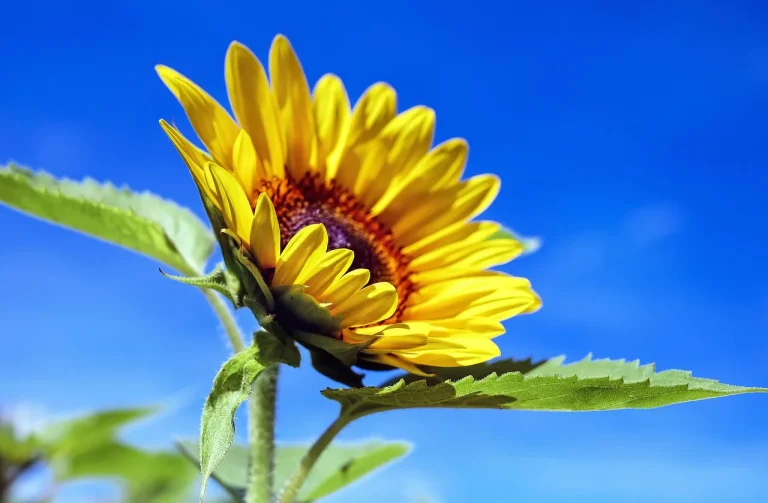
Direct sunlight is unfiltered light. It is strongest around midday and on exposed sites, so it matters most for sun-loving species. Bright indirect light is different: it works well for many forest plants that want light without the heat load of direct rays.
What counts as full sun, partial shade, and shade?
Use hours, not guesswork. Full sun means at least 6 hours of direct sun. Partial shade usually means roughly 3 to 6 hours of sun, or dappled light. Shade means less than about 3 hours of direct sun, and many forest plants do well in bright indirect light rather than hot direct exposure.
Morning sun and afternoon sun are not equal. Morning sun is cooler and usually less stressful. Afternoon sun brings higher heat, drier air, and stronger leaf stress, especially on west- and south-facing sites.
📊 Havlis shows Albizia julibrissin ‘SUMMER CHOCOLATE’ as sun-loving and zone 6b. Source: nízký strom.
Which botanical garden plants need full sun?
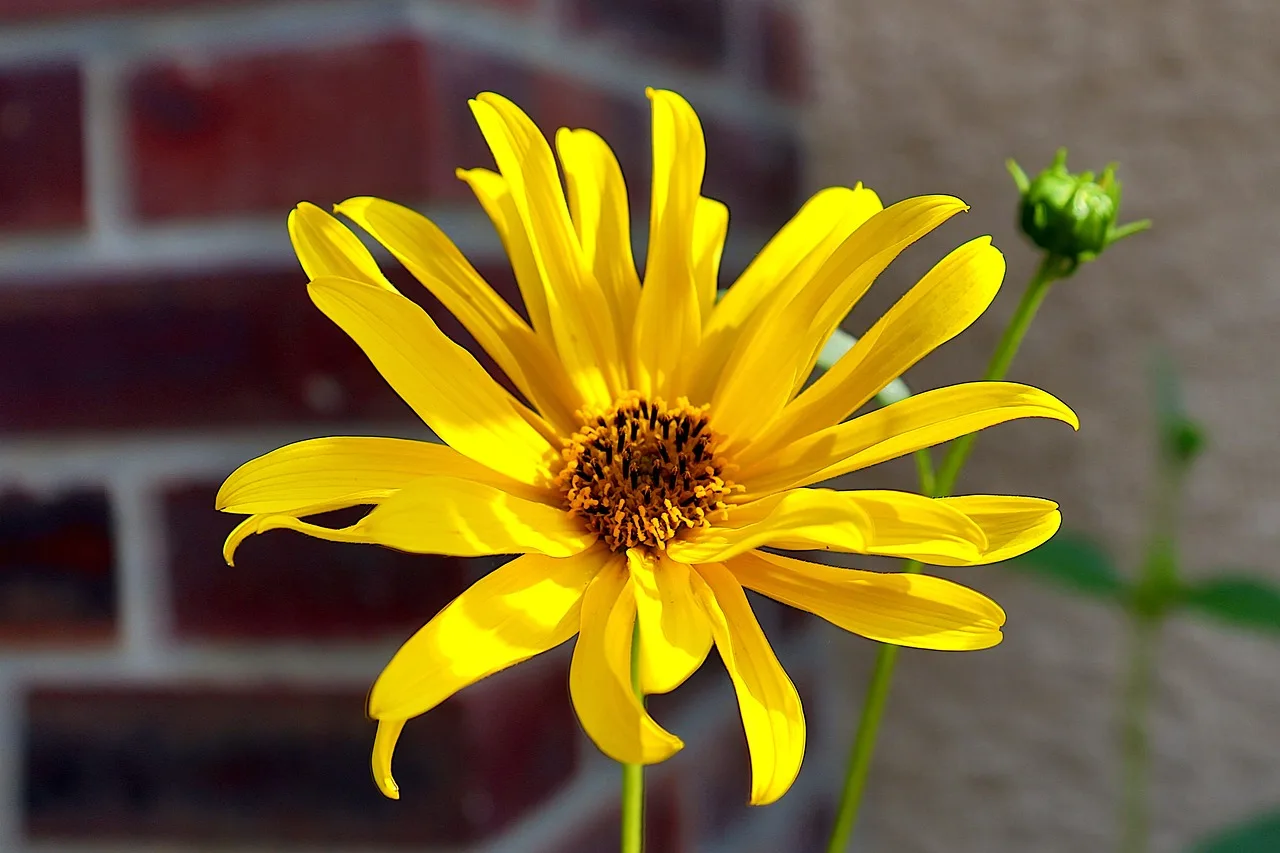
Full-sun plants are usually adapted to open, bright sites with high light and heat tolerance. That includes many desert-origin plants and many flowering plants that need strong direct light to set buds well. Full sun generally means 6 or more hours of direct sun, and it often comes with higher water demand.
Desert-origin plants and heat tolerance
Desert plants are built for direct exposure, reflected heat, and low humidity. Many have waxy leaves, small leaf surfaces, or other traits that reduce water loss. They still need careful watering in containers, because sun and wind push moisture out of potting mix quickly.
Flowering plants that need strong direct light
Many flowering plants need direct sun to bloom well. If light drops too far, they may produce long, weak stems with few flowers. A sunny display bed works best when you match those plants to open ground, not to tree cover or deep patio shade.
Failure signs when full sun is too intense
Even sun plants can fail when heat and water stress stack up. Look for leaf curling at midday, stunted growth, crispy edges, and soil that dries too fast. In containers, stress appears sooner because the root zone heats and dries faster than in-ground soil.
Suppose a 12-inch pot sits on a west-facing balcony with wind and reflected heat from a wall. A plant that would handle six hours in the ground may wilt by late afternoon in that pot unless watering is adjusted.
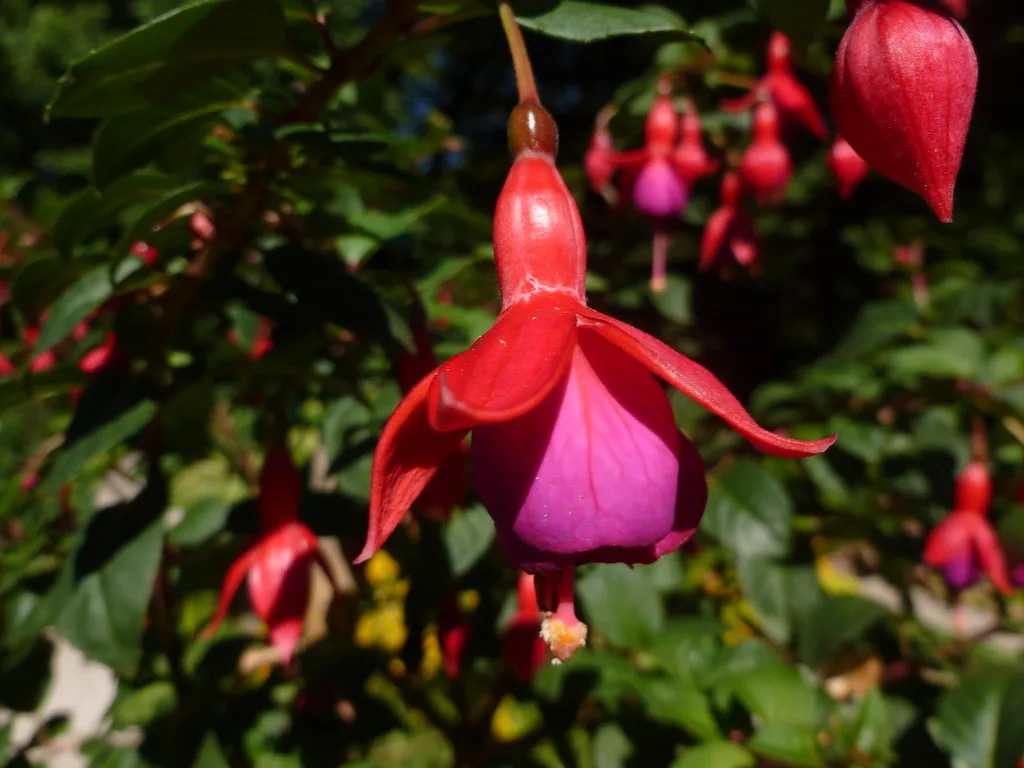
Which botanical garden plants prefer partial shade or shade?
Woodland plants, understory species, and many tropical foliage plants usually do better with less direct sun. Partial shade gives about 3 to 6 hours of sun or dappled light, which protects foliage from scorch while still giving enough light for steady growth. Shade means under 3 hours of direct sun.
Woodland plants and understory species
Dense-forest plants and tropical understory plants are adapted to filtered light under a canopy. They often want bright indirect light or short morning sun, not hot afternoon sun. That light pattern matches the way sun filters through upper layers in their native habitat.
Tropical foliage plants and bright indirect light
Many foliage plants from humid, shaded habitats scorch when placed in open sun. Foliage scorch is leaf burn from excessive sun, and it is a common failure mode for shade plants, especially during hot afternoon exposure. The damage often starts as pale patches, then turns brown and papery.
Common signs of foliage scorch and weak growth
Too much sun shows up fast on shade plants. Leaves bleach, curl, or crisp at the edges. Too little light looks different: stretched stems, small leaves, fewer flowers, and slow recovery after pruning. Both problems are light problems, just in opposite directions.
Can botanical garden plants take partial shade?
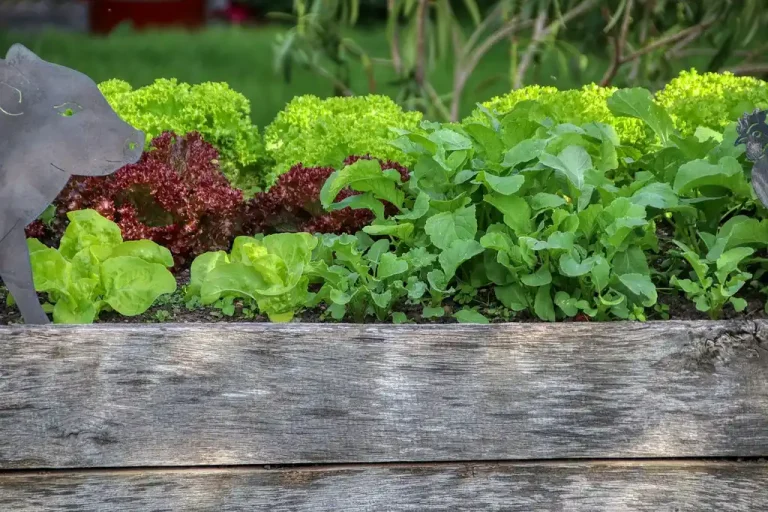
Yes. Partial shade is one of the most useful exposures in a home garden because it fits many plant groups, especially woodland and edge species. A site with 3 to 6 hours of sun, or bright filtered light through trees, can support a wide range of botanical-garden style plantings.
Temperate edge plants
Temperate edge plants often tolerate a range between full sun and light shade. They are often the easiest bridge between open beds and woodland beds because they can handle morning sun, then rest in afternoon shade. Site timing matters as much as total hours.
How morning sun differs from afternoon sun
Morning sun helps dry dew and supports photosynthesis without the same heat load as afternoon exposure. Afternoon sun raises leaf temperature and water loss. If a plant tolerates partial shade, morning sun plus afternoon shade is usually safer than the reverse.
How do microclimates change sun exposure in a garden?
Microclimate can change a plant’s experience as much as the weather forecast. A south-facing wall, reflected heat from paving, a tree canopy, or courtyard shade can shift both light and temperature. That means two beds in the same yard can require different plant choices.
South-facing walls and reflected heat
South-facing walls collect sun for much of the day and can radiate heat back into nearby leaves and soil. Light is stronger there, but so is stress. That favors sun-loving plants with higher water demand and makes shade plants more likely to scorch.
Tree canopy, courtyard shade, and filtered light
Tree canopy gives dappled light that changes through the day. Courtyard shade can be bright because walls reflect light even when direct sun is limited. Those sites often suit partial-shade plants better than deep shade plants, especially if air still moves through the space.
Wind exposure and container stress
Wind increases moisture loss. Containers dry faster than in-ground beds, so a plant that tolerates six hours in the ground may need more frequent watering in a pot. On a windy balcony, sun exposure and drying act together, which can make a “sun-tolerant” plant fail sooner than expected.
Use this placement table before you plant
This table translates habitat and exposure into practical placement rules. Use it to match the plant group to daily sun hours, then check morning and afternoon tolerance before you place it in a bed or container. Hardiness zone still matters, but it is about cold tolerance, not light needs.
| Plant group | Estimated daily sun hours | Morning sun tolerance | Afternoon sun tolerance | Likely failure signs if exposure is wrong |
|---|---|---|---|---|
| Desert-origin plants | 6+ hours direct sun | High | High, if watered appropriately | Weak growth, lanky stems, poor flowering, leaf drop in too little light |
| Many flowering display plants | 6+ hours direct sun | High | Medium to high, depending on heat | Few blooms, stretched growth, bud drop in low light |
| Temperate edge plants | 3 to 6 hours sun | High | Medium | Faded leaves, slow growth, leaf edge burn in hot afternoon sites |
| Woodland plants | 3 to 6 hours sun or dappled light | High | Low to medium | Foliage scorch, curled leaves, brown patches, rapid drying |
| Tropical understory plants | Under 3 to 4 hours direct sun, bright indirect light preferred | Medium | Low | Bleached leaves, crisp margins, stalled growth, sunburn after heat spikes |
| Dense forest plants | Under 3 hours direct sun | Low to medium | Low | Foliage scorch, limp leaves, wilting, fast decline in open beds |
How do you match light needs with watering and zone guidance?
Light, water, and hardiness zone work together, but they are not the same thing. A hardiness zone tells you how cold a plant can usually survive; it does not tell you whether that plant wants direct sun, partial shade, or deep shade. Pair zone guidance with exposure guidance every time.
Why containers dry faster than in-ground beds
Containers have less soil mass, more exposed side surface, and more air movement around the root ball. That means faster drying, especially in full sun and wind. A plant that is comfortable in a shaded border may need much more frequent watering in a pot, even in the same zone.
How sun exposure changes watering frequency
More sun means more transpiration and faster moisture loss. Full-sun plants usually need more water than the same plant in partial shade, especially during hot spells. In practical terms, check container moisture more often and expect south-facing or reflected-heat sites to dry out first.
Why hardiness zone does not tell you light needs
Zone tells you about winter cold, not summer exposure. A plant may be hardy in zone 5 or 6b and still fail in the wrong light. Havlis lists Acer palmatum ‘RED EMPEROR’ with sun and partial shade, a height range of 4 – 6m, and hardiness to zone 5; it also lists Acer shirasawanum ‘AUREUM’ with partial shade and hardiness as 5b, while Albizia julibrissin ‘SUMMER CHOCOLATE’ is listed as sun-loving and zone 6b. Those are separate decisions: cold fit first, then light fit.
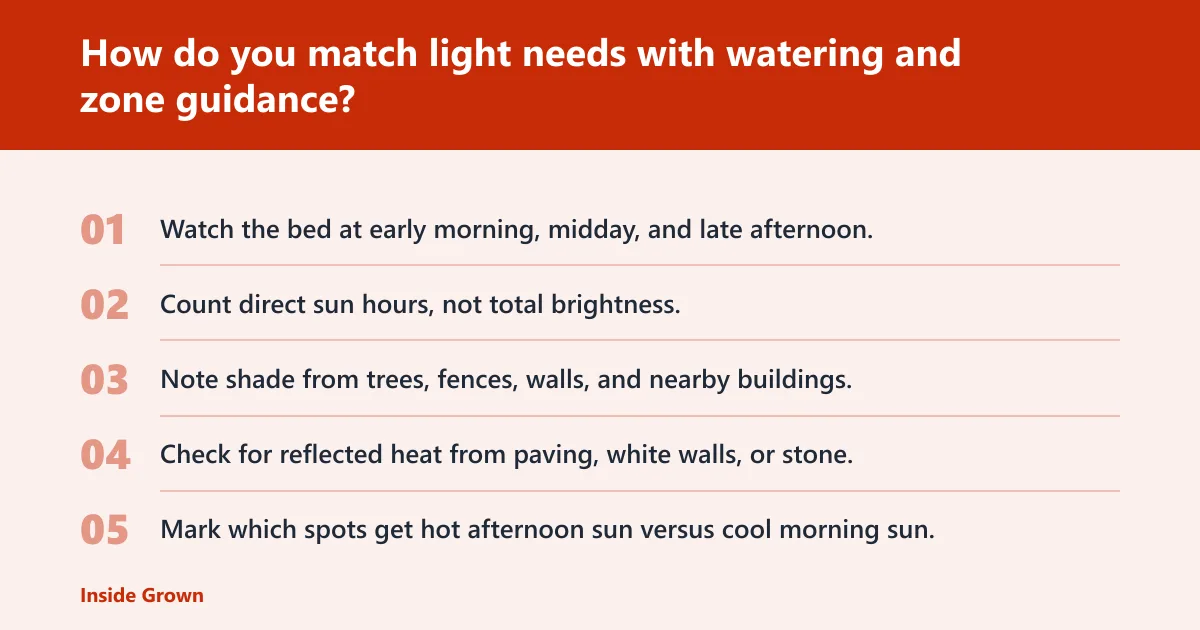
How to test a real garden bed across the day
- Watch the bed at early morning, midday, and late afternoon.
- Count direct sun hours, not total brightness.
- Note shade from trees, fences, walls, and nearby buildings.
- Check for reflected heat from paving, white walls, or stone.
- Mark which spots get hot afternoon sun versus cool morning sun.
- Place the most sensitive plants in the cooler microclimate.
How source plants guide placement
F1 and F2 point to the core rule: light needs vary, and origin matters. F3 and F4 make the habitat split clear. F5 and F6 remind you that artificial plants and artificial outdoor plants can bypass light needs entirely, but real plants still need placement that matches their origin and exposure.
Frequently asked questions
How much sun do botanical garden plants need?
Most botanical-garden plants fall somewhere between 3 and 6 hours of direct sun, but the correct target depends on the species’ habitat. Full sun plants want 6 or more hours, partial-shade plants do well with 3 to 6, and shade plants need less direct sun plus bright indirect light.
Which botanical garden plants need full sun?
Desert-origin plants and many flowering plants need full sun because their growth and bloom cycles depend on strong direct light. Full sun means at least 6 hours of direct sun, usually with higher water demand and good heat tolerance. In pots, they may still need more frequent watering than in beds.
Which botanical garden plants grow in shade?
Dense forest plants, many tropical understory plants, and some woodland species are better choices for shade. Shade means under 3 hours of direct sun, with bright indirect light often doing the work instead. These plants are more likely to scorch in hot afternoon sun than to struggle in filtered light.
Can botanical garden plants take partial shade?
Many can. Partial shade, meaning about 3 to 6 hours of sun or dappled light, suits a broad group of woodland, understory, and temperate edge plants. It also gives you flexibility in gardens with tree cover, morning sun, or afternoon shade.
How do I know if a plant needs direct sun or just bright light?
Check the plant’s origin and its native habitat. Desert and open-country plants usually need direct sun. Forest plants often want bright indirect light or short sun windows, especially morning sun. If leaves scorch in afternoon exposure, the plant probably wants less direct sun and more filtered light.
What happens if I put a shade plant in full sun?
Shade plants often show foliage scorch, wilting, and stalled growth when moved into full sun. The worst damage usually happens in hot afternoon exposure, when leaves burn faster and the root zone dries out. In containers, that stress appears even sooner because the pot heats and dries quickly.
Which plants are best for sunny botanical garden displays?
Plants from desert or open habitats are the safest choices for sunny displays, along with many sun-loving flowering plants. Look for species labeled for sun and matched to your zone, then place them where they get 6 or more hours of direct light. Container displays need extra water attention.
Are exotic botanical garden plants more sun-loving than native plants?
No. Exotic does not automatically mean sun-loving, and native does not automatically mean shade-loving. Light need comes from habitat, not from whether a plant is native or imported. A desert native may need full sun, while an exotic forest plant may need shade or bright indirect light.