Best shrubs for botanical garden borders: 7 reliable picks
For a botanical garden border, I usually aim for a modest mix of shrubs with steady structure, staggered bloom times, and some winter form: I use a backbone of evergreen or twiggy shrubs, then add a few seasonal accent shrubs.
Choose badly and the border reads as clutter from the path, with gaps, weak labels, and no clear seasonal sequence.
This guide shows how I choose and place shrubs for distance, structure, and year-round interpretation in mixed borders.
How to choose shrubs for a botanical garden border
Start with the border’s height and the way visitors will read it from the path. In a botanical garden, the planting has to keep its shape at a distance, leave labels visible, and move the eye from front edge to back row without blocking sightlines. Structure comes first; flower color comes after.
Use the border as a layered display. Low shrubs belong near paths, mid-height shrubs bridge the view, and taller shrubs sit at the rear where they can frame the planting without crowding the foreground. Mixed borders read best when evergreen shrubs carry the winter structure and deciduous shrubs add seasonal change.
Start with border height and viewing distance
Border height range is the first layout decision. Small yards may keep everything under 5 feet, while larger public borders can place taller shrubs in back to screen fences or service areas. If the border is meant to be viewed from a moderate distance, larger masses and stronger repetition matter more than fine detail.
Balance evergreen structure with seasonal shrubs
Use evergreen shrubs as the backbone in mixed borders, then layer deciduous shrubs around them for bloom, foliage change, and fruit. The rule from Yardolio suggests one evergreen for every two deciduous shrubs. That balance keeps the border from going bare in winter without turning it into a row of evergreens.
Match sun exposure, soil, and hardiness zone
Check US hardiness zone before planting. Then match the shrub to sun exposure and soil before looking at catalog photos. A plant that fits the light and zone will keep its form longer, need less rescue pruning, and survive enough seasons to matter in a public border. Wrong-zone shrubs become replacement work.
Which shrubs work best in botanical garden borders?
The strongest border shrubs are compact, readable from a path, and steady across more than one season. Hydrangea, weigela, shrub roses, and selected evergreens cover the main functions: bloom, structure, scent, contrast, and winter presence. In public borders, that mix also supports labeled displays because each shrub has a clear role.
Hydrangea for long bloom in partial shade
Hydrangeas can provide color from early summer through fall, which makes them useful as seasonal anchors. Compact cultivars fit front or middle border positions when space is tight. Hydrangea Cape Hatteras stays at 3.5 feet tall and 3 feet wide, is hardy in Zones 4 through 9, and takes partial shade to filtered sun.
Annabelle hydrangea flowers in July and is cut back to 12 inches each spring. That hard cut keeps the shrub within a border frame, though it also means the winter outline is simpler than a twiggy shrub. For display design, hydrangea works best where its summer mass can read cleanly from the path.
Weigela for compact, sunny borders
Modern weigela varieties can flower from late spring into summer, and they suit borders that need a compact, repeatable accent. Pink Poppet weigela tops out at 4 feet tall and wide, is in Zone 3 through Zone 7, and prefers full sun. That makes it a practical middle-border shrub for smaller layouts.
Dark-foliage cultivars add contrast when flowers fade. They help the border keep a clear outline after bloom, which matters in gardens that depend on reading distance and labeled interpretation. Weigela is best where pruning can stay light and the plant can keep a rounded, controlled form.
Shrub roses for scent and repeat color
Compact shrub roses give long-season color from late spring through fall, plus fragrance that visitors notice at path edge. Choose modern disease-resistant varieties with manageable size, because a rose that needs constant correction will overtake the border budget. They need sun and steady moisture, not neglect.
Roses are strongest in blocks, not singles. Grouping lets the border read as a designed sequence instead of scattered specimens. In public plantings, shrub roses also earn their place by carrying multiple interpretive values at once: flower, scent, and a clear horticultural story.
Evergreen shrubs for year-round backbone
Evergreen shrubs provide winter structure, and they should be sized to the border height before planting. Use them as anchors at the back or at turns in the border, where they can hold form when deciduous shrubs are bare. This is where mixed borders stop looking empty in February.
How should you layer shrubs by border height?
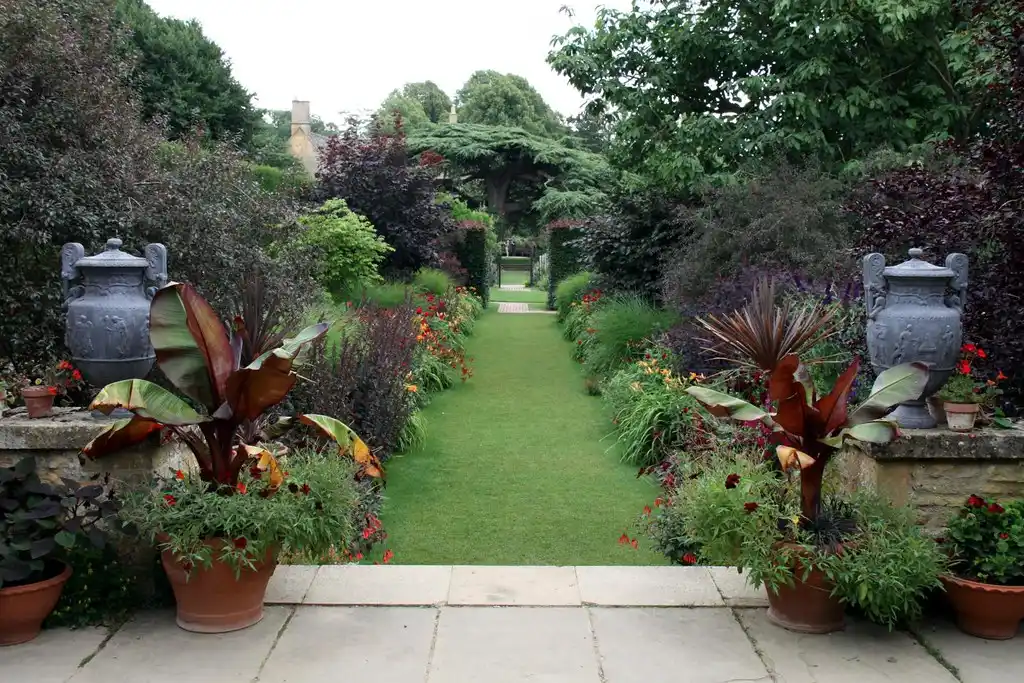
Layer shrubs by height so the border reads from the path without blocking itself. Front plants stay low and tidy, middle plants bridge the view, and back plants frame the planting or screen service areas. That is the difference between a display and a thicket.
Front border shrubs that stay low and tidy
Front border shrubs need restrained mature width, clean edges, and limited pruning burden. They should not spill into the path or hide labels. Compact hydrangeas and dwarf roses often fit here if the site has enough light. In a small border, the front layer may stay relatively low, so it does not overpower the bed.
Middle border shrubs that bridge the view
Middle shrubs do the visual handoff between low edging and taller back-row plants. This is where compact weigela, smaller hydrangea cultivars, and selected shrub roses do most of the work. They should read as a mass from a distance, not as isolated objects with gaps between them.
Back border shrubs that frame the planting
Back shrubs should be the tallest layer in the border, but not so tall that they crush the scale of the planting. Use them to frame, screen, or close the view. Evergreens often fit here because they hold a stable silhouette through winter and support the rest of the composition.
Border planning matrix: how the best shrubs compare
This matrix turns shrub choice into a repeatable design step. It compares placement, light tolerance, evergreen cover, bloom window, pruning burden, and the distance from which a visitor can still read the plant clearly. For botanical gardens, that matters as much as flower color.
| Shrub | Border position | Sun or shade tolerance | Evergreen cover | Bloom window | Mature width | Pruning burden | Visitor visibility distance |
|---|---|---|---|---|---|---|---|
| Hydrangea Cape Hatteras | Front to middle | Partial shade to filtered sun | None | Early summer to fall | 3 feet | Moderate | Near to mid-path |
| Annabelle hydrangea | Middle | Partial sun to filtered light | None | July | Medium | Moderate, with spring cutback | Mid-path |
| Pink Poppet weigela | Front to middle | Full sun | None | Late spring into summer | 4 feet | Low to moderate | Near to mid-path |
| Shrub rose, compact type | Front to middle | Full sun | None | Late spring through fall | Compact to medium | Moderate to high | Near to mid-path |
| Evergreen shrub, sized to border height | Middle to back | Site dependent | High | Nonflowering structure | Varies by selection | Low to moderate | Mid-path to far-path |
| Fatsia japonica | Shaded middle | Full shade | High | Limited ornamental bloom value | Large | Low to moderate | Mid-path |
Which shrubs give the longest seasonal display?
The longest displays come from shrubs that carry more than one visual phase: spring bloom, summer bloom, fall continuation, or foliage contrast after flowering. Hydrangea, weigela, and compact shrub roses are strong because they hold interest beyond a single week. Evergreen shrubs then keep the border from collapsing in winter.
Spring-to-summer bloom in compact cultivars
Modern weigela varieties can flower from late spring into summer, which extends the visible season without taking over the border. Compact cultivars are better than large ones when the planting is narrow, because they keep the front edge readable and leave room for labels and circulation.
Summer-to-fall continuity from Hydrangea
Hydrangeas can provide color from early summer through fall, making them one of the easiest shrubs to use for seasonal continuity. In mixed borders, that long run bridges the gap between early flowering shrubs and autumn foliage change. Their value is highest where partial shade keeps the flowers cleaner longer.
Reblooming shrubs that keep color going
Reblooming shrubs reduce the empty stretch between peak flushes. In border design, that matters more than a single heavy bloom followed by silence. A reblooming shrub should still be compact enough to stay within the border’s height plan, or it will create a maintenance problem later.
Foliage contrast when flowers finish
Dark foliage, variegation, and clean evergreen cover keep the border legible after bloom ends. Weigela cultivars with dark leaves do this well. So do evergreen shrubs placed behind deciduous plants, because the foliage plane remains visible when flowers are gone and stems begin to show.
How do you choose shrubs for shade in a border?
Shade shrubs must be matched to the depth of shade, not just the fact that a site is shady. Partial shade, dappled light under trees, and deep shade are different conditions. A border under mature trees needs species that tolerate lower light and roots competing for moisture.
Partial shade versus deep shade
Partial shade still gives enough light for many flowering shrubs, especially along bright woodland edges or east-facing borders. Deep shade is a narrower category. Daphne odora is suited to partial shade, while some shrubs can cope with full shade, including Fatsia japonica. The site should decide the plant, not the other way around.
Shrubs for under trees and darker edges
Under trees, shrubs must deal with root competition, dry soil, and weaker light. That means slower growth, fewer flowers, and more reliance on leaf form. In that setting, evergreen shrubs and shade-tolerant broadleaf shrubs usually read better than bloom-heavy choices that stretch for light and lose shape.
When soil and zone matter more than flower color
A shade border fails fast if the soil is wrong or the zone is outside the plant’s range. Before any species is chosen, confirm the hardiness zone and check moisture and drainage. Flower color is a secondary decision. Survival, then form, then bloom.
What keeps a mixed shrub border looking good all year?
A mixed shrub border looks good all year when evergreen structure is frequent enough to hold the winter frame, deciduous shrubs are grouped for seasonal effect, and pruning stays within the site’s labor budget. Public borders need plants that keep their outline without frequent rescue work.
How many evergreen shrubs to include
Use one evergreen for every two deciduous shrubs as a working ratio. That gives enough winter cover without losing the seasonal shifts that make mixed borders worth reading. In a long border, repeat the ratio in blocks so the eye can track structure from one end to the other.
How to pair deciduous shrubs with structure
Deciduous shrubs should be paired with evergreens that hold the scene when leaves fall. Hydrangea, weigela, and shrub roses gain more value when an evergreen sits behind or beside them. That pairing helps hide the winter twig stage and keeps the planting from reading as empty.
Grouping shrubs for stronger visual reading
Group shrubs in blocks instead of scattering singles. A small block of shrubs usually reads faster from the path and can support interpretive labels better than isolated plants with blank space around them. Grouping also helps the border look intentional when bloom times differ across the season.
Pruning cycles that preserve form
Pruning should preserve the original shape, not chase it. Annabelle hydrangea needs its spring cutback. Weigela and shrub roses often need lighter, timed pruning to keep them compact. If a shrub needs repeated hard cuts just to stay in bounds, it probably belongs somewhere else.
Common border mistakes with shrubs
The most common failures are oversized shrubs, shrubs that flop after flowering, and plant mixes that demand more care than the border can get. Another mistake is leaning too heavily on bloom and ignoring winter form. A border that looks strong in June can still fail by February.
Shrubs that outgrow the space
Large shrubs planted in a narrow border eventually block paths, hide labels, and force awkward pruning. If the mature width does not fit the design, the plant becomes a maintenance problem. This is why mature size has to be checked before purchase, especially near front edges.
Plants that lose form after flowering
Some shrubs finish bloom and collapse into loose, shapeless growth. That is a problem in botanical gardens, where visitors still need a clean read after peak flower. Choose cultivars that hold a rounded habit or pair looser shrubs with an evergreen that restores visual order.
Too many maintenance-heavy selections
A border packed with high-pruning shrubs will fail when labor is short. Roses, fast growers, and plants that require frequent deadheading can work, but only in smaller numbers. Public borders need a renewal plan, not a constant intervention cycle.
Weak winter structure
Winter emptiness is a design failure, not a seasonal bonus. If every shrub drops its leaves and none have useful twig form or evergreen cover, the border loses its shape. That is why structure matters before bloom and why the evergreen ratio should be planned up front.
Frequently asked questions
What shrubs work best for botanical garden borders?
Hydrangea, weigela, compact shrub roses, and appropriately sized evergreen shrubs are the best starting set for botanical garden borders. They cover the main design jobs: seasonal bloom, winter structure, fragrance, and readable form from a distance. The best choice still depends on border height, light, and zone.
How tall should shrubs be in a border planting?
Match height to placement. Low shrubs belong at the front, middle-height shrubs bridge the view, and taller shrubs sit in back. Small borders often stay under 5 feet overall. Taller shrubs can work at the rear if they do not block labels or crush the scale of the planting.
Which shrubs give year-round structure in a garden border?
Evergreen shrubs give the most dependable year-round structure. They hold the border through winter, keep the composition from looking empty, and support the seasonal shrubs around them. Twiggy shrubs can also help if their stems remain clear and intentional after leaf drop.
What shrubs bloom longest in mixed borders?
Hydrangeas and modern reblooming weigela are strong for long display, and compact shrub roses extend color from late spring through fall. Hydrangeas can provide color from early summer through fall, while modern weigela varieties can flower from late spring into summer. That overlap builds continuity.
How do you choose shrubs for shade in a border?
Start with the light level, then check zone and soil. Partial shade can support many shrubs, while deep shade narrows the list to true shade-tolerant plants. Daphne odora fits partial shade, and some shrubs can cope with full shade, including Fatsia japonica.
How many evergreen shrubs should I mix into a border?
A practical starting point is one evergreen for every two deciduous shrubs. That ratio keeps winter structure visible without turning the border into a wall of constant green. In public borders, repeat that balance in groups so the planting reads clearly from the path.
Which shrubs need the least maintenance along a border?
Low-maintenance border shrubs are usually compact, slow enough to stay within bounds, and not dependent on frequent deadheading. Well-chosen evergreens often fit that description, as do some compact hydrangeas and weigela forms. Avoid shrubs that outgrow the border or need repeated hard pruning to stay tidy.