Is Black Plastic Mulch Safe for Vegetable Gardens?
Yes, black plastic mulch is generally safe for vegetable gardens when you use agricultural-grade polyethylene, keep it intact, and remove it after the season; avoid it if the sheet is unknown, damaged, or meant for non-food use. Used poorly, it can overheat roots, trap too much moisture, and leave torn fragments in the bed. This guide separates material safety, plant safety, and gardener safety, then gives a clear go/no-go checklist for vegetable beds.
Is black plastic mulch safe for vegetable gardens?
Black plastic mulch is usually safe enough for vegetable beds when the material is meant for agricultural use and the crop, climate, and irrigation setup all fit. The safety question has three parts: the plastic itself, the plants under it, and how manageable it is for you over a full season.
What safety depends
Start with the material. Agricultural-grade polyethylene sheet mulch is made to block sunlight and weeds in planted beds, and it does not break down in vegetable gardens, so it needs seasonal removal or replacement. Repurposed trash bags, mixed plastic sheets, and mystery plastics do not belong in a food bed.
Plant safety comes next. Black plastic can raise soil temperature, reduce evaporation, and keep fruit off damp soil, but those same traits can stress roots if the bed gets too hot or too dry. Gardener safety is the last piece: a torn, loose, or forgotten sheet creates more work and more waste.
When the answer changes
The answer shifts if the crop prefers cooler roots, the climate is already hot, or the film is poorly fitted. Black plastic is often a better fit for warm-season vegetables than for leafy greens and brassicas. It is also a poor choice when drip irrigation is not available under the film.
Say your 4-by-8-foot bed is planted to peppers in late spring. In that case, black plastic can be a sensible choice if the edges are sealed and drip lines run underneath. Put the same film over lettuce in midsummer, and the risk changes fast because the crop and temperature demand are different.
What black plastic mulch does
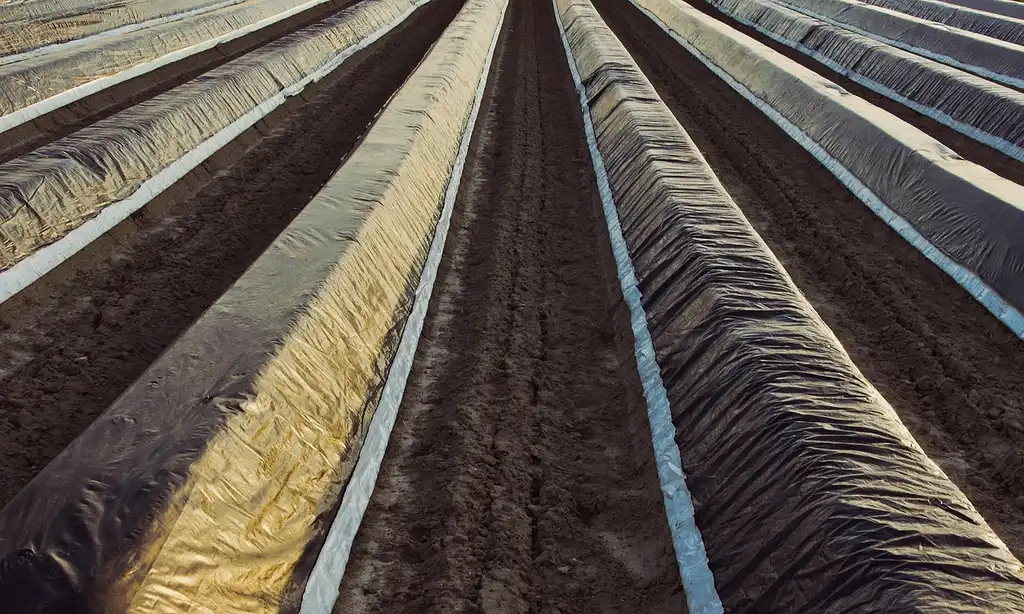
Black plastic mulch is a type of synthetic polyethylene sheet mulch. It blocks light, suppresses weeds, reduces surface evaporation, and can warm the soil. It is laid over the bed in sheets or rolls, then cut for planting holes or slits. It does not biodegrade in a vegetable garden, so removal is part of the setup.
Blocks light and weeds
Its weed control comes from simple physics: the sheet blocks sunlight from reaching germinating weeds. That makes it a barrier between mulch and soil. It works best where the film stays intact and the edges are secured, because light leaks at the edges invite weeds and reduce the benefit.
Warms soil and holds moisture
Black plastic can raise soil temperature by about 5°F or more, and that warming effect depends on firm contact with the soil. Clear plastic warms soil more than black plastic and is used when maximum soil heating is the goal. Black plastic is usually the more practical option for vegetable beds because it also blocks weeds better than clear film.
Moisture retention is part of the appeal, but it cuts both ways. Since rain will not penetrate a well-secured black film, water management has to come from below the sheet. Without that, the root zone can dry out while the surface still looks covered and protected.
Why it stays in the garden until removal
Because polyethylene does not decompose in the bed, black plastic remains a temporary cover rather than a finished mulch. That means end-of-season removal is not optional. Small tears, loose corners, and buried scraps should be collected so the bed does not keep shedding plastic into the soil.
Does black plastic mulch leach chemicals into soil?
Agricultural-grade polyethylene mulch is used in vegetable gardens and is the material that belongs in this setting. The bigger risk is not ordinary black plastic sheet mulch from a garden supply source; it is repurposed or mixed plastic of unknown origin. That difference matters more than the color alone.
Agricultural-grade polyethylene versus mixed plastic
Plastic mulch sold for crops is made to sit on soil, block light, and remain intact through a season. That is very different from a random plastic sheet that may contain mixed resins, additives, dirt, or residues from non-garden use. If the source is unclear, it should not be placed in a food bed.
Why repurposed plastic is the wrong choice
Used feed sacks, construction wrap, trash liners, and mystery tarps can be too thin, too brittle, or made with additives that were never intended for edible crops. They may also tear more easily, which leaves fragments behind. A sheet can be physically present and still be the wrong material for a vegetable bed.
What to look for before you buy
Choose black plastic sold for agricultural use, with a product description that identifies it as mulch film or crop mulch. Avoid anything that is unlabeled, brittle, heavily faded, or made for a different job. If the package does not clearly indicate vegetable-bed use, do not assume it is safe for soil contact.
Can you use black plastic mulch for tomatoes and peppers?
Yes. Tomatoes, peppers, eggplants, and melons are warm-season crops that often benefit more from the heat gain of plastic mulch than cool-season vegetables do. Black plastic can help warm their root zone early in the season, reduce weed pressure, and keep fruit cleaner by limiting soil splash.
Warm-season crops and early soil warming
Harvest to Table notes that plastic mulch can help warm soil for warm-season crops, and black plastic can raise soil temperature by 5°F or more. Growing Taste reports daytime soil temperature increases of about 5°F at 2 inches under black plastic. That kind of warming fits heat-loving transplants better than cool-weather crops.
When a hotter mulch makes sense
In a short spring or cool shoulder season, black plastic can help the bed become usable sooner. In a hot summer, the same warming can be a burden. The crop still matters more than the calendar. A pepper bed can take heat that would push lettuce into stress.
Suppose a grower wants to plant tomatoes in a site that stays damp after rain. Black plastic with buried edges and drip lines underneath can help separate fruit from wet soil and keep the root zone more consistent. The same setup on a windy, exposed bed will need better anchoring and tighter contact to work well.
Does black plastic mulch stop weeds better than organic mulch?
It usually does a better job of blocking weeds because it forms a light barrier. Organic mulches can suppress weeds too, but they let water and air move through and they do not create the same sealed light block. That difference is why black plastic is often chosen for weed control in planted rows.
Why black plastic is effective
Black plastic is used as a barrier between mulch and soil to stop weeds. Garden Guides says it does not allow air or sunlight through. That makes it effective around crops where you want weed suppression, moisture control, and some soil warming at the same time.
Where organic mulch may fit better
Organic mulches are often the better choice for cool-weather crops such as lettuce and cabbage. They keep the soil cooler and remain water-permeable, which suits crops that do not want heat trapped at the surface. If weed control is useful but warming is not, organic mulch can be the better match.
Will black plastic mulch keep soil too hot in summer?
It can. Black plastic raises soil temperature, and that benefit becomes a risk in hot climates or during sustained summer heat. Beds with poor airflow, shallow roots, or already warm soil can become too hot, especially if the plastic has firm contact with the soil and the crop does not need extra heat.
Hot weather and root-zone stress
Overheating is the main plant-safety concern. A warm-season crop may handle a hotter bed, but a cool-season crop may slow down, bolt, or struggle. Root-zone stress can also appear when moisture is cut off and the bed heats at the same time. The problem is often the combination, not one factor alone.
Cool-season crops need a different approach
Harvest to Table recommends organic mulches for cool-weather crops such as lettuce and cabbage. That advice fits the crop’s preference for cooler, more even soil conditions. If the goal is to keep a bed comfortable in summer heat, black plastic is often the wrong tool.
Do you need drip irrigation under black plastic mulch?
Yes. Drip irrigation is the standard setup under non-permeable plastic mulch because rain will not pass through a well-secured film. Water has to reach the root zone from below the sheet, or the bed can dry out while the surface remains covered and apparently protected.
Why drip belongs under the film
Tomato Dirt says black plastic is laid over the soil in sheets or rolls, with holes or slits cut for plants. It also says rain will not penetrate a well-secured black film and recommends drip hoses under the plastic for watering. That setup gives water where roots can use it.
What happens without it
Without drip lines, the bed can become difficult to manage. You may end up lifting the film, watering from above, or letting plants stress between irrigations. That defeats much of the point of the mulch and can produce uneven growth, especially in warm weather.
Should black plastic mulch touch the soil tightly?
Yes. It should lie in firm contact with the soil, and the edges should be buried or sealed. Poor fit reduces the warming benefit and leaves gaps where wind, weeds, and moisture problems can start. Loose plastic is less effective and more likely to cause trouble than a smooth, snug sheet.
Firm contact matters
Black plastic warms best when it presses closely against the soil surface. Air pockets reduce heat transfer, and that weakens the temperature gain the mulch is meant to provide. If the film bridges over clods or dips, the bed will not warm as evenly.
Edges need attention
Buried or sealed edges keep light out and wind from lifting the sheet. They also help keep the mulch in place through the season. If the film is flapping or split at the edge, the bed loses weed control and moisture control at the same time.
Black plastic mulch safety checklist
| Crop type | Climate | Irrigation method | Bed duration | Risk level | Recommendation |
|---|---|---|---|---|---|
| Tomatoes, peppers, eggplants | Cool spring, moderate summer | Drip under film | One season | Low | Use |
| Melons | Warm growing season | Drip under film | One season | Low | Use |
| Tomatoes, peppers | Very hot climate | Drip under film | One season | Moderate | Use with caution |
| Lettuce, cabbage | Warm to hot climate | Any surface watering only | One season | High | Avoid |
| Any crop | Unknown or mixed plastic source | Any | Any | High | Avoid |
| Any crop | Cool season | Drip under film | Short term | Moderate | Use with caution |
| Any crop | Hot summer with poor ventilation | Drip under film | Long bed duration | Moderate to high | Use with caution |
- Confirm the sheet is agricultural-grade polyethylene made for crop use.
- Use it on warm-season vegetables or early-season soil warming beds.
- Install drip irrigation under the film before covering the bed.
- Press the film into firm soil contact and seal the edges.
- Remove the mulch at season end and collect torn pieces.
What are the downsides of black plastic mulch in a vegetable bed?
The downsides are material waste, heat stress, irrigation dependence, and a harder cleanup. Because it does not break down in the garden, you have to remove it. Because rain does not penetrate a secured sheet, you need drip irrigation. And because it warms the soil, it can push the bed too hot for some crops.
A common first-timer mistake is using black plastic on a bed of lettuce in July because the film looks tidy and weed-free. The bed may stay cleaner, but the crop can suffer from warm roots and limited moisture movement. A better match would be organic mulch or no mulch at all, depending on the site.
Reuse and disposal matter
Reuse is only sensible if the film is still intact and clean enough to perform as mulch. Torn, brittle, or heavily soiled plastic should be removed and handled as waste according to local rules. Leaving fragments behind is the opposite of a safe garden practice.
Black plastic versus clear plastic and IRT mulch
Clear plastic is used when maximum soil heating is the goal, and it warms soil more than black plastic, but it can also promote weed growth under it. IRT mulch blocks photosynthetically active radiation while transmitting infrared radiation, and Growing Taste says it can develop crops 7 to 10 days earlier than black plastic. Black plastic remains the middle-ground choice for many vegetable beds.