Why Some Leaves Turn Yellow: Basic Plant Biology
Leaves turn yellow when chlorophyll breaks down and other pigments show through. If only the oldest, lower leaves yellow one at a time, aging is likely. Many yellowing leaves at once usually points to stress. Ignoring the pattern can push you to keep watering, feeding, or moving a plant the wrong way until roots, growth, and flowering suffer. This guide explains the basic biology behind yellow leaves and how to tell normal aging from watering, light, nutrient, pest, and root problems.
Reading yellow leaf patterns and their causes
Yellowing leaves are called chlorosis. The color change can happen when chlorophyll, the green pigment in leaves, breaks down faster than the plant replaces it. As that green fades, yellow-orange carotenoids already present in the leaf become easier to see. That is why yellow leaves do not automatically mean a plant is dying.
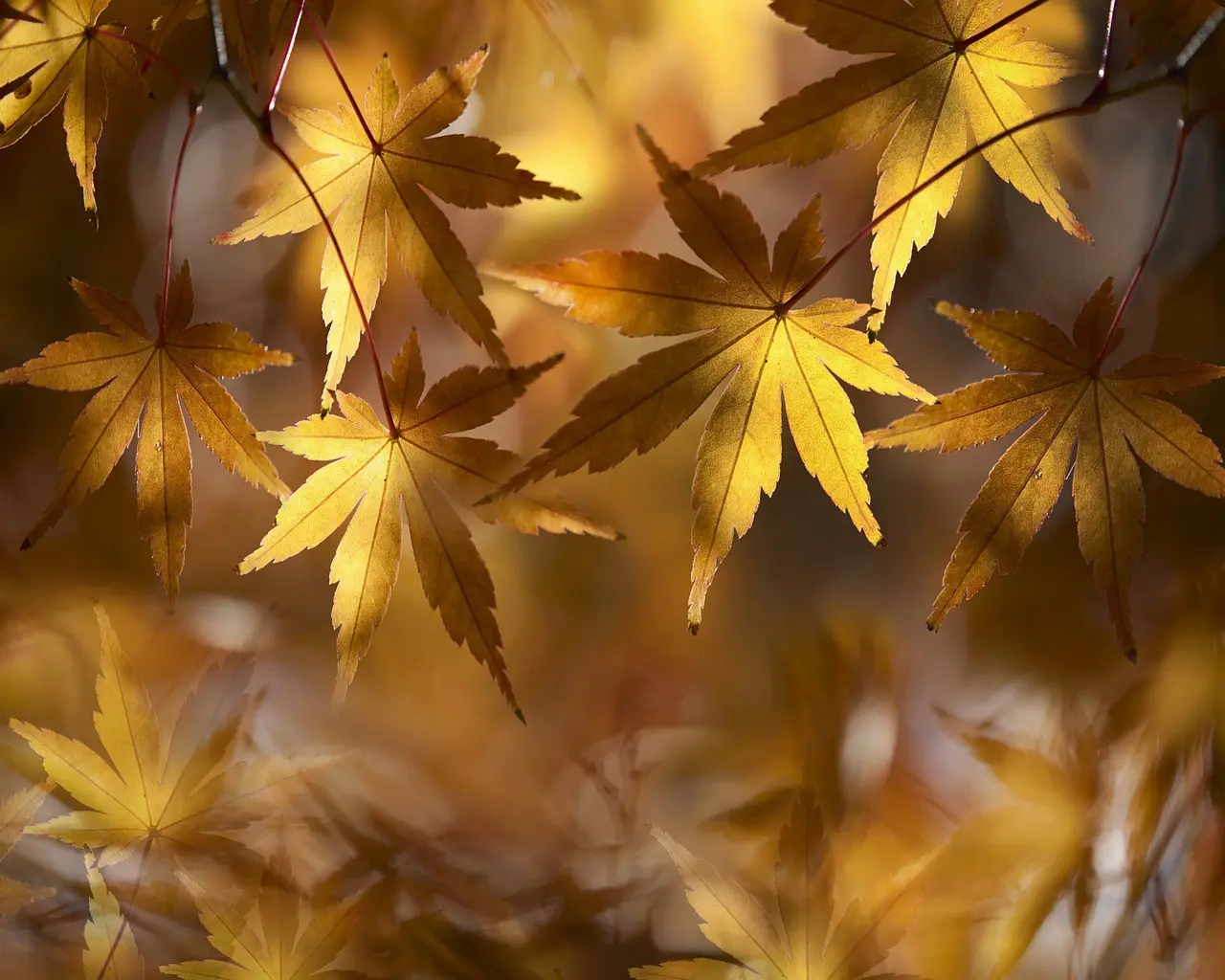
Leaves can also show red-purple anthocyanins during seasonal color change. Those pigments can appear for different reasons than chlorophyll loss and are influenced by pH. Leaf color is a signal, not a diagnosis. Yellow leaf color can reflect aging, low light, excess water, dry soil, nutrient stress, pests, or root trouble.
Yellow leaf pattern decoder
| Leaf location | Texture | Soil feel | Likely biology | First action |
|---|---|---|---|---|
| Lower, older leaves | Soft, even yellowing | Normal or mildly dry | Natural aging or nitrogen deficiency | Check whether only the oldest leaves are affected |
| Whole plant | Uniform yellowing | Wet or waterlogged | Overwatering, poor drainage, or root decline | Pause watering and assess drainage |
| Lower leaves | Pale, weak, floppy | Dry and light | Low light or general stress | Review placement and light intensity |
| Edges or whole leaf | Crispy, curled | Dry, crumbly, or dusty | Underwatering | Check the top 2 inches of soil before changing anything else |
| Leaf undersides and nearby leaves | Sticky, stippled, or webbed | Can be normal | Pests such as spider mites, aphids, or whiteflies | Inspect undersides with close light |
| After repotting or moving | Patchy yellowing | Mixed or uneven | Transplant shock or root disturbance | Reduce extra stress and wait for adjustment |
| Shaded side of plant | Pale, thin yellowing | Usually normal | Light placement problem | Compare exposure across the plant |
| New growth | Yellow or pale new leaves | Varies by plant | Stress, not a simple aging pattern | Check light, roots, and pests first |
| Lower leaves with dark veins | Yellow tissue between veins | Usually normal | Nitrogen deficiency or another nutrient issue | Compare the pattern on older leaves first |
| Leaves plus sour-smelling soil | Drooping and yellowing | Sour, wet, compacted | Root rot tied to prolonged wet soil | Stop overwatering and inspect root health |
Is it normal aging or a problem?
Older leaves often yellow first because the plant shifts resources to newer growth. That is common, especially on the lowest leaves or outer leaves. If yellowing moves upward quickly, spreads across the plant, or appears on new growth, the pattern points away from normal aging and toward stress.
Leaf position matters more than the color alone. A single lower leaf fading is different from several upper leaves turning yellow at once. A houseplant that drops one bottom leaf after months of growth is not reacting the same way as a plant that turns pale from the top down after a room change.
Why older leaves yellow first
When a plant lacks nitrogen, older leaves often show the first signs because the nutrient can move within the plant. Yellowing on old leaves first can indicate nitrogen deficiency. The classic pattern is more uniform yellowing rather than a random mix of spots and streaks.
That matters because not every yellow leaf is the same problem. If only the oldest leaves fade while new growth stays green, aging or nitrogen shortage is more likely than a root or pest issue. If new leaves yellow first, look harder at light, roots, pests, or transplant stress.
Is the soil too wet or too dry?
Both overwatering and underwatering can end with yellow leaves, but the leaf texture and soil feel usually separate them. Overwatering reduces oxygen around roots and can trigger root decline. Underwatering usually shows as drooping first, then yellowing, especially when the foliage turns dry, curled, or crunchy.
Check the pot, then change care. Start by feeling the soil and judging the pot weight. A heavy pot and soft soil point toward overwatering or poor drainage. Dry, crumbly soil with drooping leaves points the other way. If the soil is wet and the plant still looks thirsty, that is a clue that roots may not be working well.
If the soil is wet, pause watering and inspect drainage before doing anything else. If the soil is dry, water thoroughly and watch whether the leaves recover or keep declining. That simple split helps you avoid treating the wrong problem first.
Overwatering and low oxygen around roots
Roots need oxygen as well as water. When soil stays wet too long, oxygen drops around the roots and root tissue can decline. That often leads to yellow leaves, limp stems, and slow growth. Sour-smelling soil is another warning sign that the root zone has stayed too wet for too long.
Underwatering and moisture stress
Underwatering often causes leaves to droop before they yellow. Dry plants may develop curling, drooping, or crunchy leaves. The plant is responding to water stress, and yellowing can appear before leaf drop if the problem continues. Dryness alone does not explain every case, but it is a strong clue when the foliage feels brittle.
Can light cause yellow leaves?
Yes. Too little light can cause yellowing, and the first sign may be lower leaves turning pale. Too much light can also stress leaves, though the pattern is different and often appears on the most exposed side of the plant. Light problems are species-specific, so placement matters more than a generic rule.
Shaded-side yellowing often points to how the plant is sitting in the room or garden. If one side gets stronger sun or the opposite side gets almost no light, the color pattern can be uneven. Do not assume new growth yellowing is only a water issue; light stress can shift pigment use across the whole plant.
Too little light
The first sign of low light may be yellowing on lower leaves. When light is weak, the plant cannot keep as much chlorophyll in use, and older shaded leaves may fade first. That pattern is easy to confuse with age, so compare the lower leaves with the brighter upper leaves before changing watering.
Too much light
Strong direct light can stress foliage, especially if a plant is moved suddenly into harsher exposure. Sun-stressed leaves may yellow, pale, or scorch on the exposed side. If yellowing tracks the sunny side rather than the shaded side, placement is worth checking before feeding the plant.
Nutrient and transplant clues
Nitrogen deficiency is a common cause of chlorosis, and it often starts on older leaves. A classic sign is more uniform yellowing, with the whole leaf fading rather than a spotted or streaked pattern. Other nutrient shortages can look different, so avoid treating all yellow leaves as the same deficiency.
Transplant shock can also turn leaves yellow after moving or repotting. The plant may react to disturbed roots, cramped roots, or a change in environment. Yellowing after moving indoors can be caused by light or temperature shock, so timing matters as much as the color itself.
What nutrient deficiency causes yellow leaves?
Nitrogen deficiency is a common nutrient cause to check first because it often shows up on older leaves before younger ones. The pattern is usually a more even yellowing. That older-leaf pattern helps separate it from many other yellowing causes.
Why transplant shock can yellow leaves
Can transplant shock cause leaves to yellow? Yes. It often causes temporary yellowing after repotting or moving the plant, especially if roots were disturbed or root bound. The best clue is timing: if yellowing begins soon after the move and the rest of the plant was stable before, shock is a strong possibility.
Say your pothos was moved from a bright porch to a dim living room and starts yellowing lower leaves within a week. That does not point to one single cause by itself. Light change, temperature change, and root stress may all overlap, so the timing and location of the yellowing both matter.
Pests and root problems
How do I know if yellow leaves are from pests or disease? Start under the leaves. Aphids, spider mites, whiteflies, scale, and mealybugs often hide there, and they can cause yellowing, stippling, sticky residue, or webbing. Yellowing with webbing is a stronger pest clue than yellowing alone.
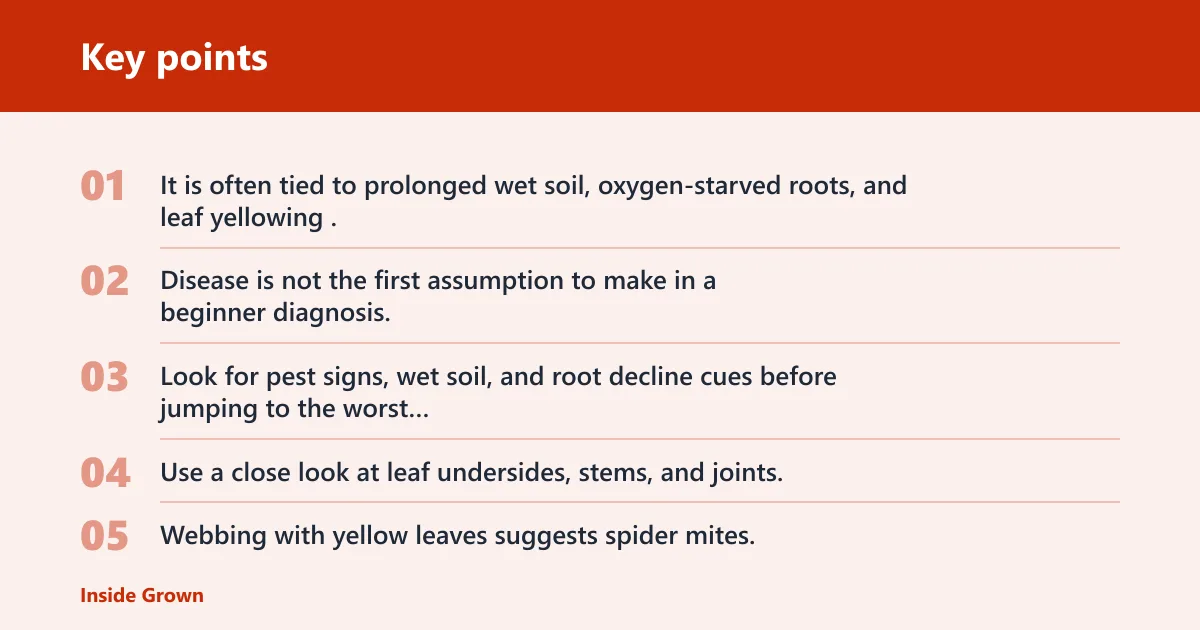
Root rot is different. It is often tied to prolonged wet soil, oxygen-starved roots, and leaf yellowing. Disease is not the first assumption to make in a beginner diagnosis. Look for pest signs, wet soil, and root decline cues before jumping to the worst explanation.
What to check under leaves
Use a close look at leaf undersides, stems, and joints. Webbing with yellow leaves suggests spider mites. Sticky residue can point to sap-feeding insects. Black spots can matter too, but the surrounding pattern on the plant still matters more than a single mark.
Hibiscus diagnosis often relies on pattern cues such as lower leaves, webbing, and black spots. That same logic helps with many plants: location, residue, and texture tell you more than the yellow color alone.
How pest damage differs from root rot
Pest damage often starts on leaves that show stippling, residue, or visible insects, while root rot starts below the soil line. A sour smell from the pot, wet soil that never seems to dry, and a plant that keeps yellowing despite watering changes point toward root decline instead of leaf-feeding insects.
A common first-timer mistake is treating yellow leaves as a feeding problem when the real issue is poor drainage. If the pot feels heavy and the soil stays soft and wet, stop adding more water first. Then inspect leaves and stems for pest signs before deciding on any other change.
Frequently asked questions
Why do plant leaves turn yellow?
Leaves turn yellow when chlorophyll breaks down and other pigments become visible. That color shift can be normal aging or a stress response. The key is pattern: lower old leaves fading one at a time is different from many leaves yellowing together, which usually means the plant needs attention.
Is yellowing leaves a sign of overwatering or underwatering?
It can be either. Overwatering often leaves the soil wet and the plant limp, with roots lacking oxygen. Underwatering usually starts with drooping, then curling or crunchy foliage before yellowing. Soil feel and leaf texture are the fastest clues, so check those before changing your routine.
Can too much sunlight make leaves turn yellow?
Yes. Too much light can yellow or pale leaves, especially on the most exposed side of the plant. Too little light can also cause yellowing, often on lower leaves first. Compare the bright side, shaded side, and leaf position before deciding whether the plant needs a different spot.
Why do older leaves turn yellow first?
Older leaves often yellow first because the plant moves resources to newer growth. That is normal in many cases. It is also why nitrogen deficiency often shows up on older leaves first. If the whole plant yellows at once, or new growth turns pale, look beyond normal aging.
How do I know if yellow leaves are from pests or disease?
Check the undersides of leaves for aphids, spider mites, whiteflies, scale, or mealybugs. Look for webbing, sticky residue, and stippling. Disease is harder to judge from color alone. If the yellowing pairs with wet soil, sour smell, or root decline, the issue may be below the surface instead.
Should I remove yellow leaves from my plant?
Remove yellow leaves only after you identify the cause. If a leaf is fully yellow and declining, it will not turn green again. If several leaves are yellow at once, focus on the stress source first. Keep partially green leaves if the plant still uses them, since they can still support growth.