
What to Do If You Have Allergies at a Botanical Garden
You can still visit a botanical garden if your allergies are mild and controlled. Check local pollen counts, avoid windy days, take your usual allergy medicine before you go if it has been prescribed or recommended for you, and leave right away if you get wheezing, swelling, or hives. For severe symptoms, CDC guidance on anaphylaxis and the NHS advice on emergency symptoms both support immediate medical help. This guide shows how to lower exposure before entry, what to do if symptoms start on-site, and when to end the visit early.
Weighing mild symptoms against active asthma
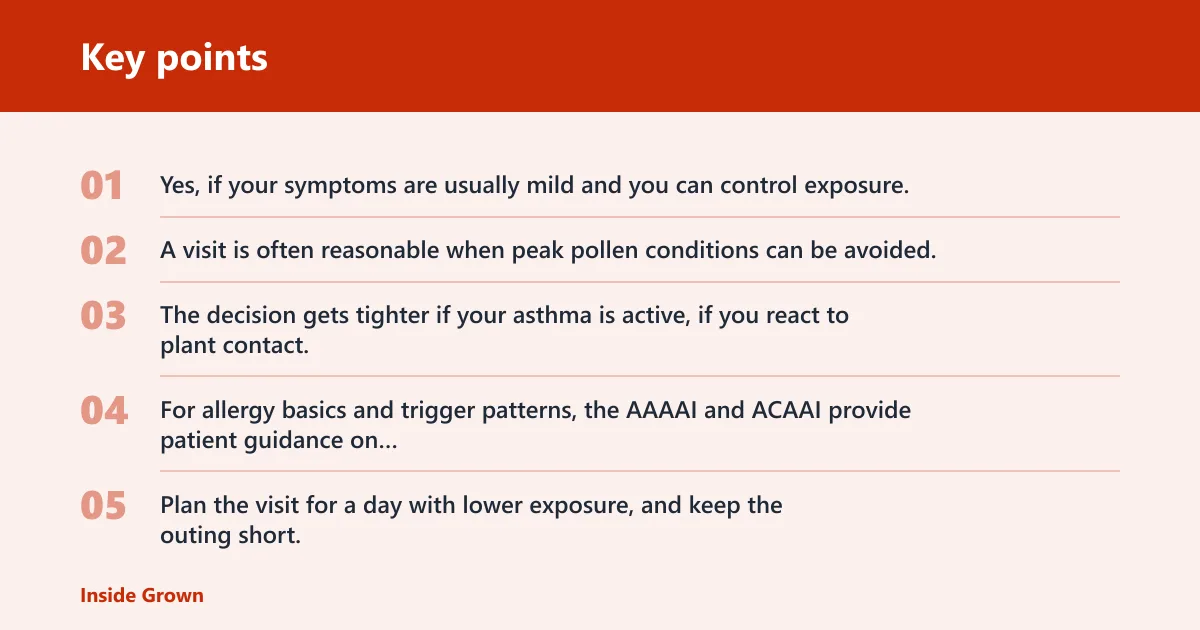


Yes, if your symptoms are usually mild and you can control exposure. A visit is often reasonable when peak pollen conditions can be avoided, marked paths are followed, and you can leave quickly if symptoms rise. The decision gets tighter if your asthma is active, if you react to plant contact, or if your usual treatment does not keep symptoms steady. For allergy basics and trigger patterns, the AAAAI and ACAAI provide patient guidance on seasonal and environmental allergies.
When a visit is usually reasonable
Plan the visit for a day with lower exposure, and keep the outing short. Rainy or humid days often mean less pollen in the air, while windy days during pollination are harder because pollen moves more freely. If you can stay on paths and skip dense flowering areas, your exposure is usually easier to control. Use local pollen reporting tools, such as the National Allergy Bureau or a nearby pollen monitor, before you go.
When to reconsider the trip
Reconsider going if you already have sneezing, watery eyes, chest tightness, or a runny nose before you leave. A garden visit adds repeated exposure from beds, lawns, and enclosed collections, so a bad day can become worse fast. If symptoms are already active, or if you are not sure whether they are allergy-related, get clinician advice before you go. If you need help finding your local count, check a National Allergy Bureau station or another local pollen source first.
How asthma changes the decision
Asthma changes the risk because pollen can trigger cough, chest tightness, wheeze, and shortness of breath, not only nose and eye symptoms. If breathing symptoms have been hard to control, skip the visit or choose a very short one with an easy exit. Leave immediately for wheezing, swelling, or hives, and seek urgent help if symptoms suggest a severe reaction. CDC and NHS emergency guidance both emphasize fast action for breathing trouble.
What parts of the garden trigger symptoms?
The highest-risk parts are the places where pollen collects or gets stirred up. Flowering beds, lawns, trees, herbs, grasses, and weed-heavy borders can all raise exposure. Wind-pollinated plants are the biggest airborne concern; insect-pollinated flowers are usually less likely to spread pollen widely, though they can still bother sensitive visitors through scent, close contact, or mixed plantings. Skin reactions are a different problem: some plants cause direct-touch dermatitis after contact.
Pollen-heavy areas
Pollen is a seasonal trigger that can travel on air currents, so open beds and broad flowering collections matter most on dry, windy days. Wind-pollinated plants are the main concern, especially grasses, ragweed, juniper, birch, olive, oak, cypress, and many other trees and weeds that shed lightweight pollen. Avoiding those areas can lower exposure. In many gardens, the highest-risk spots are the most open ones, where wind can move pollen across paths and viewing areas.
Beds, lawns, and flowering collections
Botanical garden first-time visit guides often group plants by type, which means repeated exposure in one walk. Lawns can stir up grass pollen, while beds of blooming shrubs and trees can keep you near the same allergen for several minutes. If you feel symptoms building, skip the next flowering block and choose a route with more hardscape, shade, or indoor space.
Plants that can cause skin contact reactions
Some plants cause contact dermatitis after direct touch. Urushiol-containing plants such as poison ivy, poison oak, and poison sumac can cause a reaction year-round, even from broken stems, contaminated gloves, or fallen plant material. These are touch hazards, not just airborne hazards, so you should not brush against leaves, stems, or sap.
What does a low-exposure route look like?
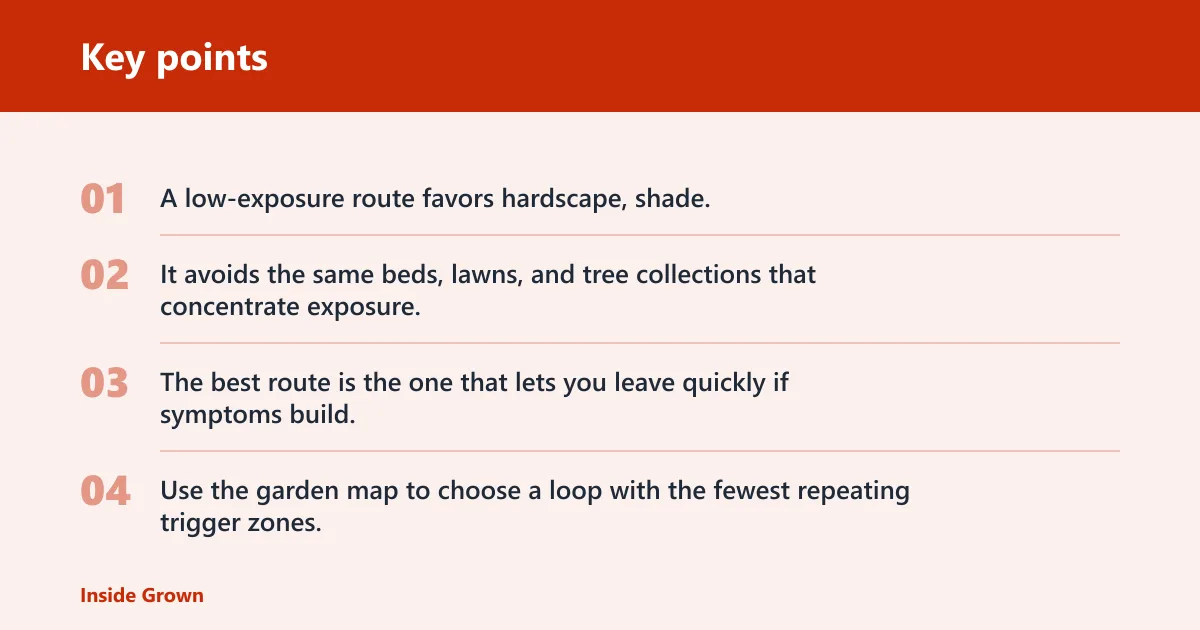
A low-exposure route favors hardscape, shade, and open space away from pollen-heavy plantings. It avoids the same beds, lawns, and tree collections that concentrate exposure. The best route is the one that lets you leave quickly if symptoms build, especially on dry or windy days. Use the garden map to choose a loop with the fewest repeating trigger zones.
High-risk garden areas vs lower-exposure alternatives
| Higher-risk area | Lower-exposure alternative | Why it helps |
|---|---|---|
| Open flowering beds | Pathway edges with distance from plantings | Reduces direct exposure to airborne pollen and repeated close contact |
| Lawns and grass collections | Hardscape, benches, or shaded paved areas | Limits grass pollen stirred up by movement and wind |
| Dense tree collections | Open courtyard areas or indoor exhibit space | Lowers exposure to tree pollen from birch, oak, olive, and similar wind-pollinated plants |
| Enclosed conservatories at busy times | Quieter outdoor paths with shelter nearby | Gives a faster exit if symptoms rise and may reduce repeated close-range exposure |
Weather that changes your exposure
Weather matters because it changes how much pollen is in the air and how far it moves. Wind usually makes exposure harder, while rainy or humid weather can reduce airborne pollen. If you are traveling by car, keep the windows closed and use filtration when possible. Check local pollen updates from the National Allergy Bureau or a local pollen source before leaving.
Why windy days are harder
Wind raises exposure by lifting pollen from trees, grasses, and weeds and carrying it across paths and lawns. That is why windy days during pollination are a poor choice for an allergy-prone visit. If the forecast is gusty, a shorter trip or a different day is the safer option.
Why rain or humidity can help
Rainy or humid days can keep more pollen from floating freely, which may make a visit more tolerable. That does not remove every trigger, and wet paths can still be a problem for footing, but it usually helps with airborne pollen exposure. If the garden is crowded indoors, ask whether there is a quieter exit route before you enter.
What to do about the drive there
Keep car windows closed and use filters if available. Open windows can undo the benefit of a lower-pollen day by pulling outdoor air into the cabin. If you park far from the entrance, plan the shortest walk-in route so you are not standing near flowering borders longer than needed.
Before you enter the garden
Preparation should be simple and specific. Check the pollen count and the day’s wind, choose the lowest-exposure route, and carry what you may need if symptoms start. For this type of visit, the goal is not to avoid every plant; it is to reduce repeated exposure and keep a clear exit plan. Use a local pollen source, not just the calendar, because levels can change by region and season.
Check pollen and weather conditions
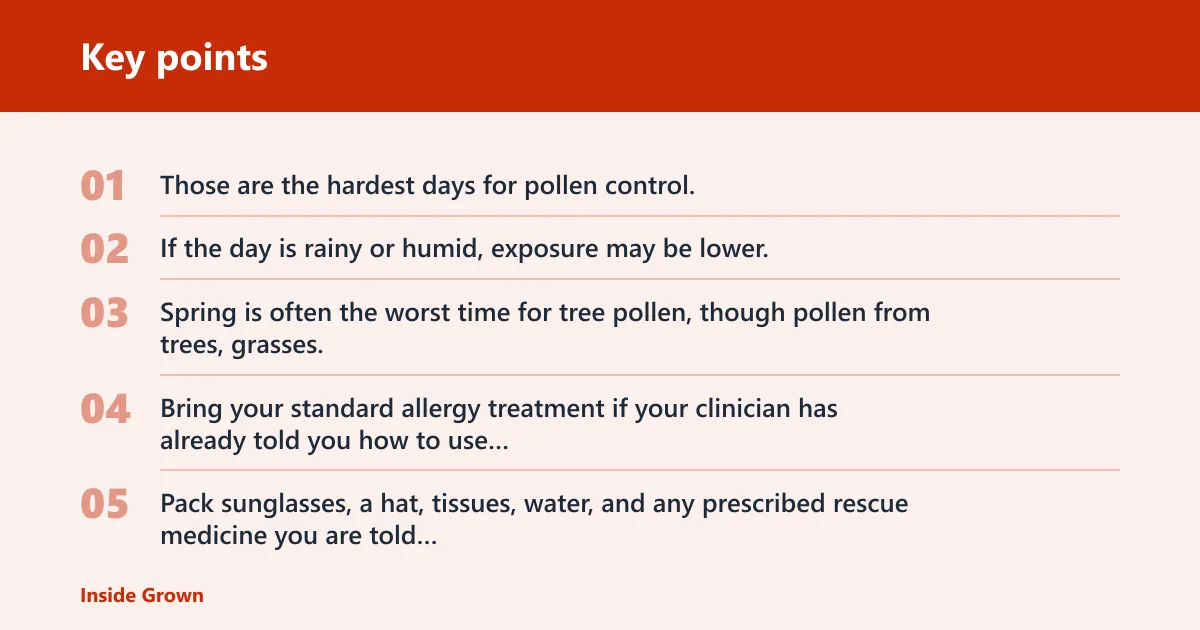
Look for dry, windy conditions first. Those are the hardest days for pollen control. If the day is rainy or humid, exposure may be lower, but you still need to watch the garden layout and your own symptoms. Spring is often the worst time for tree pollen, though pollen from trees, grasses, and weeds can affect other seasons as well.
Pack what you may need
Bring your standard allergy treatment if your clinician has already told you how to use it. Pack sunglasses, a hat, tissues, water, and any prescribed rescue medicine you are told to carry, such as an inhaler or epinephrine auto-injector. Keep it within reach, not buried in a backpack. If you have a known severe allergy, emergency medication should be accessible immediately.
Choose the lowest-exposure route
Before you start, pick a loop that avoids dense flowering beds, lawns in active bloom, and narrow paths bordered by heavy plantings. If the garden has a greenhouse or enclosed collection, remember that some areas may carry a separate fee and may concentrate exposure differently from open air. Stay on marked paths and do not enter beds or pools. Review the botanical garden access rules and etiquette before entry so you know where resting, stopping, or exiting is allowed.
Say your route maps to a rose border, a lawn edge, and then a greenhouse. If pollen is already making your nose run before you enter, choose the path that skips the lawn edge and keep the greenhouse for last. If symptoms rise again inside, you already have a shorter exit route.
What is the Botanical Garden Allergy Exit plan?
The Botanical Garden Allergy Exit Plan is a simple text-only backup plan for deciding where to go, where to pause, and when to leave. It works best when the route is chosen before symptoms start. Use it to set a trigger threshold, identify your break point, and keep medication details easy to copy into your notes or phone.
How do you set your trigger threshold?
Set the threshold before you enter. For example: leave if sneezing becomes repeated, if eyes start watering continuously, if a cough starts after a plant zone, or if any wheeze, swelling, or hives appear. A lower threshold is smart if asthma is active, pollen is high, or the garden is crowded. The goal is to decide early, not after the flare is established.
Which break point should you choose first?
Pick the nearest sheltered place before walking in. Good examples are a restroom, visitor center, shaded bench away from plantings, or an indoor hall. If the route includes a rose walk, choose the break point near the exit before entering it. If the route enters a tree collection, choose the break point near the transition to hardscape so you can stop fast without backtracking far.
How should route choice change by garden zone?
In a lawn zone, choose the path farthest from mown grass and open edges. In a tree alley, move quickly through the center path and skip lingering under blooming branches. In a greenhouse or conservatory, keep the visit short and note the nearest door before entering. In a mixed border, use the outside edge instead of the middle if that keeps you farther from the densest plantings.
Copyable medication reminder field
Medication reminder: ____________________________________
What to do if symptoms start on-site
If symptoms begin during the visit, move away from flowering areas first. Then choose a sheltered break point, such as a restroom area, indoor space, shaded bench, or another place away from active plant collections. If symptoms keep building, leave early instead of trying to finish the route. The AAAAI and ACAAI both recommend avoiding known triggers and treating symptoms promptly when they begin.
Move away from flowering areas
Start by changing the setting, not by waiting for the symptoms to settle in place. A few minutes in a different area can lower exposure if the trigger is pollen in the air. Keep away from beds, lawns, and any collection that seems to make symptoms worse.
Use a sheltered break point
A good break point is dry, calm, and farther from plants that are shedding pollen. Indoor refuge is better than standing beside a border and hoping the symptoms pass. Water, restrooms, and shade can make a short stop easier, especially if your nose is running or your eyes are stinging.
Decide whether to rest or leave
If symptoms ease after the route change and break, you may be able to continue on a lower-exposure path. If they do not ease, cut the visit short. A common first-timer mistake is trying to “wait it out” near the same bed that caused the flare, which usually keeps the exposure going.
Suppose a visitor with hay fever starts sneezing hard near a birch collection and then feels chest tightness 10 minutes later. The better move is to leave the tree area, sit in a sheltered spot, and head out if the tightness does not settle quickly. That is safer than moving from one flowering block to the next.
Can touching plants cause a reaction?
Yes. Touching plants can cause a separate reaction from pollen allergy, and the two do not feel the same. Pollen allergy usually affects the nose, eyes, and airways. Contact dermatitis usually affects the skin where the plant touched it, and it can happen after brushing against leaves, stems, or sap. Poison ivy, poison oak, and poison sumac are classic examples.
Direct-touch allergens to watch
Poison ivy, poison oak, and poison sumac are common year-round examples of touch-trigger plants. Some visitors also react to other plant surfaces, sap, or sap-covered tools. If a plant is unfamiliar, keep your hands off it unless the garden specifically invites touching in a designated area.
How to avoid contact
Stay on paths and do not reach into beds, pools, or low plantings. Avoid leaning on railings or branches, and do not pick up fallen leaves or stems. If you must steady yourself near a planting edge, watch where your hands go so you do not brush a trigger plant by accident.
When skin symptoms need help
If redness, itching, swelling, or blistering spreads after plant contact, get medical advice. Seek help sooner if the reaction is severe, uncertain, or not controlled by standard allergy treatment. Skin symptoms from contact dermatitis are not the same as pollen symptoms, and the response should match the reaction. Poison ivy, poison oak, and poison sumac dermatitis can worsen over time if exposure continues.
What rules should I know if I need to leave or rest during a garden visit?
Check the garden’s access rules before you go, because comfort and exit options depend on them. Many gardens require visitors to stay on paths, and some do not allow dogs or bicycles. No-smoking and no-littering rules also matter because they keep the air clearer and the route safer for other visitors.
Path and planting rules
The basic rule is simple: stay on paths and do not enter flower beds or pools. That protects the plants and keeps you farther from concentrated pollen and sap. If you need a break, use the spaces the garden already provides rather than stepping into restricted areas.
Dogs, bicycles, smoking, and litter
Some gardens prohibit dogs and bicycles, with assistance dogs as an exception. Smoking and littering rules are common as well. These rules matter for allergy visitors because extra dust, smoke, and traffic can make breathing symptoms harder to manage, and clutter can block a quick exit.
Facility basics that help when symptoms rise
Look for restrooms, shade, benches, and any indoor refuge before you start walking. If the garden has greenhouse areas, note that access may carry a fee and may feel more enclosed than the rest of the grounds. Knowing where to stop makes it easier to cut the visit short without guessing.
Frequently asked questions
What should I do if I start getting allergy symptoms at a botanical garden?
Move away from flowering areas first, then rest in a sheltered or indoor spot with less pollen. If symptoms are mild, you may be able to continue on a lower-exposure route. If you develop wheezing, swelling, or hives, leave immediately and get medical help if needed. CDC and NHS emergency guidance both treat breathing trouble and swelling as urgent.
Can I still visit a botanical garden if I have pollen allergies?
Yes, if your allergies are mild and you can plan around exposure. Choose lower-pollen weather, stay on paths, and avoid the most crowded flowering areas. If your symptoms are already active, or your asthma is not well controlled, it may be better to skip the visit or shorten it. Check a local pollen source before you decide.
What parts of a botanical garden are most likely to trigger allergies?
Open flowering beds, lawns, tree collections, and dense plant displays are the main trouble spots. Wind can move pollen through these areas and onto nearby paths. Enclosed collections can also be harder if you are sensitive to repeated exposure in a smaller space. Grass, ragweed, juniper, birch, olive, and similar wind-pollinated plants deserve special caution.
Should I go to a botanical garden on windy or rainy days if I have allergies?
Rainy or humid days are usually better than dry, windy ones because airborne pollen is often lower. Windy days during pollination can spread pollen across the garden and into your route. If you do go, keep the visit short and be ready to leave early if symptoms rise.
Are some plants in botanical gardens more allergenic than others?
Yes. Trees, grasses, and weeds often matter most because many are wind-pollinated and produce large amounts of airborne pollen. Common examples include birch, oak, olive, juniper, ragweed, and many grasses. Insect-pollinated flowers are usually less likely to spread pollen widely, but they can still bother sensitive visitors up close.
Can touching plants at a botanical garden cause an allergic reaction?
Yes. Some plants cause direct-touch reactions, especially poison ivy, poison oak, and poison sumac, which can cause contact dermatitis year-round. If you are unsure about a plant, do not touch it. Skin symptoms after contact are a good reason to wash up and get medical advice if they spread.
Sources
AAAAI: Allergy basics and trigger reduction
ACAAI: Seasonal allergies
NHS: Anaphylaxis
National Allergy Bureau pollen counts