Landscaping Services for Irrigation System Installation
Hire landscaping services that plan irrigation and planting together before any sod, mulch, or hardscape goes in; that timing cuts rework and usually means one coordinated site plan, not two separate contractors. Bad sequencing often leaves dry zones, overspray, broken roots, and replacement costs. This guide explains how to compare landscaping teams for sprinkler or drip installation, what to ask, and how to spot a plan that will cover the yard evenly.
Irrigation installation and landscape work


Irrigation works best when it is treated as part of the site build, not a separate add-on. Grading changes runoff. Soil prep changes how water soaks in. Sod, planting beds, edging, and curbing all affect where pipe runs, heads, and drip lines can go without being buried, blocked, or left too close to future digs.
What belongs in the same scope
A complete site-and-irrigation scope often includes rough grading, final grade correction, soil preparation, sprinkler or drip layout, trenching, pipe and head placement, controller setup, sod or seed timing, planting-bed work, and drainage corrections. If those items are split across crews, one team can undo the other’s layout.
Dircio’s Landscaping lists irrigation system installation alongside landscaping and lawn care, and customer feedback tied to that work mentions a sprinkler system installed with grading and sod. That is the kind of overlap homeowners should expect to see in a complete proposal, not as an afterthought.
Where separate contractors create gaps
Separate bidders often cover only the visible part of the job. One may quote sprinklers without checking slope or soil, while another installs sod without knowing where heads will pop up. That split can create dry corners, wet strips, and damaged roots when later digging hits pipe.
When the irrigation plan and the site plan do not match, the cost gap shows up later. Repairing a buried line under new sod is usually more expensive than placing it correctly once. The same is true for edging or curbing that gets poured across an unmarked trench path.
When one crew makes coordination easier
One crew is easier to coordinate when the project includes several linked tasks: new lawn, planting beds, drainage work, and a sprinkler layout that must avoid hardscape. A single schedule reduces repeated mobilization, but only if the quote shows each task clearly and the installer explains sequence, not just price.
Suppose a front yard needs 1,200 square feet of sod, three planting beds, and a new sprinkler system. If the contractor sets heads after rough grading but before final grade, the result may be low heads or standing water around the rotors. A common safer sequence is planning first, then grading, then pipe and head placement, then turf and beds.
Do you need a sprinkler system, drip, or both?
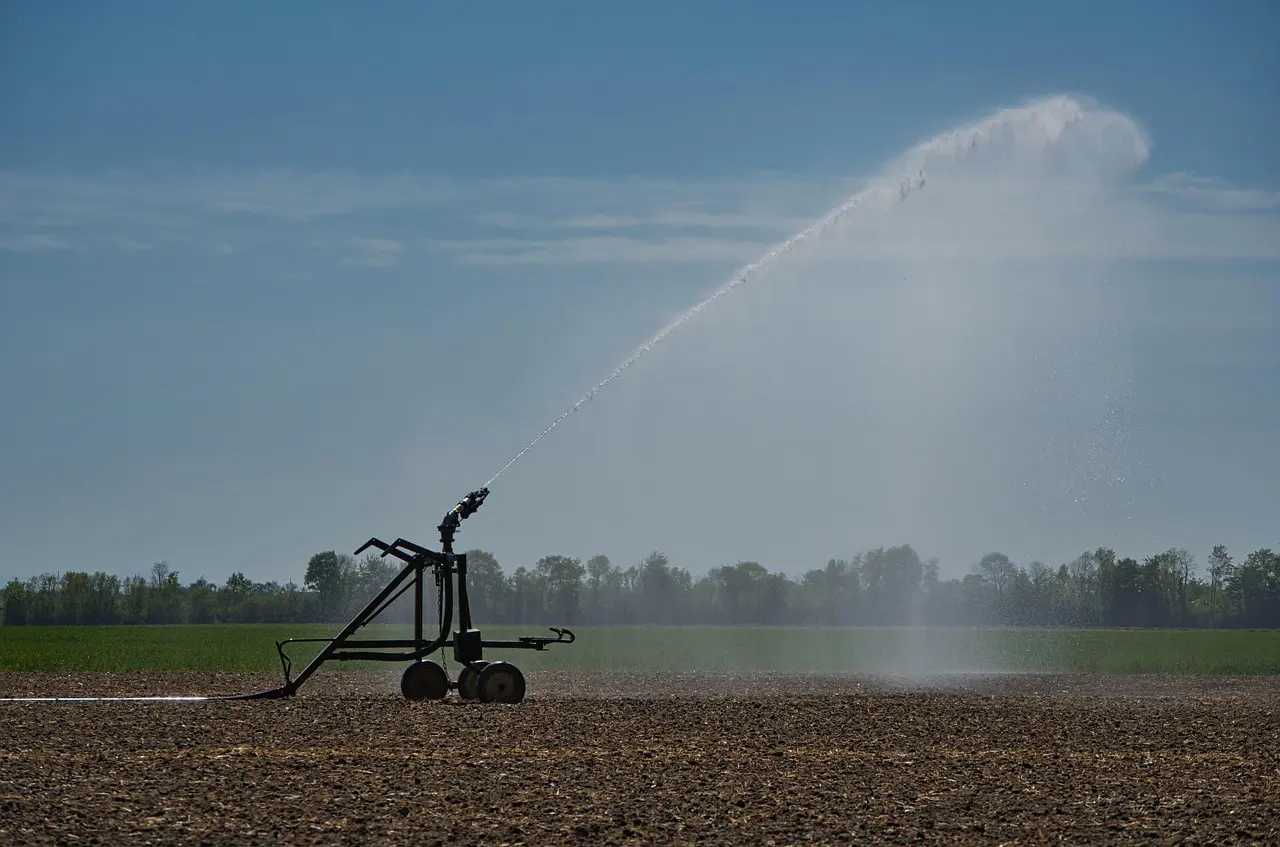
Most yards need more than one watering method. Turf usually calls for spray or rotor heads. Beds, shrubs, and trees often do better with drip because it reduces overspray and puts water where roots can use it. The right mix depends on plant type, pressure, slope, and how much of the yard is lawn versus planting area.
Lawns, beds, and trees need different delivery
Sprinklers are built for broad coverage. Drip lines are better for slower, targeted watering in beds and around individual plants. If the quote uses only one method for a mixed yard, ask how it will handle turf edges, young trees, and zones with different sun exposure or soil depth.
Pressure and soil type change the choice
Water pressure affects head selection and zone count. Low pressure may require about fewer heads per zone or different nozzles. High pressure can force misting and uneven throw if the design is not matched to the supply. Soil type matters too: fast-draining ground may need shorter run times, while dense soil may need longer soak cycles and better runoff control.
Dircio’s says irrigation system repair is offered when sprinklers have uneven patterns, and it identifies unusually high or low water pressure as a repair sign. That is a useful clue for homeowners comparing new work with repair work: not every weak spot means a full replacement, but pressure has to be checked before anyone sizes zones.
Retrofit layouts versus new builds
New construction gives the installer more freedom to place pipe, main lines, and valve boxes before turf and beds go in. Retrofit sites are tighter. Existing trees, patios, fences, and curbing can limit trench routes and head placement, so the design may need more zones or a mixed sprinkler-and-drip layout.
A retrofit can also expose old mistakes. In that case, repair or redesign is more useful than a small add-on.
What a complete quote should include
A complete irrigation quote should read like a site plan, not a service menu. It needs the work area, the watering method, the number of zones, the head types, the pressure check, the backflow requirement, winter shutdown details, and how the crew will hand the system off after install. Missing pieces usually mean change orders later.
Site prep and grading lines
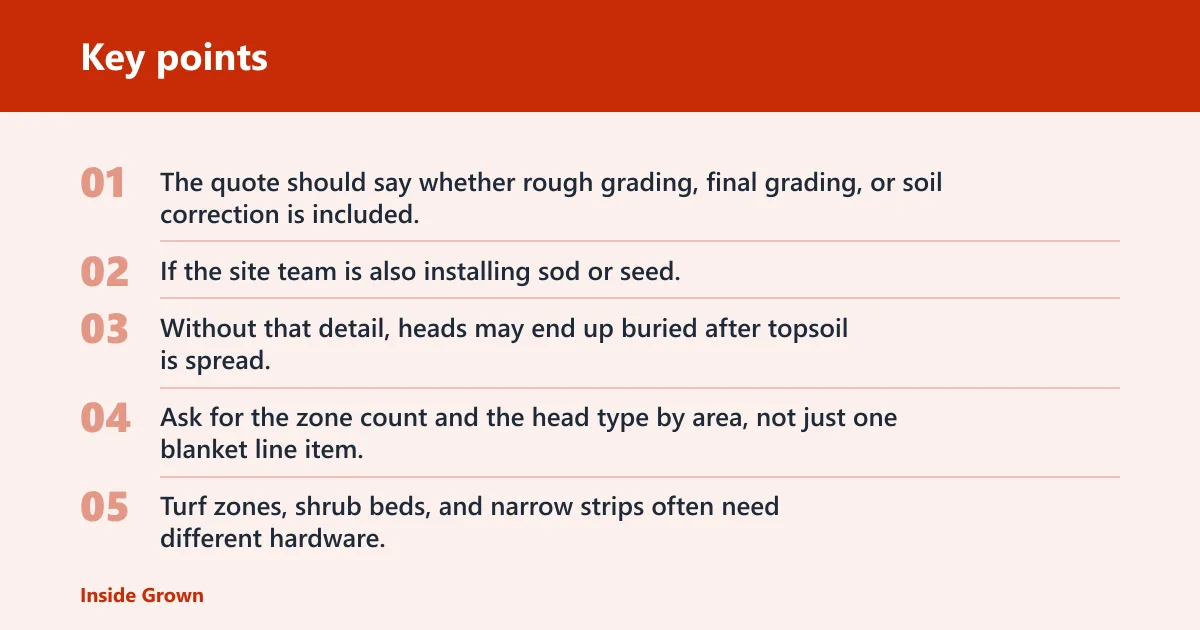
The quote should say whether rough grading, final grading, or soil correction is included. If the site team is also installing sod or seed, the grading line matters because irrigation heads must sit at the final finished height. Without that detail, heads may end up buried after topsoil is spread.
Zone count, head type, and controller setup
Ask for the zone count and the head type by area, not just one blanket line item. Turf zones, shrub beds, and narrow strips often need different hardware. The proposal should also state whether the controller or timer is part of the install and whether the programming is included before handoff.
Pressure check, backflow, winterization, and handoff
The installer should check static and operating pressure before finalizing the design. Backflow protection should be identified in the quote if local code requires it. The handoff should include zone labels, a start-up walk-through, and seasonal shutdown instructions. Liberty Lawn Maintenance lists irrigation activation as a separate service and irrigation blowout as a separate service, which is a good sign that the company separates startup from winter protection instead of folding both into a vague promise.
| Quote item | What should be stated | Why it matters |
|---|---|---|
| Site prep | Rough grade, final grade, soil correction, trench restoration | Prevents buried heads and standing water |
| Zone count | Number of turf, bed, and tree zones | Shows whether the system is sized to pressure and area |
| Sprinkler head type | Spray, rotor, or drip by zone | Confirms the delivery method matches the plant material |
| Pressure check | Measured supply pressure and design match | Helps avoid misting, dry spots, and broken fittings |
| Backflow requirement | Device type and code responsibility | Protects drinking water and avoids permit surprises |
| Winterization | Blowout, shutdown, or equivalent protection step | Reduces freeze damage in cold months |
| Sod/seed timing | When turf goes in relative to pipe work | Keeps new turf from being cut up later |
| Drainage fixes | Swales, drain lines, or runoff corrections | Stops runoff from carrying water away or pooling |
| Maintenance handoff | Startup, seasonal checks, and contact for repairs | Gives the owner a plan after install |
How site conditions change the design
Site conditions can change almost every part of the irrigation plan. Slope affects runoff. Rocky ground affects trenching depth and labor. Alkaline soil and high-desert heat affect watering frequency. Drainage problems can turn a good sprinkler layout into a mud strip unless the installer treats grading and water movement as one system.
Slope and runoff control
On sloped ground, water can move downhill faster than the soil can take it in. That means heads may need shorter run times, matched precipitation rates, or a split cycle so water soaks before it runs off. Drainage fixes such as regrading or drain lines may be needed before the system is considered complete.
Rocky ground and trench depth limits
Rocky soil slows trenching and can force route changes. The installer may need to adjust pipe depth, avoid shallow roots, or use a different head layout where digging is limited. If a bid ignores rock, it may look lower at first and turn into a change-order job once the trench opens.
Alkaline soil, high-desert heat, and drainage fixes
In alkaline or high-desert conditions, water use needs to be site-specific. Fast evaporation, dusty topsoil, and uneven infiltration can make a one-size schedule waste water and leave dry patches. Soil prep, topsoil placement, and drainage fixes matter here because they affect how long water stays where roots can reach it.
Earth Works Landscaping offers landscaping installation and says it serves the greater Moses Lake area. That matters because high-desert work often requires more attention to grade, soil, and water movement than a simple head count can show. Tatum Lawn Care also lists irrigation installation among its services in Moses Lake, which gives homeowners another local example of irrigation being bundled with site work.
When should irrigation be installed?
In most new site projects, irrigation should be planned before sod or seeding goes in and before the final hardscape layout is locked. The pipe network, valve locations, and head spacing need room to fit under the finished design. If curbing, edging, or fence work is coming too, trench routes should be set before those features block access.
Before sod or seeding in most new builds
The best time to install is after rough grading and before turf is laid. That order lets the crew correct slopes, place pipe, and test coverage without tearing up finished lawn. It also makes it easier to match irrigation to the final plant layout instead of guessing around future beds.
How to coordinate with beds, edging, and curbing
Edging and curbing can change head placement by narrowing access or shifting the usable lawn edge. Planting beds also need enough room for drip lines or smaller spray coverage. If the site plan is still changing, ask the contractor to mark sprinkler locations on the site plan before any concrete, edging, or bed borders are set.
Where hardscape timing affects trenches and pipe runs
Patios, paths, and fence lines can block a straight trench route. That does not mean irrigation should be delayed forever; it means the timing has to be coordinated. The installer may need to sleeve under hardscape or reroute main lines before the final surface goes in. That is cheaper than cutting finished work later.
Irrigation-ready site quote checklist
This checklist helps you compare bids line by line. A complete proposal should show the site work and the watering work together, with enough detail to spot missing grading, missing startup steps, or an underbuilt zone plan. Use it to compare estimates from full-service landscaping teams and irrigation-only contractors.
| Checklist item | What to look for in the quote | Yes/No |
|---|---|---|
| Site prep | Rough grade, final grade, soil prep, trench restoration | |
| Zone count | Separate turf, bed, and tree zones listed by number | |
| Sprinkler head type | Spray, rotor, or drip specified by zone | |
| Pressure check | Pressure testing and design match stated in writing | |
| Backflow requirement | Device or permit responsibility identified | |
| Winterization | Blowout, shutdown, or equivalent freeze protection included | |
| Sod/seed timing | Timing relative to trenching, head setting, and grading | |
| Drainage fixes | Swales, drains, or regrading listed if runoff is a problem | |
| Maintenance handoff | Startup, zone labeling, and service contact after install |
- Ask for a site plan that shows irrigation, grading, sod or seed, beds, and hardscape together.
- Confirm the zone count and head type for each area.
- Ask how pressure was checked and whether the design matches that pressure.
- Check whether backflow, startup, and winter shutdown are included.
- Look for drainage corrections where runoff, slope, or low spots exist.
- Confirm who handles repairs, seasonal activation, and blowout service after install.
A common first-timer mistake is comparing only the bottom-line price and ignoring scope gaps. A low quote that skips pressure checks, drainage corrections, or final startup can cost more later than a fuller bid that covers the entire sequence correctly.
Frequently asked questions
Do landscaping services install irrigation systems, or do I need a separate contractor?
Many landscaping companies handle irrigation, but not all of them do the design work that connects sprinklers with grading, sod, and drainage. Dircio’s Landscaping, EnvyUs, Liberty Lawn Maintenance, and Tatum Lawn Care all list irrigation installation among their services, while Liberty also separates activation and blowout as distinct services.
What should be included in a landscaping quote for irrigation system installation?
Look for site prep, zone count, head type, pressure check, backflow requirement, winterization, sod or seed timing, drainage fixes, and maintenance handoff. If the quote only says “sprinkler install,” it is too vague to compare against other bids or to spot missing work before the crew starts.
How do I know if my yard needs new sprinklers, repairs, or a full redesign?
Uneven spray patterns, clogs, leaks, and unusual high or low pressure can point to repairs. If the yard has a new layout, poor coverage, rocky ground, slope, or repeated runoff problems, a redesign may be better. Dircio’s identifies uneven patterns and pressure problems as repair signs.
What problems can happen if irrigation is installed without proper grading or soil prep?
You can end up with low heads, ponding, dry strips, and runoff that carries water away before it soaks in. Soil prep matters because the finish grade controls head height, and poor soil structure can make a correct sprinkler design perform badly even when the hardware is fine.
How much does irrigation installation cost when bundled with landscaping?
Cost depends on zone count, head type, trench difficulty, pressure matching, drainage fixes, and whether the crew is already on site for grading, sod, or beds. Bundling can reduce repeated mobilization and coordination costs. For a small yard, a basic add-on may stay near a few thousand dollars; larger or tougher sites rise fast when rock, slope, or drainage corrections are added.
What maintenance will my irrigation system need after installation?
Expect seasonal activation, occasional zone testing, head adjustments, leak checks, clog clearing, and repair of damaged or misaligned heads. EnvyUs lists irrigation checks for system performance, and Liberty lists irrigation activation separately, which suggests that startup and ongoing checks should be treated as planned service, not an emergency-only task.
Is winterization or blowout service part of irrigation system ownership?
Yes. In freeze-prone areas, seasonal shutdown is part of ownership. Blowout service uses compressed air to clear water from lines and heads, or an equivalent winterization process that prevents trapped water from freezing in pipes, valves, and fittings. Liberty lists blowout separately, and EnvyUs offers irrigation blow-outs for winter protection.