How to Protect Landscape Lighting From Rain
Protect outdoor lighting from rain by checking the weakest points first: fixture seals, plugs, and wire connections, then clear drainage so water cannot sit around them. Ignore those spots and you get shorts, corrosion, GFCI trips, dead lamps, and costly replacement parts. This guide gives a simple after-storm checklist for fixtures, connectors, low spots, and fixes that keep the whole system working in wet, humid weather.
What fails first in rain?


Rain usually finds the same weak points first: fixture openings, plug ends, splices, transformer entries, and any low spot that holds water. Outdoor lighting in rainy climates faces afternoon downpours, tropical systems, and thick humidity, so a system that looks fine in dry weather can fail after one storm.
Turn off power to the lighting circuit and unplug the transformer before you touch wet fixtures, plugs, or wiring. Then work from the most exposed parts inward. That order matters because the visible leak is often not the true source of the fault.
Fixtures and gasket failure points
Heavy rain can get into poorly sealed fixtures and lenses. Wet-rated outdoor fixtures are the right choice for direct rain exposure, but only if the gaskets and seals are intact at every opening. A cracked lens, flattened gasket, or loose housing edge can let water collect inside the fixture body.
Thin aluminum, low-grade steel, and flimsy hardware can corrode in wet conditions, which makes the housing easier to leak over time. Look for water droplets inside the lens, mineral marks, green corrosion, or a lamp that fails after a hard rain.
Plugs, connectors, and transformer entries
Plug ends and connector housings often fail before the fixtures do. Water follows cords, sits in receptacle boxes, and moves into the transformer through a loose entry point. If a zone trips right after rain, the plug area is one of the first places to check after power is off.
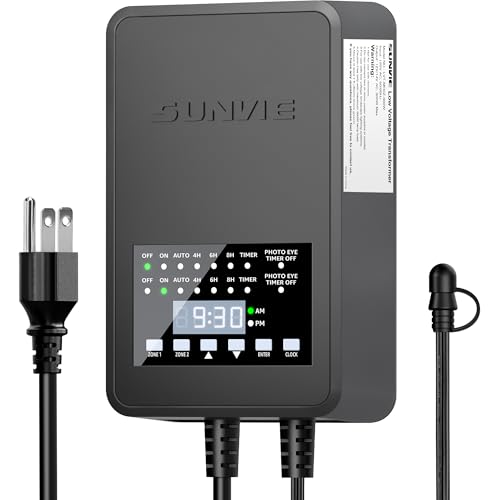
Transformer entries deserve the same attention. Low-voltage outdoor lighting uses a transformer to reduce 120 volts to 12 volts, and some transformers offer higher tap outputs. Water intrusion can trip the transformer or create a short that shows up as dim lights or a dead zone.
Low spots, pooling water, and buried runs
Puddles or flooding around low fixtures are a serious problem. Drainage and grading matter because water movement across the yard affects reliability. If a fixture sits in a depression, or a buried splice is in a spot that holds runoff, rain keeps finding the same weak point.
Picture a path light at the bottom of a slight slope. The fixture may be sealed well enough for a shower, but if water keeps collecting around the base, the connection chamber, stake opening, or buried splice gets soaked again and again. Moving the fixture is often better than adding another cover.
Rain protection checklist
Use this table as a quick after-storm check. Start with the part that sits in the most water exposure, then move to the next weak point. If one row keeps failing, fix the cause instead of only drying the symptom.

| System part | Rain risk | Best protection method | Red-flag symptom |
|---|---|---|---|
| Fixtures | Direct rain enters through lenses, seams, or damaged seals | Use wet-rated fixtures with intact gaskets and seals at every opening | Water inside the lens, flicker after rain, corrosion at the housing edge |
| Plugs and outlets | Splash, runoff, or water pooling at ground level | Use weatherproof covers, raise the connection point, and form a drip loop | Tripped protection, damp receptacle, plug discoloration, intermittent power |
| Low-voltage wire | Jacket wear, standing water, or damaged insulation | Use direct burial-rated wire; add conduit where extra protection is needed | Nicked jacket, soft spots, voltage drop, random outages |
| Junction boxes | Water entry at lids, knockouts, or bad seals | Use weatherproof enclosures and keep splices dry and elevated | Condensation, corrosion, repeated tripping, green or white residue |
| Transformers | Water intrusion at the case, conduit entry, or internal terminals | Mount in a sheltered location, keep clearances dry, test before rainy season | Buzzing, reset failure, breaker trips, dim or dead zones after storms |
| Timers and controllers | Moisture damages electronics and control terminals | Use enclosed, outdoor-rated controls and add surge protection in storm-prone areas | Wrong on-off timing, blank display, failed schedules, phantom cycling |
| Solar panels | Standing water, dirty panels, cracked seals, weak battery boxes | Angle panels to shed water and keep the battery compartment sealed | Short runtime, dim output, moisture in the lens or battery area |
| Buried connections | Soaked splices and direct contact with waterlogged soil | Use rated connectors, keep them out of low spots, and protect with conduit where needed | Flicker after rain, corrosion, repeated ground faults, dead sections |
Which fixtures are rain safe?
Choose wet-rated outdoor fixtures for direct rain exposure. UL-listed, wet-rated fixtures are recommended when the fixture will sit in open weather, not under a porch or deep overhang. For balconies, gardens, terraces, and outdoor walls, the protection rating should match the exposure level and the outdoor conditions it will face.
Concrete examples help. IP44 is protection against splashing water from any direction. IP65 is commonly used for protection against water jets. IP67 is used for brief submersion. That does not mean every outdoor light needs IP67; it means the rating should match where the fixture will sit and how much water it may face.
Reading IP ratings for placement
Use the rating as a placement rule, not a sales phrase. A wall light under partial cover may only need splash resistance, while an exposed terrace fixture needs stronger water resistance. If the product page gives no IP number, treat that as a warning sign for exposed locations.
For rainy weather, the rating matters most at openings, seams, and lens edges. A high number does not fix a cracked gasket. It only works when the housing is still intact.
When seals, lenses, and housings need replacement
Replace the fixture or its sealing parts if you see cracked lenses, hardened gaskets, stripped screws, or recurring moisture inside the housing. A temporary dry-out can get the light working again, but repeated fogging means the seal has already failed.
A common first-timer mistake is assuming a dry bulb means a dry fixture. The lamp can still be dry while water collects inside the lens chamber or around the wire entry. That hidden moisture often shows up as corrosion first, then outages later.
How do you protect plugs and connections?
Protect plugs from rain by keeping them off the ground, inside weatherproof covers, and away from runoff. A dry mounting point matters more than a temporary cover that still leaves the plug sitting in a puddle. Water reaches the connection by gravity, splash, or cord travel.
For outdoor light plugs from rain, use a cover that closes fully around the receptacle, place the connection higher than grade, and shape the cord so water drips off before it reaches the plug. If the outlet box is already taking water, move the connection instead of relying on a cap alone.
Drip loops and connector placement
Make a drip loop so water falls off the cord before it reaches the plug or junction. Keep connectors above the soil line and away from mulch that stays wet. When a connector hangs low, water can follow the jacket straight into the housing.
Do not place a connector in a hollow where runoff collects. A small rise in the yard often solves a problem that no amount of tape can fix.
Weatherproof boxes versus temporary covers
Weatherproof boxes are the better long-term fix for exposed plugs and control points. Temporary covers are useful for a short weather window, but they are not a cure for a bad outlet location, missing gasket, or recurring splash from a downspout or slope.
If the plug still gets wet after a cover is added, treat that as a placement problem. Move the connection, raise it, or add permanent enclosure protection.
How do you keep outdoor lighting wiring from getting water damage?
Use direct burial-rated wire for underground runs. It has a thick protective jacket that resists moisture, fungus, and sunlight. Where the wire is not direct burial-rated, conduit can add protection, especially in spots that need extra mechanical or moisture shielding.
Burial depth can vary by cable type, circuit type, and local code. Follow the product instructions and local rules rather than treating one depth as universal.
Direct burial wire versus conduit
Direct burial wire is the simplest choice for many outdoor runs because it is built for soil contact. Use conduit when you need more protection from digging, sharp edges, or repeated moisture exposure at a crossing point. Metal or plastic conduit can both serve that purpose.
Conduit is not a substitute for poor drainage. If the trench sits in standing water, the wire and any splices still need proper placement and sealing.
Choosing wire gauge for longer runs
Wire gauge affects voltage drop. Thicker wire carries current better over distance, which matters in low-voltage outdoor lighting. 10-gauge is one of the thicker options used for landscape lighting. 12-gauge can be appropriate for longer runs depending on the wattage, voltage drop, layout, and transformer output. 16-gauge wire is better suited to shorter runs and lighter loads.
That means longer runs, more fixtures, or higher load often call for thicker wire. A short path light line may be fine on lighter wire, while a long perimeter run usually needs a heavier gauge to keep the last fixtures from dimming.
Moisture at splices and buried connectors
Splices should stay dry, elevated when possible, and protected inside approved enclosures or rated connectors. If a buried connection sits in a wet pocket, moisture attacks the splice before the rest of the cable fails. That is why repeated storms often expose hidden weak points.
Suppose a 40-foot run starts flickering only after heavy rain. The issue may not be the lamp heads at all. A buried connector at the low end may be filling with water, then drying and corroding, which causes intermittent failure.
Transformer and control protection
Transformers and controls need their own rain plan. A transformer can trip during water intrusion or shorts, so it should be tested before rainy season. Surge protection also matters in stormy monsoon or rainy seasons because lightning and power swings can damage lighting controls and drivers.
Why transformers trip after storms
Water entering the transformer case, terminals, or nearby splice points can create a short or trip the unit. If a zone shuts down after a storm, check the transformer after the power is off and the unit is unplugged. A reset may restore function, but repeated trips point to moisture that still needs to be fixed.
Look for buzzing, heat, condensation, or a breaker that trips again after reset. Those signs suggest the fault is not just a temporary glitch.
Timers, controllers, and drivers in wet weather
Timers and controllers should be kept in enclosed, outdoor-rated locations, away from runoff and direct spray. Drivers need the same care. If the control housing is wet inside, schedules can fail, lights can cycle on their own, or the system can stop responding after rain.
Surge protection is worth adding in storm-heavy areas. It helps protect the parts that are hardest to replace quickly, especially electronic controls and LED drivers.
How do you protect outdoor string lights from rain?
Protect outdoor string lights from rain by treating every socket and connection as a leak point. String lights are usually more exposed than hardwired outdoor fixtures, so they need weather-rated sockets, elevated attachment points, and dry plug locations. A waterproof bulb label alone is not enough if the socket or plug sits in water.
For holiday lights, the same rule applies. How to protect outdoor christmas lights from rain starts with the plug and socket layout, not the color of the bulb. Keep the power end under cover, use proper outdoor-rated strings, and avoid hanging sets where water drips directly into each socket.
String lights versus hardwired lighting
String lights are often temporary and lighter duty than permanent outdoor lighting, so they are more sensitive to water at the plug and socket ends. Hardwired systems rely more on fixture seals, transformers, and buried runs. The protection method changes with the system type.
If a string light run keeps failing after rain, move the plug higher, shorten low sags that trap water, and replace any cracked socket covers. Temporary tape rarely lasts through a wet season.
How do you protect solar lights from rain?
Protect solar lights from rain by keeping water out of the battery compartment and off the panel surface. The panel itself can handle outdoor exposure when it sheds water well, but the weak point is usually the seam around the lens, switch, or battery door. Moisture there shortens runtime and weakens output.
Keep the fixture on a slight angle so water drains away from the housing, and clean debris from the panel face so rain does not leave grime that blocks charging. If the light dims after every storm, check the seal first, then the battery box.
What to do after a heavy storm
After a heavy storm, inspect fixtures, plugs, and control gear in that order. If one zone flickers, trips, or dims, turn off power and unplug the transformer before drying anything. Then check for visible water inside the housing, a corroded connector, or a low spot that keeps refilling.
If the same area keeps failing after each rain, the fix is usually placement or enclosure, not another quick patch. Move the weak point out of standing water and upgrade the protection there.
Should outdoor lighting be in low spots where water collects?
No. Outdoor lighting should not sit in low spots where water collects. Puddles or flooding around low fixtures are a serious problem, and standing water speeds corrosion, trips protection devices, and weakens seals. If the yard slopes toward the fixture, the fixture is in the wrong place.
Drainage and grading should keep fixtures out of standing water and keep buried connections away from the wettest point in the yard. A small relocation can solve the problem better than adding more weatherproof parts.
When should I call a professional for wet-weather lighting issues?
Call a professional when a light keeps tripping, dimming, or corroding after rain, or when you see visible water inside a fixture, junction box, or transformer. Repeated failures usually mean the problem is in the wiring path, the enclosure, or the drainage pattern, not just at the bulb.
Professional help is also the safer call if a transformer keeps resetting, if the system has buried splices in saturated soil, or if you are not sure which cable type, conduit setup, or code requirement applies. A wet-weather fault that returns after drying is not a simple cosmetic issue.
Frequently asked questions
How do I protect outdoor lights from rain?
Start with the weakest points: fixture seals, plugs, and wire connections. Use wet-rated fixtures for direct exposure, keep plugs in weatherproof covers and above standing water, and make sure buried runs and drainage do not send runoff through the system. Turn off power and unplug the transformer before any inspection.
How do I protect outdoor light plugs from rain?
Use a weatherproof outlet cover, mount the plug above grade, and add a drip loop so water falls off the cord before it reaches the receptacle. If the plug still gets wet after that, move the connection or upgrade the mounting point instead of relying on a temporary cap.
What kind of fixtures are safe for direct rain exposure?
Use wet-rated outdoor fixtures that are UL-listed or otherwise rated for wet locations. For exposed balconies, gardens, terraces, and outdoor walls, match the IP rating to the exposure: IP44 for splash exposure, IP65 for strong water jets, and IP67 for brief submersion.