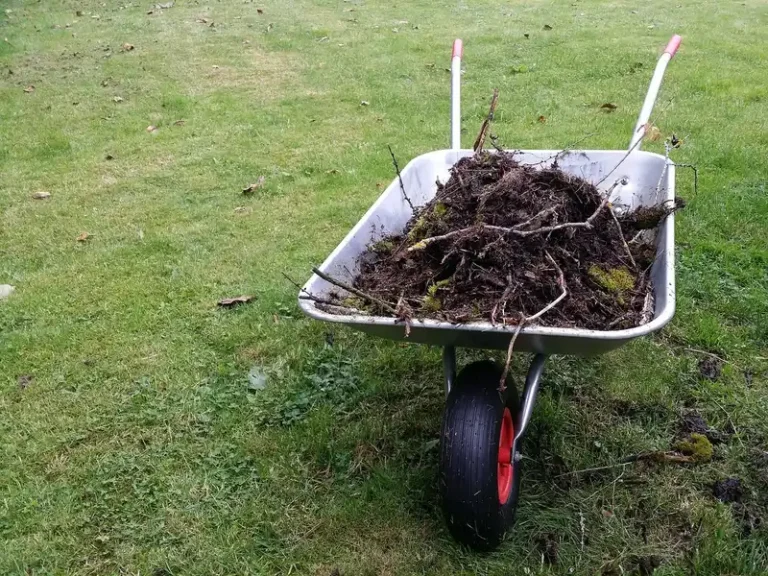
How to Hide Landscape Lighting Wires Neatly
Hide low-voltage exterior lighting wires by keeping them accessible on the surface, burying them only about 2 to 6 inches in soil or mulch beds, and protecting lawn or path crossings in conduit. If you bury too deep, nick the cable, or skip protection at crossings, later troubleshooting means digging up the yard. This guide shows the surface, shallow-bury, and protected-crossing methods by scenario.
This guide is part of our Landscape lighting guide series.
What you’ll need
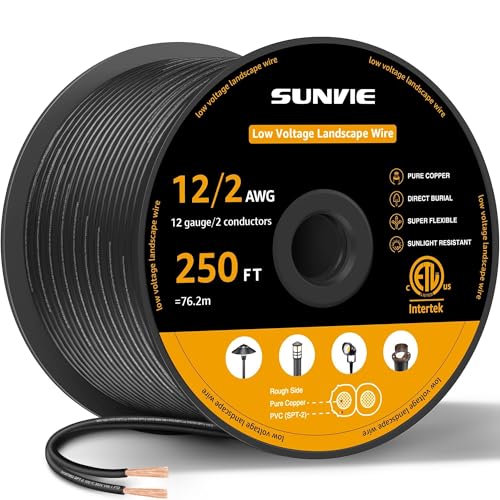


- Direct-burial exterior wire rated for outdoor use
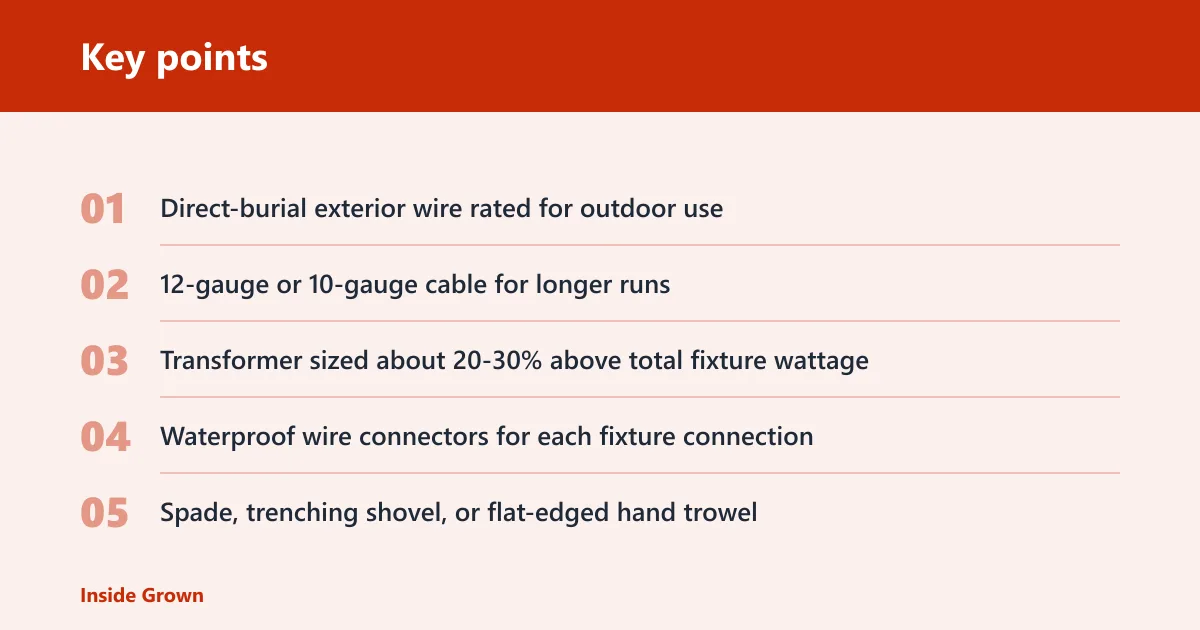
- 12-gauge or 10-gauge cable for longer runs
- Transformer sized about 20-30% above total fixture wattage
- Waterproof wire connectors for each fixture connection
- Spade, trenching shovel, or flat-edged hand trowel
- Cable clips for temporary surface routing
- Conduit or sleeve for lawn and path crossings
- Exterior lights: path lights, spotlights, floodlights, or hardscape lights
- Measuring tape and marking flags
Plan the wire route
Set fixture locations first, then draw the cable path around them. Place the transformer near a power source, leave access for service, and check total wattage before choosing cable size. Low-voltage systems are the safest and easiest option for DIY work, but long runs still need planning because voltage drop grows with distance.
Match the transformer to the load
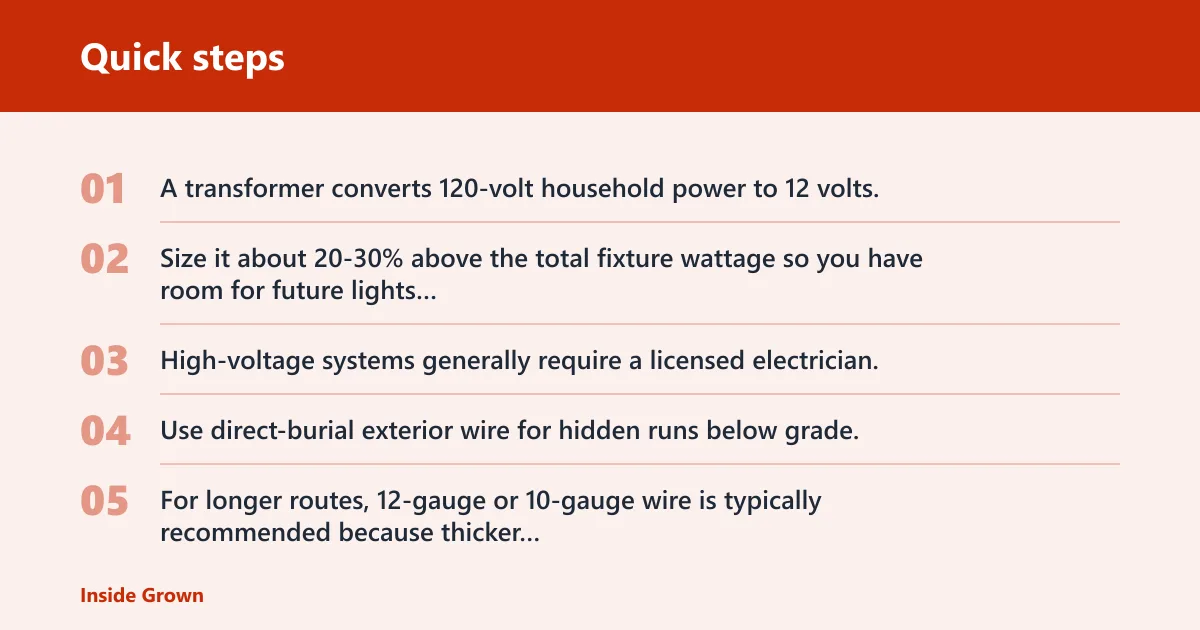
A transformer converts 120-volt household power to 12 volts. Size it about 20-30% above the total fixture wattage so you have room for future lights and less strain on the system. High-voltage systems generally require a licensed electrician.
Pick the cable for the run
Use direct-burial exterior wire for hidden runs below grade. For longer routes, 12-gauge or 10-gauge wire is typically recommended because thicker wire reduces voltage drop. Shorter branches can often use smaller cable, but the run length and total load should drive that choice, not the number of fixtures alone.
Lay out fixtures before digging
Place the cable along the planned route first. Leave enough slack at each fixture to move it, service it, or replace it later without cutting into the main line. Path lights usually work best staggered rather than in a straight line.
How to hide wires in mulch beds
Hide wire in mulch beds by tucking it just under the mulch surface or a shallow layer of soil, not by packing it deep where future access gets difficult. Keep connector points reachable, and give each fixture enough slack to lift it during maintenance without pulling on the run.
Use shallow cover, not deep burial
A shallow cover keeps the wire out of sight while still allowing repairs. In mulch beds, that usually means burying only a few inches or hiding the cable under mulch after routing it along bed edges and around plant bases.
Keep joints reachable
Waterproof connectors should sit where you can open them later without tearing up the bed. Put them close to the fixture, but not under dense roots or compacted mulch that hardens after watering.
Say your bed has four path lights around a shrub border. Keep the main line near the edge, tuck each branch under the mulch, and leave a service loop at every fixture so a future swap does not require digging up the whole bed.
How to hide wires across lawns and paths
Hide wires across lawns and paths by shallow-burying the run and protecting the crossing with conduit or sleeve. That is the difference between a cable that stays hidden and one that gets sliced by a mower, aerator, or shovel. Mark the route before backfilling so later digging does not hit it.
Protect every crossing
Use conduit, sleeve, or another protective barrier wherever the cable crosses turf, a walkway, or a place that gets repeated foot traffic. Keep the crossing as short and direct as possible.
Mark the route for later work
Flag or map the line before the soil goes back. Hidden cable that is not marked becomes a repair problem the first time someone installs a new bed edge or digs for irrigation.
Landscape lighting wire decision table
| Location | Best concealment method | Recommended burial depth or cover | Risk level | Maintenance access |
|---|---|---|---|---|
| Mulch beds | Surface route under mulch or shallow bury | 2 to 3 inches under mulch or light soil cover | Low if kept away from edging tools | Easy; lift mulch and expose slack |
| Lawn crossings | Sleeved crossing in conduit | About 6 inches cover with protective sleeve | High without protection | Moderate; mark location before digging |
| Hardscape edges | Hidden along edge with sleeve or channel | Conceal in joint, recess, or protected chase | Medium from abrasion and foot traffic | Moderate; access depends on edge design |
| Retaining walls | Run through protected chase or behind wall cap | Protected path, not loose exposure | Medium to high from movement and moisture | Limited if buried behind finished stone |
| Fence lines | Clip to hidden side or route in shallow trench | Surface clipped or 2 to 6 inches cover | Medium from wind, tools, and posts | Good if clips remain visible and removable |
| Exposed connector points | Keep above waterline in accessible pocket | No burial; waterproof connector only | High if left in pooling water | High, if not sealed into permanent cover |
Common mistakes
Most visibility problems start with the wrong burial depth or the wrong place for the crossing. Small mistakes here become expensive fast.
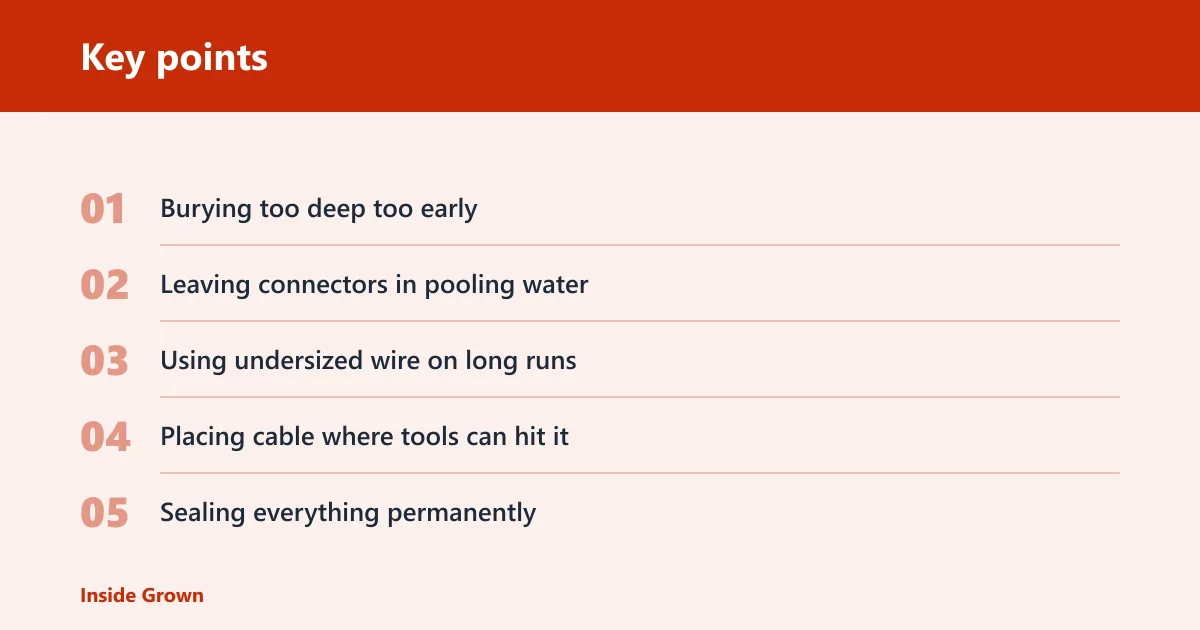
- Burying too deep too early: keep shallow-bury runs close enough to reach for repairs.
- Leaving connectors in pooling water: move splices higher or into a protected pocket.
- Using undersized wire on long runs: upgrade to 12-gauge or 10-gauge when distance grows and voltage drop becomes a problem.
- Placing cable where tools can hit it: stay clear of mower paths, edging blades, and shovel lines.
- Sealing everything permanently: hide the run, but keep service access at fixtures and joints.
Fix a visible or damaged run
If a cable is already exposed, reroute it first, then re-cover it. A common first-timer mistake is to push the wire deeper wherever it shows. That can hide the problem for a while, but it often leaves a connector too low, or puts the cable in the same damage zone again.
- Expose the damaged or visible section.
- Check whether the line can be moved to an edge, bed border, or protected sleeve.
- Replace any nicked section with outdoor-rated direct-burial wire of the same gauge or a heavier one.
- Raise or relocate exposed connectors to a dry, reachable spot.
- Test the circuit, then recover the line with the method that fits the location.
Frequently asked questions
How to hide exterior wires
Use the lightest concealment that still protects the cable: surface routing under mulch, shallow burial in beds, and sleeve protection across exposed crossings. If the wire is near a hard edge or traffic path, protection matters more than making it vanish completely.