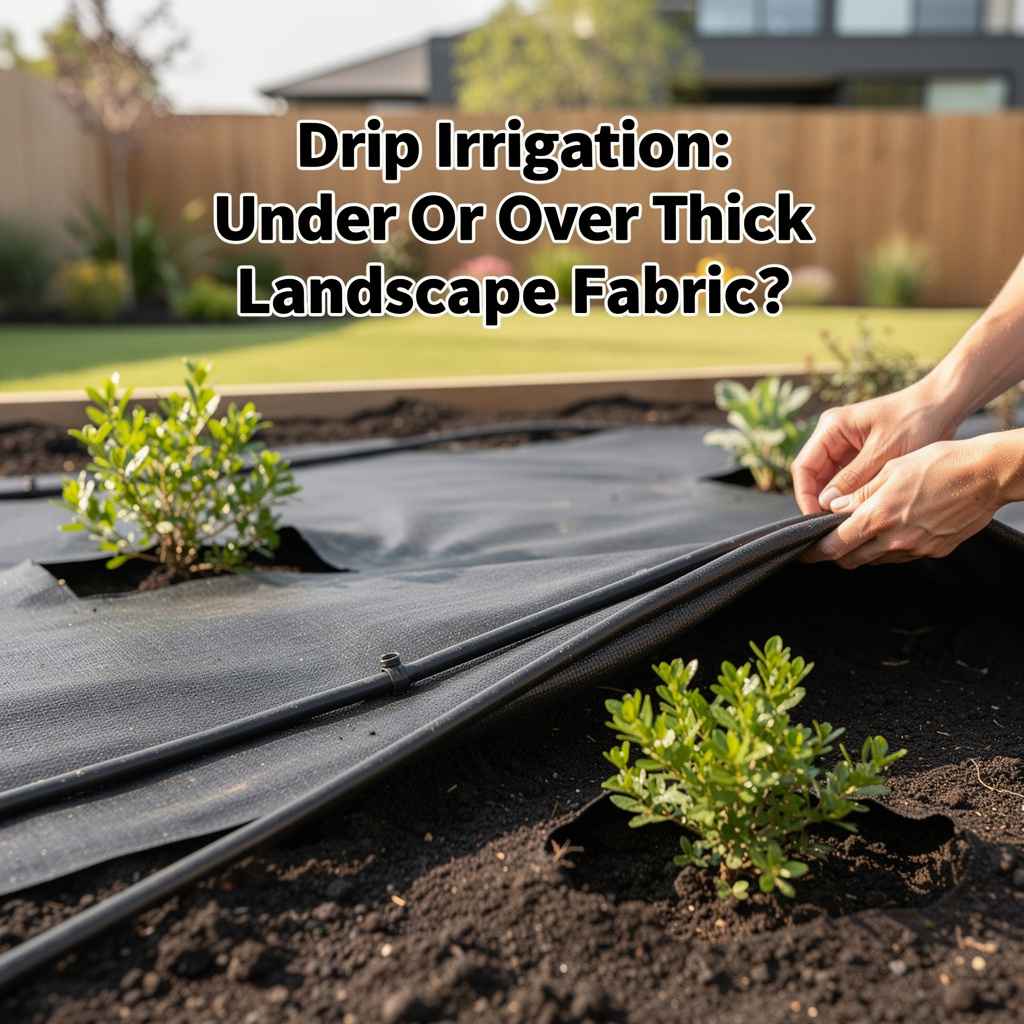
Drip Irrigation: Under Or Over Thick Landscape Fabric?
It’s a question many gardeners face when setting up a new irrigation system. You’ve got your landscape fabric down, ready to suppress weeds. Now, where does the drip irrigation go?

CARPATHEN
CARPATHEN Drip Irrigation System Kit for Garden…
- Be a Gardening Master with the help of our superior and complete Drip Irrigation Kit: 10 Drip Irrigation Emitters Vortex + 20 Drip…
- Make your own garden irrigation system kit easier than ever: run a 3/4 connection from your water source to the watering area. Use…
- Enjoy taking care of your garden with high quality adjustable spray emitters and forget about broken irrigation sprayer stakes and…
As an Amazon Associate I earn from qualifying purchases.
Underneath, or on top? This choice matters more than you might think for your plants’ health and your watering system’s success. Let’s break down what works best.
Understanding Landscape Fabric and Drip Irrigation
Landscape fabric is a great tool. It stops weeds from popping up. It also helps keep mulch in place.
Drip irrigation is a smart way to water. It sends water right to your plants’ roots. This saves water and prevents diseases.
But putting these two together can be tricky. You want the water to get to the soil. You also want the fabric to do its job.
So, under or over? That’s the big question.
Think about how water moves. It needs to reach the soil where roots live. Landscape fabric can be a barrier.
Some fabrics let water through easily. Others can get clogged over time. This affects how well your drip system works.
It also affects how your plants grow. We need to consider the type of fabric. We also need to think about the plants you are growing.
This guide will help you decide. We will look at the pros and cons of each method. We will also share tips from folks who have been doing this for years.
By the end, you will know the best way for your garden. You will feel confident about your setup. Your plants will thank you!
Placing drip irrigation under landscape fabric is generally better. It protects the emitters from debris and sunlight. It also creates a cleaner look.
However, the fabric must be water-permeable. If the fabric clogs, water won’t reach plants. Drip over fabric is easier to adjust but less protected and can look messy.

Drip Irrigation Under Landscape Fabric: The “Hidden” System
Putting your drip irrigation lines beneath the landscape fabric is a popular choice. Many gardeners prefer this method. It offers a clean, tidy look.
You don’t see the hoses or emitters. They are hidden from view. This helps your garden beds look their best.
It’s like a secret watering system working hard.
One big plus is protection. The fabric shields the drip tape or tubing. It keeps sunlight off the plastic.
It also stops small rocks and dirt from getting into the emitters. Emitters can get blocked easily. If they get blocked, water can’t flow.
This protection means your system lasts longer. It also means fewer clogs to deal with.
The water moves from the emitter. It then travels through the fabric. It finally reaches the soil.
This requires good quality fabric. The fabric must let water pass through easily. Some cheap fabrics don’t.
They can become waterproof over time. They can also get plugged by soil. If this happens, your plants won’t get enough water.
This is a major downside if your fabric is not permeable.
Most modern landscape fabrics are designed to be permeable. They allow water and air to pass. This is key for the under-fabric method to work.
You should always check the fabric’s specs. Look for terms like “water-permeable” or “breathable.” This ensures your watering system can do its job.
Drip Irrigation Over Landscape Fabric: The “Visible” System
Sometimes, laying the drip irrigation lines on top of the landscape fabric makes more sense. This is often easier when you are first setting things up. You can see exactly where everything is going.
It’s simple to adjust. You can move lines around if needed. This is great for testing or during the initial planting phase.
The main benefit here is easy access. If an emitter gets clogged, you can see it. You can clean it or replace it quickly.
If a line needs to be moved for a new plant, it’s simple. You don’t have to dig up the fabric. This makes maintenance a bit easier for some people.
You can also see if any lines have shifted. This helps prevent damage from foot traffic or lawnmowers.
However, there are downsides. The drip lines and emitters are exposed. They are in direct sunlight.
Sunlight can make the plastic brittle over time. This can lead to cracks. It can also make the tubing expand and contract more.
Debris like leaves, small stones, and soil can fall directly onto the emitters. This increases the chance of clogs.
Also, many people find this look less appealing. The hoses and lines are visible. They can detract from the garden’s beauty.
It can look a bit messy. Some gardeners prefer the clean look of hidden irrigation. This is a personal preference, of course.
But it’s something to consider for your garden’s appearance.
Comparing the Two Methods: Pros and Cons
Let’s put it side-by-side. It helps to see the good and bad of each way. This way, you can pick the best for your garden needs.
Under Landscape Fabric: The Hidden Advantage
Pros:
- Aesthetic Appeal: Your garden looks cleaner and more natural.
- Emitter Protection: Shields emitters from sun and debris.
- Durability: Potentially longer lifespan for drip lines.
- Reduced Evaporation: Water goes directly to soil, less lost to air.
Cons:
- Fabric Permeability is Crucial: Water might not reach plants if fabric clogs.
- Harder to Adjust: Moving lines means lifting fabric.
- Clog Detection: Harder to spot clogs right away.
- Installation Complexity: Can be slightly more work upfront.
Over Landscape Fabric: The Visible Ease
Pros:
- Easy Access: Simple to adjust, clean, or replace emitters.
- Visible Issues: Clogs or leaks are immediately apparent.
- Simpler Installation: Generally quicker to lay out.
- Flexibility: Easy to change layout if planting plans change.
Cons:
- Less Aesthetically Pleasing: Drip lines are visible.
- Emitter Exposure: Susceptible to sun damage and debris.
- Potential Damage: Lines can be stepped on or snagged.
- Increased Evaporation: Some water might be lost before reaching soil.
Choosing between them often comes down to priorities. Do you want a perfect look? Or is easy maintenance more important?
Think about your garden’s specific needs. Consider the type of plants. Also, consider the climate.
These factors can help you make the right choice.
Real-World Scenarios and Considerations
In real homes, different situations call for different approaches. Let’s look at a few examples. This shows how context matters.
It helps you see what might work for you.
Scenario 1: The New Flower Bed
You’re creating a brand-new bed for colorful annuals. You want it to look neat. You’ve laid down good quality, permeable landscape fabric.
You’re planting petunias and marigolds. They need consistent moisture. In this case, running the drip lines under the fabric makes sense.
It gives a clean look. The fabric will help keep weeds down. The water will go right to the roots.
You’ve checked that the fabric lets water through easily.
Scenario 2: Established Vegetable Garden
You have a well-loved vegetable garden. You use landscape fabric to manage weeds around your tomato plants and peppers. You might have some older drip lines already in place.
Or you’re adding new ones. If the fabric is a bit older, you worry about its permeability. Maybe you’ve seen some water pooling before.
In this situation, putting the drip lines over the fabric could be wiser. You can easily check if water is getting to the plants. You can adjust the lines if needed.
It’s also easier if you plan to add or move plants later.
Scenario 3: Xeriscaping and Drought Tolerance
You live in a dry area. You’re using landscape fabric under gravel. You’re planting succulents and native plants that need little water.
The goal is water conservation. For these plants, precise watering is key. Putting the drip lines under the fabric is usually best here.
The fabric and gravel help reduce evaporation. The system delivers water directly to the roots where it’s needed most. This method maximizes water efficiency.
These examples show that there isn’t one single “right” answer. Your specific garden, your plants, and your landscape fabric all play a part. It’s about finding the best fit for your situation.
Think about what you’re trying to achieve.
The Importance of Landscape Fabric Quality
We’ve mentioned fabric quality a few times. This is super important. It’s the main factor for success when placing drip irrigation underneath.
Permeability Matters Most
What it means: The fabric lets water and air pass through. It’s not waterproof.
Why it’s vital: If water can’t get through, your plants will dry out. They won’t get the water from your drip system.
How to check: Look for fabric labeled “water-permeable,” “breathable,” or “weed barrier fabric.” Read reviews or product descriptions. Sometimes, pouring a little water on a corner can give you a hint, but check the specs.
Durability and Type
Woven vs. Non-woven: Woven fabrics are made of interlocking threads. They are strong.
Non-woven fabrics are made from matted fibers. They often offer better permeability but can be less strong.
Material: Most are made of polypropylene or polyester. These are durable.
Longevity: Cheaper fabrics can break down faster. They might degrade in sunlight. Better quality fabrics last longer.
Using a high-quality, permeable fabric is key. It ensures that water from your drip system can reach the soil. If you’re unsure about your fabric, it might be safer to lay the drip lines on top.
Or, test the fabric first.
Installation Tips for Success
No matter which method you choose, good installation makes a difference. Here are some tips to help you get it right.
Installing Drip Under Fabric
- Lay Fabric First: Install your landscape fabric firmly. Make sure it lies flat.
- Position Drip Lines: Lay your drip tape or tubing over the soil. Place it where the plant roots will be.
- Secure Lines: Use garden stakes or anchors to keep the drip lines in place. This stops them from moving when you lay the fabric.
- Cover with Fabric: Carefully lay the landscape fabric over the drip lines. Cut holes for any existing plants.
- Mulch (Optional but Recommended): Add a layer of mulch on top of the fabric. This helps hold it down and looks nice.
- Flush the System: Before adding mulch, turn on the water briefly. This flushes out any dirt that got in during installation.
Installing Drip Over Fabric
- Lay Fabric First: Place your landscape fabric and secure it well.
- Position Drip Lines: Lay the drip tape or tubing on top of the fabric. Follow your planting layout.
- Secure Lines: Use garden staples or stakes to hold the drip lines down. This is very important to prevent movement.
- Cover Emitters (Carefully): If you are using emitters instead of tape, make sure they are not buried deeply by debris.
- Mulch (Optional): You can still add mulch on top of the fabric. This helps aesthetics and moisture retention.
- Avoid Snagging: Be careful when working around the lines. Try not to snag them with tools.
Properly securing the drip lines is key for both methods. This prevents them from shifting. This ensures water goes where it’s needed.
It also prevents damage.
Troubleshooting Common Issues
Even with the best planning, problems can happen. Here are some common issues and how to fix them.
Issue: Plants are Dry, but Water is Running
Possible Cause: Fabric is not permeable enough, or it’s clogged. Or, emitters are blocked.
What to do:
- If under fabric: Check if water is pooling under the fabric. If so, the fabric might be clogged or not permeable. You may need to replace it.
- If over fabric: Check emitters directly. Clean or replace any that seem blocked.
- Flush the system: Run water at full pressure for a few minutes. This can dislodge minor clogs.
Issue: Drip Lines are Cracking or Brittle
Possible Cause: Exposure to direct sunlight over time.
What to do:
- This is more common with lines on top of fabric. If possible, try to cover them with mulch.
- Consider using UV-resistant drip tubing.
- If lines are old and brittle, it’s time to replace them.
Issue: Weeds are Growing Through the Fabric
Possible Cause: Fabric is too thin, poor quality, or holes were made.
What to do:
- This often happens when drip lines are on top. If weeds grow through, you might need to patch holes or lay new fabric.
- If weeds grow around plant stems, it’s usually due to holes cut for plants. Hand-pull these weeds.
- Adding a thick layer of mulch over the fabric can help suppress small weeds.
Don’t get discouraged if you face issues. Most problems with drip irrigation are fixable. They often involve a simple adjustment or cleaning.
Regular checks are the best way to prevent big problems.
When to Choose Under vs. Over Landscape Fabric
Let’s simplify the decision. When does one make more sense than the other?
Choose Drip Under Fabric If:
- You prioritize a clean, tidy appearance in your garden beds.
- You are using a high-quality, known-permeable landscape fabric.
- You want to protect the drip emitters from direct sun and debris.
- You are setting up a long-term planting that won’t change often.
- You are in a region where water conservation is very important.
Choose Drip Over Fabric If:
- You need easy access and quick adjustments for maintenance.
- You are unsure about the permeability of your landscape fabric.
- You have an existing setup that works, and you’re adding to it.
- You anticipate frequent changes in plant placement or garden layout.
- Your budget is tight and you need a simpler, faster installation.
- The garden areas are high-traffic and lines need to be visible to avoid damage.
It’s worth noting that some people even use a combination. They might run main lines on top. Then, they tuck emitters under fabric near individual plants.
This offers a balance of protection and accessibility.
The Long-Term View: Durability and Maintenance
Thinking long-term is smart for any garden project. How does the placement affect how long your system lasts? How much work will it be over the years?
When you bury drip lines under fabric, they get a shield. This shield helps prevent damage. It keeps the sun’s rays from breaking down the plastic.
It also stops rocks and tools from nicking the lines. This can mean your system lasts for many years. However, if the fabric itself breaks down or gets holes, the protection is gone.
Maintenance under fabric can be trickier. If an emitter clogs, you might not notice it right away. Water might not reach a plant for a while.
You may have to lift sections of fabric to find the problem. This makes repairs more involved. It requires more effort to troubleshoot.
On the other hand, drip lines on top are easy to see. You can spot a clog or a leak quickly. Cleaning or replacing a part is usually fast.
But, these lines are more exposed. They can suffer damage from UV rays. They can also be damaged by garden tools or footsteps.
This means you might need to replace parts more often.
So, there’s a trade-off. Under fabric might offer longer life with less frequent replacement. But it can mean more complex repairs when needed.
Over fabric might require more occasional part replacements. But those replacements are often simpler to do.
What About Mulch?
Mulch plays a role too. Whether you put it under or over the fabric, it helps. It keeps moisture in the soil.
It also helps keep the soil cool. When you have drip irrigation under landscape fabric, mulch on top is a good idea. It helps hold the fabric down.
It also looks nice.
If you have drip irrigation on top of the fabric, you can still add mulch. This helps. It can cover the drip lines a bit.
It makes the garden look better. It also protects the lines from sun. But you need to be careful.
Don’t pile mulch too high around the emitters. This can stop water from getting out.
Think about your mulch choice. Wood chips are common. Gravel is also used.
Different mulches have different weights. They can affect how well water moves through the fabric. For example, very fine gravel might wash into fabric pores.
It could clog them over time.
Protecting Your Investment
Your drip irrigation system is an investment. You want it to last. You want it to work well.
Understanding where to place it relative to landscape fabric is a key part of that.
If you put the lines under the fabric, you’re betting on the fabric’s quality. You’re betting that it will stay permeable. You’re betting that it won’t degrade too quickly.
This method often gives a professional, clean look. It hides the functional parts of your watering system.
If you put the lines on top, you’re opting for accessibility. You’re making maintenance easier. You’re able to see problems as they arise.
This can be great for busy gardeners. It might mean a slightly less polished look. It also means the lines are more exposed to wear and tear.
Consider your comfort level. Are you comfortable lifting and adjusting landscape fabric? Or do you prefer to see and easily access your irrigation lines?
Both are valid approaches. The best one is the one that fits your life and your garden best.
Frequent Questions About Drip Irrigation and Landscape Fabric
Is it okay to put landscape fabric over drip irrigation lines?
Yes, it is often recommended. Placing drip irrigation lines under landscape fabric is a common practice. It protects the lines and emitters from sunlight and debris, contributing to a cleaner look and potentially longer system life.
However, it’s crucial that the fabric is water-permeable. If the fabric clogs or doesn’t allow water to pass through, your plants will not receive adequate moisture.
What type of landscape fabric is best for drip irrigation?
The best type of landscape fabric for drip irrigation is one that is highly water-permeable. Look for fabrics labeled as “breathable” or that specifically state they allow water and air to pass through easily. Woven fabrics can be very durable and permeable if constructed properly.
Non-woven fabrics often offer excellent permeability but might be less robust.
Can drip emitters get clogged if placed under landscape fabric?
Yes, emitters can still get clogged under landscape fabric, although the fabric itself offers some protection. Clogging can occur if soil particles or mineral deposits build up. However, the primary risk of clogging under fabric is if the fabric itself becomes impermeable due to soil buildup or degradation, preventing water from reaching the emitters efficiently in the first place.
How do I know if my landscape fabric is letting water through?
The best way to know is to check the product specifications for permeability ratings. Visually, if water beads up and doesn’t soak in, it’s likely not very permeable. You can also do a simple test by pouring a small amount of water onto a corner of the fabric.
If it seeps through quickly, it’s likely permeable. If it sits on top or pools, it may be an issue.
What happens if I put drip irrigation over landscape fabric and it gets damaged?
If drip irrigation lines are placed over landscape fabric and they get damaged (e.g., a crack or break), it’s usually easier to spot and repair. You can typically cut out the damaged section and
Does mulch affect drip irrigation under landscape fabric?
Yes, mulch can have a positive effect. When placed over landscape fabric and drip lines, mulch helps to hold the fabric in place, prevents UV degradation of the fabric, and reduces water evaporation from the soil surface. It also improves the garden’s appearance.
Ensure the mulch is not so dense that it prevents water from reaching the fabric and soil.
Conclusion: Making the Right Choice for Your Garden
Deciding whether to place your drip irrigation under or over landscape fabric isn’t a one-size-fits-all answer. It involves looking at your specific needs. Think about the look you want for your garden.
Consider how easy you want maintenance to be. Your landscape fabric’s quality is a huge factor.
For a clean, protected system, putting drip lines under permeable fabric is often the best route. For ease of access and visible checks, placing them over the fabric works well. Both methods can lead to healthy plants and efficient watering when done correctly.
You’ve got this!
Related pick: Check today's price on Amazon