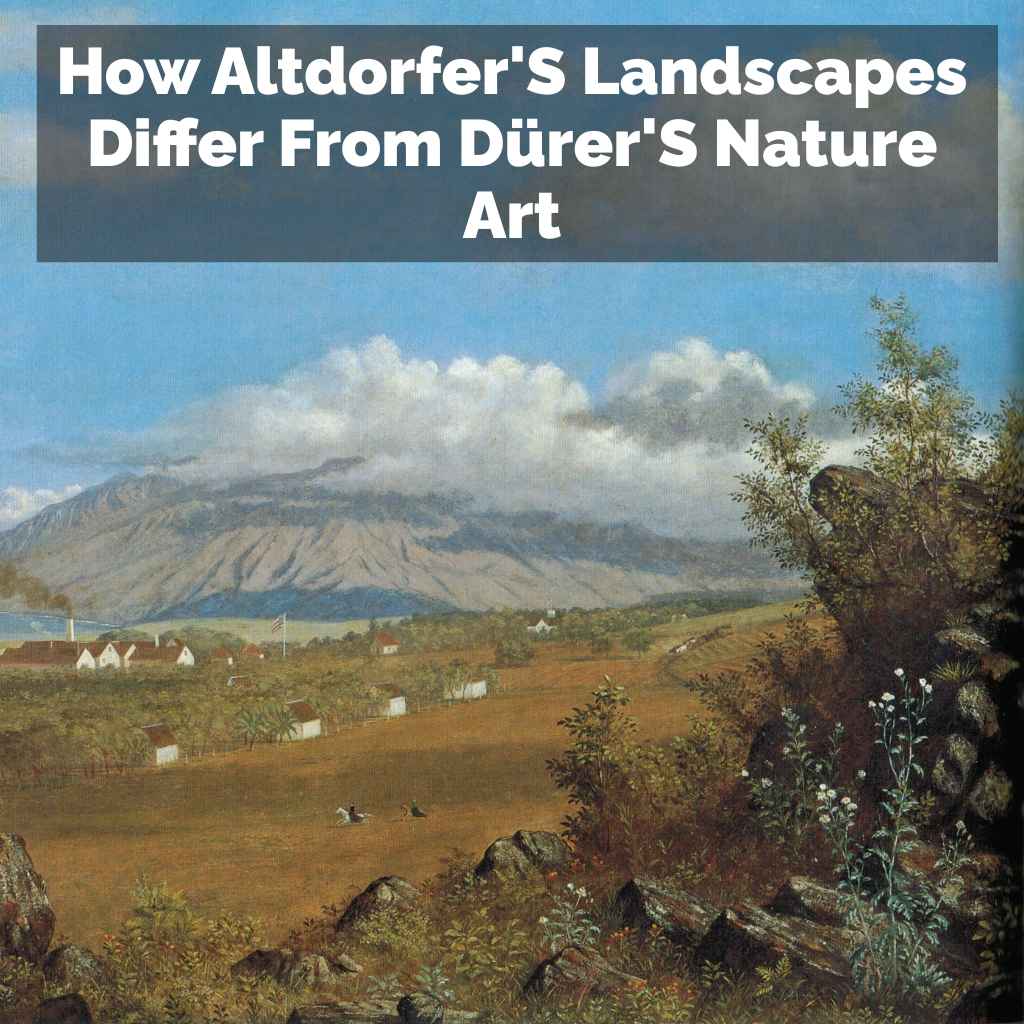

It’s easy to lump all old art together, especially when we talk about nature. Artists in the past loved painting trees, mountains, and skies. But dig a little deeper, and you find huge differences. Think about Albrecht Dürer and Albrecht Altdorfer. They were friends, working around the same time. Yet, their nature art is like two different worlds.
Dürer gives us nature with a microscope. He shows us every tiny leaf, every bit of bark. Altdorfer, though, gives us nature with a sigh. His scenes are more about feeling and light. We’ll look at what makes each artist’s view of the outdoors so special and distinct. You’ll learn what to look for to tell their work apart.
The World Through Dürer’s Eyes: Precision and Study
Albrecht Dürer was a true Renaissance man. He was a painter, a printmaker, and a thinker. His love for nature was deep. But it was a specific kind of love. He saw nature as something to be studied. He wanted to understand how it all worked. His art shows this quest for knowledge.
Dürer’s drawings of plants are amazing. Look at his “Great Piece of Turf.” It’s like a science class. You see each root, each blade of grass. He even shows the soil holding it all together. This isn’t just pretty art. It’s a record of what he saw. He believed in observing the world closely. He wanted to show its true form.
Dürer’s Nature Study Highlights
- Detailed Observation: Every element is drawn with care.
- Scientific Accuracy: He aimed to show things as they are.
- Focus on Texture: The feel of bark, leaves, and fur is clear.
- “The Great Piece of Turf”: A prime example of his detailed plant study.
When Dürer painted landscapes, this precision carried over. His backgrounds are not just backdrops. They are places with depth. You can almost feel the air. But even in these grand scenes, the smaller parts are clear. A distant tree is still a distinct shape. A rock has texture. It’s a nature you can almost touch and measure.
Altdorfer’s Vision: Mood and Atmosphere
Albrecht Altdorfer painted in a different spirit. He was part of a school called the Danube School. These artists liked to paint landscapes that felt magical. They cared more about how a scene made you feel. Light and color were very important to them. Altdorfer was a master at this.
Think about his painting “The Landscape with Woodcutters.” The trees are tall and dark. The light filters through the leaves in a hazy way. You don’t see every single leaf. Instead, you feel the coolness of the forest. You sense the quietness. It’s a world that feels a bit like a dream.
Altdorfer’s Atmospheric Approach
- Emphasis on Light: How light falls and creates mood.
- Soft Edges: Details are less sharp, more blended.
- Evocative Color: Colors create a feeling or emotion.
- Sense of Wonder: His scenes often feel a bit magical.
Altdorfer often used a low horizon line. This makes the sky a big part of the picture. The sky in his paintings is rarely just blue. It’s full of changing light. There are clouds that catch the sun. There are colors that shift from yellow to orange to purple. This focus on the sky adds to the dreamy mood of his work.
His mountains are often soft and blue in the distance. They aren’t sharp peaks. They are shapes that suggest a vast world. This is different from Dürer’s precise rendering of nature. Altdorfer wanted you to feel small in a big, beautiful world. He wanted you to get lost in the view.
A Personal Encounter with Difference
I remember standing in front of a print of Dürer’s “Melencolia I.” I was struck by the tiny details. There was a spider on a wall. The texture of the stone was so real. I felt like I could reach out and touch it. It was nature as a subject of deep study. It felt very learned, very precise.
Then, later, I saw a reproduction of Altdorfer’s “Danube Landscape.” It was completely different. The river flowed with a soft sheen. The trees on the bank were dark shapes. The sky was this amazing mix of soft colors. It felt like pure mood. It made me feel calm, almost like I was there in the quiet air.
These two experiences really opened my eyes. Art isn’t just about what you paint. It’s about how you see it. Dürer saw the world as a text to be read. Altdorfer saw the world as a poem to be felt. Both are valid, and both are beautiful. It’s just a matter of what kind of beauty speaks to you more.
Key Differences: A Quick Look
Let’s break down the core differences. It’s not just about trees and rocks. It’s about their entire approach to art and the world around them. They saw different things when they looked at the same forest.
Comparing Dürer and Altdorfer
| Feature | Albrecht Dürer | Albrecht Altdorfer |
|---|---|---|
| Focus | Detail, science, accuracy | Mood, atmosphere, light |
| Line Quality | Sharp, clear, precise | Soft, blended, hazy |
| Color Use | Naturalistic, true to life | Evocative, mood-setting |
| Sense of Space | Deep, measurable | Expansive, dreamy |
Dürer’s approach was very much of his time. The Renaissance was about rediscovering the world. It was about human knowledge. He wanted to document nature. He wanted to understand its rules. His work is a testament to that drive.
Altdorfer, on the other hand, was a pioneer of landscape as a subject. He showed that a landscape could be the main event. It didn’t need a story with people to be important. His focus on mood and feeling was a new idea. It paved the way for later Romantic artists.
The Role of Nature in Their Art
For Dürer, nature was often a setting. But it was a setting rendered with immense care. Even when he painted religious scenes, the natural world around them was detailed. The plants and animals had symbolic meaning too. He used them to tell a richer story. For him, nature held divine order.
He created detailed studies of animals. His rabbit and his rhinoceros are famous. They show his fascination with the world’s forms. He wanted to capture their essence. This careful observation made his landscapes feel solid and real. They were places you could imagine walking through.
Nature as Inspiration: Dürer vs. Altdorfer
Dürer’s Nature
Inspiration: Divine order, scientific study.
Purpose: To record, understand, and symbolize.
Feel: Real, detailed, grounded.
Altdorfer’s Nature
Inspiration: Beauty, mood, spiritual feeling.
Purpose: To evoke emotion and a sense of place.
Feel: Dreamy, atmospheric, expansive.
Altdorfer, however, often made nature the hero. His religious stories, like “The Fall of Man,” are set in incredibly detailed natural scenes. But it’s the landscape that really draws you in. It’s a lush, inviting world. His landscapes can also stand alone, without any human figures. They are powerful on their own.
He explored the power of light and weather. Storms in his paintings are dramatic. Calm sunsets are peaceful. He captured the changing moods of nature. This made his landscapes feel alive and dynamic. They weren’t just pretty pictures. They were experiences.
Where They Might Live: Context Matters
Both artists worked in the Holy Roman Empire. This was a vast area with varied landscapes. Dürer was from Nuremberg, a busy city. His early work shows a more direct observation of local nature. But he also traveled and saw different lands. He brought this wide view back to his art.
Altdorfer was from Regensburg, also on the Danube River. His connection to the river and the surrounding forests is clear in his work. The Danube itself was a vital trade route. It was a source of life and beauty. His paintings often have a sense of distance and exploration. They suggest faraway places and journeys.
Geographic and Cultural Influences
Dürer’s World
Region: Holy Roman Empire (Nuremberg).
Key Interests: Urban life, nature as study, travel.
Artistic Focus: Detail, realism, symbolic depth.
Altdorfer’s World
Region: Holy Roman Empire (Regensburg, Danube).
Key Interests: Rivers, forests, atmosphere, mood.
Artistic Focus: Light, color, emotional impact, landscape as subject.
The printing press was also a big deal then. Dürer was a master printmaker. His prints spread his art widely. This meant his precise style was seen by many. Altdorfer also made prints, but his paintings often got more attention for their unique style.
The general atmosphere in the Holy Roman Empire was one of change. There were new ideas about art, religion, and the world. Both artists were part of this exciting period. They both used nature to explore these new ideas, but they chose different paths.
What This Means for You: Appreciating the Nuance
When you look at art now, understanding these differences is key. It’s not just about liking a painting or not. It’s about seeing what the artist was trying to do. Were they trying to show you the world as it is? Or were they trying to make you feel a certain way about the world?
If you see a landscape with sharp lines. Where every leaf is clear. Where the rocks have texture you can almost feel. That might be more like Dürer. You’ll appreciate the skill of the artist. You’ll see their deep study of nature.
Spotting the Difference in Art
- Look for Details: Are they crisp and clear? That’s Dürer-like.
- Check the Light: Is it soft and hazy? That’s Altdorfer-like.
- Feel the Mood: Does it make you feel calm or thoughtful? Altdorfer excels here.
- Observe the Edges: Are they sharp or blended?
If you see a landscape that feels soft. Where the colors blend and create a mood. Where the sky is a big, important part of the picture. That might be more like Altdorfer. You’ll connect with the feeling of the place. You’ll enjoy the atmosphere the artist created.
It’s also useful to remember that artists influenced each other. Dürer’s detailed studies could have inspired Altdorfer’s settings. And Altdorfer’s focus on mood might have pushed Dürer to add more atmosphere to his backgrounds.
Quick Tips for Your Own Art Appreciation
Next time you visit a museum or look at art online, try this. Look at a landscape. Ask yourself: what is this artist trying to show me? Is it the facts of nature? Or is it the feeling of nature?
Does the artist want you to learn? Or do they want you to dream? Does the art make you want to get out a magnifying glass? Or does it make you want to sit and just gaze?
Art Appreciation Toolkit
For Dürer Fans
Look for: Intricate patterns, sharp outlines, realistic textures.
Think about: The artist’s research and precision.
For Altdorfer Fans
Look for: Soft colors, misty skies, flowing lines.
Think about: The mood and emotion the artist creates.
This kind of thinking helps you connect more deeply with art. It makes you an active viewer. You’re not just looking at pretty pictures. You’re understanding the artist’s choices. You’re seeing their unique view of the world.
Both Dürer and Altdorfer loved nature. But their ways of showing that love were very different. Dürer showed nature as a subject to be known. Altdorfer showed nature as a world to be felt. Both offer a powerful window into art history and human perception.
Frequently Asked Questions
What is the main difference between Dürer’s and Altdorfer’s landscapes?
The main difference lies in their focus. Dürer’s landscapes are highly detailed and accurate, like scientific studies. Altdorfer’s landscapes are more atmospheric and emotional, focusing on mood and light.
Was Altdorfer influenced by Dürer?
Yes, they were contemporaries and likely influenced each other. Dürer’s detailed approach to nature may have informed Altdorfer’s background elements, while Altdorfer’s focus on mood might have inspired Dürer’s atmospheric effects.
Which artist painted more realistic nature scenes?
Albrecht Dürer painted more realistic and detailed nature scenes. His work is known for its precision and scientific accuracy, capturing textures and forms with great care.
What was the Danube School of art?
The Danube School was an early 16th-century art movement in Germany. Artists like Altdorfer focused on landscape painting, often imbuing their scenes with strong moods and atmospheric effects. They were among the first to make landscape a primary subject.
Did Dürer focus on landscapes as much as Altdorfer?
While Dürer’s landscapes are detailed and important, his overall work included many portraits, religious scenes, and prints. Altdorfer is noted for elevating pure landscape painting as a significant genre in itself.
How can I tell an Altdorfer landscape from a Dürer landscape at first glance?
Look at the overall feel. Dürer’s work will likely have sharper details and clearer forms, even in the distance. Altdorfer’s work will feel softer, more blended, with a strong emphasis on the sky and the overall light.
Conclusion: Two Paths to Nature’s Beauty
So, the next time you see a landscape from this era, take a moment. Ask yourself: am I looking at a world built of sharp facts and careful study? Or am I lost in a world of soft light and deep feeling? Dürer and Altdorfer show us two amazing ways to see and paint the natural world. Both are treasures.