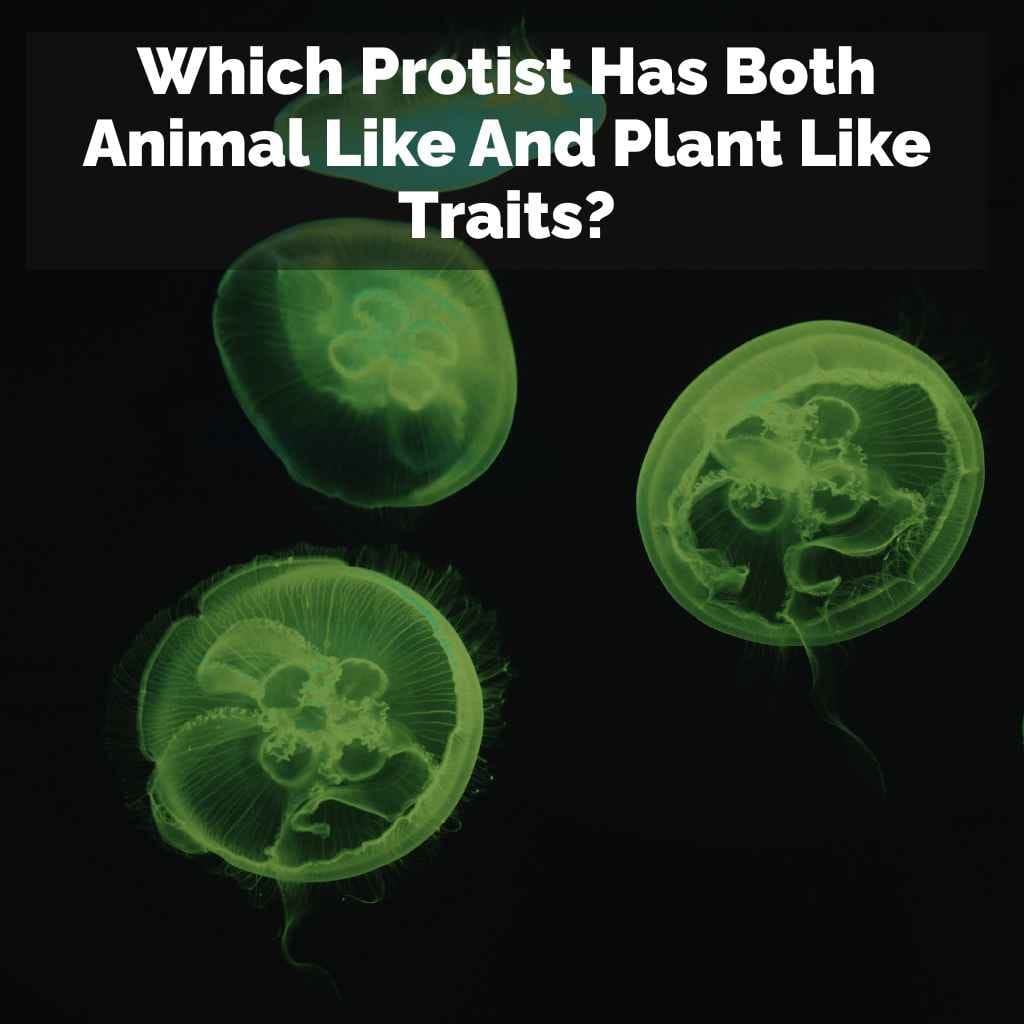

The Euglena is a type of protist that famously exhibits both animal-like and plant-like characteristics. It can make its own food using sunlight like a plant, but it can also move and consume food like an animal when light is unavailable.
For a related plant or gardening question, The Rock-Like Substance That Forms From Decayed Plant Matter gives readers a focused next step.
For a related plant or gardening question, How Are Vacuoles Different In Plant And Animal Cells? gives readers a focused next step.
For a related plant or gardening question, Which Organelle Belongs in Both Plant and Animal Cells? Answered gives readers a focused next step.
Unpacking the Protist Puzzle
When we talk about protists, we’re stepping into a world of single-celled organisms that don’t fit into the plant, animal, or fungus kingdoms. They are a super diverse group. Some are helpful, some can cause trouble, and some are just plain fascinating because they do things we wouldn’t expect.
One of the most intriguing examples of this mix-and-match biology is the Euglena. It’s a tiny organism that has puzzled scientists and delighted students for years.
Think about it. A plant needs sunlight, water, and air to live. It stands still and makes its own food.
An animal needs to move around to find food. It breathes, eats, and grows. Now, imagine a little creature that can do both.
That’s the magic of the Euglena. It’s like nature decided to create a creature that bridges two very different worlds. This blurring of lines is what makes the Euglena so important to study.
Understanding the Euglena helps us grasp how life can be incredibly flexible. It shows that life forms aren’t always one thing or the other. They can have traits from different groups.
This tiny protist is a perfect example of that amazing flexibility in the living world. It’s a key piece in understanding the evolution of life on Earth.
The Euglena: A Living Paradox
So, what exactly is this amazing creature? The Euglena is a type of protist. It’s a single-celled organism.
Most Euglena live in freshwater. You can find them in ponds, lakes, and slow-moving streams. Some types live in saltwater, though.
They are so small you need a microscope to see them.
What makes Euglena so special? It’s their dual nature. They have features that remind us of plants.
They also have features that remind us of animals. This makes them a prime example of an organism that doesn’t fit neatly into our usual categories. It’s a living lesson in biology.
Plant-Like Traits of Euglena
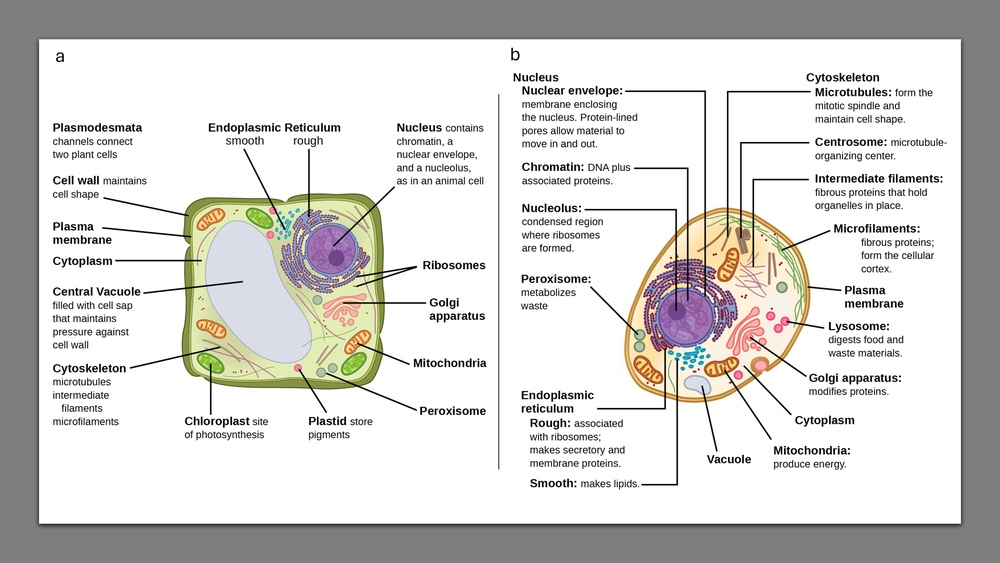
One of the most striking plant-like features of Euglena is its ability to perform photosynthesis. Inside its cell, it has structures called chloroplasts. These are the same little green powerhouses found in plant cells.
Chloroplasts capture sunlight. They use this light energy to convert carbon dioxide and water into sugar, which is food for the Euglena.
This ability to create its own food means that when light is available, Euglena is completely self-sufficient. It doesn’t need to hunt or search for other organisms to survive. It simply basks in the sun, much like a blade of grass or a leafy green plant.
This is a defining characteristic we usually associate only with the plant kingdom.
Another plant-like aspect is its cell structure. While not as rigid as a plant’s cell wall, Euglena has a flexible outer covering called a pellicle. This pellicle provides shape and support.
It’s important for maintaining its form, similar to how cell walls help plants stay upright.
Animal-Like Traits of Euglena
Now, let’s look at the animal-like side. The most obvious animal trait is mobility. Euglena has a long, whip-like tail called a flagellum.
This flagellum beats back and forth. It propels the Euglena through the water. It can actively swim towards light when it needs to photosynthesize.
It can also move away from too much light or into areas with food.
This ability to move freely and actively seek out resources is very much an animal behavior. Plants are generally fixed in place. Animals move to find what they need to survive.
Euglena does this with ease, darting and twirling in its watery environment.
When light is scarce, Euglena can switch gears. It can absorb dissolved nutrients from its surroundings. It can even ingest small food particles.
This is called heterotrophy. It’s a feeding strategy common in animals. This ability to obtain food from external sources, rather than making it all itself, is a key animal-like trait.
Euglena also possesses a light-sensitive eyespot, or stigma. This spot helps it detect light. It guides the organism towards optimal light conditions for photosynthesis.
While not a “brain” or “eyes” like in complex animals, it’s a sensory organ that aids in survival, a function often associated with animal life.
A Day in the Life of a Euglena
Imagine a Euglena swimming in a sunlit pond. Its chloroplasts are busy. They are soaking up the sun’s energy.
Sugars are being made. The Euglena is full of energy. It moves around, perhaps to find a better spot of light.
This is its plant-like mode.
As evening falls, the sunlight fades. The Euglena’s chloroplasts can’t work anymore. Now, its animal instincts kick in.
It stops trying to make food from light. Instead, it starts looking for other food. It might swim near decaying matter or other tiny organisms.
It absorbs these nutrients or engulfs them.
This constant shift between two very different survival strategies is what makes the Euglena so remarkable. It’s not just a passive organism. It’s an active participant in its environment.
It adapts its lifestyle based on what the world around it offers. This adaptability is a hallmark of successful life.
Consider the energy involved. Photosynthesis is a relatively slow process for growth. Heterotrophy can provide quick bursts of energy.
Euglena can utilize both. This gives it an edge. It can thrive in environments that might be too challenging for organisms relying on only one method.
Many Euglena species also have a contractile vacuole. This organelle pumps out excess water from the cell. This is important because freshwater is usually less salty than the inside of a cell.
Water tends to move into the cell. The contractile vacuole prevents the cell from bursting. This is a cellular survival mechanism, common in many single-celled organisms, but essential for its freshwater life.
Euglena’s Unique Features at a Glance
Movement: Uses a flagellum for active swimming, seeking light or food. This is an animal-like trait.
Nutrition: Can perform photosynthesis using chloroplasts (plant-like). Can also absorb or ingest food (animal-like).
Sensory Organ: Has an eyespot (stigma) to detect light direction. Aids in finding optimal conditions.
Cell Structure: Possesses a flexible pellicle for shape and support, not a rigid cell wall.
Water Balance: Features a contractile vacuole to expel excess water, vital for freshwater survival.
Why the Lines Blur: Evolutionary Significance
The Euglena’s existence challenges our simple categories. It highlights that life evolves in complex ways. For a long time, scientists placed Euglena with plants.
This was mainly because of its chloroplasts. Later, its animal-like movement and feeding led some to classify it with animals.
Today, Euglena is firmly placed in the Kingdom Protista. This kingdom is a kind of “catch-all” for eukaryotes. These are organisms whose cells contain a nucleus and other organelles.
Protista is where life forms that don’t fit elsewhere reside. It’s a testament to life’s diversity.
The Euglena is believed to have evolved from ancestors that were more animal-like. Over time, some of these ancestors acquired chloroplasts. This might have happened through a process called endosymbiosis.
A smaller organism was engulfed. It then lived inside the larger cell. It became an organelle, like the chloroplast.
This process of acquiring new abilities is crucial in evolution. It shows how organisms can adapt and change. They can take on traits from other life forms.
Euglena is a living fossil of such an event. It shows us a snapshot of life’s incredible journey. It’s a bridge between different ways of living.
This flexibility is key to survival. In changing environments, organisms that can adapt have a better chance. Euglena’s ability to switch feeding strategies is a prime example.
It allows it to survive in a wider range of conditions than a purely photosynthetic or purely heterotrophic organism might.
Real-World Context and Scenarios
In your backyard pond, Euglena is likely a common sight. Especially in the warmer months. If you were to take a water sample on a sunny day, you might see tiny green specks darting around under a microscope.
Those are Euglena hard at work, making food.
If that same pond experienced a sudden algae bloom, or if a period of heavy cloud cover lasted for days, the Euglena population might shift its behavior. They would become more reliant on absorbing dissolved nutrients. Their green color might even appear less vibrant as they focus on survival over abundant photosynthesis.
Sometimes, a Euglena population can grow very large. This can happen when conditions are just right. Sunlight is plentiful.
Nutrients are available. They can multiply rapidly. This can sometimes lead to a “bloom.” This bloom might change the color of the water.
This is similar to how algae blooms happen, though Euglena is a single organism, not a colony.
The presence of Euglena can also indicate certain water quality conditions. While they can live in a range of freshwater environments, very polluted waters might not support them. Their need for light for photosynthesis means they won’t be found in deep, dark sediments.
They prefer the upper layers of water bodies.
Understanding where and how Euglena lives helps us appreciate the interconnectedness of ecosystems. They are food for other tiny organisms. They play a role in the nutrient cycle.
Their ability to photosynthesize also contributes to oxygen production in their aquatic homes.
Contrast Matrix: Euglena’s Dual Life
Scenario: Sunny Day in a Pond
- Plant-like Behavior: Euglena floats near the surface. Its chloroplasts actively perform photosynthesis. It makes its own sugary food.
- Animal-like Behavior: Euglena may use its flagellum to slowly move towards optimal light patches. It conserves energy.
Scenario: Cloudy Day or Night
- Plant-like Behavior: Photosynthesis stops or slows greatly. Chloroplasts are not active.
- Animal-like Behavior: Euglena swims more actively. It seeks out dissolved nutrients in the water. It may even engulf small food particles.
What This Means For You
When you see Euglena, it’s a reminder of life’s adaptability. It shows that categories aren’t always black and white. For students, it’s a great way to learn about different biological processes.
You see both energy creation and energy consumption in one tiny cell.
It also tells us that what seems like a simple creature can have complex behaviors. The Euglena isn’t just drifting. It’s actively responding to its environment.
It’s making choices about how to survive. It’s a tiny master of adaptation.
For those interested in biology or science education, Euglena is a star example. It bridges concepts from botany (plant study) and zoology (animal study). It shows how these fields can overlap.
It teaches us that life forms can have a mix of strategies.
It’s also important to know that not all protists are like Euglena. There are many other types. Some are more plant-like, some more animal-like, and some have other unique traits.
Euglena is just one, albeit very famous, example of how diverse the protist kingdom is.
When you encounter information about Euglena, think about its dual nature. It’s not just a “green blob.” It’s an organism that has evolved remarkable ways to thrive. It uses sunlight when it can and finds food when it must.
This is a powerful survival strategy.
Quick Tips for Observing Euglena
If you’re curious to see Euglena for yourself, here are a few tips. You’ll need a microscope, of course. Collect a water sample from a freshwater source.
A pond or a slow-moving stream is best. Avoid areas with heavy pollution or strong currents.
Let the sample sit for a day or two. This allows any organisms that prefer calmer conditions to become more active. Look for a green tint in the water.
This can sometimes indicate the presence of photosynthetic organisms like Euglena.
Under the microscope, look for small, greenish, elongated cells. You’ll want to see them moving. They often have a characteristic whip-like flagellum.
If you see them swimming actively, especially if they seem to be reacting to light (moving towards or away from it), you’re likely looking at Euglena.
Try shining a light on one side of the microscope slide. Observe if the Euglena move towards the light. This is a good test for their phototaxis.
Then, try covering the light source. See if they move away from the bright light. This shows their ability to avoid harsh conditions.
Remember, Euglena is just one example. The Kingdom Protista is vast and full of wonders. Exploring it can open your eyes to the incredible diversity of life on our planet.
Each protist has its own story of survival and adaptation.
Euglena Quick Facts
- Kingdom: Protista
- Habitat: Mostly freshwater (ponds, lakes)
- Size: Microscopic
- Key Feature: Exhibits both photosynthesis (plant-like) and heterotrophy (animal-like)
- Movement: Uses a flagellum
- Eyespot: Helps detect light
Frequently Asked Questions about Protists with Dual Traits
Which protist is the best example of having both animal and plant characteristics?
The Euglena is the most well-known protist that shows both animal-like and plant-like traits. It can perform photosynthesis like a plant but can also move and consume food like an animal.
What is the plant-like feature of Euglena?
Euglena’s main plant-like feature is its ability to photosynthesize. It contains chloroplasts, which use sunlight to create food (sugars) from carbon dioxide and water.
What is the animal-like feature of Euglena?
Euglena’s key animal-like features include its ability to move actively using a flagellum and its capacity to absorb or ingest food from its environment when light is unavailable. This feeding method is called heterotrophy.
Why is Euglena classified as a protist and not a plant or animal?
Euglena is classified as a protist because it doesn’t fit neatly into the definitions of plants or animals. While it has traits of both, it also has unique characteristics and evolutionary history that place it in the diverse Protista kingdom, which groups organisms that don’t belong to the other major kingdoms.
Can Euglena survive without sunlight?
Yes, Euglena can survive without sunlight. When light is not available for photosynthesis, it switches to heterotrophic feeding. It absorbs dissolved nutrients from the water or engulfs tiny food particles to get energy.
Where do Euglena typically live?
Euglena are most commonly found in freshwater environments. They inhabit ponds, lakes, ditches, and slow-moving streams where they can find both sunlight and nutrients.
Conclusion: A Masterclass in Adaptation
The Euglena is a true wonder of the biological world. It shows us that life can be incredibly fluid. It doesn’t always stick to strict definitions.
This tiny protist embodies adaptability. It uses the best of both plant and animal strategies to thrive. It’s a living example of evolution’s creativity.