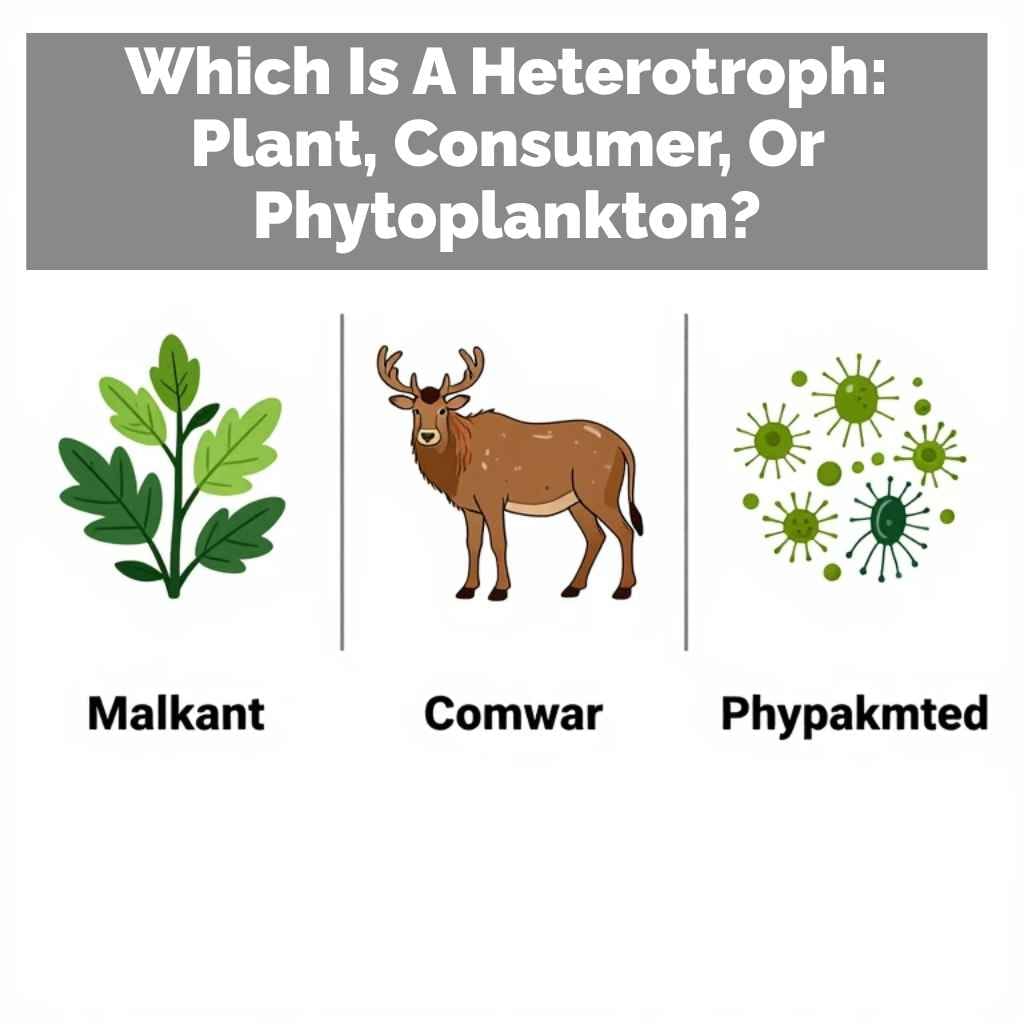

A heterotroph is any living thing that cannot make its own food. It must eat or absorb organic molecules from other living or once-living things to get energy. Consumers and decomposers are types of heterotrophs. Plants and phytoplankton are typically autotrophs because they make their own food.
For a related plant-care question, How Savanna Plants Have Adapted To Long Periods Of Drought gives readers a more focused follow-up.
What Is a Heterotroph?
Let’s break down what a heterotroph is. The word itself gives us clues. “Hetero” means “other.” “Troph” relates to “nourishment” or “eating.” So, a heterotroph is something that gets its nourishment from others.
Think about it like this: some living things are like chefs who make their own meals. They use simple ingredients like sunlight, water, and air. Other living things are like people who go to a restaurant or a grocery store.
They need to find food that’s already made.
These “food-seekers” rely on other organisms. This can be by eating them directly, or by eating things that were once alive. They can’t perform photosynthesis like plants do.
They also can’t create their own energy from non-living sources. Instead, they have to take in complex organic compounds. These compounds are then broken down.
This process releases the energy needed for life. It’s a fundamental way that energy flows through almost every ecosystem on Earth. Without heterotrophs, many food chains would simply stop.
Understanding the Autotrophs: The Food Makers
To really get heterotrophs, it helps to know their opposite: autotrophs. Autotrophs are the “self-feeders.” They are the base of most food webs. They are the ones who create the food in the first place.
The most common type of autotroph uses sunlight. This process is called photosynthesis. Plants are the classic example.
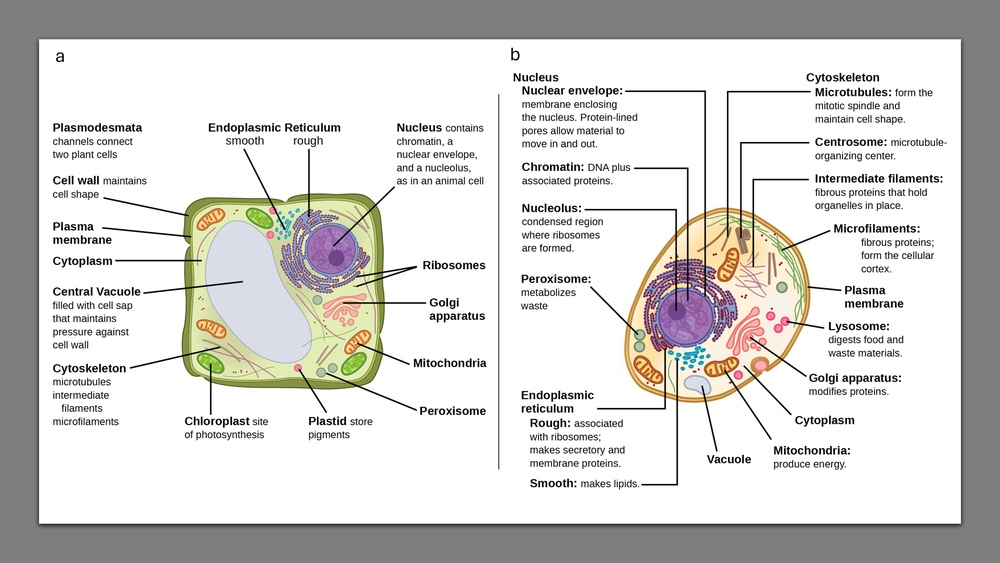
They have special parts called chloroplasts. These contain chlorophyll, which captures sunlight. They take in carbon dioxide from the air and water from the soil.
Using the sun’s energy, they turn these simple things into sugars. These sugars are their food. They store this energy.
Other organisms can then eat the plant to get that stored energy. Phytoplankton also fall into this category. These are tiny, plant-like organisms that float in oceans and fresh water.
They perform photosynthesis too. They are incredibly important. They produce a huge amount of the oxygen we breathe and are the start of many aquatic food chains.
Some bacteria are also autotrophs. They might use chemicals instead of sunlight for energy. But the core idea is the same: they make their own food.
Who Is a Heterotroph? The Consumers
So, if autotrophs make the food, who eats it? That’s where heterotrophs come in. The most common type of heterotroph is a consumer.
Consumers are organisms that get energy by eating other organisms. They can’t produce their own food. They depend on autotrophs or other consumers.
We see different types of consumers all around us. Think about the herbivores, carnivores, and omnivores. These are all heterotrophs.
Herbivores eat only plants. Cows, deer, and rabbits are examples. They are primary consumers.
Carnivores eat other animals. Lions, wolves, and sharks fit this description. They are secondary or tertiary consumers.
Omnivores eat both plants and animals. Humans, bears, and pigs are good examples. They can be primary, secondary, or even tertiary consumers, depending on what they eat.
Every time a consumer eats, it’s taking in organic matter. This matter contains energy and nutrients. The consumer’s body then breaks this down.
This process releases the energy it needs to live, grow, and reproduce. The type of food a consumer eats determines its place in the food chain. It also shows how it is a heterotroph.
It’s actively seeking and consuming food made by others.
The Hidden Heterotrophs: Decomposers
There’s another crucial group of heterotrophs. These are the decomposers. You might not always think of them, but they are vital.
Decomposers are organisms that break down dead organic matter. This includes dead plants, dead animals, and waste products. Fungi and many bacteria are the main decomposers.
When a plant or animal dies, it doesn’t just disappear. It becomes food for these tiny organisms.
Decomposers are heterotrophs because they absorb nutrients from dead material. They don’t “eat” in the way an animal does. They release enzymes.
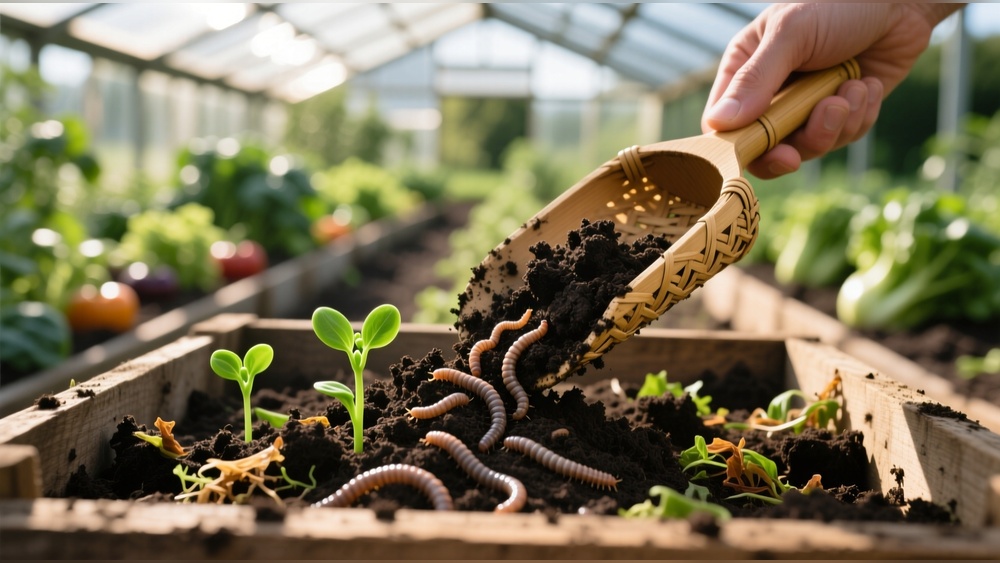
These enzymes break down complex molecules in the dead matter. The decomposers then absorb the simpler substances. This process is essential for recycling nutrients.
Without decomposers, dead things would pile up. Nutrients would be locked away. They wouldn’t be available for plants and other organisms to use again.
So, while they might not be as flashy as a lion hunting, decomposers play a huge heterotrophic role.
Putting It All Together: Plant, Consumer, Phytoplankton
Now let’s directly answer the main question: Which is a heterotroph: plant, consumer, or phytoplankton?
Out of those three, the consumer is the heterotroph. Here’s why:
Understanding the Roles
Consumers are heterotrophs. They get energy by eating other organisms. This is their defining trait as a heterotroph.
They can’t make their own food through photosynthesis or chemosynthesis.
Plants are autotrophs. They use photosynthesis to make their own food from sunlight, water, and carbon dioxide.
Phytoplankton are also typically autotrophs. Like plants, most phytoplankton perform photosynthesis to create their own food. They are the “grass of the sea” in many ways.
So, when you see a consumer, like a rabbit eating grass or a fox eating a rabbit, you are looking at a heterotroph in action. They are fulfilling their role of getting energy from another living thing. The plant and the phytoplankton are the food makers, the autotrophs.
They form the base of the food web. The consumer then relies on that base.
Personal Experience: A Forest Floor Discovery
I remember one crisp autumn day, walking through a dense forest near my home in Oregon. The air was cool and smelled of damp earth and pine needles. Sunlight dappled through the tall fir trees, creating shifting patterns on the ground.
I was looking for interesting fungi, something I often do on my hikes. My goal was to understand the forest’s recycling system better. I knelt down near a fallen log that was covered in a thick, velvety moss.
The log itself was starting to look soft and spongy. It was no longer the hard, solid wood it once was. Tiny mushrooms, delicate and pale, were poking through the decaying bark.
Little beetles crawled over the surface, likely feeding on the fungus or other tiny organisms. It struck me then how much was happening right under my nose. This log, once a living tree, was now a buffet.
It was feeding a whole community of decomposers and tiny creatures. These were all heterotrophs, busy breaking down the dead material. It wasn’t a dramatic hunt like I might see on TV, but it was life’s engine working perfectly.
It highlighted how essential these “hidden” heterotrophs are.
How Energy Flows: The Food Chain
The concept of heterotrophs is central to understanding how energy moves through ecosystems. It’s like a river of energy. It starts at the top with the sun.
Autotrophs, like plants and phytoplankton, capture this solar energy. They convert it into chemical energy stored in sugars. This is the first step, the creation of usable energy.
Then, the energy moves to the next level. Primary consumers (herbivores) eat the autotrophs. They gain the energy stored in the plant’s tissues.
For example, a deer eats leaves. The energy from the sun, captured by the leaves, now goes into the deer. This energy allows the deer to run, grow, and live.
This makes the deer a heterotroph.
If a wolf then eats the deer, the energy transfers again. The wolf, a carnivore, is also a heterotroph. It gets its energy from the deer.
This continues up the food chain. Each transfer involves a loss of energy. It’s usually lost as heat during metabolic processes.
This is why food chains have a limited number of steps. Not all the energy from one level is available to the next.
Energy Transfer Levels
Level 1: Producers (Autotrophs)
- Plants, algae, some bacteria.
- Capture energy from sunlight or chemicals.
- Create their own food (sugars).
Level 2: Primary Consumers (Herbivores)
- Eat producers.
- Are heterotrophs.
- Examples: Rabbits, cows, grasshoppers.
Level 3: Secondary Consumers (Carnivores/Omnivores)
- Eat primary consumers.
- Are heterotrophs.
- Examples: Foxes, snakes, birds that eat insects.
Level 4: Tertiary Consumers (Carnivores/Omnivores)
- Eat secondary consumers.
- Are heterotrophs.
- Examples: Eagles, sharks, lions.
Decomposers (Fungi, Bacteria)
- Break down dead organisms from all levels.
- Are heterotrophs.
- Recycle nutrients back into the ecosystem.
This flow of energy is the backbone of life. Heterotrophs are the ones doing the consuming at each step. They are a necessary part of this vital energy transfer.
Without them, the energy captured by autotrophs would be stuck.
Real-World Context: Your Own Kitchen
Let’s bring this home, right into your kitchen. Think about your last meal. Were you eating a salad?
The lettuce, tomatoes, and cucumbers were plants. They are autotrophs. They made their own food using sunlight.
If you added chicken or fish, those animals were consumers. They ate plants or other animals, making them heterotrophs. Even if you had a vegetarian meal, you were consuming something that was once alive and had to get its energy from somewhere else.
You, as the eater, are a heterotroph.
Consider your refrigerator. A carton of milk comes from a cow. That cow ate grass (an autotroph).
So, the milk contains energy derived from plants. A loaf of bread comes from wheat, which is a plant (an autotroph). If you spread jam on it, the fruit in the jam grew on a plant (an autotroph).
Even processed foods are made from ingredients that were once living organisms. They all trace back to autotrophs capturing energy from the sun.
Your own body is a complex system of heterotrophy. You eat food. Your digestive system breaks it down.
Your cells use the energy and nutrients. This is exactly what a heterotroph does. You are not making your own sugars from sunlight.
You are getting them from the food you consume. This is true for almost all animals, including us. It’s a fundamental aspect of our biology.
Kitchen Heterotroph Check
Your Meal:
- Vegetables/Fruits: Plants (Autotrophs)
- Meat/Fish/Eggs: Consumers (Heterotrophs)
- Dairy Products: From animals that ate plants (Heterotrophs tracing back to Autotrophs)
- Grains/Bread: Plants (Autotrophs)
You Eating: You are a Consumer (Heterotroph)
This shows how deeply ingrained heterotrophy is in our daily lives. It’s not just a science term; it’s the reality of how we and most life on Earth get the energy to keep going.
What This Means for Ecosystem Health
Understanding the roles of autotrophs and heterotrophs is crucial for understanding ecosystem health. Healthy ecosystems depend on a balance between these groups. If the autotrophs are struggling, it impacts everyone up the food chain.
Imagine a drought wiping out a local plant population. The herbivores that rely on those plants will suffer. This then affects the carnivores that hunt the herbivores.
Conversely, if the populations of certain heterotrophs grow too large, they can overgraze the autotrophs. This can damage plant communities. It can lead to soil erosion.
It can disrupt the entire habitat. Predators help keep herbivore populations in check. This shows how interconnected everything is.
The health of the consumers (heterotrophs) is directly tied to the health of the producers (autotrophs).
Decomposers also play a key role. If decomposition slows down, nutrients don’t get recycled properly. Soil fertility can decrease.
This makes it harder for plants to grow. A balanced ecosystem has robust populations of producers, consumers, and decomposers. Each group relies on the others.
Disruptions at any level can have ripple effects throughout the entire system. It’s a delicate dance of energy and nutrient cycling.
Ecosystem Balance Factors
Producer Population: Abundance and health of plants/phytoplankton.
Consumer Populations: Balanced numbers of herbivores and carnivores.
Predator-Prey Dynamics: Natural regulation of populations.
Decomposition Rate: Efficient recycling of nutrients.
Environmental Conditions: Water, sunlight, temperature, soil quality.
When we study these roles, we gain insight into how to protect our natural world. We can better understand the impact of human activities. For instance, deforestation reduces autotrophs.
Overfishing reduces specific heterotroph populations. Pollution can harm both producers and consumers. Recognizing the heterotroph’s place helps us see the whole picture.
Common Misconceptions
Even with clear definitions, some ideas about heterotrophs can get mixed up. One common thought is that anything that moves is a heterotroph. While many heterotrophs move to find food, movement isn’t the defining factor.
Plants don’t move much, but they are autotrophs. Some tiny organisms that might seem plant-like, like some types of algae, might have limited movement but still perform photosynthesis.
Another point of confusion can be phytoplankton. While most are autotrophs (photosynthetic), there are some exceptions. Some mixotrophic plankton can perform photosynthesis but also absorb dissolved organic matter or consume smaller particles.
However, the vast majority of phytoplankton are considered producers. For general understanding, they are grouped with plants as autotrophs. The defining characteristic of a heterotroph is the inability to create its own food from inorganic sources.
Heterotroph Myths vs. Facts
Myth: Anything that moves is a heterotroph.
Fact: Movement is common in heterotrophs searching for food, but it’s not the defining trait. Autotrophs like plants are stationary.
Myth: All plankton are autotrophs.
Fact: Most phytoplankton are autotrophs, but some mixotrophic plankton exist. However, the primary role of phytoplankton is as producers.
Myth: Heterotrophs only eat other animals.
Fact: Heterotrophs include herbivores (plant-eaters), carnivores (meat-eaters), and omnivores (plant and meat-eaters), as well as decomposers.
It’s important to stick to the core definition: a heterotroph must consume other organisms or organic matter for energy because it cannot produce its own. This clarity helps us correctly identify organisms and understand their roles in the web of life.
What This Means for You
Understanding that a consumer is a heterotroph has practical implications for how we see the world. It helps us appreciate the interconnectedness of life. Every time you eat, you are participating in this cycle of energy.
You are a consumer, a heterotroph, relying on the energy captured by others.
This knowledge can also influence your choices. If you’re interested in gardening, knowing plants are autotrophs helps you understand what they need to thrive: sunlight, water, and nutrients from the soil (which decomposers help make available). If you’re concerned about the environment, understanding the roles of different organisms helps you see why preserving habitats is so important.
Protecting forests means protecting autotrophs. Protecting oceans means protecting phytoplankton. These are the energy factories for countless heterotrophs.
It also gives you a deeper appreciation for the diversity of life. From the smallest bacteria to the largest whale, each organism has a role. Whether it’s making food or eating food, every part is vital.
Recognizing a consumer as a heterotroph is a key step in understanding this complex, beautiful system. It’s a reminder that we are all part of a larger ecological story.
Quick Fixes & Tips
While there aren’t “fixes” for heterotrophy itself, understanding it can guide better practices. If you’re trying to grow your own food, remember your plants are autotrophs. Give them plenty of sunlight and good soil.
Good soil often means healthy decomposers at work.
If you’re concerned about feeding pets, understand they are consumers. They need food that provides them with the energy and nutrients they can’t make themselves. This means feeding them appropriate food, which is made from other organisms.
For anyone interested in nature, keep an eye out for consumers in action. Watch a bird eating seeds. See a deer grazing.
Observe insects on a leaf. These are all examples of heterotrophs fulfilling their biological role. It’s a constant, living demonstration of how life on Earth gets its energy.
Practical Takeaways
For Gardeners: Focus on providing sunlight and healthy soil for your autotrophs (plants).
For Pet Owners: Ensure your consumer pets receive food formulated for their heterotrophic needs.
For Nature Watchers: Observe consumers (animals, insects) to see heterotrophy in action.
For Everyone: Appreciate the interconnectedness; your food links back to producers.
It’s a simple concept at its heart, but its implications are vast. It governs how energy moves from the sun, through plants, and then to everything that eats them.
Frequently Asked Questions
What is the main difference between an autotroph and a heterotroph?
The main difference is how they get energy. Autotrophs make their own food, usually through photosynthesis using sunlight. Heterotrophs cannot make their own food and must get energy by eating other organisms or organic matter.
Are all animals heterotrophs?
Yes, all animals are heterotrophs. Animals cannot perform photosynthesis or create their own food from inorganic sources. They must consume other living or once-living things for energy and nutrients.
Why are plants considered autotrophs?
Plants are considered autotrophs because they perform photosynthesis. They use chlorophyll to capture energy from sunlight. They then use this energy to convert carbon dioxide and water into sugars, which is their food.
Are fungi heterotrophs or autotrophs?
Fungi are heterotrophs. They get their nutrition by absorbing dissolved organic compounds from their environment. They are often decomposers, breaking down dead organic matter, but some are parasites or symbionts.
Can a phytoplankton be a heterotroph?
Most phytoplankton are autotrophs because they perform photosynthesis. However, some types are mixotrophic. This means they can photosynthesize like autotrophs but also absorb nutrients from their surroundings or consume smaller particles like heterotrophs.
What role do heterotrophs play in an ecosystem?
Heterotrophs play a crucial role by consuming other organisms, transferring energy through food chains and webs. They also help regulate populations and, as decomposers, recycle essential nutrients back into the ecosystem for producers to use.
If I eat a salad, am I a heterotroph?
Yes, if you eat a salad, you are acting as a heterotroph. The salad consists of plants (autotrophs). By eating them, you are consuming their stored energy and becoming a consumer, which is a type of heterotroph.
Conclusion
So, there you have it. When we look at a plant or phytoplankton, we see life making its own food. They are the autotrophs.
When we look at a consumer, we see life getting its energy from somewhere else. That is the heterotroph. It’s a simple distinction, but it’s the foundation for understanding how energy moves through every living system on our planet.
From the deepest oceans to your own dinner plate, the cycle is constant and essential.